

The minivan renaissance
If you’ve spent any time in a grocery store parking lot lately, you’ve probably noticed the SUV takeover is nearly complete. Compact SUVs, midsize SUVs, lifted wagons calling themselves SUVs — the category has ballooned so much that “family car” has basically become shorthand for “anything vaguely box-shaped with roof rails.”
But trends shift, and American tastes are never static. Younger buyers in particular seem less enamored with the faux-rugged image the modern crossover sells. At the same time, practicality is having a bit of a renaissance as families look for more usable space and better efficiency without going full school-bus mode. That opens the door for the minivan.
Minivans have always been the sensible choice: lower floors, massive cargo space, adult-friendly third rows, and driving dynamics closer to cars than lumbering crossovers. As SUVs creep past $50,000 (or far more), the minivan argument suddenly feels less nostalgic and more logical. If you’re minivan-curious heading into the new year, here’s what’s still available in 2026 — and what sets each model apart.
Chrysler Pacifica
Stellantis
Starting price: $45,640
Fuel economy: 22 mpg combined
The Pacifica is the closest thing the U.S. has to a traditional minivan template in 2026. Under the hood is a familiar 3.6-liter V6 powering the front wheels, and inside you’ll find the kind of thoughtful packaging Chrysler helped pioneer: Stow ’n Go second-row seats, a roomy cabin, and a large 10.1-inch touchscreen.
It’s been on the market for several years, and because Chrysler hasn’t tried to reinvent the formula every two seasons, the Pacifica feels reassuringly predictable. It doesn’t chase a rugged off-road aesthetic or pretend to be a luxury shuttle; it focuses on comfort, storage, and ease of use. For families that want the classic minivan experience with modern conveniences, it’s the closest fit.
Chrysler Pacifica Plug-In Hybrid
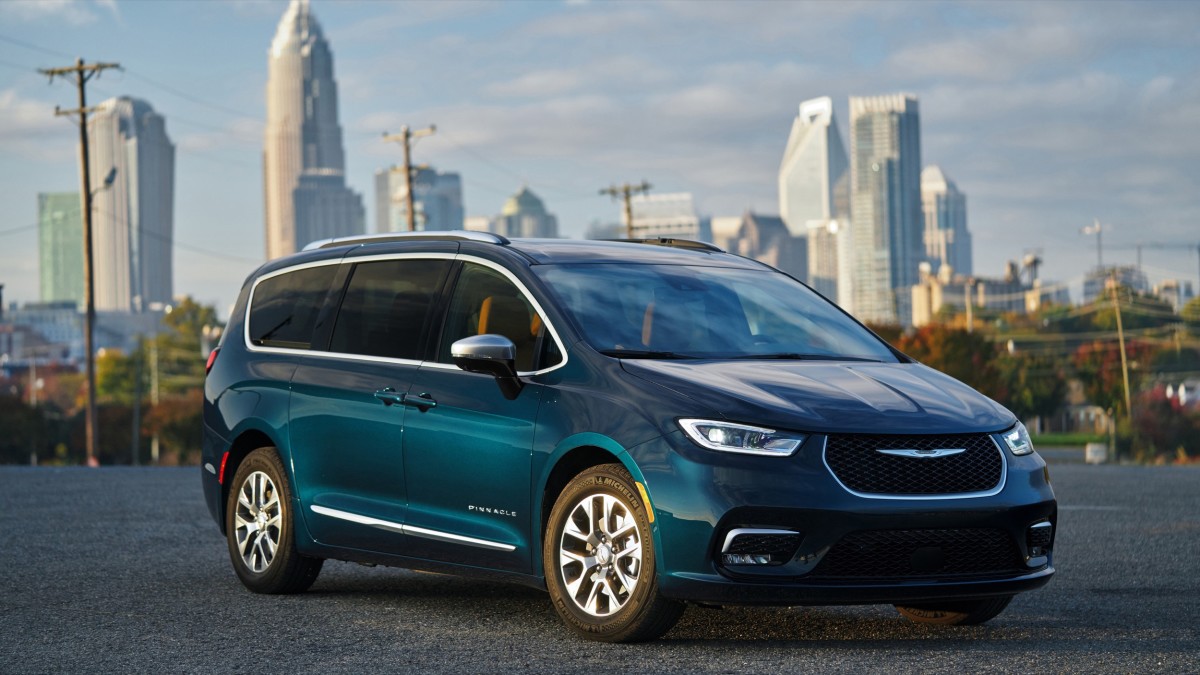
Chrysler
Starting price: $53,760
Fuel economy: 82 MPGe, 32 miles EV range
The plug-in version takes everything the standard Pacifica does well and adds the ability to run errands or school drop-offs using little to no gasoline. With 32 miles of electric driving on a full charge, many owners will only hear the V6 wake up on weekend road trips.
The price jump compared with the gas version is noticeable, but once you factor in the daily fuel savings — especially for families constantly on the go — it becomes easier to justify. If you want a minivan that can dabble in EV life without range anxiety, the PHEV remains one of the most compelling options in the segment.
Chrysler Voyager
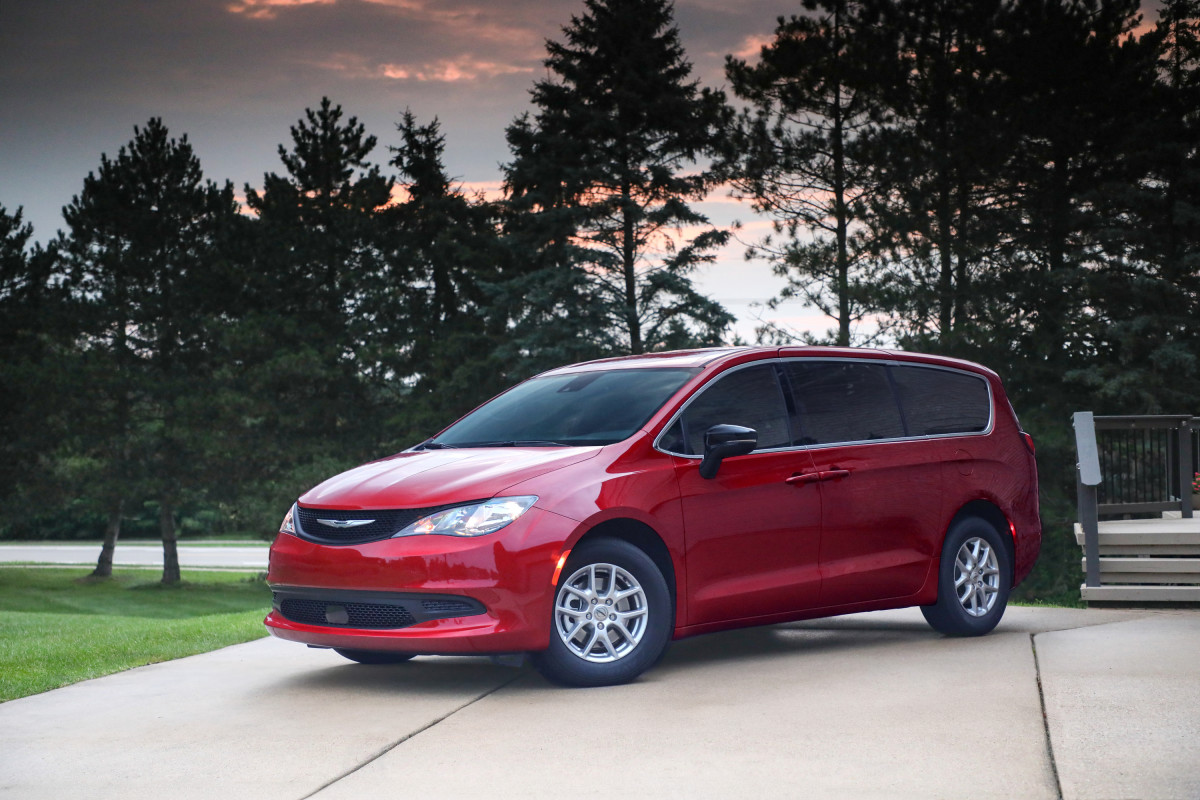
Stellantis
Starting price: $42,490
Fuel economy: 22 mpg combined
For buyers who like the Pacifica but want something more affordable, Chrysler continues to offer the Voyager. Think of it as a simplified Pacifica — one engine, one trim, fewer flashy options, and styling that’s a bit more old-school.
Yet the essentials are still here: the same V6, the same convenient seating layout, and the same easy-to-drive feel. It’s ideal for budget-minded families who want space and reliability without climbing into the upper-$40,000 range. The Voyager may not be the most glamorous choice, but it’s extremely functional.
Honda Odyssey
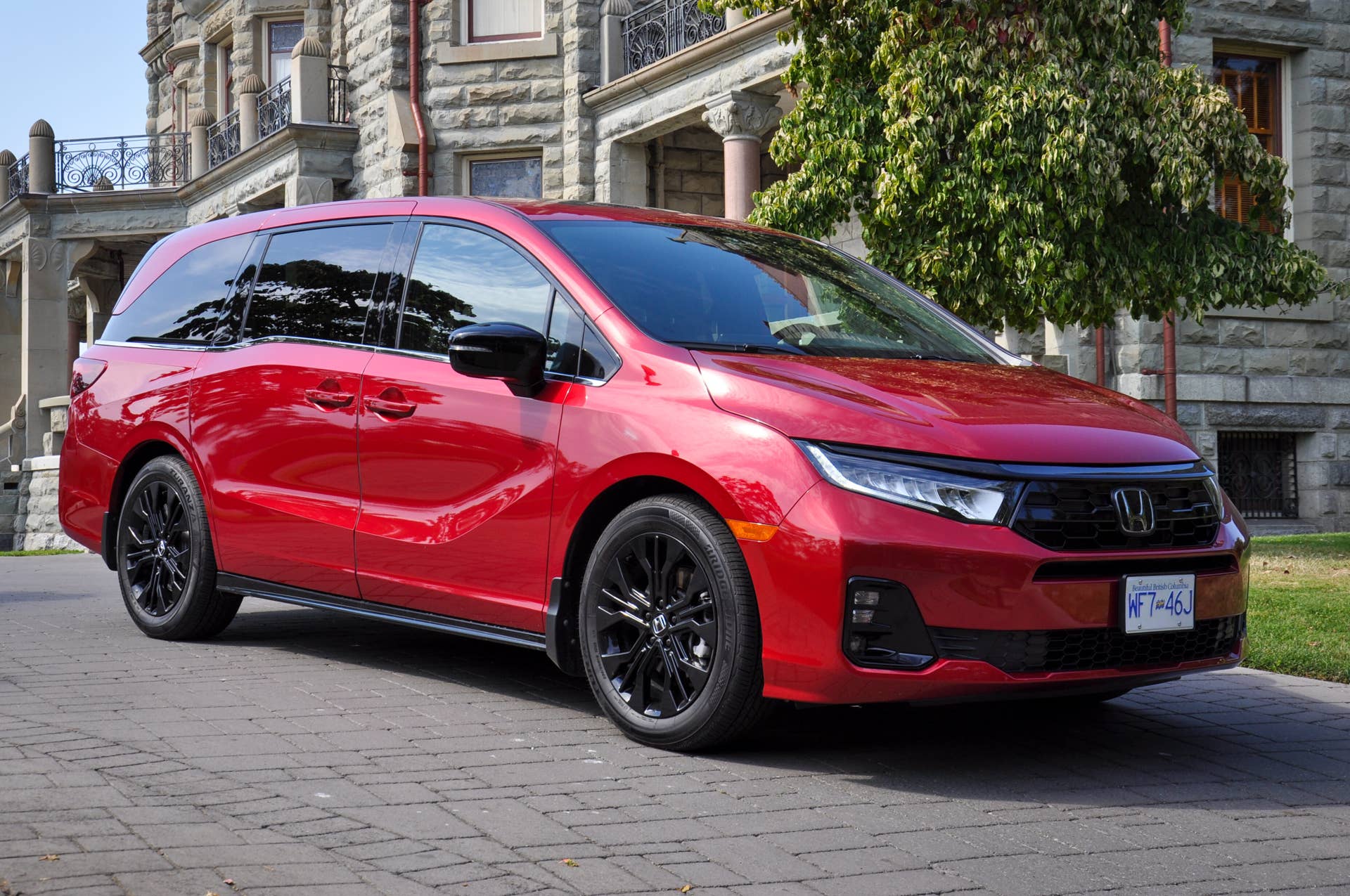
Honda
Starting price: $44,290
Fuel economy: 22 mpg combined
Honda’s longstanding entry continues to appeal to families who enjoy driving or simply want something built to last. The Odyssey’s 3.5-liter V6 remains smooth and responsive, giving it more pep than its utilitarian reputation might suggest.
Inside, Honda’s clever Magic Slide seats make loading kids or adults into the third row far simpler than wrestling with bulky captain’s chairs. The cabin layout prioritizes usability, visibility, and durability — three things that matter a lot more than fender cladding or a faux-skid plate. A mild refresh in 2025 updated the styling, but the Odyssey’s core strengths remain unchanged.
Kia Carnival
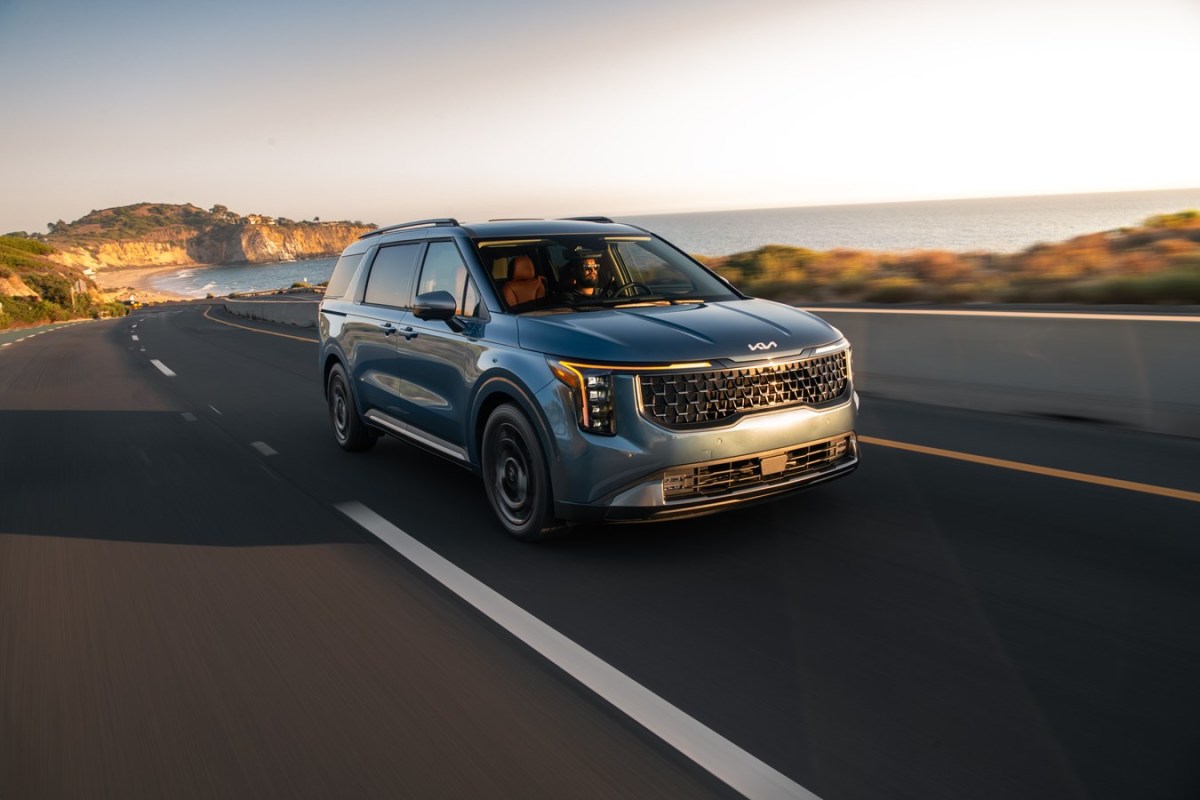
Kia
Starting price: $38,485
Fuel economy: 21 mpg combined
The Carnival is the most aggressively styled minivan on sale, and for some buyers, that’s part of the appeal. Kia markets it as something between an MPV and an SUV, and while the body shape still falls squarely into “minivan,” the sharp lines and squared-off nose make it look a bit more adventurous.
Its big advantage is value. For well under $40,000, you get a spacious three-row interior, crisp tech, and available second-row lounge seats that recline like a business-class airplane pod. The only drawback is the V6’s middling efficiency, but if you want style and space on a budget, the Carnival is hard to overlook.
Kia Carnival Hybrid
Kia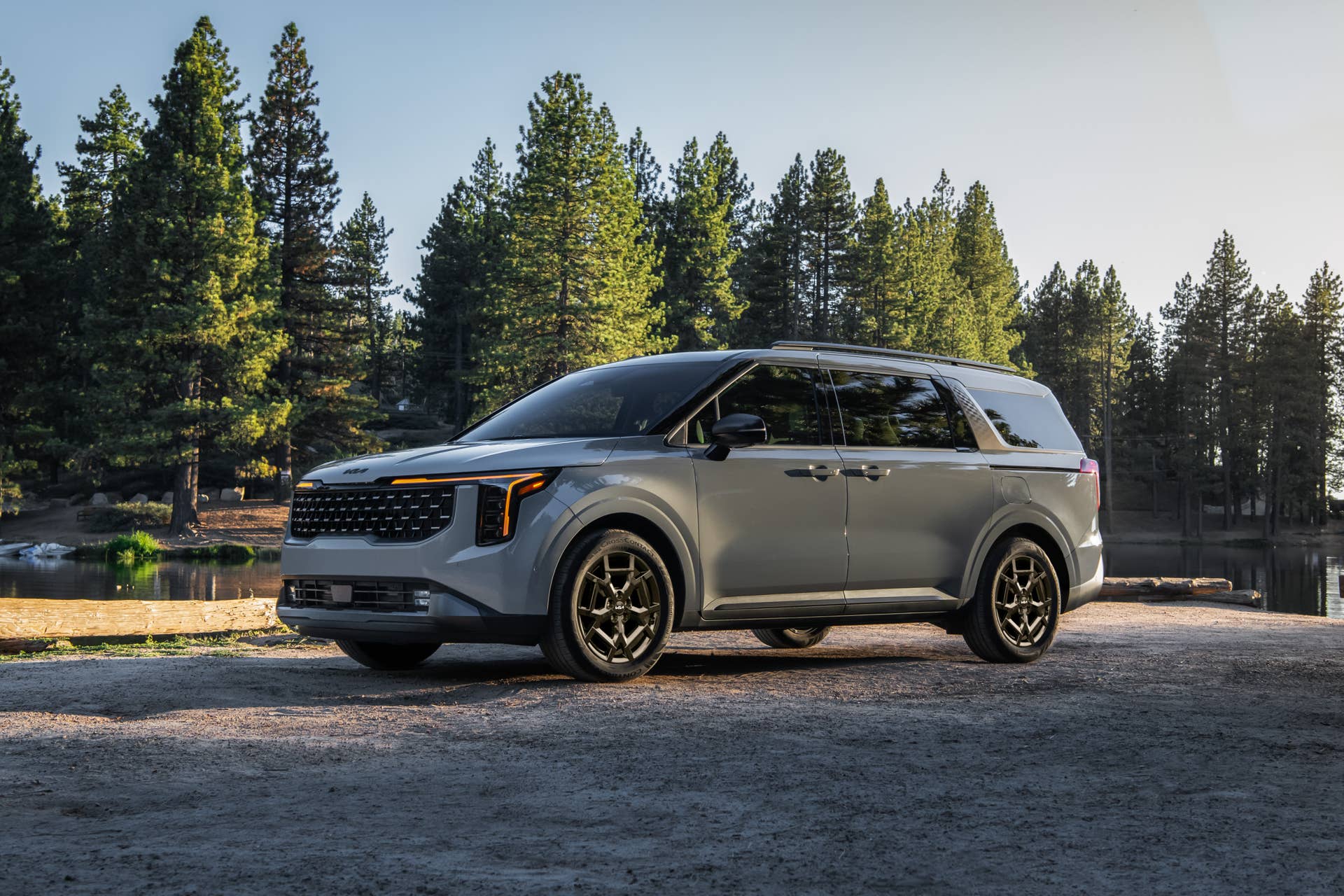
Starting price: $42,485
Fuel economy: 32 mpg combined
Kia added a hybrid option to the Carnival lineup to give buyers a more efficient alternative. It swaps out the V6 for a turbocharged four-cylinder hybrid setup that significantly improves fuel economy while keeping the Carnival’s overall driving experience pleasantly relaxed.
It won’t beat the Toyota Sienna on mpg, but it brings the Carnival’s tech-forward interior and bold design to shoppers who care about gas costs. For families who spend most of their time in stop-and-go traffic, the hybrid’s real-world advantages add up quickly.
Toyota Sienna
Toyota
Starting price: $41,615
Fuel economy: 36 mpg (FWD) / 35 mpg (AWD)
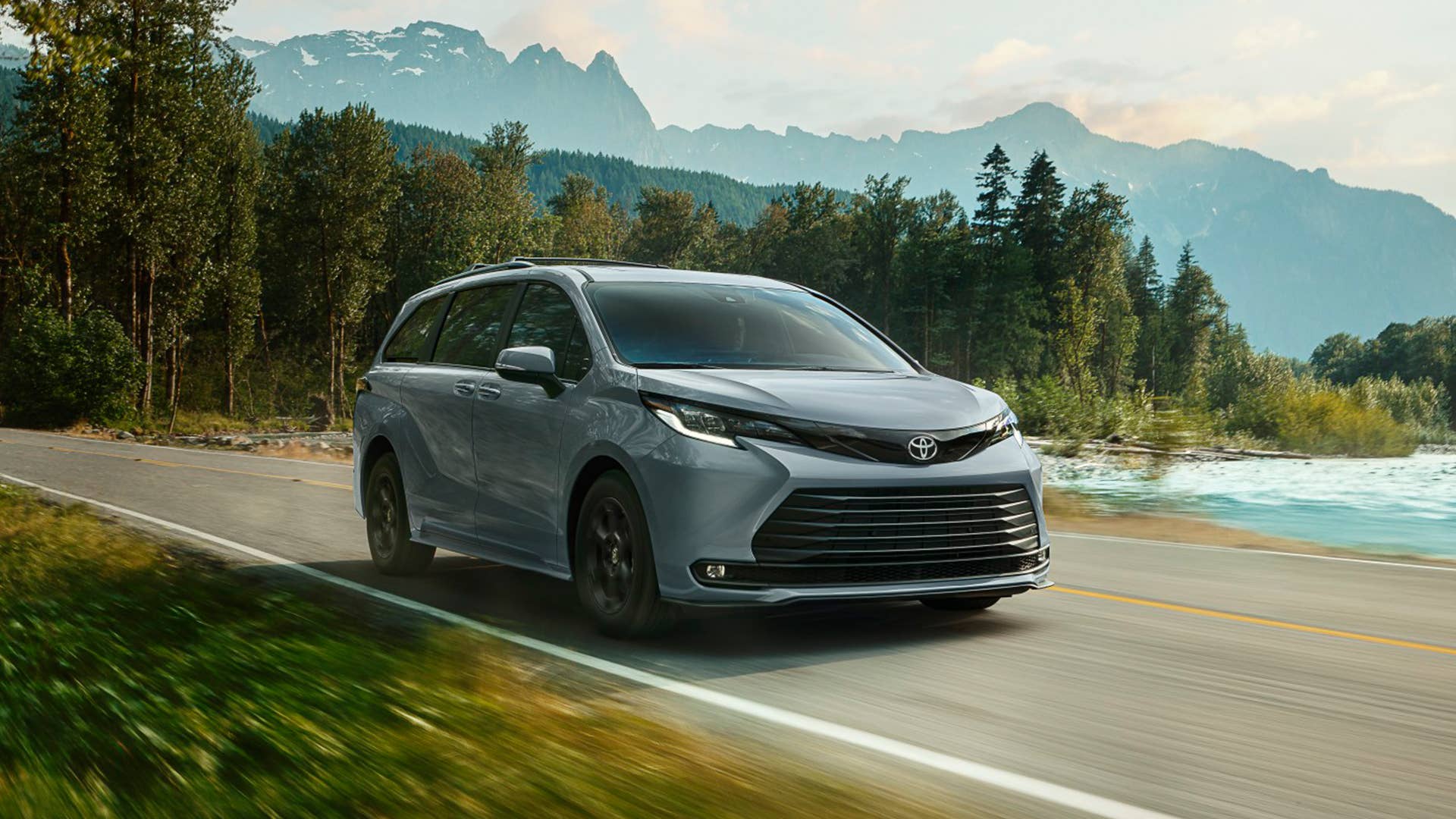
Toyota made a bold move when it redesigned the Sienna as a hybrid-only model, but the gamble has paid off. It remains the most fuel-efficient minivan on the market, and its hybrid powertrain feels refined and predictable — perfect for city commuting or long road trips.
The Sienna’s interior emphasizes practicality, with plenty of cubbies, sliding console storage, and a third row that folds into the floor without drama. While Toyota’s reputation for reliability is a major draw, the Sienna’s surprisingly engaging driving manners help keep it from feeling like a box on wheels.
Volkswagen ID. Buzz
VW
Starting price: $61,545
Range: 234 miles (RWD) / 231 miles (AWD)
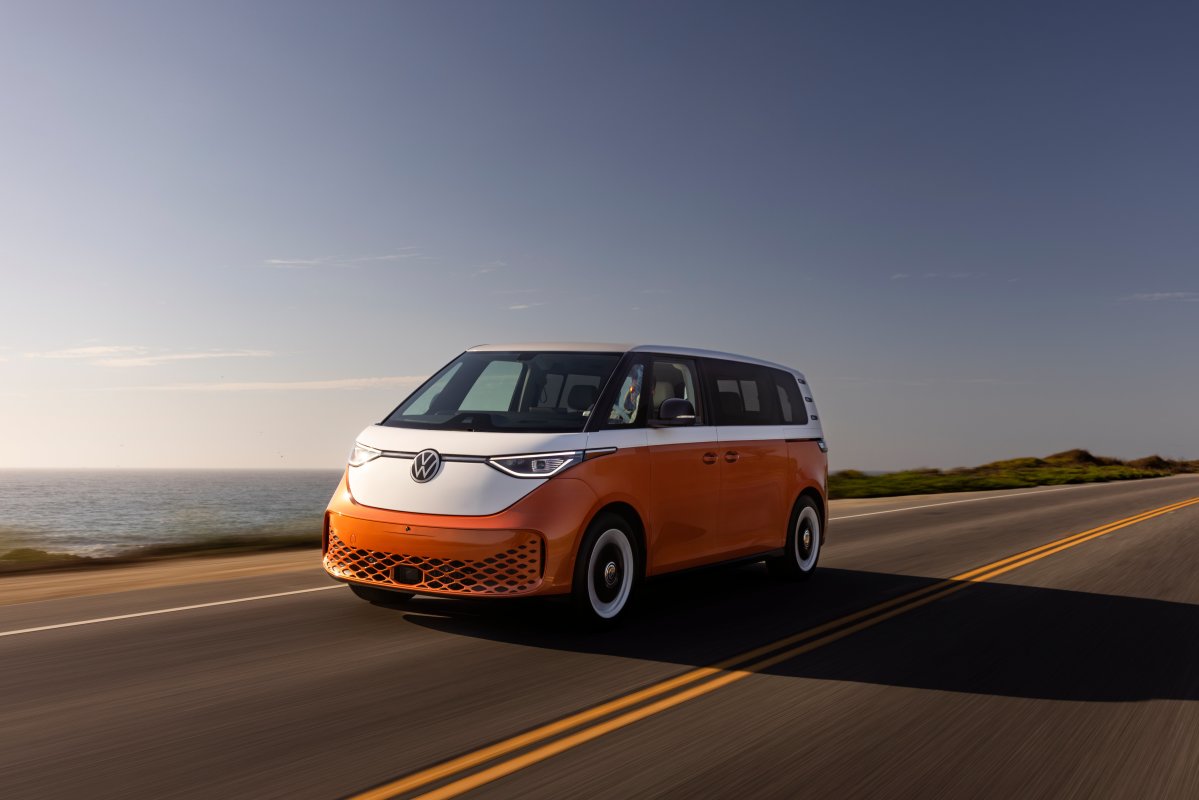
Volkswagen’s retro-styled electric van is technically a minivan, even if it looks more like a futuristic remake of the Microbus. It’s the only fully electric option on the U.S. market, and the only one you can buy in bright two-tone colors that guarantee attention everywhere you drive.
With seating for up to seven and a cabin focused on open space rather than traditional minivan packaging, the ID. Buzz stands apart from the pack. It’s also the priciest van here by a wide margin, but for shoppers who want personality, zero tailpipe emissions, and sliding doors, it offers a combination no rival does.
Final thoughts
SUVs aren’t going anywhere, but their dominance has helped the minivan slip under the radar — and that may be exactly why this is a great time to buy one. They’re spacious without being imposing, easier to load than a raised SUV, and often more fuel-efficient. In 2026, the lineup is stronger than it’s been in years. If you’re thinking about ditching the SUV treadmill, the minivan is ready to be your family’s secret weapon.