

The 2025 Toyota Highlander remains an American family favorite for a simple reason. Sure, it’s comfortable, safe, and possesses a utility that seems ideal for a family, but the Highlander has an additional bona fide that beats its competitors: Toyota’s legendary reputation for reliability. Given the worries that parents have, one less fear is valued. Still, is the Highlander worth it compared to its competitors?
Toyota
Well, that depends. Its pricier sibling, the lengthier Grand Highlander, offers more third-row legroom, albeit at a higher price. Its other pricier sibling, the Highlander Hybrid, offers increased fuel efficiency. We cover both separately. Considering the costs families face, we understand the need to pay as little as possible for the family Conestoga. The Highlander offers 135 cubic feet of passenger volume and 16 cubic feet of cargo volume, expanding to 84 cubic feet with the seats stashed. Passenger space is good in the first two rows, but far less satisfactory in the third, where the low, cramped seat is best for children or left folded down.
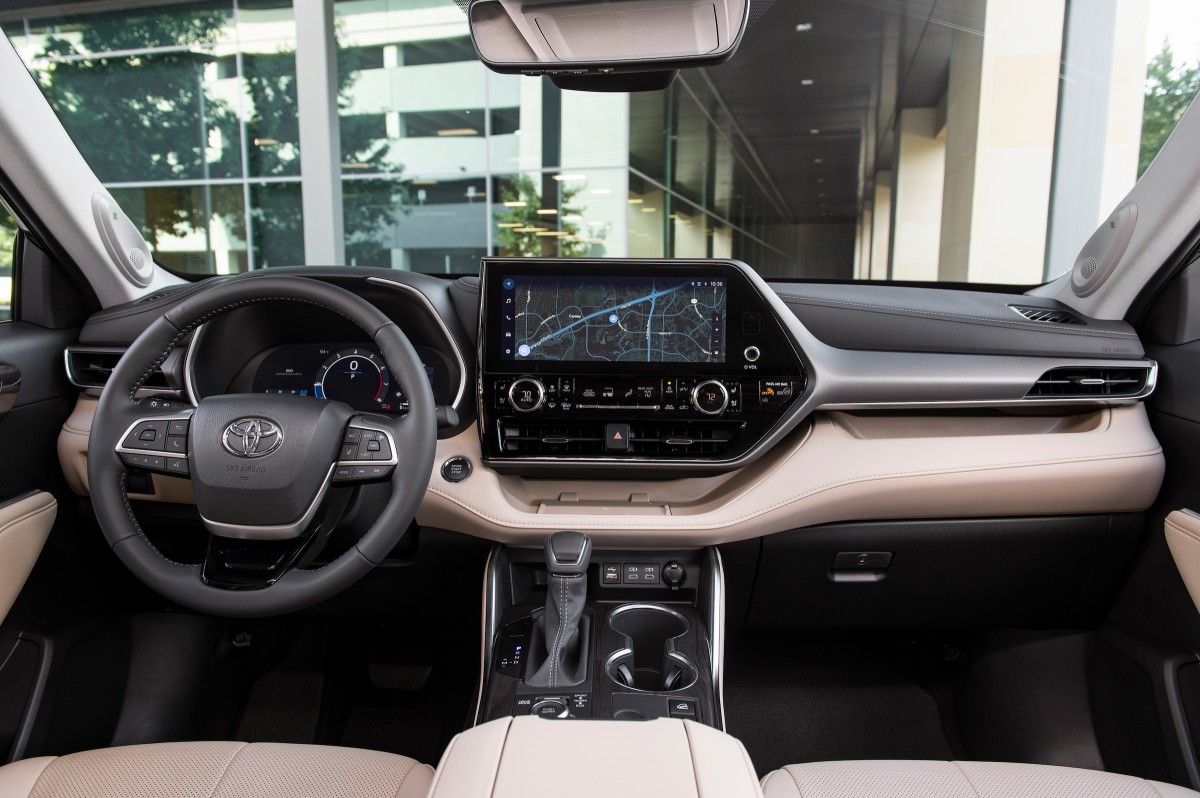
Trim quality is of good quality, but nothing special. An 8-inch infotainment touchscreen is standard on LE and XLE, while a 12.3-inch touchscreen is standard on the Limited and Platinum and optional on the XLE. Apple CarPlay, Android Auto, Amazon Alexa, and a 4G Wi-Fi hotspot are standard. All models except for the LE get a wireless charging pad.
Toyota
Power comes with a 265-hp turbocharged 2.4-liter four-cylinder engine that funnels its power through an eight-speed automatic transmission. Highlander LE and XLE models come with a choice of front-wheel or optional all-wheel drive. Highlander XSE, Limited, and Platinum trims have standard all-wheel drive. The four-cylinder driveline lacks the refinement of the V6 Toyota previously used. Handling is good, but not agile, while the ride is firmer than you might expect. Still, it has eight inches of ground clearance and is rated to tow 5,000 pounds. At less than 195 inches long, most drivers will find the Highlander easy to maneuver. It’s a consummate automotive servant, just don’t expect any personality or flair. That’s why, for the same money, you might want to consider something else.
Chevrolet Traverse
Chevrolet
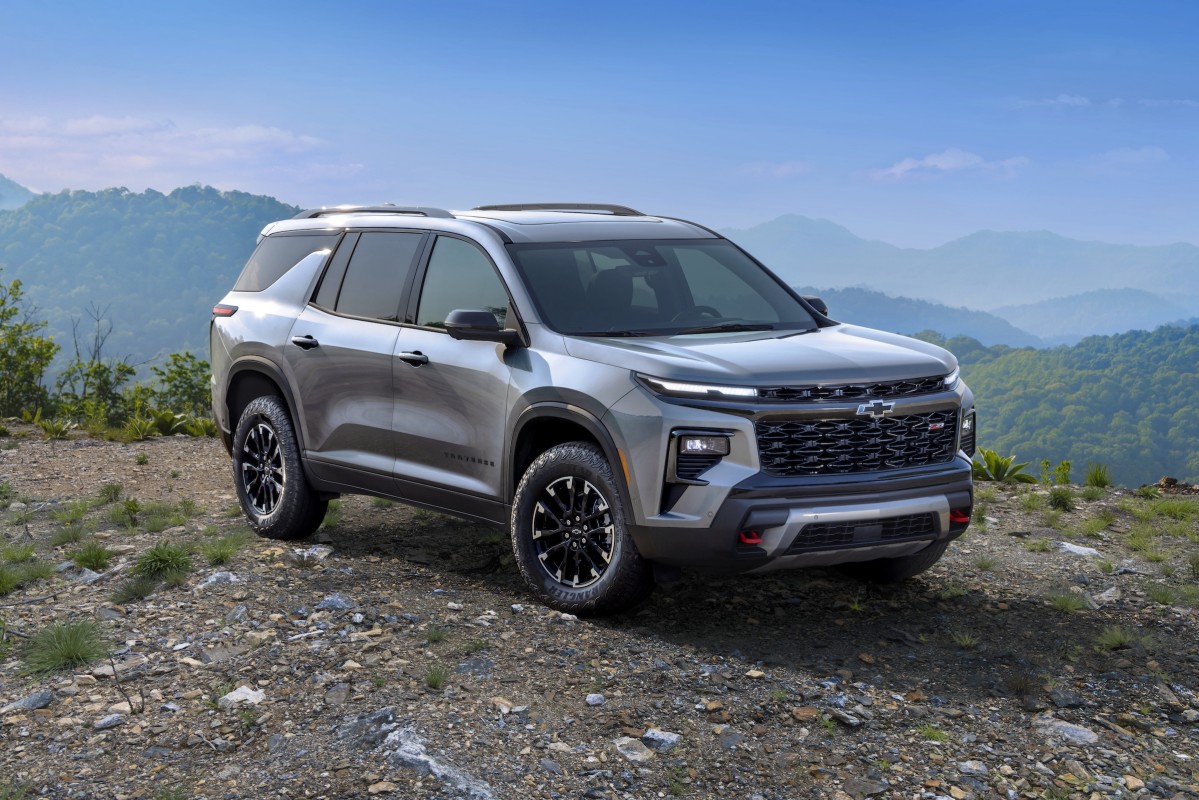
With a look that resembles the Chevrolet Tahoe – a true, off-road SUV – the Traverse offers the size that Americans appreciate. It’s 205 inches long, delivering 178 cubic feet of passenger space, including a third row that’s tolerable for adults with a comfortably high seat. In the back, there’s 23 cubic feet of cargo space, expandable to a massive 98 cubic feet. Another 300 pounds can be carried on the roof. An 11-inch digital gauge cluster and mammoth 17.7-inch infotainment touchscreen come standard with a wireless smartphone charging pad, 5G Wi-Fi hotspot, and Apple CarPlay and Android Auto compatibility. If there’s anything off-putting, it’s that the cabin has the feel of being built to a price more so than its competition.
Chevrolet 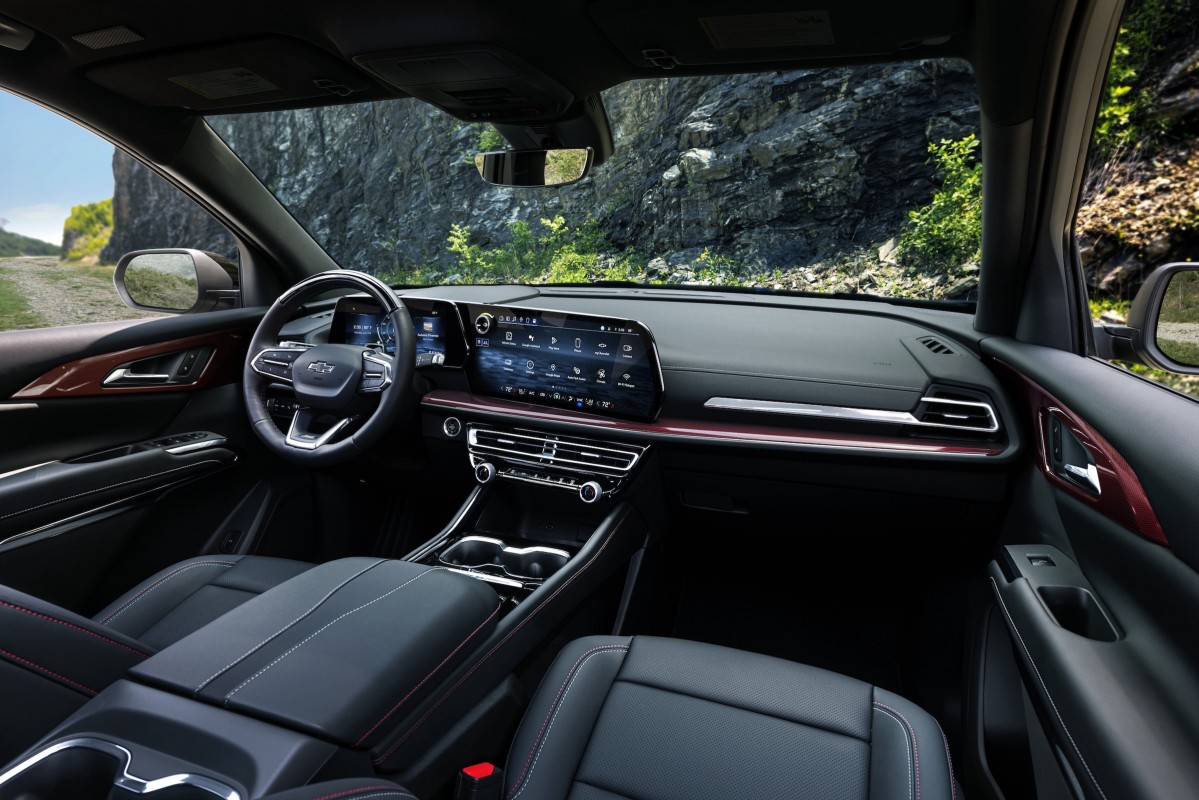
A 328-horsepower 2.5-liter turbocharged four-cylinder engine and eight-speed automatic transmission come standard with front-wheel drive. All-wheel drive is optional, and towing is rated at 5,000 pounds. During regular driving, the engine works hard, complains loudly, and lacks the smoothness you’d expect. It’s a sophisticated driving experience, but its ride is comfortable, which is fine for a family vehicle.
Honda Pilot
Honda
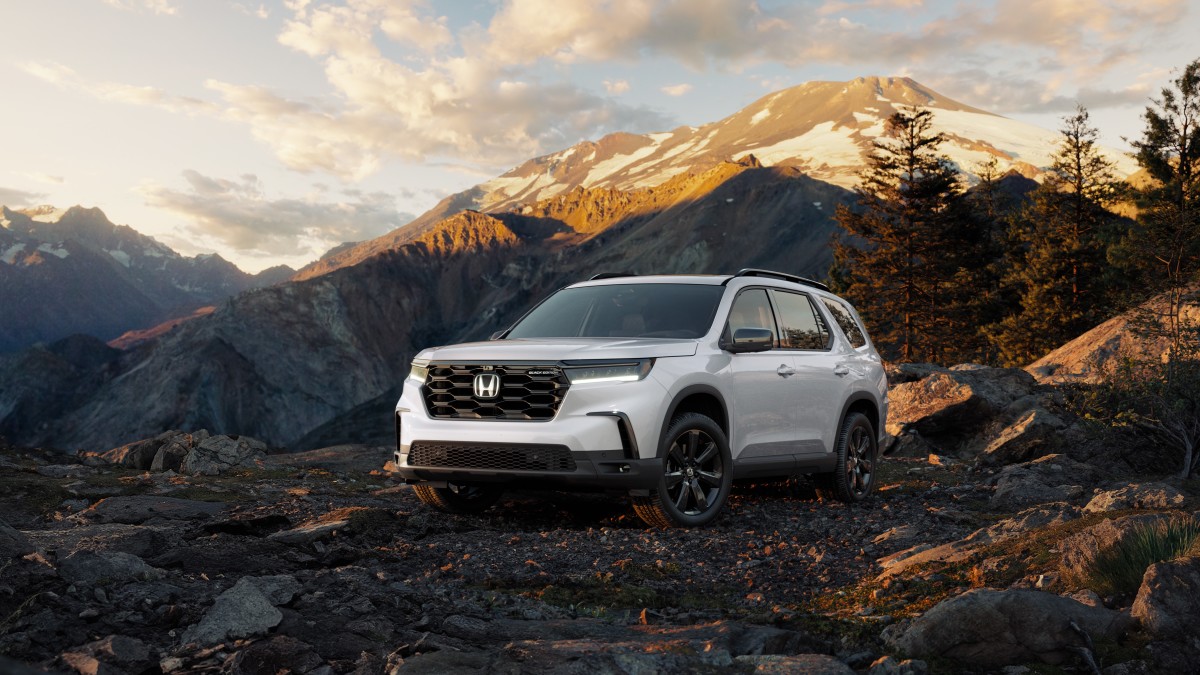
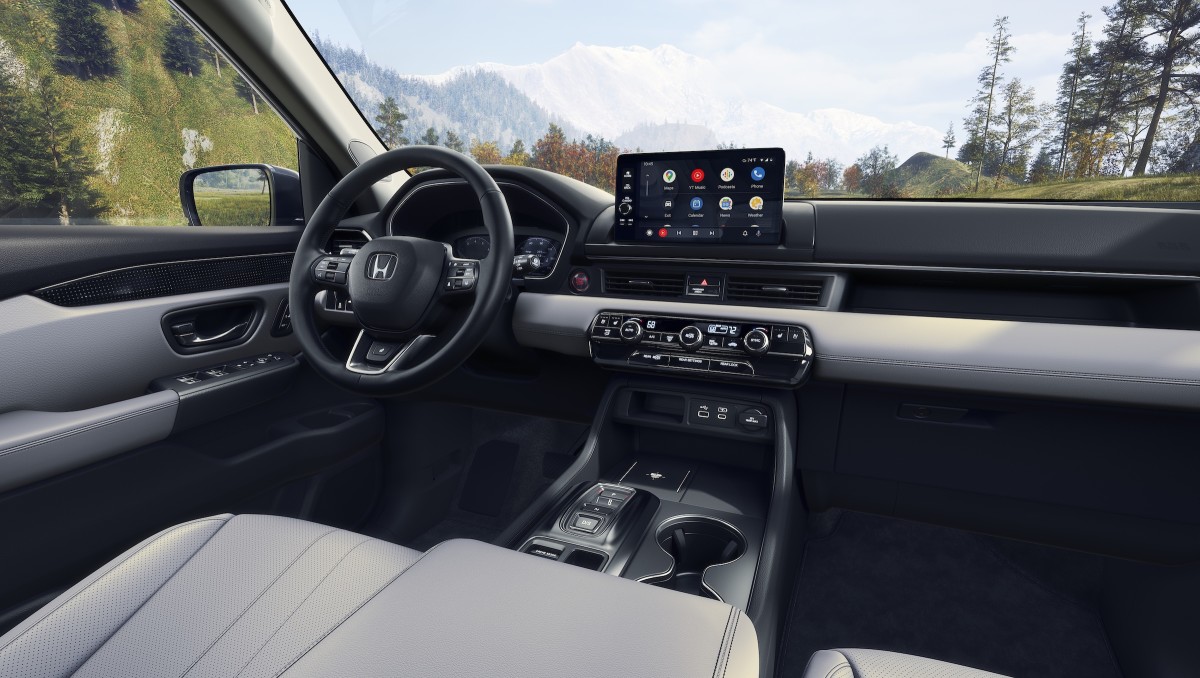
There’s a refreshing, straightforward nature to the 2025 Honda Pilot that makes it the closest rival to the Highlander. The Honda handily outpowers it, with its 285-horsepower 3.5-liter V-6 and a 10-speed automatic transmission powering the front wheels or, optionally, all four. There’s 7.3 inches of ground clearance except for the off-road-oriented TrailSport trim, which gets 8.3 inches. Towing is rated at 3,500 pounds with front-wheel drive and 5,000 pounds with all-wheel drive. Piloting the Pilot will feel familiar, as it possesses the same lively, responsive disposition that makes Honda models fun to drive. For those going off-road, the TrailSport is adequate for light-duty travel once the sidewalk ends.
Honda
Open its doors and you’ll find the Pilot to be more commodious than its Toyota rival, with 154 cubic feet of people space and 19 cubic feet of cargo space, which expands to 89 cubic feet with the seats stowed. Its roof is also rated to haul an additional 165 pounds of stuff. At the center of the instrument panel, you’ll find a seven-inch infotainment touchscreen with Apple CarPlay and Android Auto. But choose an upper trim level and you’ll get a nine-inch screen with wireless Apple CarPlay and Android Auto.
Hyundai Santa Fe
Hyundai
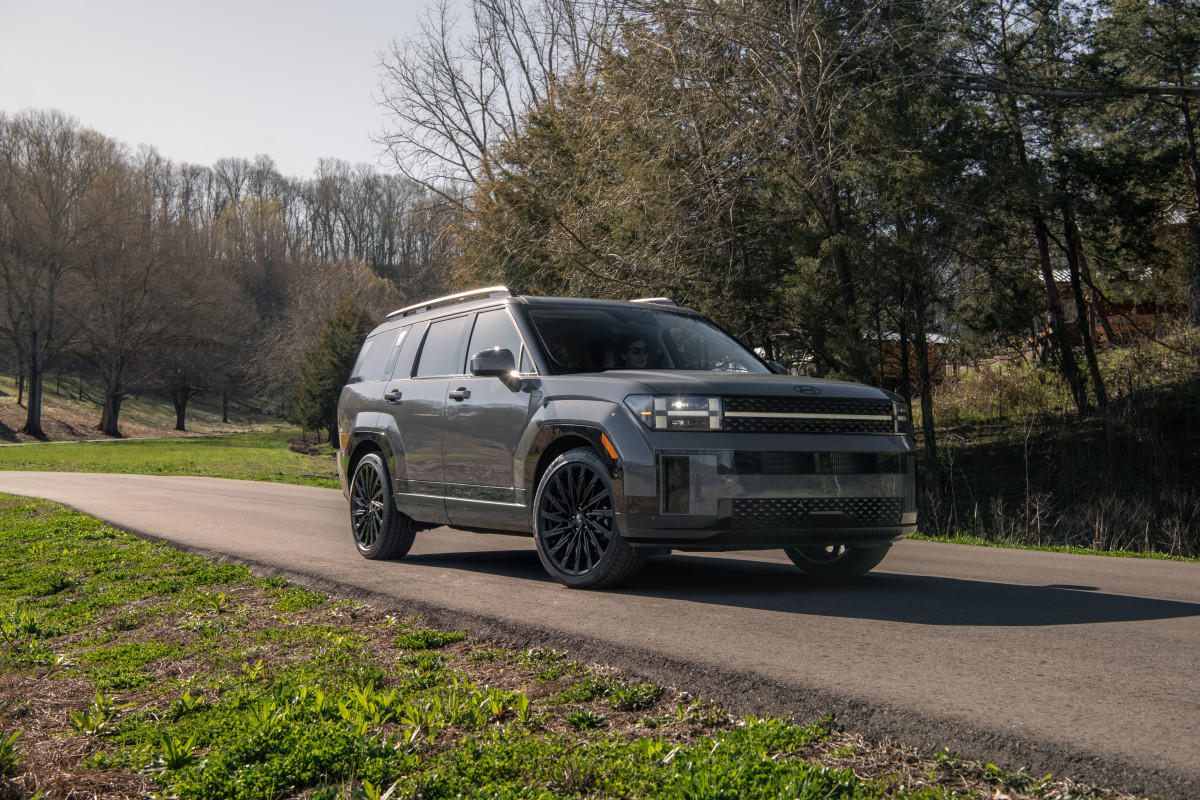
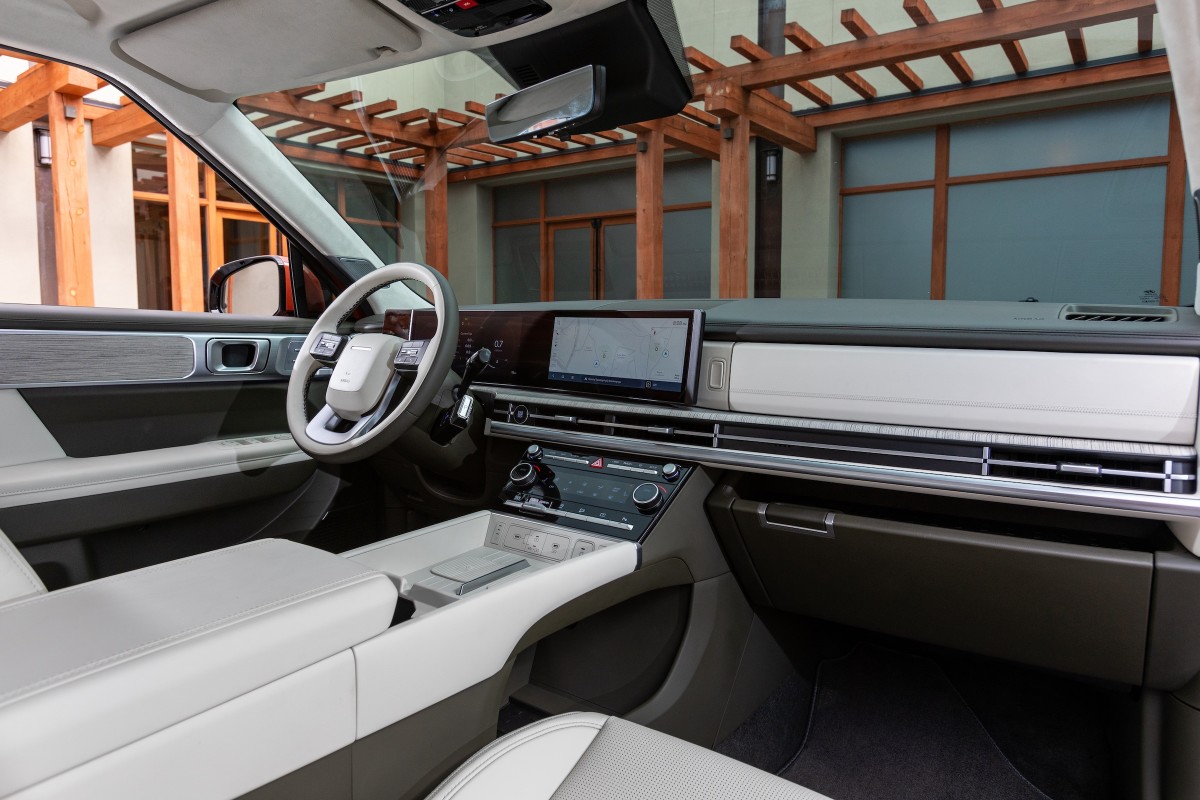
Family haulers aren’t usually draped in the cutting-edge haute couture, but that’s not the case with the 2025 Hyundai Santa Fe. Not surprisingly, the cabin has two wireless chargers up front, a 12.3-inch digital instrument cluster, and a 12.3-inch infotainment touchscreen with wireless Apple CarPlay and Android Auto. Then there are the thoughtful touches, like the ease of access for second-row passengers to the front, dual-hinged center console bin. That said, the Santa Fe measures 190 inches long, rendering third-row legroom tight. It’s the smallest midsize SUV here, but its passenger volume tops Toyota’s at 150 cubic feet. That comes at the expense of cargo capacity at 15 cubic feet, expanding up to 80 cubic feet – also the smallest here.
Hyundai
Power comes from a 2.5-liter turbocharged four-cylinder engine and an eight-speed dual-clutch transmission that generates 277 horsepower and 311 pound-feet of torque. A 231-horsepower hybrid is also offered, but we review that separately. Towing is rated at up to 5,000 pounds. But it’s the driveline that proves disappointing, with a cacophonous amount of engine noise and an interminable wait until the turbo kicks in off the line. And, like every Santa Fe ever built, driving it is wholly remarkable. But in this class, that’s not unusual.
Kia Telluride
Kia
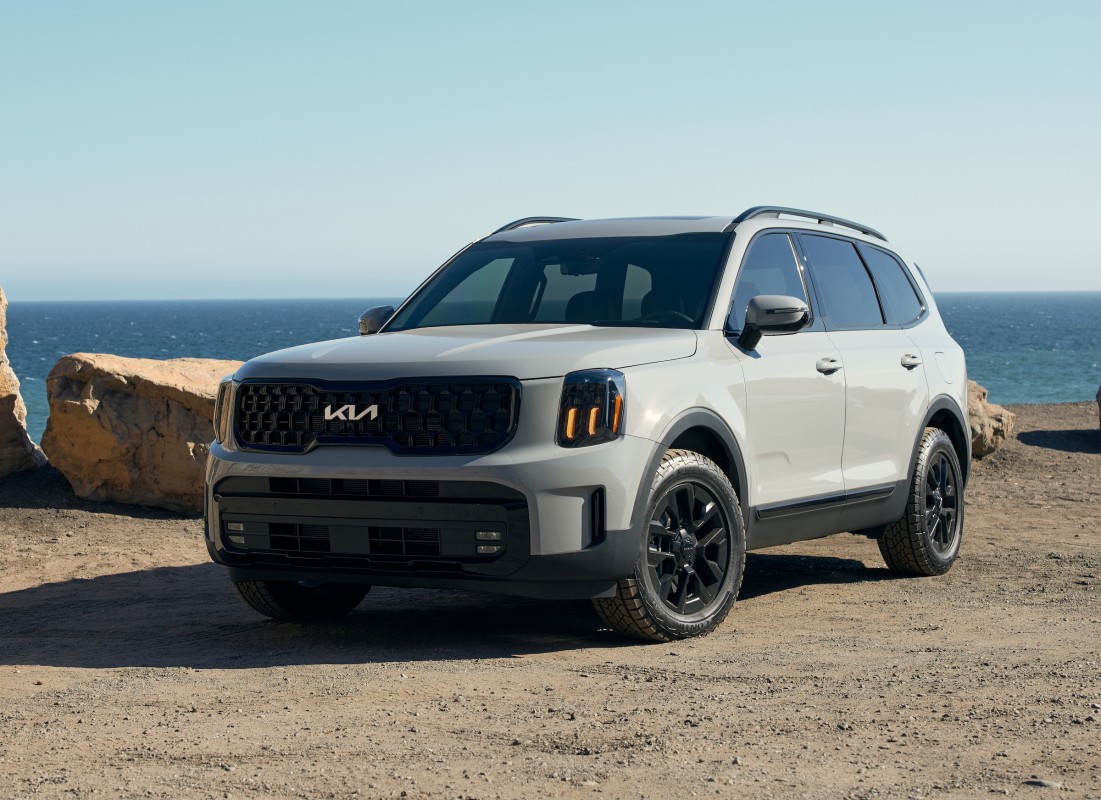
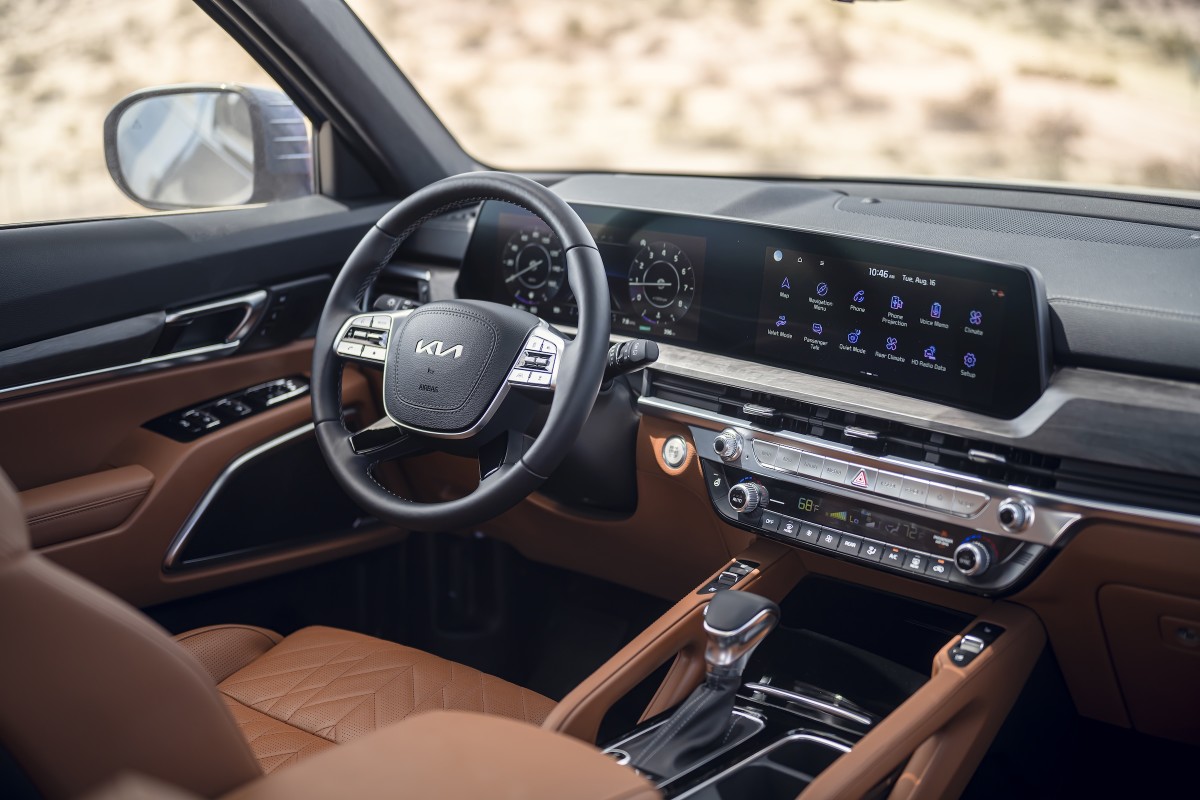
Clearly, this is the current cul-de-sac sweetheart. Its popularity is so strong, Kia insiders refer to it as the Selluride, and there are many reasons why. For starters, there’s adult-size room in all three rows, with 151 cubic feet of passenger space – noticeably more than the Highlander. There’s also 21 cubic feet of cargo capacity that expands to 87 cubic feet, along with a roof rack rated at 165 pounds. A 12.3-inch infotainment touchscreen with Apple CarPlay, Android Auto, and a 4G Wi-Fi hotspot comes standard, while wireless smartphone charging is optional. Uniquely, the Telluride offers an intercom system for the driver to talk to rear seat passengers through the audio system speakers, and Quiet Mode, which isolates music to the front row so as not to disturb other passengers.
Kia
Then there’s its 291-horsepower 3.8-liter V6 mated to an 8-speed automatic transmission with standard front-wheel drive and optional all-wheel drive. Towing is rated at 5,000 pounds. The Kia Telluride proves to be smooth and very refined, with the absorbent suspension you’d expect of an off-road vehicle. This translates into body lean while cornering, but yields a comfortable ride. It’s clothed in apparel that’s as sophisticated as its driveline, without being off-putting. Overall, it feels pricier than its MSRP suggests.
Final thoughts
If reliability is your top concern, it’s hard to argue with the Toyota Highlander, but next to the Hyundai Santa Fe, it’s the smallest vehicle here. The Toyota even boasts the least passenger space. Even the Hyundai has more, despite being a half-foot shorter, but surrenders some cargo space to do it. If space is your biggest concern, go for the biggest vehicle here: the Chevrolet Traverse. Yes, you’ll surrender driveline refinement, but you may find it worth it. The Honda is well-rounded and straightforward, with a smooth V6 and enough athleticism to make it fun to drive. In the end, it’s the Kia Telluride that’s our favorite here, with an optimal blend of driveline refinement, sophisticated design, and all-around goodness that’s hard to ignore.