

Refueling infrastructure is holding back hydrogen
Around two months ago, I wrapped up an article covering the state of hydrogen fuel cell vehicles and the challenges they face. FCEVs are currently only available for purchase in California, which is home to the most robust hydrogen refueling infrastructure in the nation. Unfortunately, that’s putting a positive spin on the situation. In reality, California’s hydrogen refueling infrastructure consists of just 50 stations. To make matters worse, those stations are plagued by errors and malfunctioning equipment that leave them inoperable on an all-too-regular basis.
U.S. Department of Energy
Efforts to establish streamlined hydrogen refueling infrastructure are bogged down by red tape, many of which are set by the State of California. For starters, almost all refueling stations require chillers that keep the temperature of hydrogen well below zero degrees. If these chillers fail, the entire refueling station becomes inoperable – and they’re just one part of the equation. Now, a company called Millennium Reign Energy (MRE) has created a refueling system that could be the solution, with a system that handles every step of the refueling process, including hydrogen production, purification, compression, storage, and dispensing.
The story of Millennium Reign Energy
MRE is nestled in Dayton, Ohio, just off of I-75, in a three-story building that had previously been a Cadillac dealership. The layout is ideal for their work, as the building can support cars on all three floors. When executives from MRE reached out with an offer to demonstrate their hydrogen refueling solution, it piqued my interest. As it turns out, not only is their refueling unit functional, but it is also practical, scalable, and already in use at various locations around the world.
Joseph Pudlewski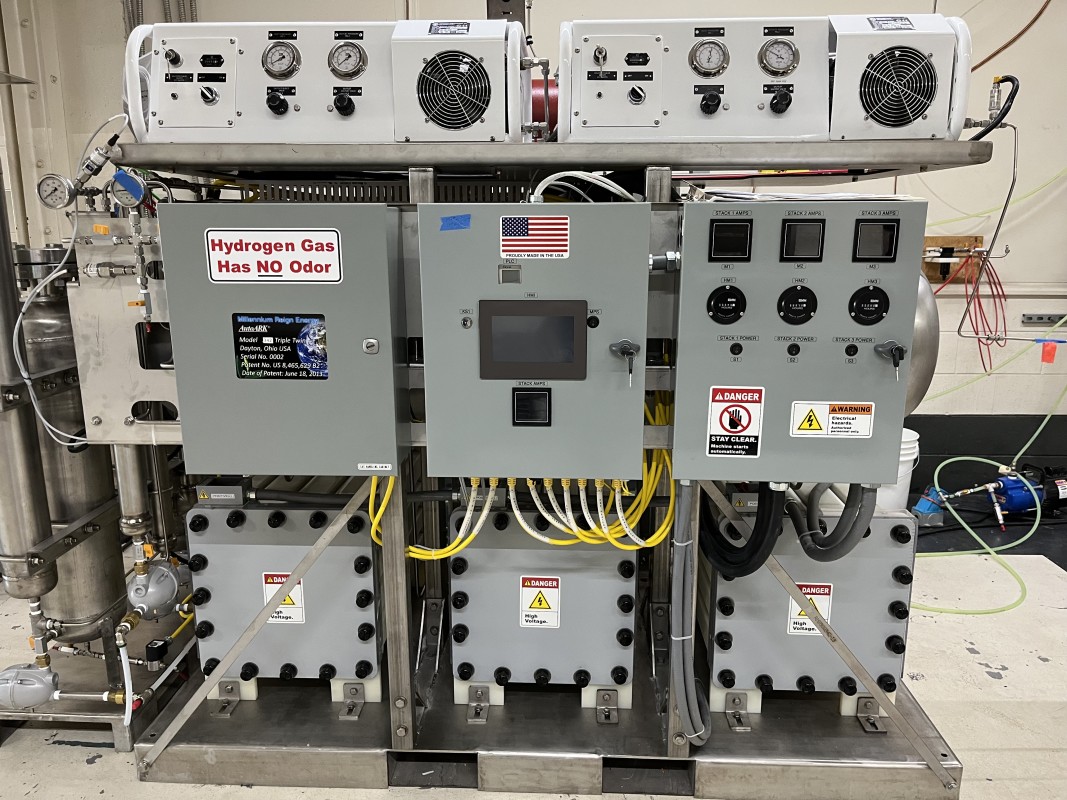
CEO Chris McWhinney started what would become MRE in his garage in 2003. In 2008, he founded the LLC which currently holds 10 patents and five trademarks, and he is also a member of every codes and standards committee responsible for regulating hydrogen infrastructure. Thanks to his expertise, MRE puts safety above all else and is in the ideal position to provide the hydrogen refueling solution that the industry desperately needs.
MRE currently offers three hydrogen fueling stations, which are simply named Model 100, 200, and 300. The stations use onboard electrolysis to send an electric current through water, separating the oxygen and hydrogen molecules from one another. The hydrogen is then purified, compressed, and stored in tanks until it is dispensed. MRE can also remotely monitor each station’s diagnostics, production, and output to determine whether it matches supply with demand. If demand exceeds supply, the stations can be scaled up to produce and store more hydrogen.
Joseph Pudlewski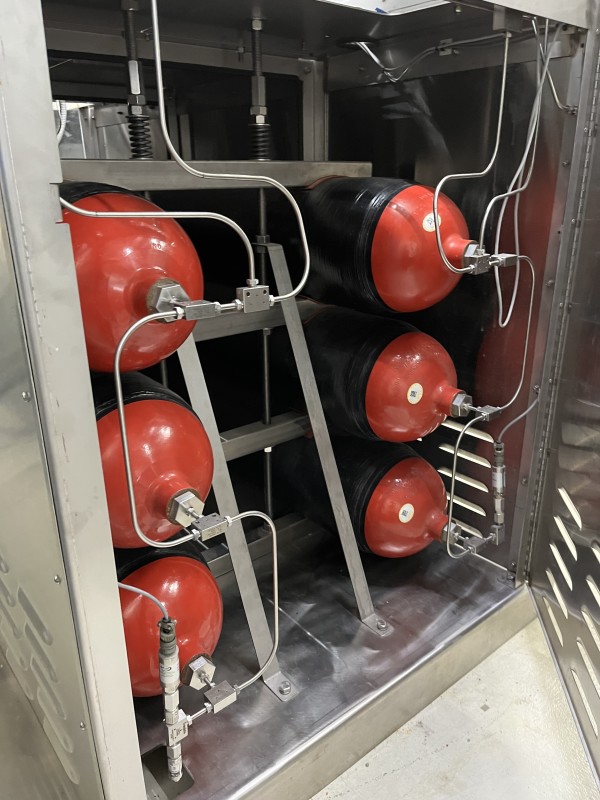
MRE’s vision goes beyond simply providing local hydrogen fueling stations. The company plans to create a coast-to-coast route primarily along I-70, dubbed the Transcontinental Hydrogen Highway (THH), which would allow hydrogen fuel cell vehicles to travel from Los Angeles to New York City. While the project is currently in the early stages, MRE already has 22 fueling stations operating within the United States and another 15 around the globe.
MRE works with several smaller automotive manufacturers
While MRE’s hydrogen fueling stations are already in use around the world in various fields, they also work with small automotive manufacturers who share a similar vision. In addition to serving as CEO of MRE, Chris is also the CTO of Revo Zero, an automotive company working to create a zero-emissions vehicle that’s as practical as any other vehicle currently on the road.
Joseph Pudlewski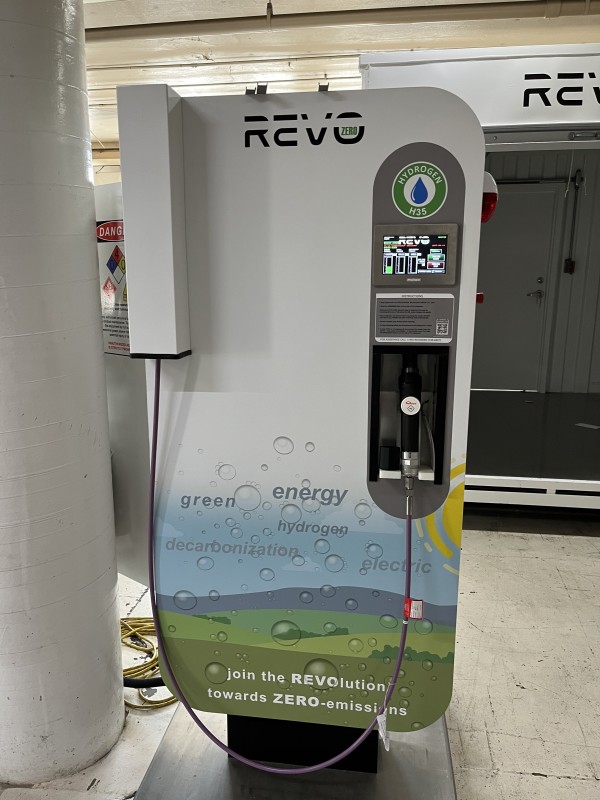
Revo Zero currently has one vehicle available for preorder: the Model ENERGY, a zero-emissions SUV powered by a battery and hydrogen. It boasts a 700-mile range and can be refueled in as little as seven minutes at MRE’s hydrogen fueling stations. In addition to the six-passenger SUV, Revo Zero is working with MRE’s white label program to establish hydrogen refueling infrastructure of its own.
If a fairly standard SUV powered by hydrogen isn’t quite your style, the Hyperion XP-1 hypercar might catch your eye. With a total output of 2,038 horsepower and a top speed of 221 mph, the XP-1 is designed to prove that hydrogen fuel cells can challenge gas-powered rivals. As it turns out, I narrowly missed seeing the Hyperion XP-1 on display at MRE’s facility—a pity.
Hyperion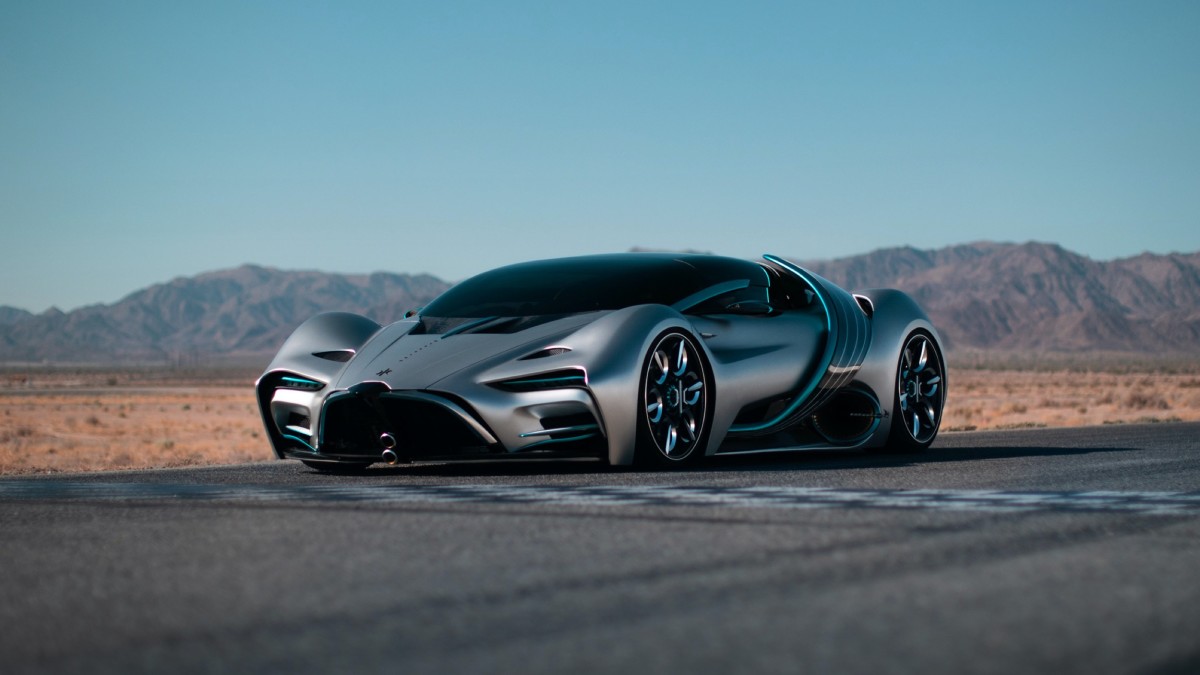
BMW is also ready to enter the fray
Thus far, hydrogen has been at a standstill for a variety of reasons, but now it looks like BMW is also ready to add some fuel to the dwindling fire. The German automaker announced that the BMW iX5 Hydrogen will be the first model in its lineup to come powered by, as the name entails, hydrogen.
Unsurprisingly, BMW worked closely with Toyota to develop its hydrogen fuel cell system. The iX5 Hydrogen is expected to be the most luxurious model in its sparsely populated class, and it’s bound to come with a staggering price tag as a result. Considering the Toyota Mirai, Hyundai Nexo, and Honda CR-V e:FCEV all start at over $50,000, the iX5 Hydrogen’s price tag could limit it to a rather minuscule demographic.
BMW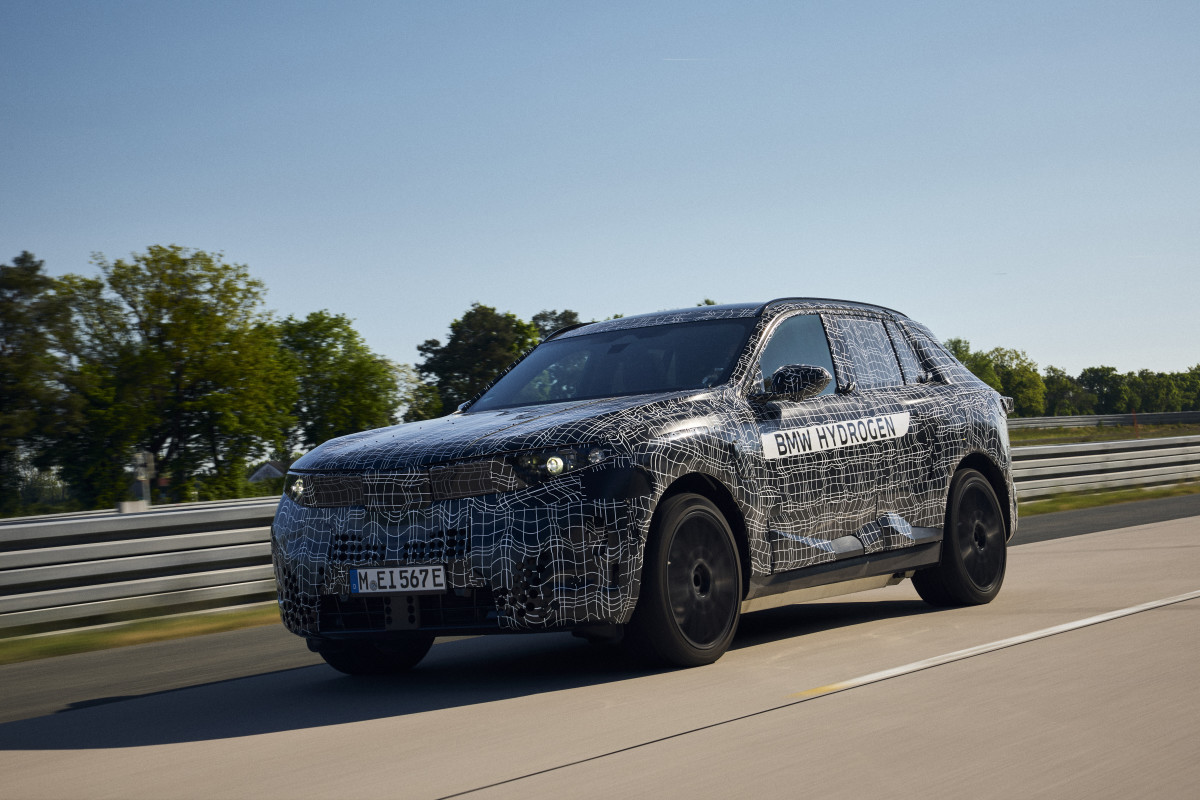
Final thoughts
A huge thank you to MRE and Chris for not only showing me the facility but also giving me the rundown on the intricacies of their hydrogen fueling stations, running the numbers, and detailing their plans for the future. With the BMW iX5 Hydrogen, there are now four mainstream manufacturers competing in the hydrogen arena. Hydrogen as an alternative fuel source is clearly gaining traction, and with MRE’s potential solution to create a reliable refueling infrastructure, we could see FCEVs become more commonplace throughout the nation in just a few years.
To leave you on a fun note, Hyundai provides a live fuel cell vehicle zero-emissions miles tracker at the top right of the Nexo’s media page. At the time of writing, it currently sits at 20,090,237 miles.