

The Prelude is Back
Late last year, Honda brought back a car with a name that it previously used on a fan-favorite sports coupe. The new Prelude is a new chapter for the nameplate, harkening back to a time when its original iteration served as a technology testbed for the brand. Featuring a 201-horsepower hybrid powertrain under the hood, the new car features a smattering of goodies designed to bring a bit of fun with such an efficient powertrain, including suspension and braking components shared with the ultra-high-performance Civic Type R
Though it was well-received during its concept and development phase, early indications regarding its horsepower figures and alleged paltry performance numbers have drawn a great wave of criticism online from seasoned automotive pundits and Honda enthusiasts who felt that the automaker’s effort to revive the iconic name was an expensive machine that would fail to garner customers at the showroom.
But while the new model has the attention of Honda fans and performance car enthusiasts on all corners of social media and the internet, it’s important to recognize the roots of the Prelude that came before the one in Honda showrooms today. Debuted in 1978, the original Honda Prelude was positioned above the Civic and Accord as a premium, sporty two-door coupe that not only looked good, but also introduced advanced features that were once solely featured on more expensive models, to a broader market of mainstream, everyday consumers.
The First Prelude
Positioned above the Civic and the Accord, the first-generation Prelude wasn’t exactly Honda’s opening statement when it came to its sports cars. Some of its first models in the late 60s in Japan were sporting models; namely, the 1300 Coupe 9 and the tiny, high-revving S500 and later S800 roadsters. However, just a few years earlier, Toyota had released a sports coupe of its own called the Celica, proving there was a real appetite for an affordable, fun Japanese coupe. Honda saw the same opportunity and took it.
Mechanically, it was basically an Accord underneath; its four-wheel independent suspension, brakes, and engine were all borrowed from the first-generation Accord, but that wasn’t the point. Honda took what worked and repackaged it into something real stylish: a cool, two-door coupe that looked like it meant business. Aftermarket specialists even outfitted it into a convertible, which allowed some buyers in sunny states to drop the top and make things even more fun.
Dirty Car? Shop Chemical Guys Specials: Up To 40% Off
Disclaimer: If you buy something via one of our links, we may earn a commission.
Chemical Guys Basic Wash and Wax Kit: 28% Off
Chemical Guys Exterior Starter Kit: 33% Off

Chemical Guys Leather Care Kit: 35% Off

Chemical Guys Streak Free Glass Cleaner: Just $9.99

Despite this, like the current-day hesitation surrounding the now-sixth-generation Prelude, many automotive pundits were not particularly impressed by the first iteration of the now-legendary sports coupe. Many were not a fan of the two door’s looks, performance and some even criticized the car’s backseat, however, legendary auto pundit Brock Yates was a believer, declaring it as a bargain sports car, adding in a review that it was “by any sane measurement, a splendid automobile,” while also noting that it is built to a standard that is “surpassed only by the narrowest of margins by Mercedes-Benz.”
“Can one imagine the ecstatic yelping if Porsche produced a 1.7-liter OHC coupe capable of 100 mph for under $7,000?,” Yates reasoned in a Motor Trend review.
Honda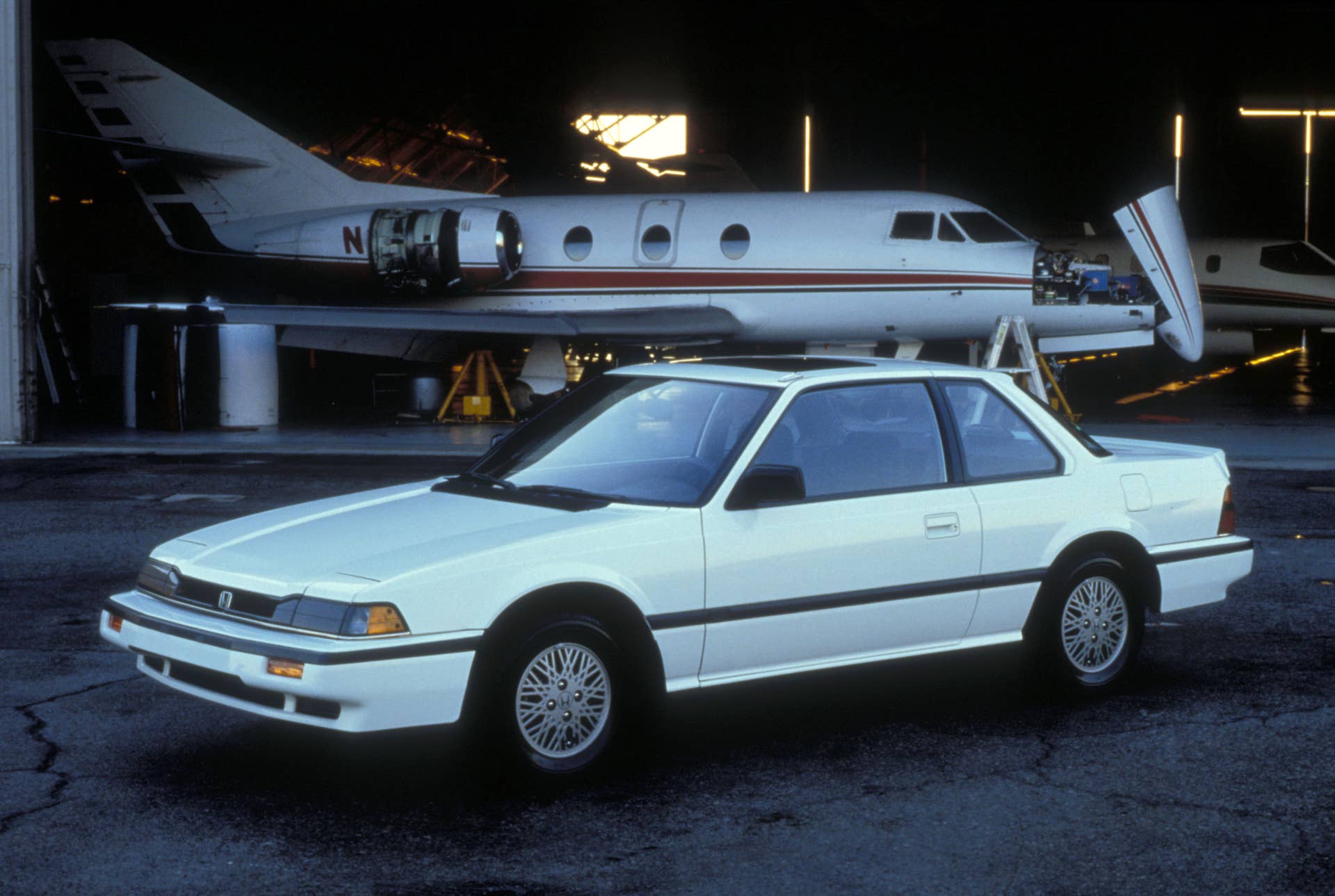
View the 2 images of this gallery on the
original article
The Second Prelude Introduced a Lifesaving Safety Feature
If there is one safety feature apart from seatbelts and the airbag that has helped save lives, it would probably be Anti-lock Brakes, otherwise known as ABS. In a nutshell, ABS prevents drivers from suffering from wheel lockup under hard braking, letting the driver maintain traction and steering control instead of sliding helplessly toward whatever they were trying to avoid.
Under hard braking, locked wheels can’t steer. ABS simulates a driver “pumping” the brakes faster and more effectively than any human can, keeping the wheels rolling and the car pointed where you want it to go. In an emergency stop, that can be the difference between not crashing and crashing. Up until the second-generation Prelude arrived in 1983, ABS was the kind of technology you’d find on a Mercedes S-Class, a car that cost roughly three or four times as much. Mercedes had introduced ABS on their flagship models in the late 1970s, and for a few years, it sat firmly in the category of “rich person’s safety equipment.”
However, Honda changed that. By fitting ABS to the second-gen Prelude; a mainstream model with a reasonable price tag, they made a statement that went well beyond one model year: important safety technology shouldn’t have to be a luxury. It was the same democratizing instinct that had always driven the Prelude, now applied to something with real consequences on real roads.
The Third-Gen Prelude was more nimble than a Corvette
In 1987, Honda released the third-generation Prelude, which introduced a revolutionary feature that would elevate the sports coupe to a whole new echelon of high performance. This generation introduced Honda’s mechanical four-wheel steering system, a revolutionary piece of technology so good that auto pundits at the time noted the Prelude could out-maneuver exotic sports cars costing thousands of dollars more.
It was actually very simple technology; Honda incorporated two separate steering boxes at both the front and rear of the Prelude, which were then connected by a dedicated shaft running the whole length of the car.
Honda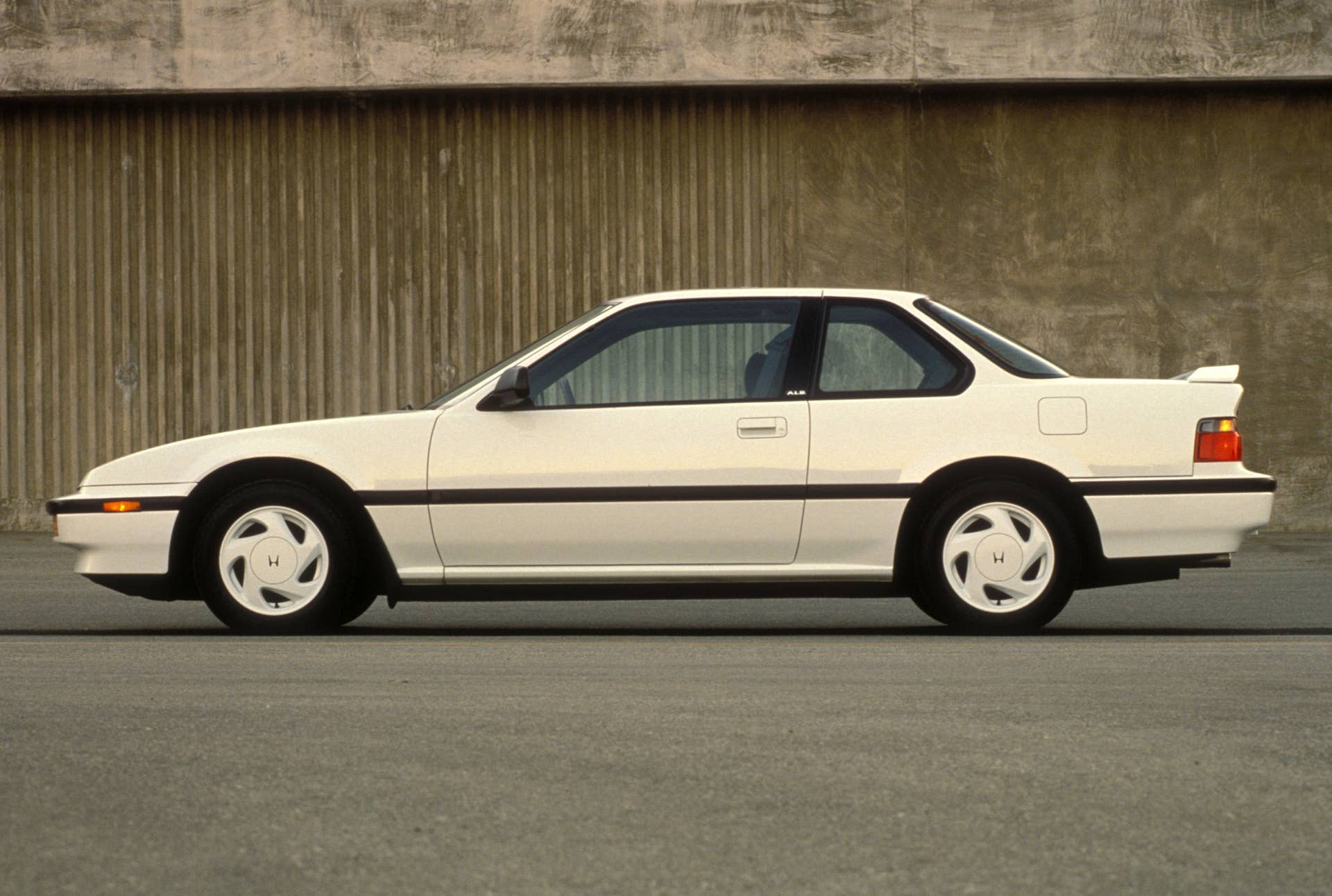
At low speeds, the rear wheels would turn in the opposite direction to the fronts, tightening the turning circle and making the car feel nimble in tight corners and easy to move in difficult tasks like parallel parking. At higher speeds, they’d shift to turning in the same direction as the fronts, adding stability through fast sweeping bends and making highway lane changes virtually effortless.
The result was a car that felt genuinely planted and agile at the same time; a combination that was rare at any price point, let alone one this accessible. In fact, in its testing, the 1988 Prelude Si 4WS outperformed the Chevrolet Corvette in a slalom test, with Road & Track reporting a speed of 65.5 mph for the Honda, compared to the Corvette’s 64.9 mph.
Honda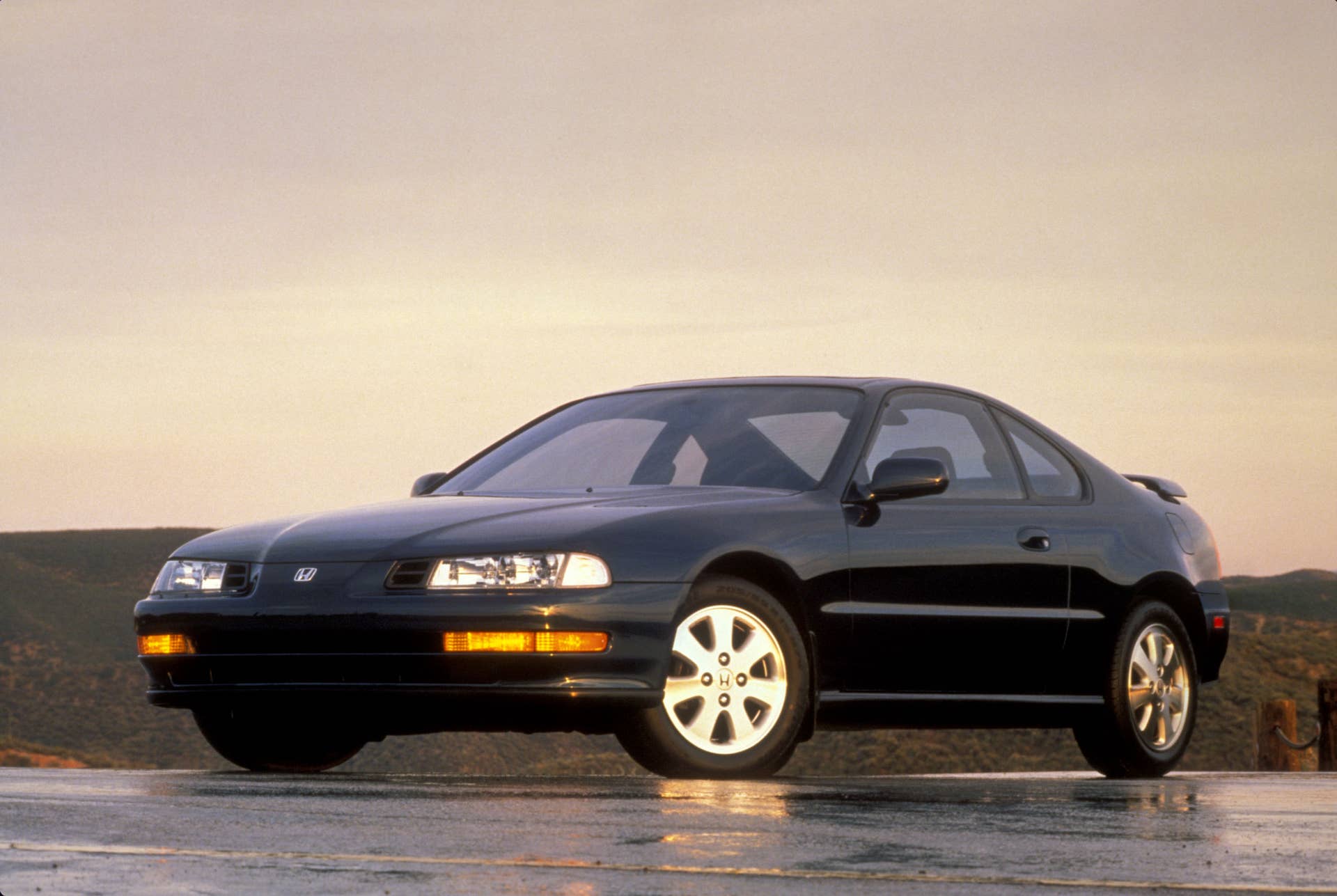
VTEC Kicked in the Fourth-Gen Prelude
However, Honda’s performance vindication in the United States would be found when it introduced the fourth-generation Prelude, as it brought a technology it previously offered in its more premium offerings at the Acura brand. The 1993 Honda Prelude VTEC featured the larger H22A, a 2.2-liter inline-four equipped with their now-famous VTEC system, a system that was previously solely offered in the Acura NSX supercar and the top-trim Acura Integra GS-R.
VTEC, which stands for Variable Valve Timing and Lift Electronic Control, allowed Honda to build an engine that’s both fuel-efficient around town, and genuinely exciting when pushed to perform at high RPMs. Honda’s answer was to give the engine two distinct cam profiles, one more aggressive than the other, and used oil pressure and electronics to switch between them at a set engine speed near the redline.
Honda would slowly incorporate VTEC into the engines of its more mainstream models in the United States throughout the rest of the decade, but its inclusion in the Prelude would establish the technology as a signifier of high-performance for the brand. The technology quickly became a hallmark of Honda’s engineering prowess and push other manufacturers to create variable valve timing systems of their own.
Honda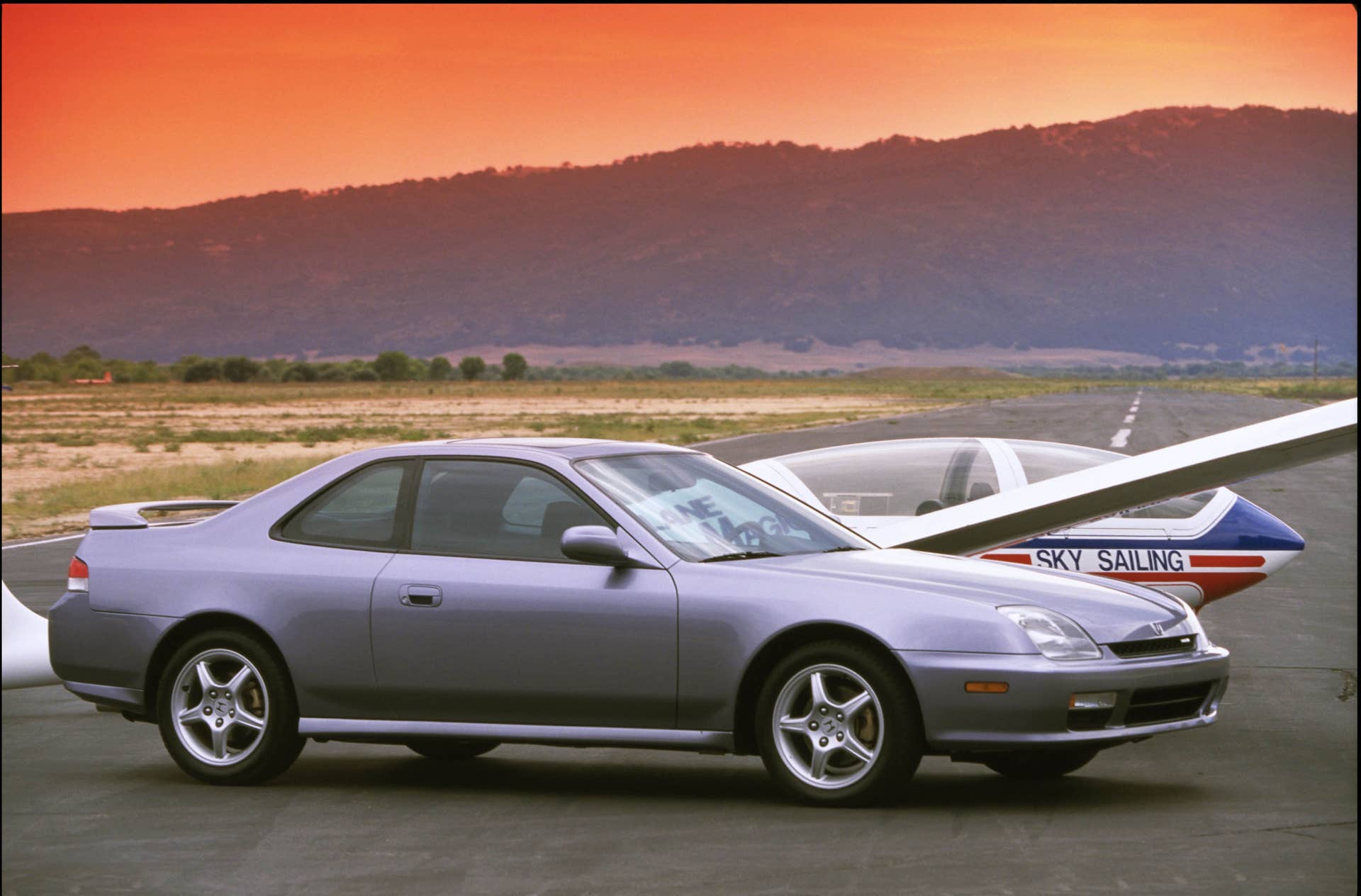
A legacy to live up to.
The Prelude’s initial run would bow out with the introduction of the fifth and final generation, which arrived in 1997. While the VTEC H22A carried over from the previous model, one of the standout additions was a Tiptronic-style sequential gearbox option on automatic-equipped cars. Drivers could nudge through the gears manually without a clutch pedal; a feature at the time, was more commonly found on European sports cars such as Porsches.
Prelude bowed out in 2001 with its reputation fully intact. It never got a direct replacement until now, but whatever the new hybrid Prelude turns out to be, it has one heck of a legacy to live up to.