

Before I found myself behind the wheel of the recently refreshed 2026 Honda Pilot Elite AWD, I pictured the Honda Pilot as a run-of-the-mill, boring 3-row SUV that people bought because it was one of the more affordable but reliable options. You know, like most Hondas. Nothing fancy, but it’ll get the job done. The vehicular equivalent of buying Skechers’ athletic shoes instead of Hokas, Kurus, or Brooks. Then I was invited to San Diego by Honda to test drive the Pilot alongside the new Prelude, and I realized I was horribly wrong. I’d judged the Pilot way too harshly. With the updates that came with the new model year, there are more standard features and updated tech, making it feel a lot more premium than it ever did.
Kristen Brown
Putting my family in one just reinforced it. The third row is exceptionally roomy, even for adults; the second row is clever; visibility is excellent; and the ride quality helps the large barge feel deceptively smaller than it is. Plus, I’m such a sucker for an old-school V6 in the age of turbo fours. After I spent a week with it, I found myself looking at prices of Honda Pilots near me to replace my smaller, much less fancy Subaru Forester. Here’s why, as a parent, I was swept off my feet by Honda’s largest SUV.
You don’t need to buy the top-shelf model to get a well-equipped Honda Pilot—unless you want to
Three-row SUVs aren’t cheap by any means. Well, I should rephrase: good 3-row SUVs aren’t cheap. The most affordable is the Mitsubishi Outlander, which starts at $32,205, followed by the Kia Sorento, Hyundai Santa Fe, Santa Fe Hybrid, and then the Nissan Pathfinder. They all start under $40,000, but they share something annoying in common. A dinky, nearly unusable third row. I loved the Nissan Pathfinder Rock Creek edition, but as a 2-row. Same thing with the Kia Sorento X-Pro Prestige. It’s gorgeous, and the all-wheel drive system is excellent. But the third row is only usable if anyone riding back there is shorter than 4’5”. They’re affordable, but you’re not getting a true third row.
Kristen Brown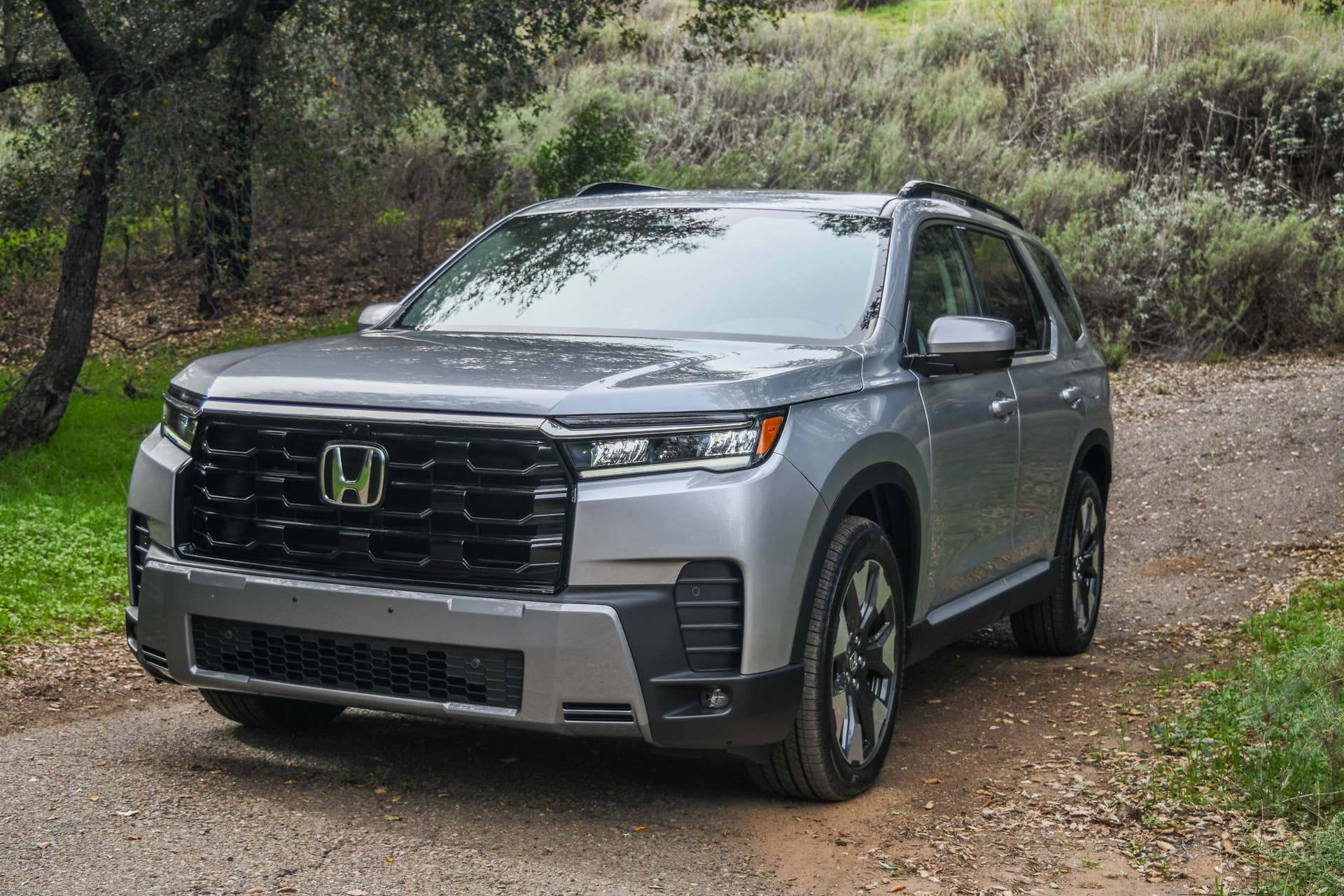
The Honda Pilot, then, stands sort of in the middle. The front-wheel drive Sport model starts at $42,195, and goes up to $54,995 for the AWD Black Edition. I say “middle ground” because it’s more expensive than the VW Atlas and Kia Telluride. But, in my opinion, you get a lot, even at the base. For 2026, Honda added a lot more standard technology and features for the Sport model, like getting rid of the smaller 7-inch infotainment screen and implementing the 12.3-inch HD touchscreen with Google built-in that was previously reserved for higher-level trims, and brings wireless Apple CarPlay and Android Auto, even to the Sport. To complement this, the driver now gets a fully digital 10.2-inch instrument cluster, moving away from the old analog-digital hybrid setup.
Beyond the screens, the 2026 Sport adds practical hardware that used to require an upgrade, most notably a power tailgate and standard roof rails. Honda also addressed the sloppy driving dynamics I was afraid I’d experience by retuning the electric power steering for a more weighted, precise feel and adding enhanced sound insulation to the doors and hood for a quieter, more vault-like ride. Finally, the safety suite is bolstered by the addition of Post-Collision Braking, ensuring the Pilot is as secure as it is high-tech. So, unlike the other models, you don’t have to spend more than $50,000 to have all those features. It comes at the base, too.
Kristen Brown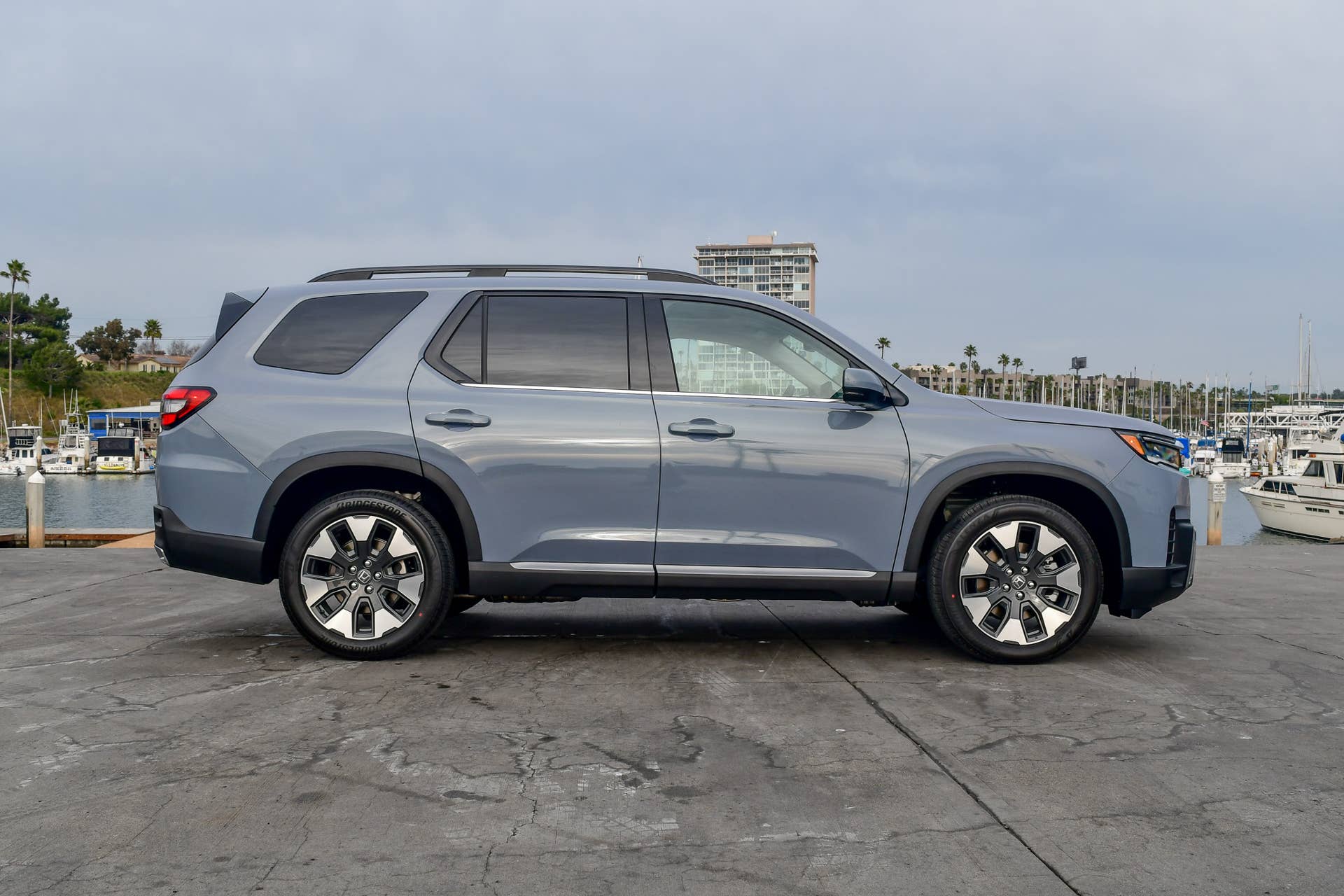
Now, I drove the Elite AWD model, which was a tad over $54,000. At that price, you get quilted leather seats, heated seats for the second row, nicer 20-inch wheels, and faux wood accenting throughout the interior that instantly made me feel like I was driving something much more expensive. Acoustic glass and enclosed fender lines are exclusive to the Elite, so the ride was much quieter, and the 12-speaker Bose sound system was a very, very welcome upgrade, along with the 360-degree view parking assistance technology and HUD. But do you need to spend that much to get a comfy third row, decent tech, a nice ride, and Honda reliability? No. And that’s something I can truly appreciate about the Pilot.
Related: Road Ethos Launches: The New Automotive Lifestyle Site You Should Read
It’s very easy to drive, and that feels rare in this day and age
As a reviewer who’s nearing almost 100 press loans—and I’ve said this at least a million and one times—it becomes very difficult to feel impressed, or wowed by new cars. There comes a point where they all feel pretty much the same. I’ve liked every Honda I’ve driven, because the company does a great job at making something fairly basic feel more premium than it is. The suspension setup for the Sport model is identical to what’s in the Elite, but it doesn’t feel like it because the Elite is quieter (to reiterate, acoustic glass and fender liners). The 3.5-liter V6 under the hood is smooth and torquey, so the 4,336-lb SUV moves as if it weighed half as much. It’s not a sports car, and it’s not pretending to be—but the 10-speed automatic transmission moves it from a stop with a good amount of enthusiasm. The steering felt just right—not too stiff, not too loose. And the braking is responsive, too.
Kristen Brown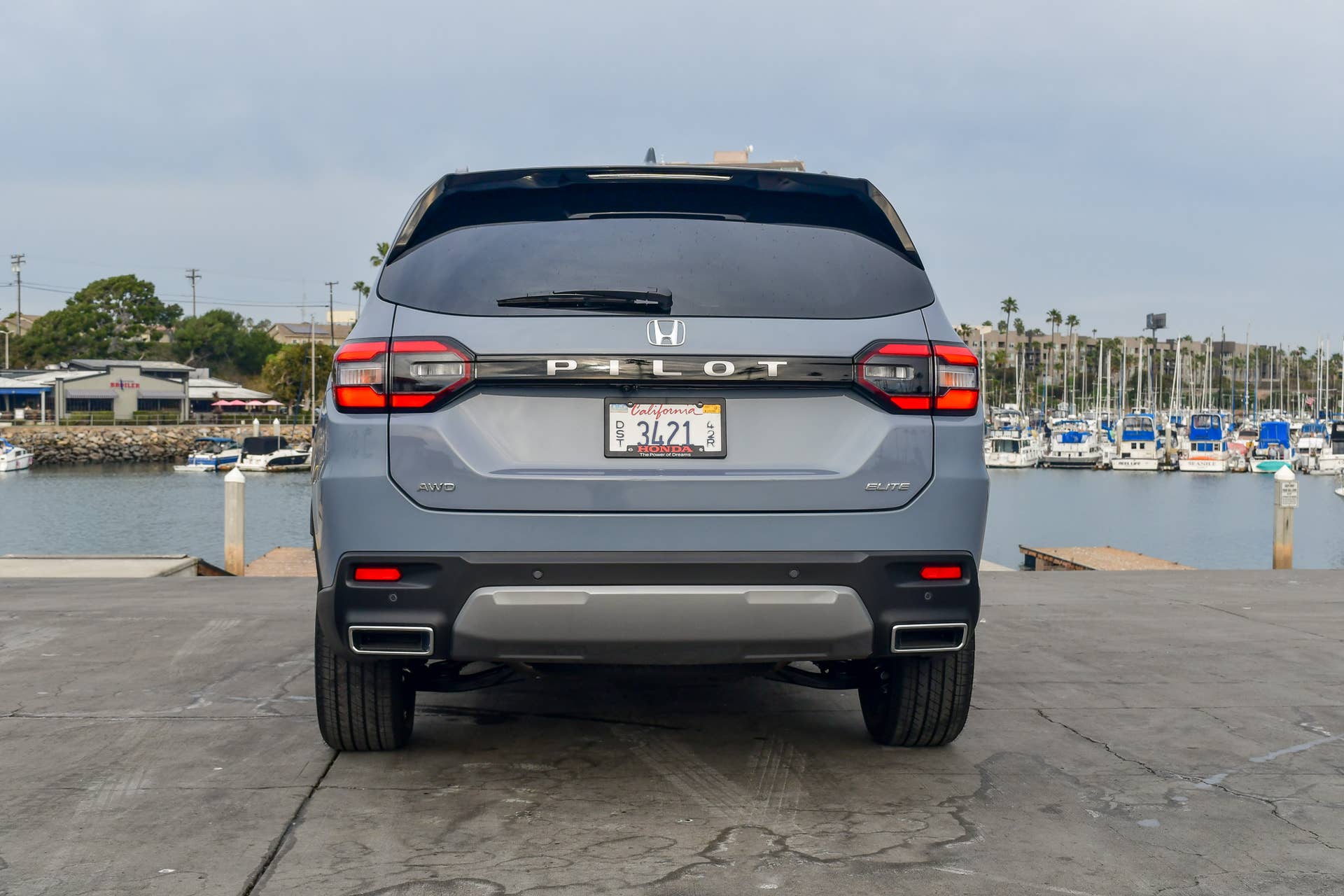
I liked that it wasn’t complicated. You didn’t have to fiddle around with too many drive modes. You didn’t have to worry about customizing suspension, steering, or throttle responses. Customizing the driver information display or multimedia settings was dummy-proof, with clear labels, easy menu navigation, and setting manipulation. I didn’t notice it until I drove the Hyundai Palisade right after, but there wasn’t any “digital jewelry” with the Pilot, or features in a car’s interior that make it feel nicer without adding any functionality, like ambient lighting, engine sound enhancers, puddle lights, or themes in the infotainment system. It’s a simple V6 engine, paired with a simple, traditional transmission, on a simple, yet functional, practical, and humble chassis. No funny business. It has everything you need, and that’s about it.
The third row is surprisingly roomy, even for adults
Three-row SUVs are more expensive than their two-row counterparts, and that’s because you get “extra utility” from the third row. If anything, you get more cargo space because the third row will be folded for the majority of the time. The Honda Pilot is different because the third row is actually usable, even for adults. I stand at about 5’8”, and I fit back there perfectly fine. Even when the second row seats were positioned in the middle, I had plenty of space for my knees, a place to rest my elbow, my own window, a large sunroof to let in natural light and open up the rear, a cupholder, an A/C vent, and then a USB-C charging port per side. It’s not an unfavorable place to be, not in the slightest. It’s nowhere near as cozy as the Hyundai Palisade or Toyota Grand Highlander, but it’s pretty damn close.
Kristen Brown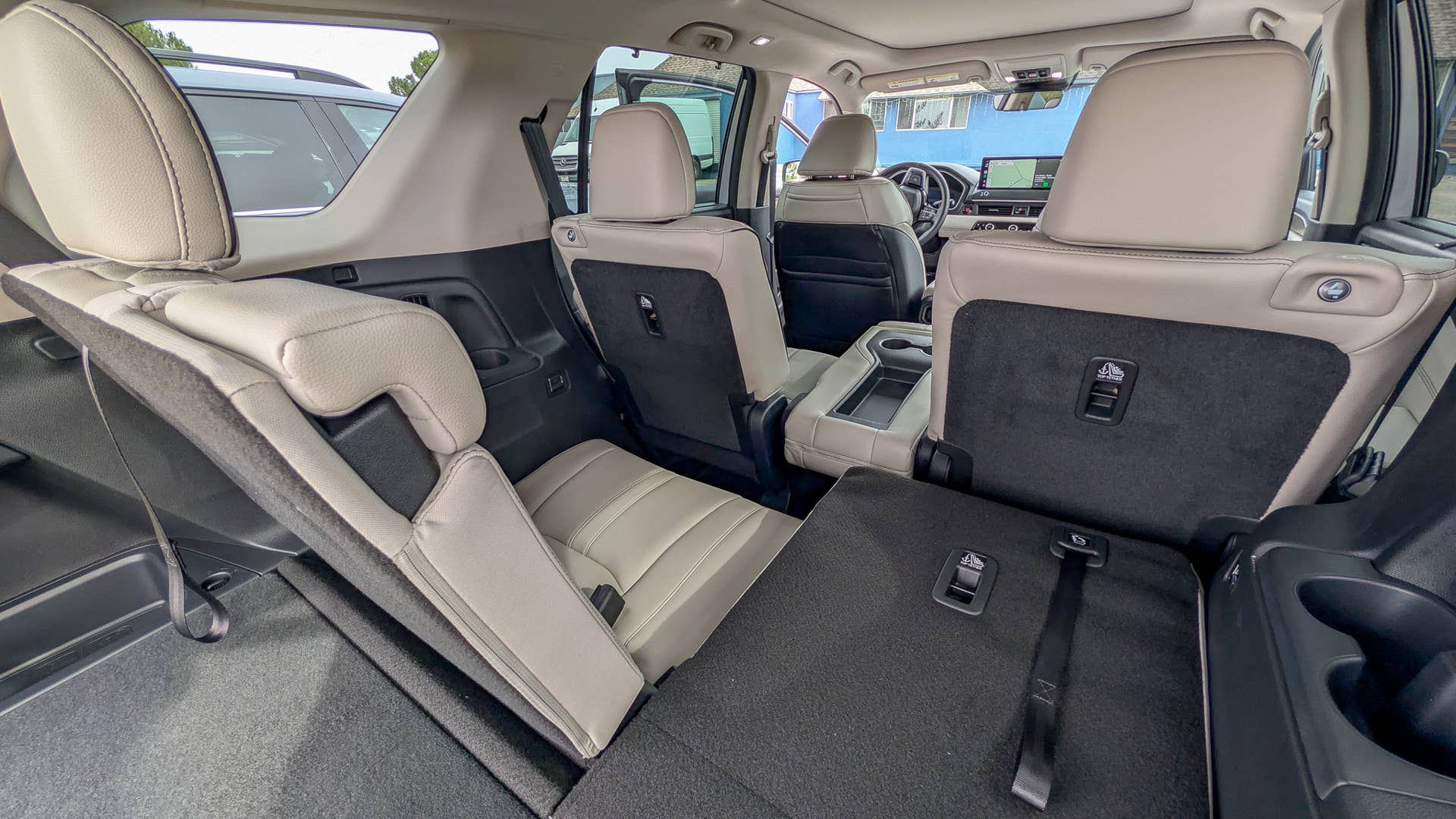
Adults could sit back there. In-laws could sit back there. Kids, tweens, and teens would love it back there. And, for longer drives, there’s a surprising amount of cargo space with the third row up, too. If there isn’t, the Honda Pilot has a 5,000 lb tow rating, so you could easily buy a hitch cargo carrier and haul everything that way. Or install a rack on the roof for a cargo box or basket. The options are, thankfully, endless.
Kristen Brown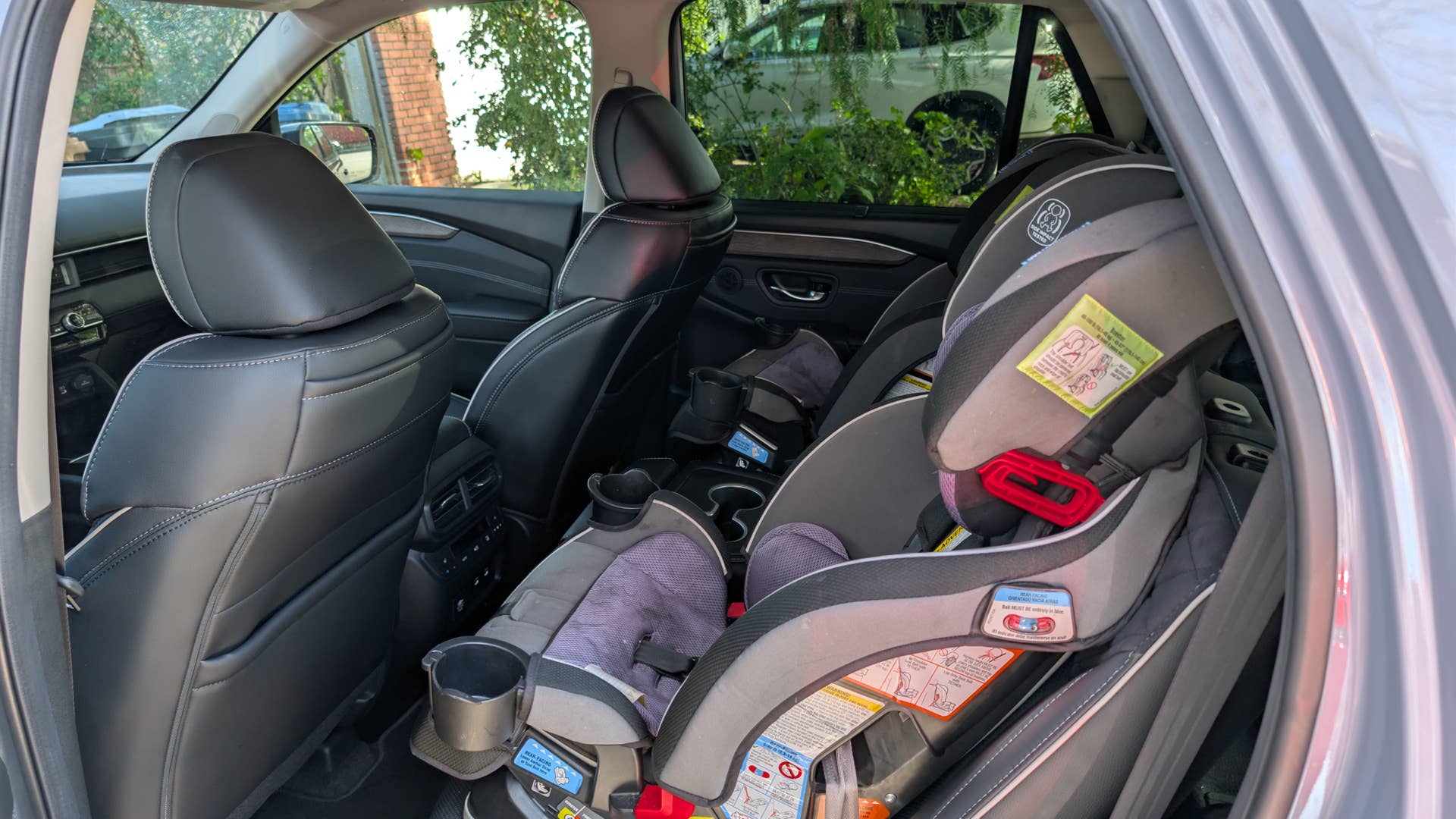
And then there’s the removable middle seat in the second row. Circling back to the value of a Honda Pilot, you don’t need to buy a lower trim to get the bench seat, or buy a higher level trim to get captain’s chairs. In a Pilot, no matter the trim, you can have both because you can remove the middle seat. But the versatility doesn’t stop there. You can use it as a middle seat, or you can fold it halfway to make it an elbow rest with two cupholders for second row passengers. Aside from the Acura MDX, its industry sibling, it’s the only 3-row SUV with a removable middle seat.
When the third row isn’t in use, the cargo space is *chef’s kiss*
The second day into my Pilot week, my best friend, who drives a Honda Civic and has two boys in car seats, calls me to ask if my Subaru Forester’s trunk is big enough to haul her and her husband’s brand-new 65-inch TV, which they bought from Costco. The trunk of her Civic, with her two boys in tow, wasn’t up to the task, and neither was her husband’s Ford Fusion. I told her, “It is, but I have something better. I have a Honda Pilot this week.” So, I folded the second row and met her in the Costco parking lot, where her husband simply lifted the tail gate and slid the TV right in, flat against the ground with room to spare. Easy peasy.
Kristen Brown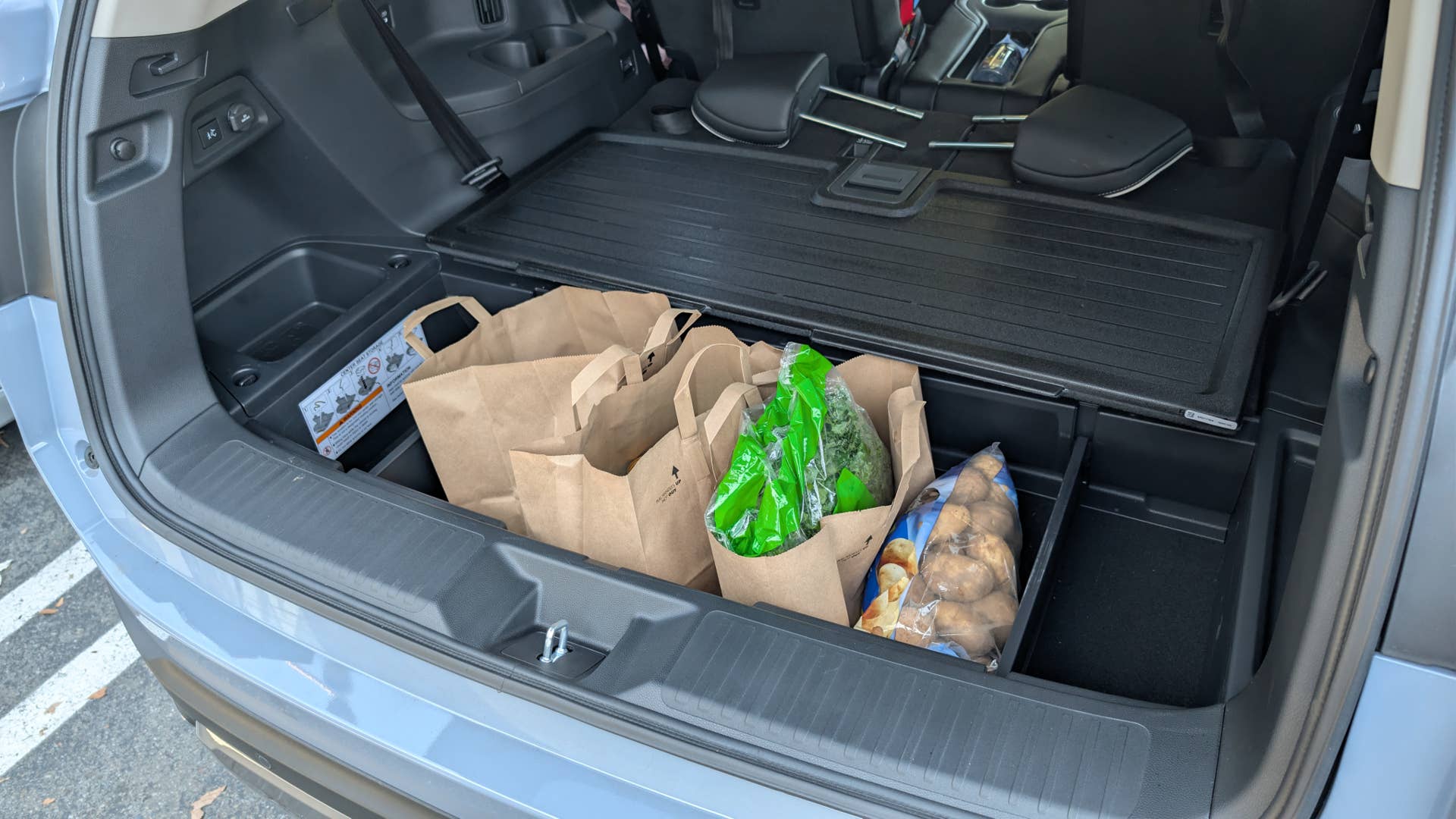
Plus, I could hug the engineer who decided to put underfloor storage in the Pilot. If you remove the middle seat, that underfloor storage in the trunk is designed to stow it without taking any cargo space, complete with tie downs to keep it secure, so you don’t have to store it in your garage like you would a minivan. If you have the middle seat installed, you can use it to keep milk gallons, bottles of wine, eggs, or other groceries from sliding around or tipping over on your way home. Or, in my case, you can keep a car battery that you’re taking back to Costco to have it warrantied from tipping over and spilling acid everywhere. It’s another one of those Honda features that make me think, “Honda truly thinks about everything.”
Related: Is the 2026 Acura MDX Type S Worth Almost $78,000? A Week Reveals Its Strengths and Weaknesses
It’s not the most efficient, but it scores pretty well for a large, V6-powered SUV
Because it’s powered by a V6 and not a turbocharged four-cylinder engine, the Pilot doesn’t come with a decent report card for mileage. The model I drove, the Elite, came with all-wheel drive, so I saw an average of about 17 mpg in the city and 20 mpg on the highway. Which isn’t all that bad for how big and heavy it is. You obviously get better mileage if you go with front-wheel drive instead, though. The difference is pretty marginal, but if you lived somewhere sunny and warm, like Southern California or most of Texas and Arizona, you don’t need it.
Kristen Brown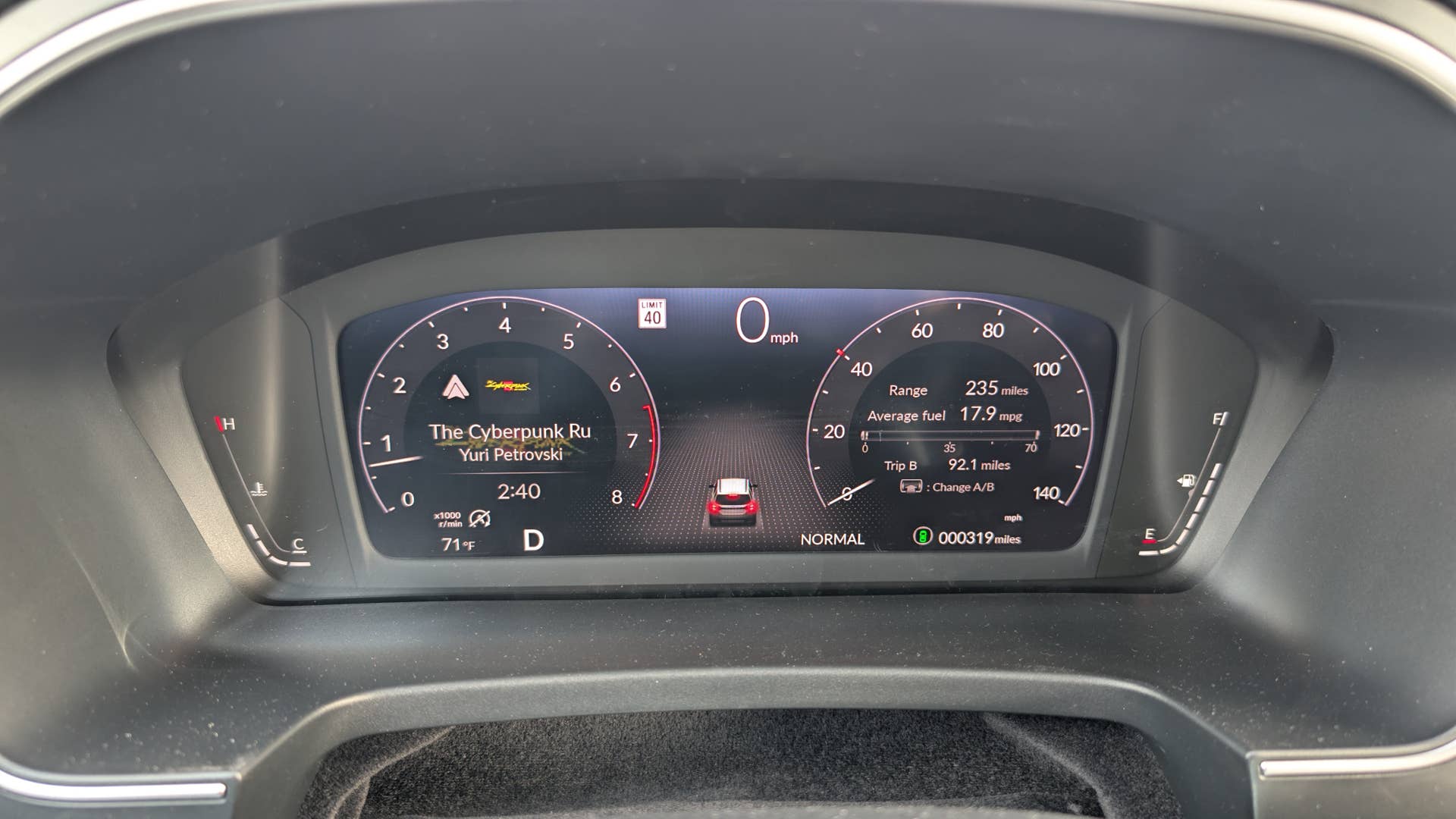
Since it’s engineered to tow a decent amount, mileage dropped when it was full of people, but it wasn’t nearly as bad as I thought it would be. Granted, most of California’s East Bay roads are flat, so there wasn’t a huge amount of strain for it, so I imagine it’d be worse if I were somewhere like the Sierra Nevada mountains. Still, what I was averaging wasn’t terrible given what you got to go on. Honda will be producing a hybrid version of it soon, though. Thank goodness.
It also comes with excellent standard safety features—without having to add anything on
For the 2026 refresh, Honda has doubled down on its safety-first ethos with the Post-Collision Braking system, which automatically applies the brakes after an initial impact to prevent the vehicle from rolling into a secondary accident. This commitment to safety is particularly vital for families who are navigating the daily chaos of carpools and long road trips.
Kristen Brown
Beyond the structural “bones” of the car, the standard Honda Sensing suite acts as a digital co-pilot, providing active interventions like Collision Mitigation Braking and Lane Keeping Assist to compensate for driver fatigue or distraction. For those in the back, the Pilot features a next-generation front passenger airbag designed to better cradle the head in angled impacts, significantly reducing the risk of brain injury. The adaptive cruise control is top-notch, helping reduce distracted driving and unintentional swerving, and it still has a spot on the IIHS’s top safety picks. Again, no wonder families love it. It’s affordable, but not cheap.
Related: 2026 Honda Pilot is Cheaper to Lease than Toyota Grand Highlander This March
Final thoughts: a well-rounded, no-nonsense, affordable 3-row SUV
I fell in love with the Honda Pilot, and I fell hard. It’s clever, practical, functional, as well as attractive, pleasant to drive, and affordable without forcing buyers to buy the top-shelf model to get the nicer convenience features and safety tech. You get exactly what you’re paying for, plus a little extra, no matter the trim. The only complaint, and I mean the only complaint about the Pilot was the mileage, and that’s because I live in California, where filling up can cost just as much as groceries, if not more. Otherwise, I told my technician husband that I want one after my Forester kicks the bucket. And he had no qualms with that.