

You’ve picked the color. You’ve argued about trims. You’ve test-driven both and liked each one for different reasons. Then your insurance quote lands in your inbox, and suddenly, one of them costs $150 more a year to own than the other. Insurance is the carrying cost most buyers forget to price before they sign, and for the RAV4 and CR-V, the gap is wider than you’d expect for two vehicles that share a showroom-floor stare-down.
The headline numbers
Insurance rate data varies by source, methodology, and assumptions, so here’s a cross-section from several of them. MoneyGeek, which analyzes hundreds of millions of quote estimates, puts the RAV4 at $2,140 per year for full coverage and $1,106 for minimum. The CR-V comes in at $2,139 for full coverage and $1,108 for minimum. In this dataset, the two vehicles are functionally identical, separated by the cost of a gas-station coffee. Insure.com tells a different story. Its 2026 data puts the RAV4 at $2,159 per year for full coverage and the CR-V at $2,037, a $122 gap favoring Honda. CarEdge’s figures show the RAV4 at roughly $1,999 per year and the CR-V at $1,959, a $40 spread. The Zebra reports an average monthly full coverage cost of $143 for the RAV4 and $133 for the CR-V, which works out to roughly $120 per year in Honda’s favor.
Toyota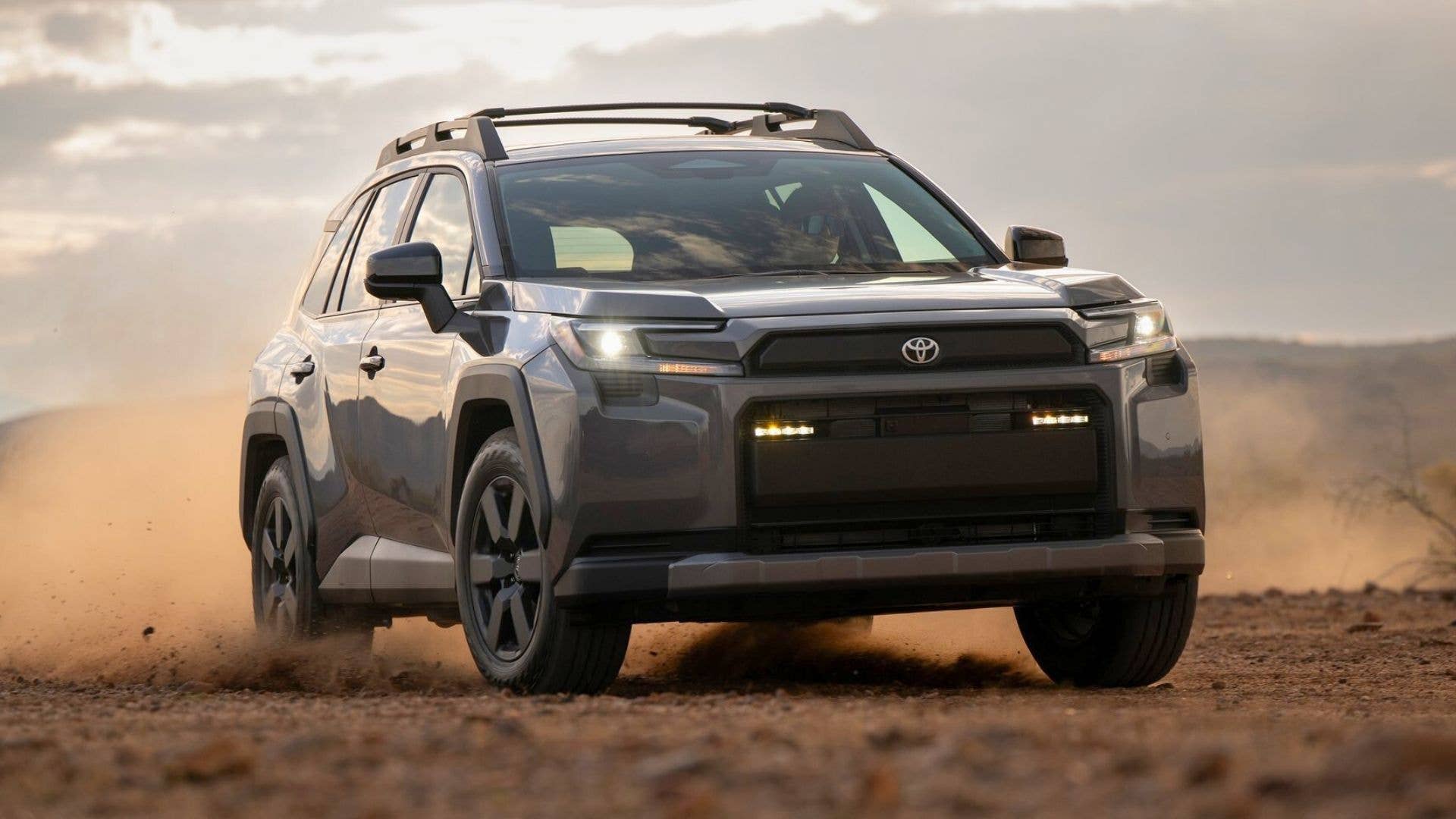
Insuraviz, which directly compared the two models across trim levels for the 2024 model year, found that the CR-V costs an average of $166 less per year to insure than the RAV4. The CR-V’s cheapest trim (LX) averaged $1,942 annually; the RAV4’s cheapest (LE AWD) averaged $1,954. At the top end, the RAV4 Prime XSE pushed past $2,600 per year, a figure no CR-V trim comes close to touching. The pattern across every source points in the same direction: the CR-V is slightly cheaper to insure. Not dramatically, but consistently. Over a five-year ownership period, that consistency adds up to somewhere between $200 and $830, depending on which dataset you trust.
Why does the CR-V cost less to insure?
Insurance premiums aren’t set by vibes. They’re calculated from claims data, repair costs, safety ratings, vehicle value, and theft frequency. For these two vehicles, a few specific factors explain the gap. The CR-V has earned a reputation as one of the least expensive SUVs to insure in the country. A 2026 Insure.com study found that the CR-V had the lowest average insurance premiums of any vehicle on the market, at roughly $161 per month. A separate Bankrate analysis ranked it second-cheapest, behind only the Subaru Outback. The CR-V benefits from low claim severity (meaning that when CR-V owners file claims, payouts tend to be smaller), moderate repair costs, and consistently high safety ratings. Honda’s maintenance costs for the CR-V average $407 annually, according to RepairPal, compared to $429 for the RAV4. Lower expected repair bills translate directly into lower premiums.
Kristen Brown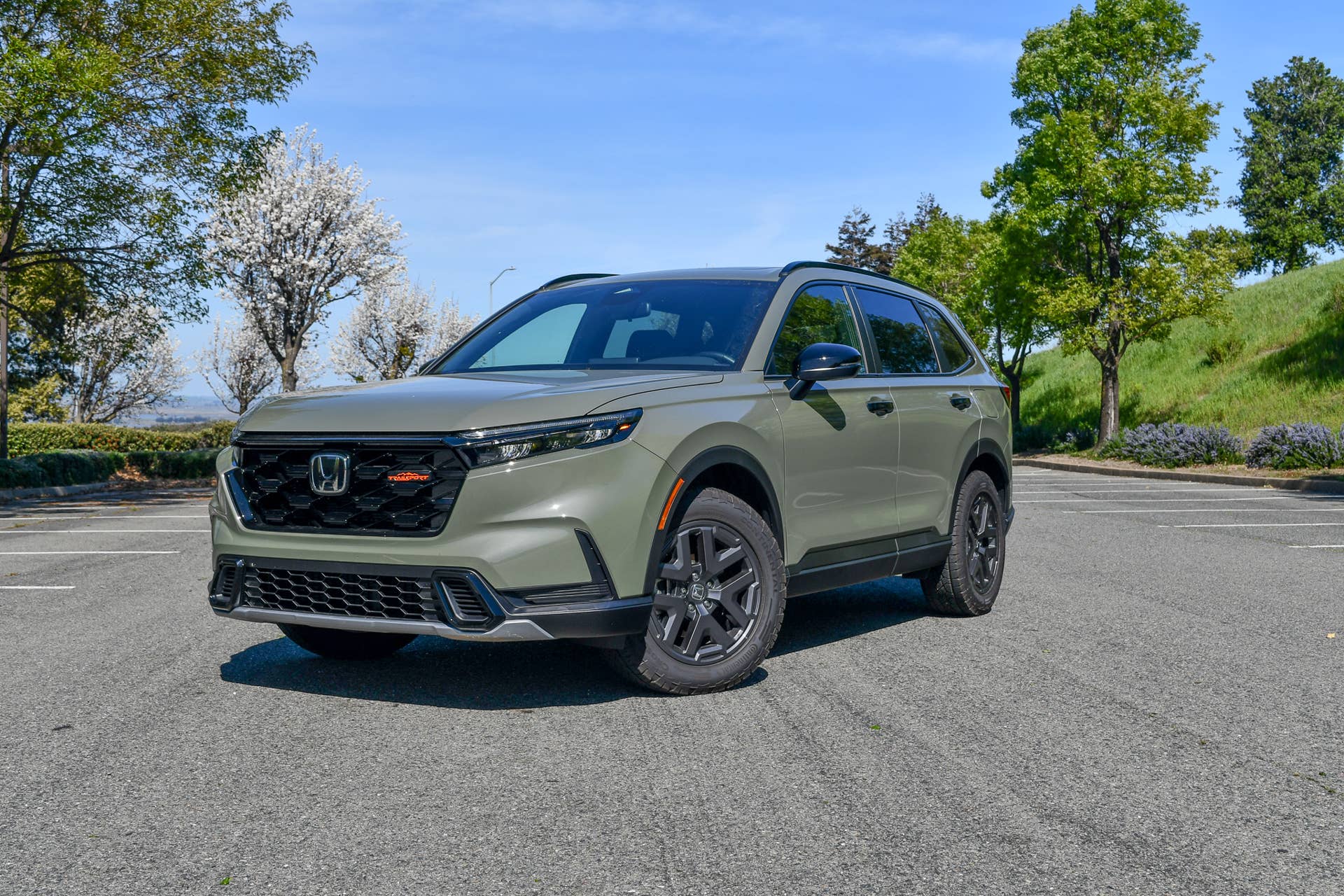
The 2026 RAV4 introduces a complication. It’s a first-year redesign running an all-hybrid powertrain. Hybrid components, particularly the battery and inverter systems, are more expensive to repair or replace than conventional drivetrain parts. Insurers know this. The Zebra’s data shows that insuring a RAV4 Hybrid costs an average of $164 per month compared to $143 for the standard RAV4, and the RAV4 Prime plug-in hybrid jumps to $196 per month. Since every 2026 RAV4 is now a hybrid, buyers can no longer opt for the cheaper-to-insure gas-only model. The entire lineup sits at the hybrid insurance tier. The CR-V still offers a conventional 1.5-liter turbo engine in its LX, EX, and EX-L trims, which tend to attract lower insurance rates than the hybrid trims. Buyers who choose a non-hybrid CR-V benefit from the insurance of a simpler, cheaper-to-repair powertrain.
The theft factor
Here’s a wrinkle that might surprise CR-V shoppers: the Honda CR-V has a theft problem. Insurify’s 2025 data identified the CR-V as the most stolen SUV in the United States during the first half of 2025, entering the overall top 10 most-stolen vehicles list for the first time. IIHS data from the Highway Loss Data Institute shows the CR-V Hybrid carrying a relative theft claim frequency of 340, meaning it’s stolen 3.4 times more often than the average vehicle. The Toyota RAV4, by contrast, doesn’t appear on most-stolen lists. In fact, the RAV4 Prime plug-in hybrid was among the vehicles with the lowest theft claim frequency in the same IIHS dataset. Theft rates feed directly into comprehensive insurance premiums. If you’re comparing comprehensive coverage costs and wondering why the CR-V’s advantage isn’t larger, given its lower repair costs and safety profile, theft is likely the counterweight.
Toyota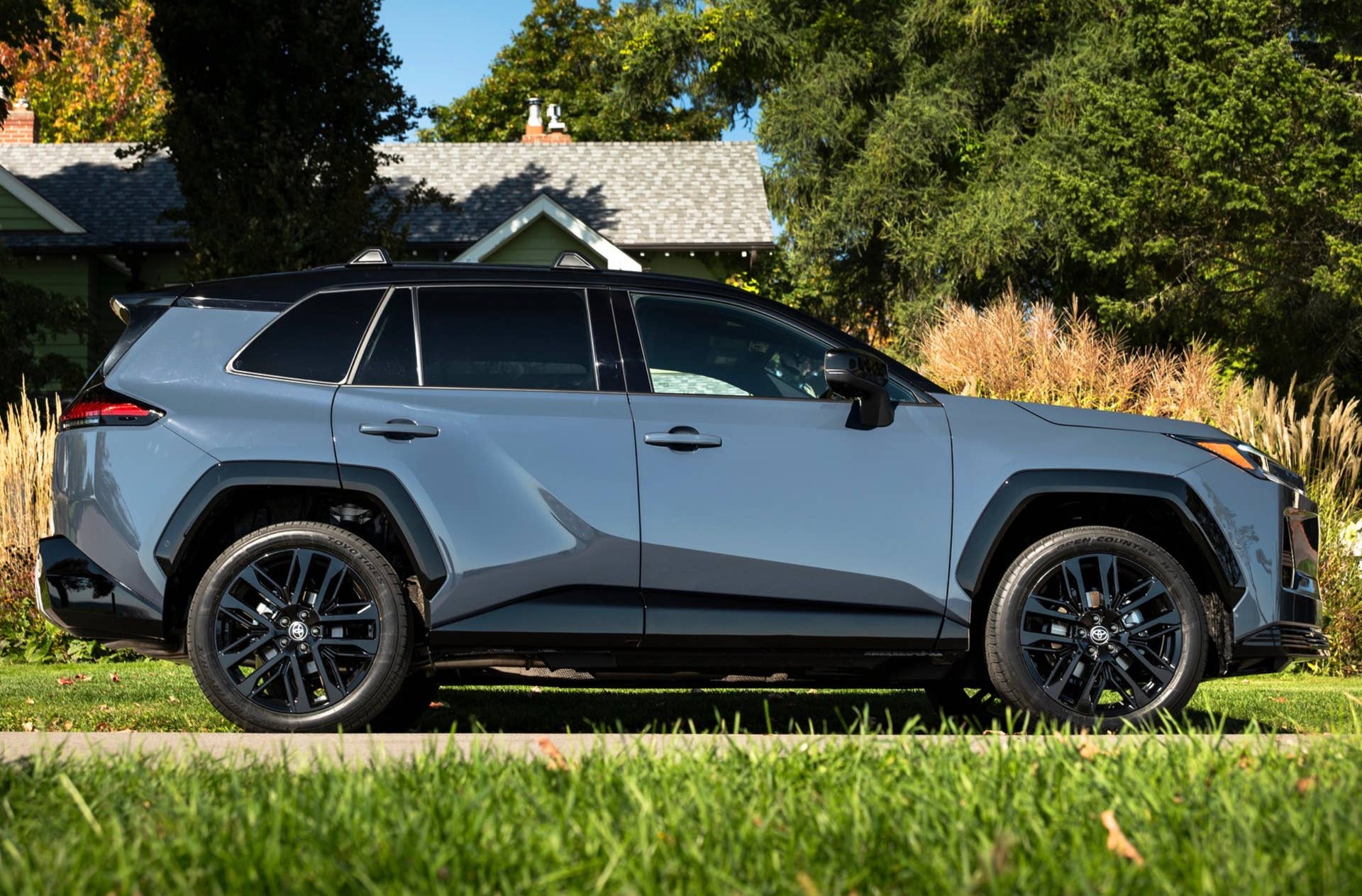
What actually moves your premium
The model difference matters less than you’d think; your rate is driven far more by where you live, your driving record, age, credit score, and insurer choice. Compare.com data shows RAV4 rates ranging from $68/month in North Carolina to $352/month in New York, a fivefold gap that makes the $10–$15 monthly difference between these two models look cosmetic. Both vehicles share top crash-test ratings and near-identical safety suites (Toyota Safety Sense 4.0 vs. Honda Sensing), so neither has a clear edge with underwriters. Your biggest lever is shopping around. GEICO, USAA, State Farm, and Progressive are consistently cheapest for both models, though the winner depends on your ZIP code and profile. Annual rate shopping saves owners an average of 24%, according to MoneyGeek.
Verdict: Which one is cheaper to insure?
The Honda CR-V wins, but it’s a quiet victory. Across every major comparison dataset, the CR-V costs between $40 and $166 less per year to insure than the RAV4, depending on trim and source. Over five years, that’s real money, though not enough to swing a purchase decision on its own. The 2026 RAV4’s move to an all-hybrid lineup nudges its insurance costs up from previous model years, when a gas-only option was available. The CR-V still lets buyers choose between a conventional engine and a hybrid, giving cost-conscious owners a way to keep premiums lower.