

Tough terrain meets daily drive
While the 4Runner offers superior off-road performance across its lineup than the Honda Passport, the 2026 Passport’s TrailSport trim, starting at $48,450, is better equipped to give this Toyota a fair fight on and off the beaten path. The 2026 4Runner TRD Sport, paying mind to daily drivability without sacrificing the nameplate’s rugged appeal, holds a comparable $48,050 base price. The 4Runner might’ve sold more units in recent years, but that doesn’t mean that the Passport’s TrailSport trim doesn’t warrant consideration. Below is a feature-focused breakdown of the 2026 Toyota 4Runner TRD Sport and Honda Passport TrailSport, exploring performance, interior amenities, connectivity, and more to guide your SUV choice.
Honda
View the 3 images of this gallery on the
original article
The Winner in Off-Roading and Durability: 4Runner TRD Sport
Despite the Toyota 4Runner TRD Sport and Honda Passport TrailSport trims mirroring each other more closely, these vehicles differ in a notable way affecting their dynamics and capabilities. The 4Runner TRD Sport has body-on-frame construction and a boxed frame, translating into improved approach and departure angles, better handling on rough and/or uneven terrain, and greater rust protection. In contrast, the Passport TrailSport unibody design emphasizes a balance between smooth on-road driving and moderate off-road use.
Regarding powertrains, the 4Runner TRD Sport, available in rear-wheel drive (RWD) or part-time four-wheel drive (4WD), features a 2.4-liter turbocharged inline-four-cylinder paired with an eight-speed automatic transmission, delivering 278 horsepower and 317 lb-ft of torque. The Passport TrailSport, which is available only with all-wheel drive (AWD), features a 3.5-liter V6 paired with a 10-speed automatic transmission, producing 285 horsepower and 262 lb-ft of torque. This 10-speed transmission offers smooth shifts, reflecting the Passport’s ability to excel as a daily driver. While both models have towing modes, the 4Runner TRD Sport’s maximum towing capacity is 1,000 lbs higher at 6,000 lbs. Mileage in the 4Runner TRD Sport is rated at 19-20/25-26 city/highway mpg, outperforming the Passport TrailSport’s 18/23 city/highway fuel economy.
Related: 2026 Toyota Highlander Vs. 2026 Toyota 4Runner: 5 Major Differences
The Passport TrailSport’s exterior has multiple tricks up its sleeve
The 2026 Honda Passport TrailSport’s exterior offers an edge in value, with features that serve both functional and aesthetic purposes. In comparison, the 2026 Toyota 4Runner TRD Sport’s exterior adopts a more utilitarian approach with less visual flair, especially in areas like the front fascia. Exterior highlights of the Passport TrailSport include a panoramic moonroof, a power tailgate, and power-folding side mirrors, none of which you’ll find on the 4Runner TRD Sport. Both of these SUVs have standard LED daytime running lights, but the Passport TrailSport enhances this feature’s appearance with distinctive amber coloring.
One may expect the 4Runner TRD Sport to offer significantly better ground clearance. However, this Toyota’s 8.3-inch ground clearance is only 0.2 inch greater than that of its Honda rival, which primarily stems from the 4Runner TRD Sport’s use of a sport-tuned suspension and the Passport Trailsport’s off-road-tuned suspension. The Passport TrailSport’s wheels are 18 inches, two inches smaller than the 4 Runner TRD Sport, but this allows for higher-profile tires with taller sidewalls, softening the impact of tough terrain. Additionally, the Passport TrailSport’s front recovery hooks are “high visibility,” unlike those on the 4Runner TRD Sport, making them easier to recognize during recovery situations while enhancing looks.
Honda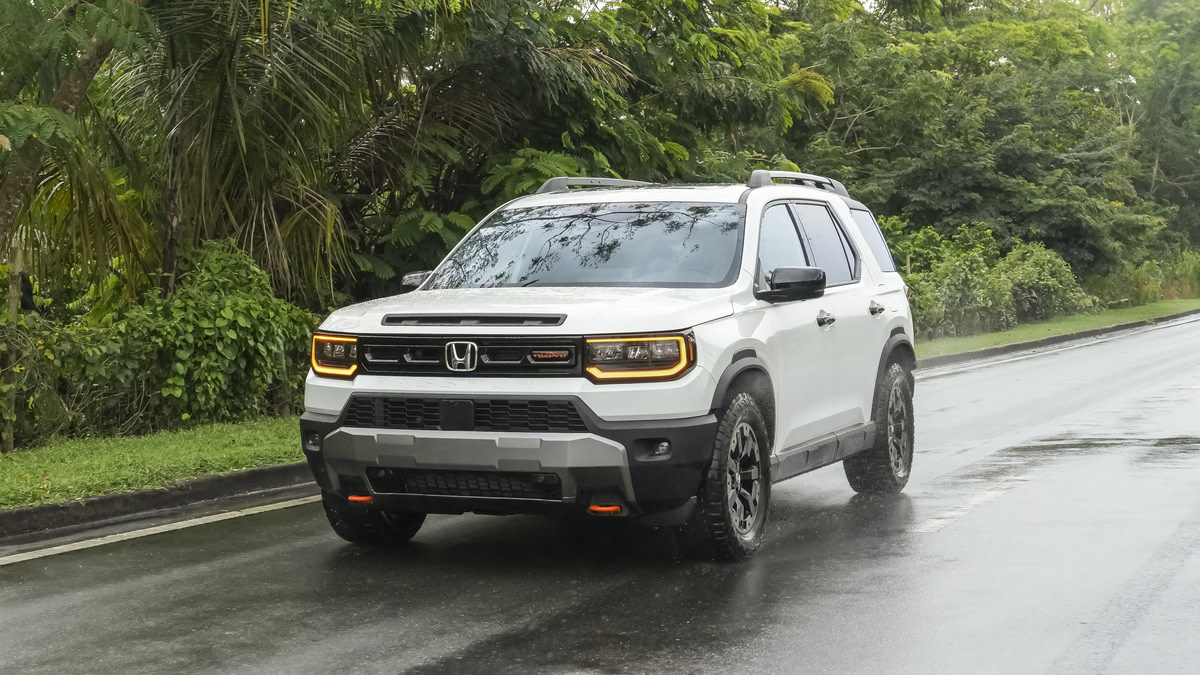
View the 3 images of this gallery on the
original article
The Passport TrailSport’s interior shines despite lower cargo capacity
One practical advantage that the 4Runner TRD Sport has over the Passport Trailsport is its greater cargo capacity. This Toyota offers 48.4 cu ft of storage space behind its second-row seats and 90.2 cu ft behind its first row seats. In comparison, you’ll receive 44 cu ft of space behind the Passport Trailsport’s second row and 83.8 cu ft behind its front row. Front passenger legroom between these two vehicles is almost equivalent, with the 4Runner TRD Sport providing 41.8 inches, and the Passport Trailsport supplying 41.1 inches. Second-row legroom is a stark contrast: this Toyota offers 34.8 inches, while its Honda rival provides 40.9 inches. The Passport TrailSport also gives you durable leatherette/cloth seats with orange stitching and accents, along with a 10-way power driver’s seat, instead of its competitor’s fabric-trimmed seats with a six-way power driver’s seat. Honda completely wraps this trim’s steering wheel in leather, while this Toyota’s wheel adds leather trim, further highlighting the Passport’s attention to modern design design.
Related: My Desert Adventure in a Honda Talon Side-by-Side
Highlighting the Passport TrailSport’s connectivity edge
The 4Runner TRD Sport and Passport TrailSport share integrated drive modes such as Normal, Eco, Sport, and Tow. Still, the Passport TrailSport provides a broader range of integrated drive modes, including Snow, Trail, and Sand. This selection reinforces this Passport trim’s ability to handle daily driving in varied conditions without leaning too hard into off-road territory. If you’re prioritizing a larger central touchscreen, the PassPort Trailsport is the better option with its 12.3-inch display that’s 4.3 inches larger than its competitor’s, but the 4Runner TRD Sport’s 12.3-inch digital instrument cluster is 2.1 inches larger. Both models feature wireless Apple CarPlay and Android Auto, with the Passport TrailSport’s standard audio system offering nine speakers instead of the 4Runner TRD Sport’s eight.
Crash protection and driver-assists: passport leads, 4Runner awaits
Toyota’s latest 4Runner hasn’t yet received any Insurance Institute for Highway Safety (IIHS) crash protection scores. In contrast, the IIHS has published all eight scores for the newest Passport, each of which received the highest rating of “Good.” This clean sweep is a significant improvement over the 2025 Passport, which scored “Acceptable” in the small overlap front crashworthiness and LATCH seat belt/child restraint tests, and “Marginal” in the side crashworthiness segment. You’ll also get a greater number of standard advanced driver-assist aids in the 2026 Passport Trailsport, like advanced parking assistance via front/rear sensors. Since the 2026 4Runner carries over from 2025, the 2026 model’s IIHS scores might be comparable, but this isn’t certain given the Passport’s progress. Last year, the IIHS gave the 4Runner TRD Sport’s headlights its lowest-possible score of “Poor” and rated the SUV’s moderate overlap front crash capabilities as “Marginal.”
Toyota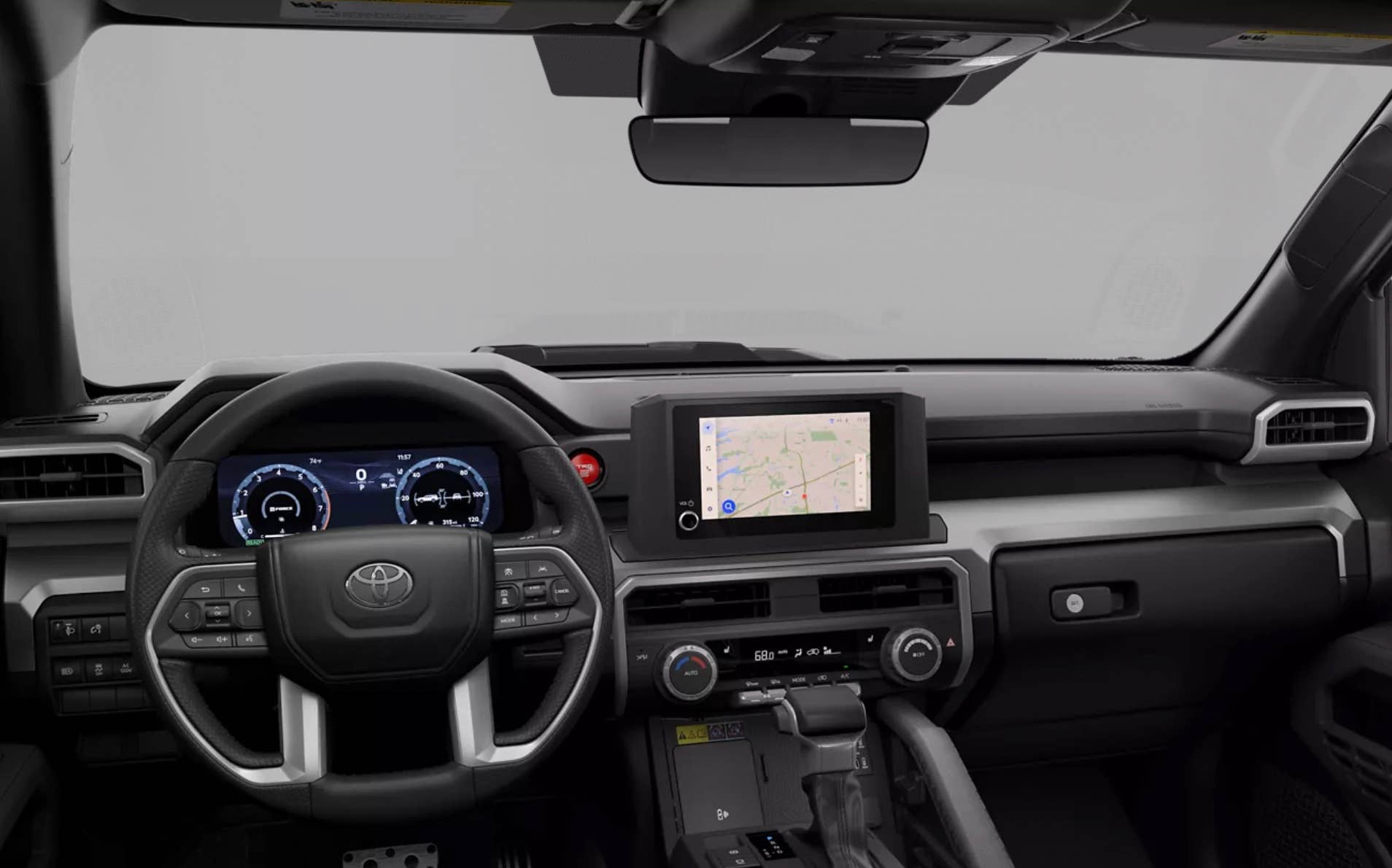
View the 2 images of this gallery on the
original article
Comparable warranty coverage with the tie-breaker going to Toyota
The Toyota 4Runner TRD Sport holds a slight advantage in warranties, despite the Passport TrailSport matching its limited warranty and roadside assistance lasting three years or 36,000 miles — whichever comes first — its powertrain coverage lasting five years or 60,000 miles, and its corrosion protection spanning five years with unlimited mileage. This Toyota’s restraint warranty lasts five years or 60,000 miles, but the Passport TrailSport’s restraint system repairs fall under Honda’s three-year or 36,000-mile limited warranty.
Final thoughts
While the 2026 Toyota 4Runner TRD Sport is more durable and capable of handling uneven or rough terrain, the 2026 Honda Passport TrailSport is the better buy. Unlike other 4Runner model, the TRD Sport places greater emphasis on daily driving, but this strategy leaves it without several standout features that 4Runner fans love, such as off-road-specific shocks, the bronze heritage grille that debuted on the 2023 4Runner, and heavy-duty skid plates. In comparison, the 2026 Passport TrailSport offers a more comfortable on-road drive without compromising off-road performance, thanks to features such as a 10-way power driver’s seat, nicer seating materials, a larger central infotainment touchscreen, greater second-row passenger legroom, an off-road-tuned suspension, and more integrated drive modes. Still, exterior styling preferences remain subjective, and you should test-drive each SUV before making a decision.
Related: Toyota Tacoma Vs. Toyota Tundra: 5 Major Differences