

Can the 2026 Jeep Cherokee stand out in a crowded, competitive segment?
The 2026 Jeep Cherokee is back with a fresh redesign, aiming to stand out in one of the most competitive SUV segments. But how does it measure up against heavy-hitters like the Honda CR-V and Toyota RAV4 when it comes to space, comfort, performance, and price? Despite all three offering hybrid powertrains and identical use cases, the Jeep has no trouble at all carving its own space out, starting with the fact that it’s a substantially bigger deal — literally — than its rivals.
Honda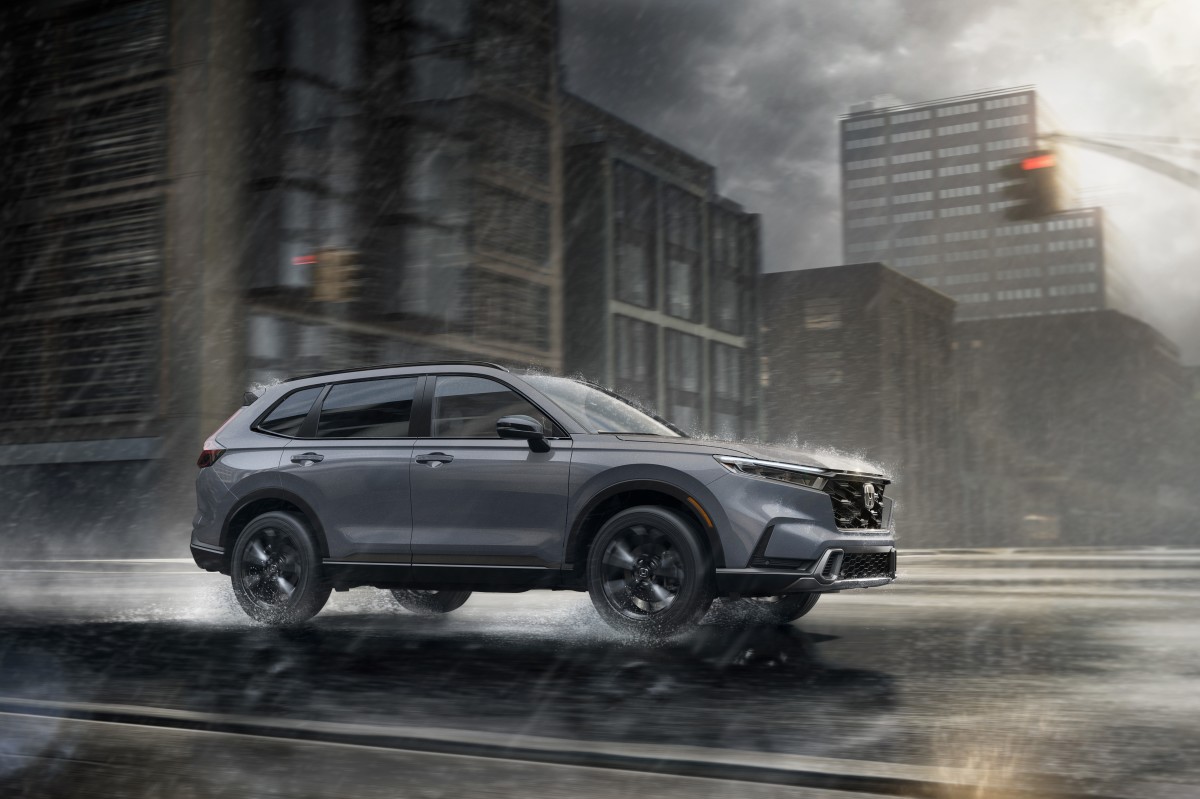
View the 2 images of this gallery on the
original article
The 2026 Jeep Cherokee is easily the largest SUV in our comparison, measuring 188.1 inches long, or 15.6 feet. The Honda CR-V is the closest competitor, at 184.8 inches or 15.4 feet long. Finally, there’s the RAV4, which measures 180.9 inches or nearly exactly 15 feet long. The disparity in size is consistent when looking at wheelbases. The Cherokee has a wheelbase measuring 113 inches, nearly seven inches longer than the CR-V and eight inches longer than the Toyota RAV4. Finally, there’s width, which again remains consistent with the other measurements. The 2026 Jeep Cherokee measures 74.7 inches wide without the mirrors, an inch more than the closest competitor, the CR-V.
Size doesn’t matter too much in this segment, but it’s worth noting that the Cherokee is actually large enough to rival compact luxury SUVs, which are generally a bit bigger. For example, the BMW X3 measures 187.2 inches long and touts a 112.8-inch wheelbase. Indeed, the X3 is about as close to an “identical” SUV as far as exterior dimensions go. The extra inches in the wheelbase should counteract the overall length to make the 2026 Jeep Cherokee a reasonably planted ride on or off the pavement.
Space inside: How does the 2026 Jeep Cherokee compare?
Despite its king-sized exterior dimensions, the 2026 Jeep Cherokee doesn’t do much inside that its competitors can’t and actually does less in some departments. Stellantis claims the 2026 Jeep Cherokee offers 68.3 cubic feet of cargo space with the rear seats folded down. Meanwhile, the RAV4 offers 69.8 cubic feet, and the CR-V offers a considerably better 76.5 cubic feet. Space behind the rear seat is equally modest, with the Jeep giving you 33.6 cubic feet to work with. Compare that to the 37.6 cubic feet in the Toyota RAV4 and 39.3 in the Honda CR-V (or even 36.3 cubic feet in hybrid models).
2026 Honda CR-V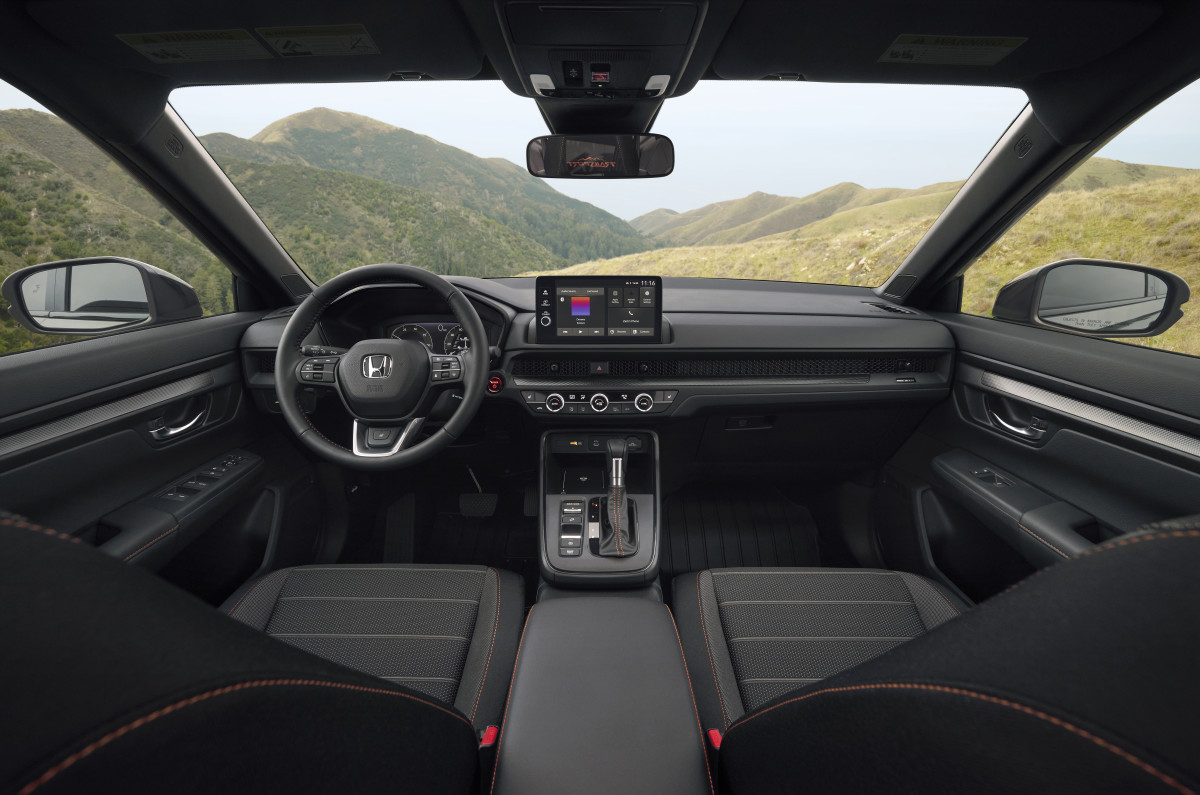
View the 3 images of this gallery on the
original article
So, while your cargo might be a little more cramped in the Jeep than the competition, surely things look better for passengers, no? While the 2026 Jeep Cherokee isn’t exactly a dominant force, it’s a winner when it comes to human comfort. In the front, the Jeep Cherokee offers 40.3 inches of headroom (without the optional sunroof), 41.3 inches of legroom, 57.7 inches of shoulder room, and 55.4 inches of hip room. That very slightly beats out the Toyota RAV4 in all areas except shoulder room, where the Toyota has a tenth of an inch more. The CR-V barely beats the Cherokee in hip room and shoulder room while offering the exact same amount of front legroom.
In the back, the 2026 Jeep Cherokee offers room for five, touting 40.2 inches of second-row headroom, 38.5 inches of legroom, 57.6 inches of shoulder room, and 55.1 inches of hip room. The Honda CR-V Hybrid offers a bit more legroom but is down everywhere else. Meanwhile, the Toyota RAV4 can’t hold a candle to the Cherokee in any metric. It’s down almost eight inches in second-row hip room! With its XL sizing, it makes sense that the 2026 Jeep Cherokee would be the best for people-hauling, overall.
Performance and price
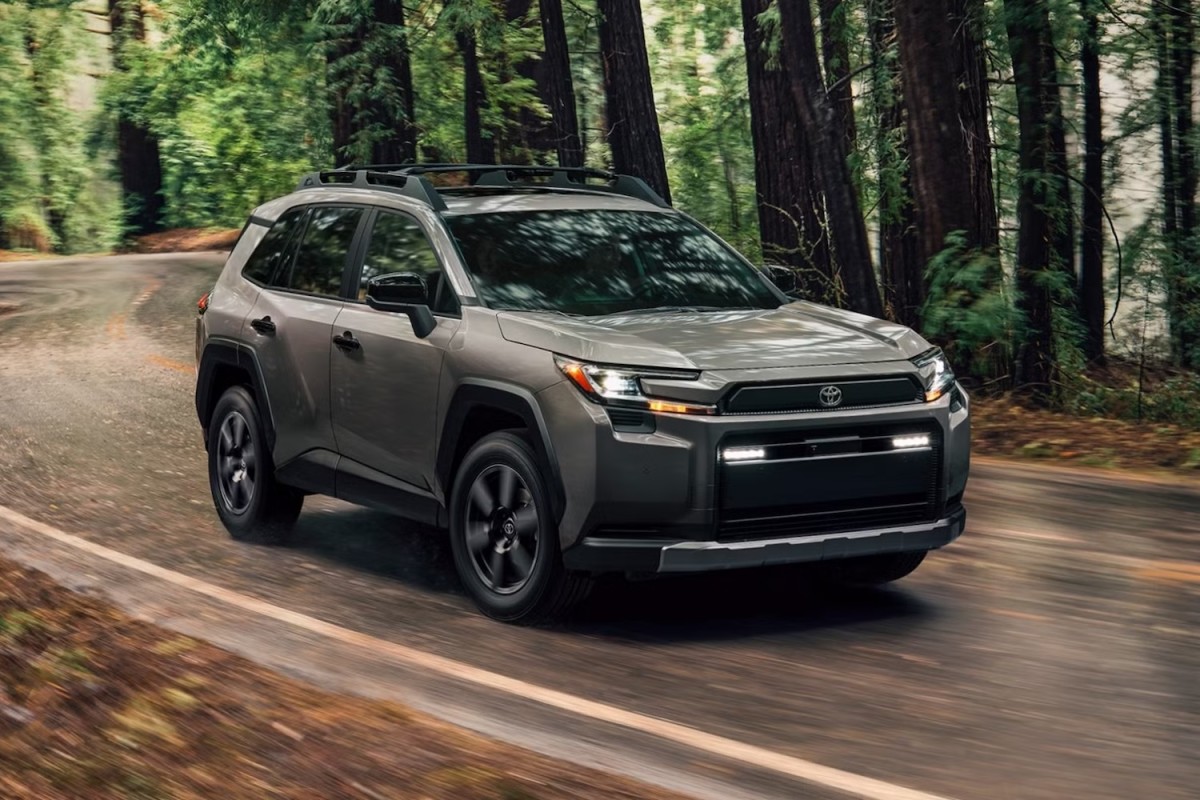
The 2026 Jeep Cherokee has one thing going for it that places it immediately at the head of the pack among these compact SUVs: standard all-wheel drive. While the Honda and Toyota do offer all-wheel drive, it’s an optional extra replacing the standard front-wheel drive system. All Cherokee SUVs will be hybrids, pairing a turbocharged 1.6-liter four-cylinder with a battery-powered motor and planetary gearset. The SUV’s 210 horsepower is more than the hybrid CR-V’s 204 horsepower but less than the next-gen RAV4’s 236 horsepower.
View the 3 images of this gallery on the
original article
Then there’s the other particulars. The 2026 Jeep Cherokee and some trim levels of the RAV4 Hybrid are rated for 3,500 pounds of towing capacity, whereas the CR-V is rated for just 1,000 pounds. The Jeep, surprisingly, doesn’t offer the most ground clearance. At eight inches, it actually has less than both the RAV4 (8.4 inches) and CR-V (8.2 inches). Who saw that one coming? Finally, there’s price. The Cherokee starts at $36,995 and the CR-V Hybrid commands $37,080. The current RAV4 Hybrid starts at $34,050, but the 2026 model will likely be more expensive.
Final thoughts
There’s no doubt about it: the new Cherokee should be able to snag a bit of market share from CR-V and RAV4 shoppers. It should be noted that since the redesigned 2026 Toyota RAV4 doesn’t have official exterior or interior specs listed anywhere yet, we’re forced to compare the 2026 Jeep Cherokee to the current RAV4 in those areas. The new model will go on sale later this year or early next year, which is around when we expect the new Cherokee to hit showrooms, too.
The Jeep’s solid power and standard all-wheel drive might make it the best suited for performance-minded drivers, but hopefully it doesn’t end up trapped between segments. Drivers might find it underpowered and cramped for a mid-size SUV and too expensive/big for a compact, but only time behind the wheel will really tell.