

Why adventure-ready crossovers are everywhere right now
The Toyota RAV4 is America’s best-selling car. The Honda CR-V is fifth, and the Nissan Rogue ninth. There is simply no denying that Americans can’t get enough of their beloved compact crossovers. The convenient blend of everyday car practicality and the all-weather functionality of an SUV makes crossovers especially appealing to frugal buyers and adventure seekers alike. Still, though, as many crossovers have softened over the years, tailoring their market approach more towards the city-friendly side of the spectrum, away from adventure-readiness, some buyers have been left wanting more off-road capability from their economical family haulers. That’s where these guys come in.
Cole Attisha Using Adobe Photoshop and Gemini 3 Pro
The 2026 Subaru Forester Wilderness, the 2026 Toyota RAV4 Woodland, the 2026 Honda CR-V Hybrid TrailSport, and the 2026 Nissan Rogue Rock Creek represent a unique and budding subculture in the automotive marketplace. Offering a granola-friendly approach to the compact crossover segment, these offerings do their best to claw their way back towards the adventure-ready end of the crossover spectrum. Fitted with trail-purposed goodies like all-terrain tires, uprated roof racks, lifted suspensions, and trick all-wheel drive systems, these SUVs are ready for whatever you, your family, and Mother Nature can throw at them.
As a lifelong Pacific Northwesterner, I couldn’t help but develop a personal curiosity about this up-and-coming subsegment. After all, they represent the sort of vehicular equivalent of an Arc’teryx jacket or a Patagonia fleece or, perhaps more accurately, pairs of hiking boots—all necessary pieces of equipment for life in the PNW, whether you’re hiking Vancouver Island’s picturesque Juan de Fuca trail, perusing the locally-made craft stalls at Seattle’s Pike Place Market, or circumnavigating Mount St Helens by way of forest service road. So, I tested each of them—over about two months—to see how they stacked up against one another. Today, I rank and compare them for you.
Cole Attisha
How I tested Japan’s best “vehicular hiking boots”
Before I get into my rankings, I must freely admit that the severity of my off-road testing of each of these vehicles was not entirely consistent. There’s a vastly different threshold for damage allowance between driving a pre-production model at a sanctioned, manufacturer-hosted event with a predetermined off-road route versus driving a press loaner in my hometown, where my own insurance and personal driving record are at risk, should something go awry on an off-road excursion meant to test a car’s limits—a likely turn of events. I was lucky enough to drive the Subaru Forester Wilderness and the Toyota RAV4 Woodland at planned manufacturer events in Oregon and in Arizona, respectively, with pre-chosen off-road sections. In contrast, I had the Honda CR-V TrailSport Hybrid and the Nissan Rogue Rock Creek for a week each at home in Vancouver, B.C.
Cole Attisha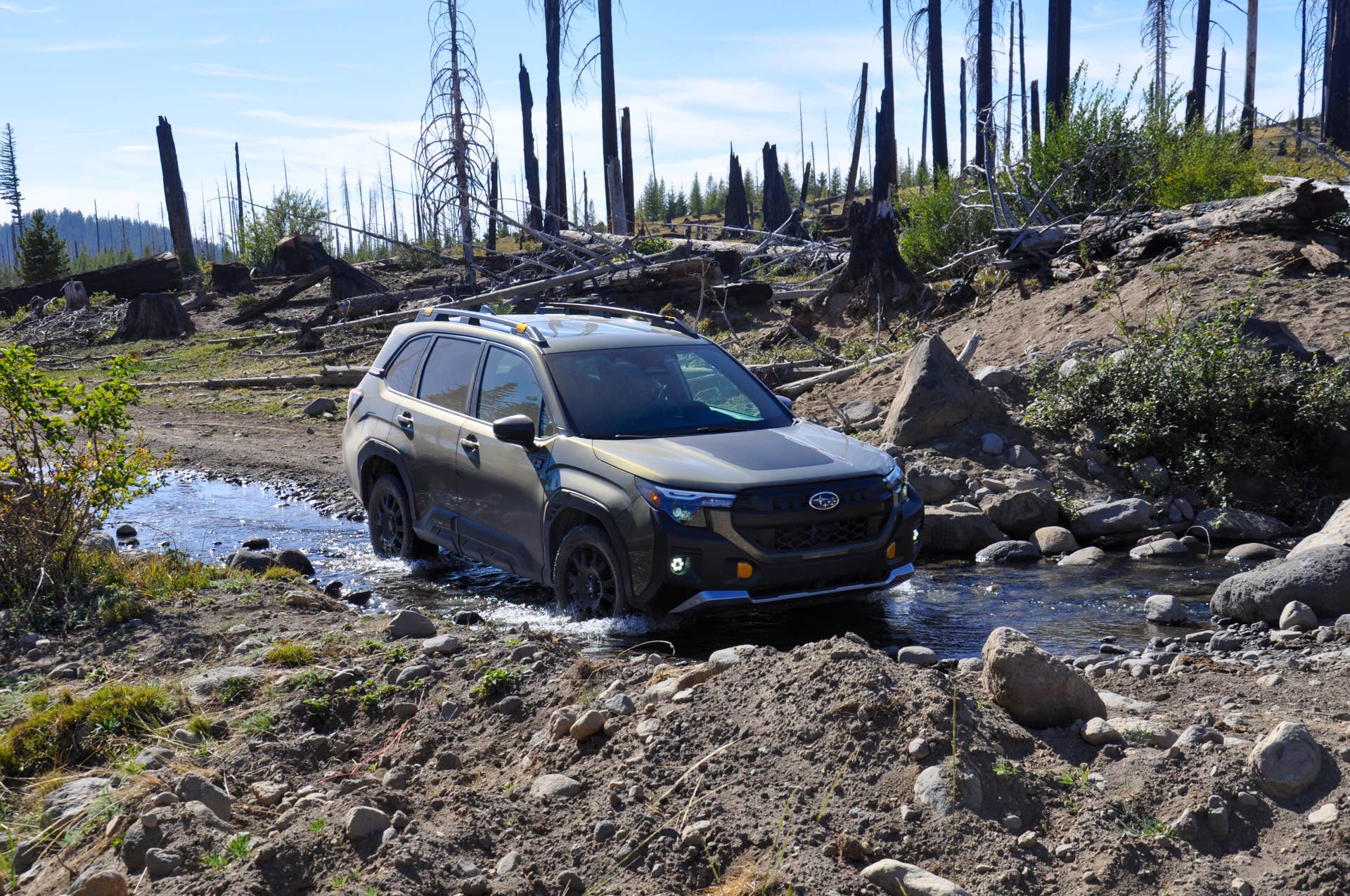
Even when comparing the two manufacturer events, though, one manufacturer chose a significantly more hardcore route to test its rugged crossover, and I bet you can probably guess which one that was. Because both the Subaru and the Toyota were pre-production models tested at press events, I feel it’s still a fair fight between the two, as their respective automakers had complete control over how harsh our off-road tests could be. For the CR-V TrailSport and the Rogue Rock Creek, though, keep in mind that, while they did spend some time on Squamish Valley service forest roads, I didn’t bash on them all that much more than what Toyota allowed me to do with their RAV4. I can, however, promise you that the Subaru Forester saw some s**t. The severity of Subaru’s chosen route genuinely shocked me.
In the end, over the course of about two months, I had gained ample seat time in all four of these crossovers. I’d driven each of them on loose terrain—if only briefly for some—and spent time on all sorts of roads; twisty, straight, flat, long, hilly, you name it. I’d lived with some and laughed with others. Some became like brothers, and some like lovers. Some even got on my nerves. Still, when it came down to it, coming up with the ranking order wasn’t so easy. Each one has its own unique appeal—each sits somewhere different on the spectrum between city-friendly and adventure-competent—so ultimately the best one comes down to whichever one matches one’s individual wants and needs.
Cole Attisha
How I ranked them
So, I decided to rank each of these adventure crossovers the same way I’d rank pairs of hiking boots, since that’s essentially what these are—they’re “vehicular hiking boots.” Maybe they’re more like trail boots. The point is, each of these SUVs represents a unique trim level in its respective crossover’s model lineup, intended for off-road, adventureuse. And, they still have to do the job of shoes. They have to get you where you need to go, whether on pavement or dirt. So, when it comes down to ranking hiking boots, hiking comes first. “Will they get me up the mountain?” Once that’s sorted, comfort is essential, too. “Will this give my feet blisters?” Then, convenience comes third. Not many people complain about hiking boots being too clunky to wear around town—most switch to another pair of shoes. However, because cars are far more expensive than shoes, that’s not as likely for most buyers, so I still considered city-friendly convenience, but it wasn’t weighed as heavily as the other factors.
The following list represents the order in which I enjoyed each of these SUVs. I don’t believe that whether one places first or last necessarily means it’s the worst car or even one that’s unworthy of consideration. You must keep in mind that I’m an emotional being with an undying passion for all things automotive—if I weren’t, I wouldn’t be doing this job—so I take the weight of a car getting under my skin—for better or for worse—very seriously when it comes to my judgement of it. “Did I ever miss it after dropping it back off at the end of the test?” If so, that means something. It shows that real passion went into creating it, and that intangible quality must never be forgotten in automotive design and production. As I said before, each one tailors to a unique set of wants and needs, and if you’ve found yourself in a position to decide between any of these SUVs, take the time to see them, feel them, drive them, and weigh their pros and cons against your individual priorities before you make a final purchase decision.
5. 2026 Nissan Rogue Rock Creek
Cole Attisha
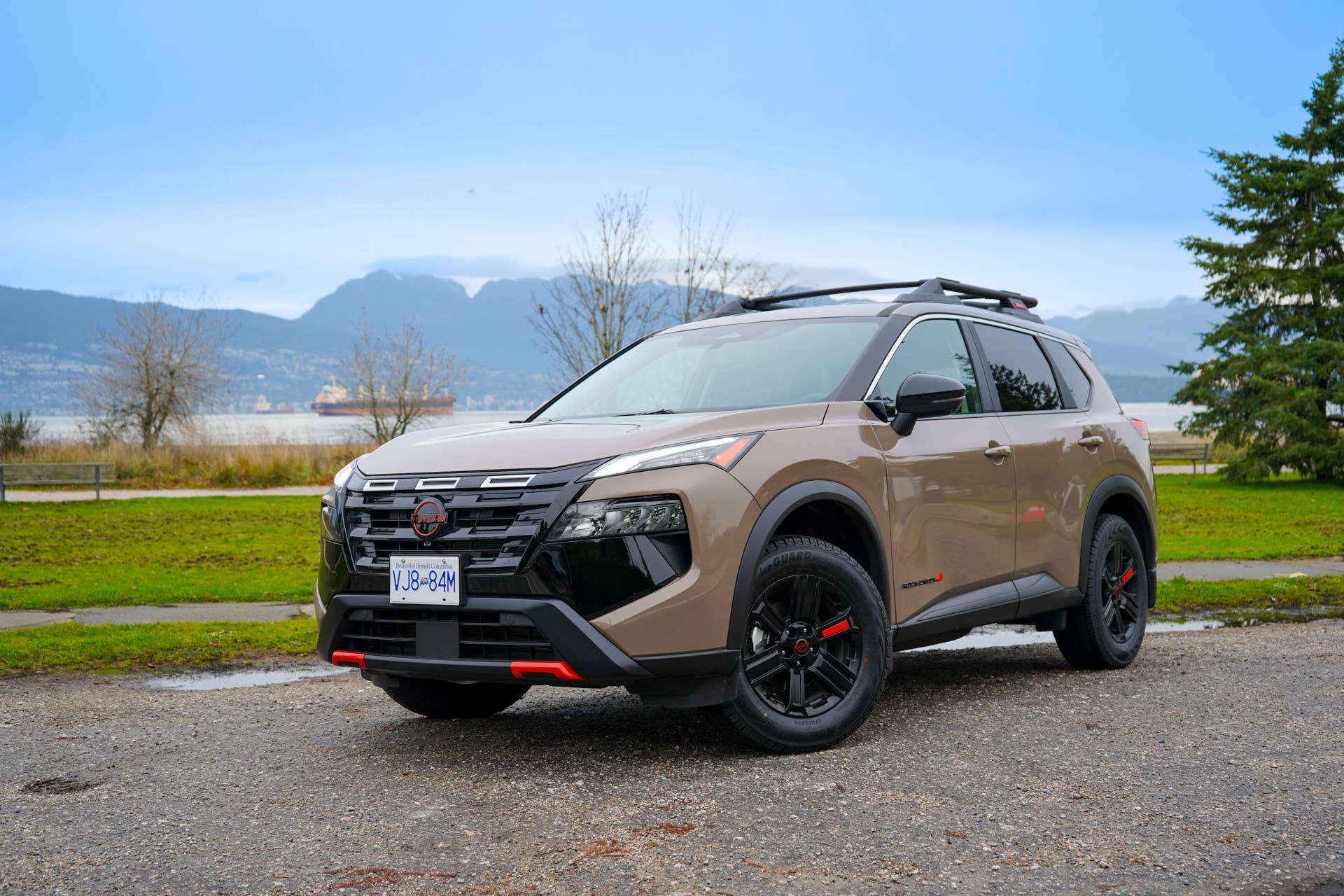
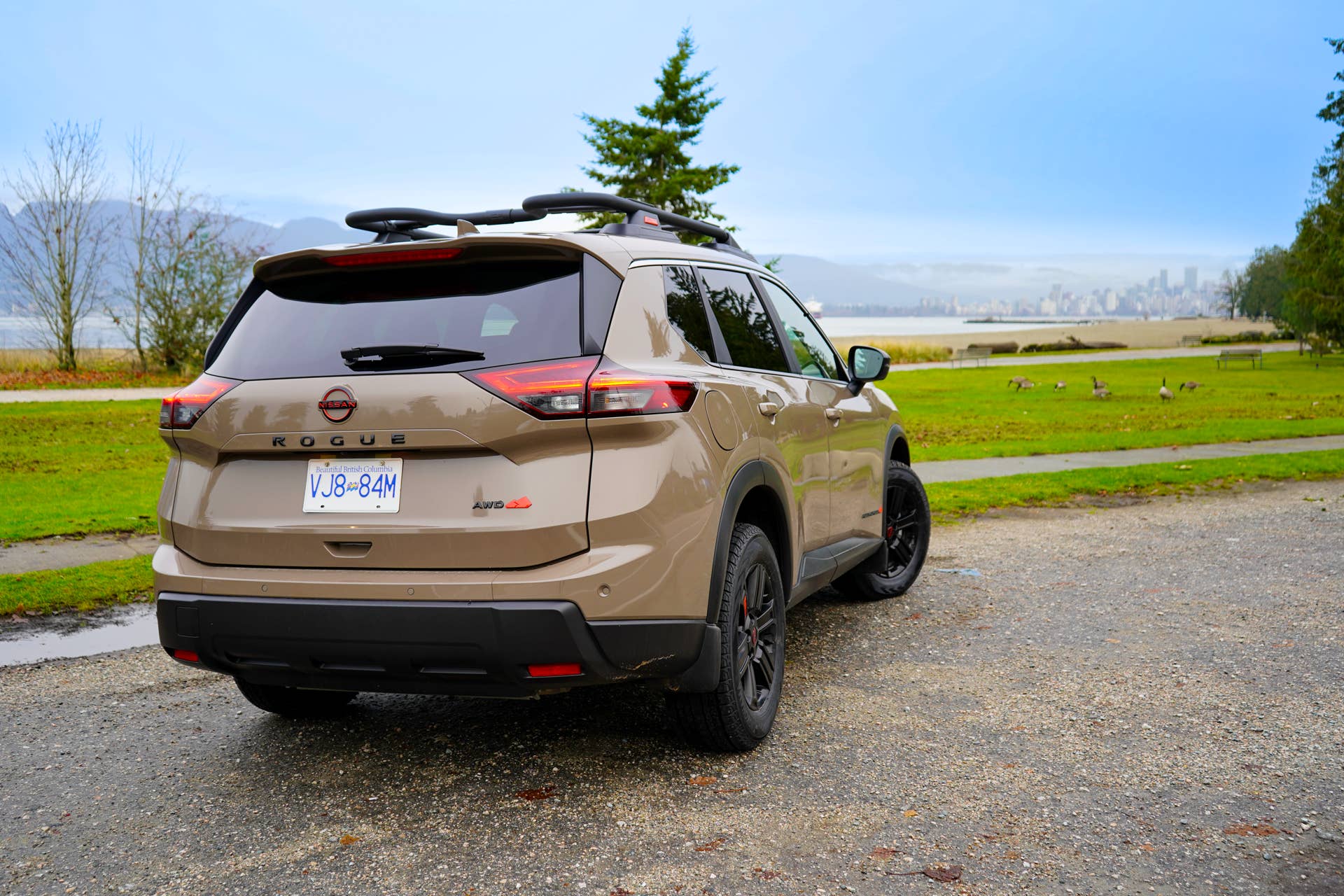
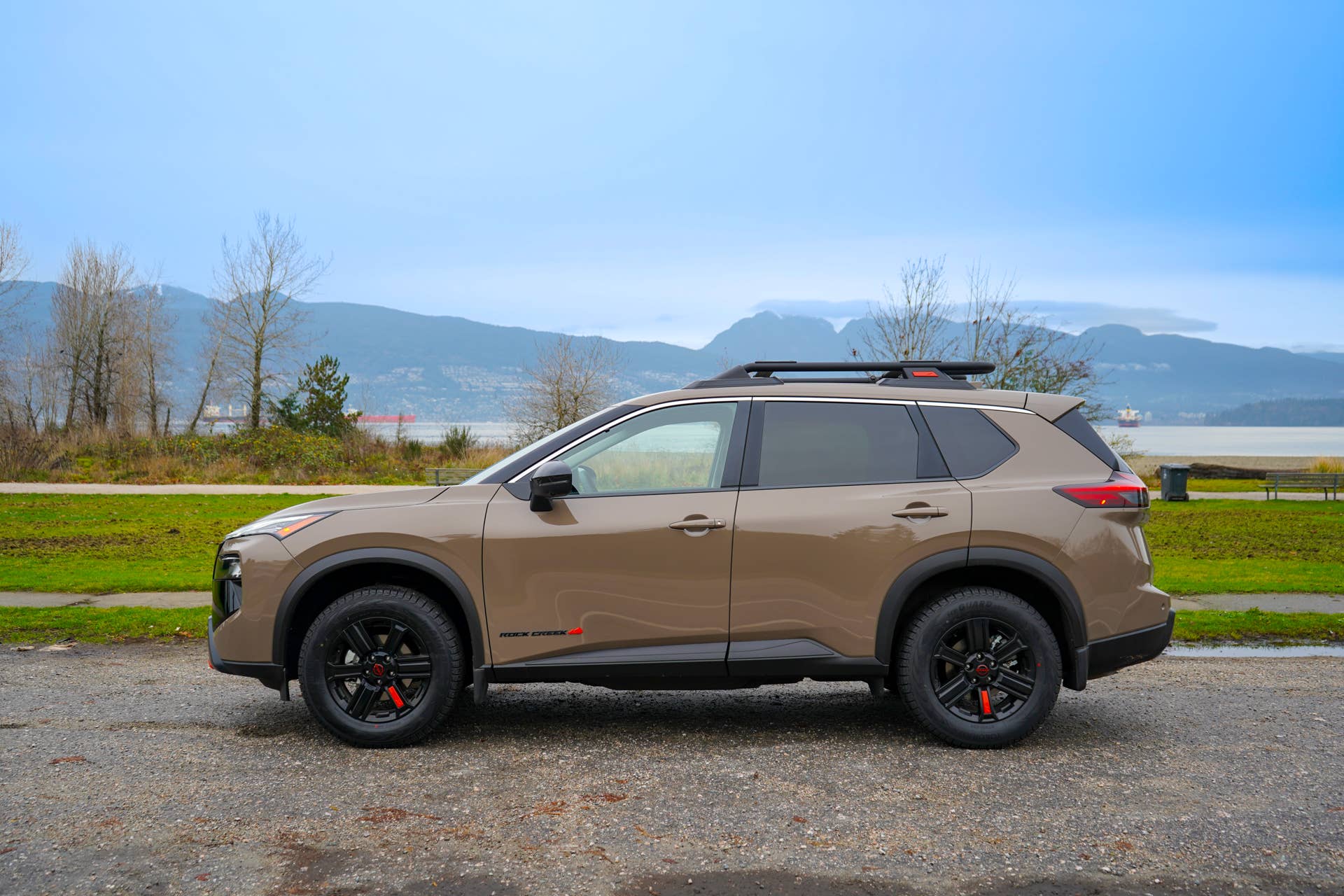
With its added 17-inch aluminum-alloy wheels, all-terrain tires, modified front fascia and grille, black tubular roof rack, off-road cameras, and unique cabin upholstery, the Nissan Rogue’s Rock Creek trim is more of an aesthetic package than one of genuine all-terrain function. As shown in Baja Storm Metallic, the Rogue Rock Creek certainly looks the part of a rugged, adventure-ready off-roader, but its bold red accents and its angry-looking face come across as dated. It’s not the most capable thing, either. The Rogue Rock Creek has just 8.2 inches of ground clearance, tying it with the Honda CR-V Hybrid TrailSport for the lowest in the segment. The Rogue also boasts superior approach and departure angles when compared to the CR-V, as well as towing capacity, with the Rogue capable of hauling up to 1,500 lbs. Still, it’s no match for more seriously rugged rivals in its segment, and leans far more towards city-friendliness than off-road readiness.
Cole Attisha
Around town, the Rogue isn’t all that bad. Its VC-turbocharged 1.5-liter three-cylinder engine, which produces up to 201 horsepower, is sparky and sounds truly unique, unlike anything else in this segment. While it can make driving around town a ton of fun, its fuel economy isn’t quite as impressive as its hybrid-powered rivals. Still, its 27 City MPG/32 Highway MPG/29 Combined MPG ratings are admirable, though I achieved closer to 23 MPG during my test period.
When the roads get a bit more chaotic, though, the Rogue can be a bit of a handful. With its vague steering feedback (even in “sport” mode), its CVT’s unintuitive simulated shift points, and the reduced grip on pavement stemming from its all-terrain tires, I struggled to find confidence driving the Rogue in the rain along the Sea-to-Sky Highway on Canada’s Pacific Coast, which features fast-paced twists and turns on a mountainside stretch of freeway spanning between Vancouver, B.C. and Whistler.
2026 Nissan Rogue Rock Creek Cole Attisha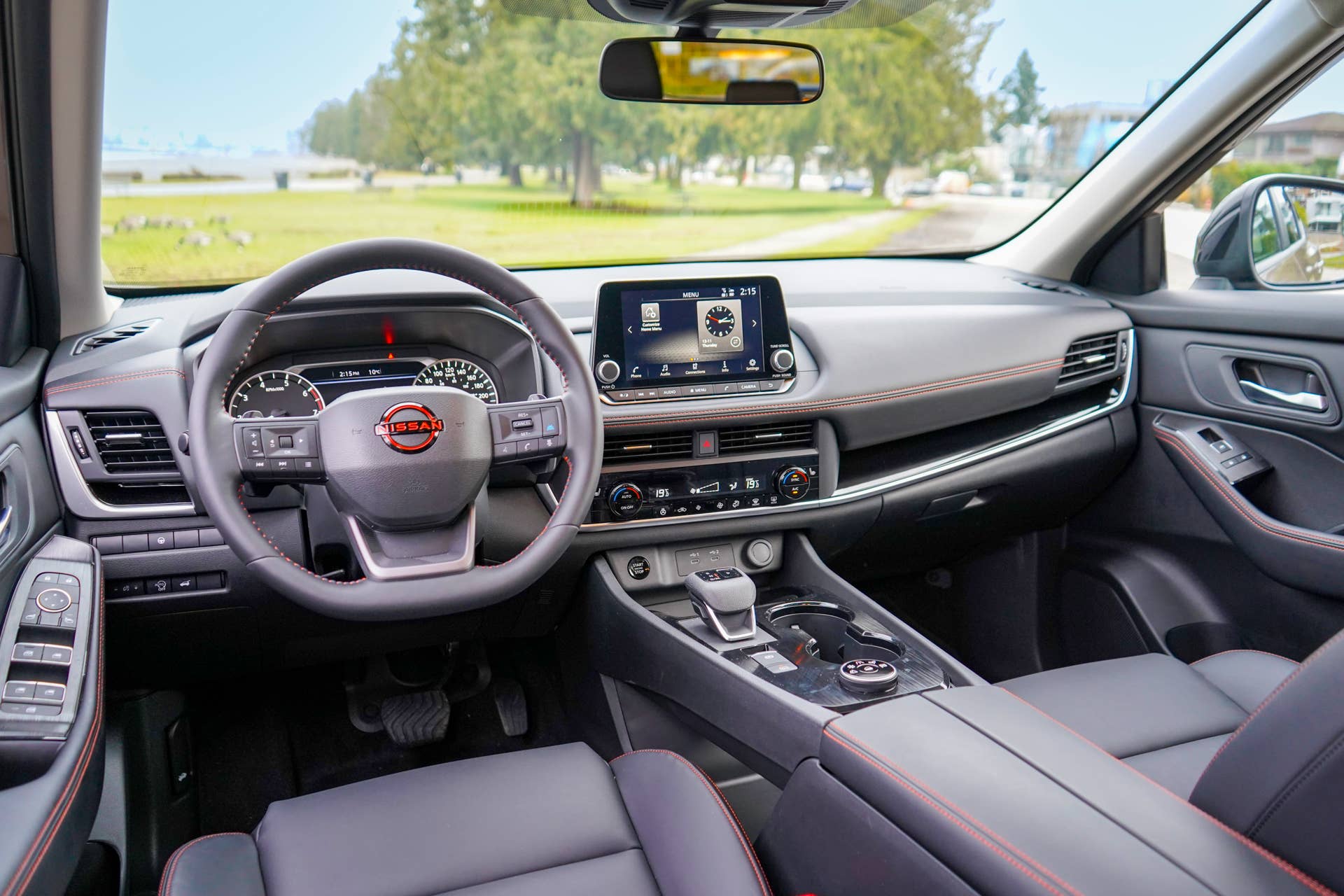
View the 4 images of this gallery on the
original article
The Rogue Rock Creek’s cabin is a bit of a mixed bag, too. On one hand, it’s incredibly comfortable. Nissan’s proprietary “Zero Gravity Seats” have impressed me in every 2026 model year vehicle I’ve tested from the automaker, and the trend continues in the Rogue. It’s spacious, too, boasting around 38.5 inches of rear legroom, about 57.1 inches of front shoulder room, and 39.2 inches of rear headroom. As for cargo space, the Rogue offers 74.1 cubic feet with the rear seats folded, or about 35 cubic feet with the seats in use.
On the other hand, however, the Rogue’s interior really does give away the model’s age. Having been in production since 2020, the Rogue’s interior suffers from a less-than-lovely infotainment system that even lags behind Nissan’s own and less-expensive offerings, such as the Kicks, which received a major overhaul for its 2025 model year. The cheap-feeling plastic materials on my test vehicle already looked worn out, despite having just over 2,500 km on the odometer. The overall atmosphere in the cabin makes it feel like a five-year-old car that’s just had some red accents and a new steering wheel added with the intention of making it appear less ancient.
Cole Attisha
Although the Nissan Rogue Rock Creek comes last on this list, it’s also the least. Least expensive, that is, and that’s important to note here. Starting at just $33,990, the Rogue undercuts every one of its rivals by nearly $5,000, and that’s certainly not chump change. The Rogue Rock Creek offers an intriguing value proposition amongst its more rugged foes, but, in the same breath, this SUV does feel that much cheaper. You certainly get what you pay for in this segment—one of the most lucrative automotive segments in North America at the moment—and the Rogue will happily save you a few thousand bucks, albeit for an SUV that lacks a few thousand dollars’ worth of value (to the right buyer). Stay tuned for my focused review of the 2026 Nissan Rogue Rock Creek, coming later this week.
4. 2026 Toyota RAV4 Hybrid Woodland
Cole Attisha
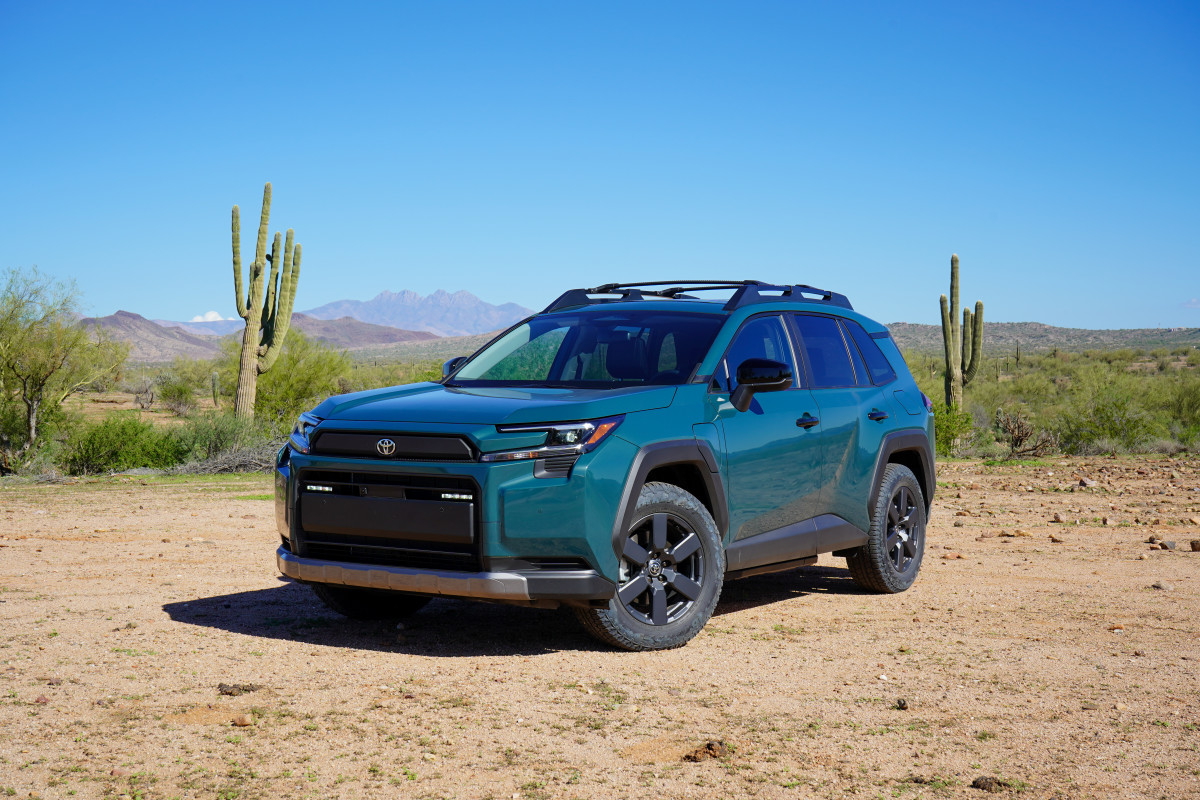
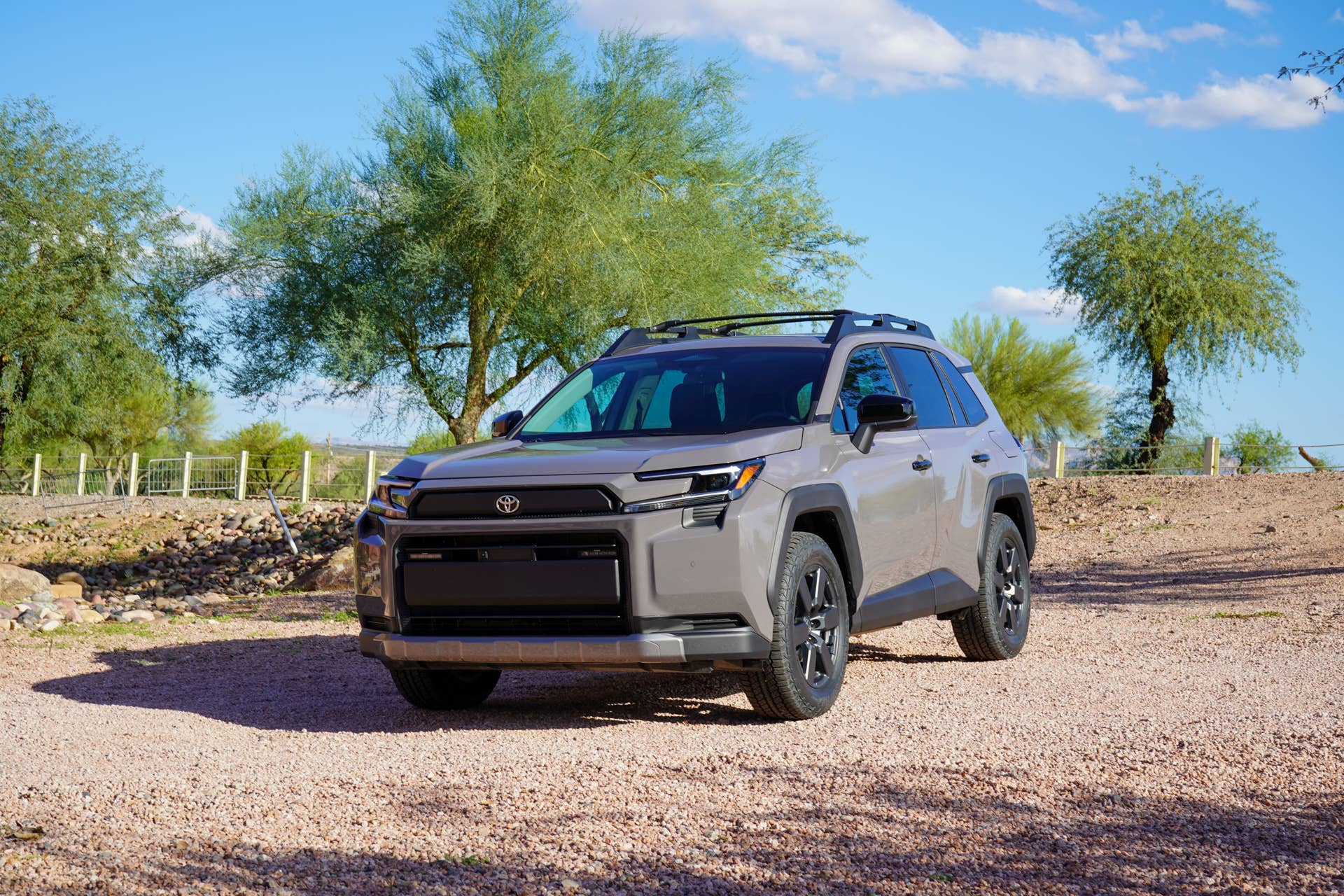
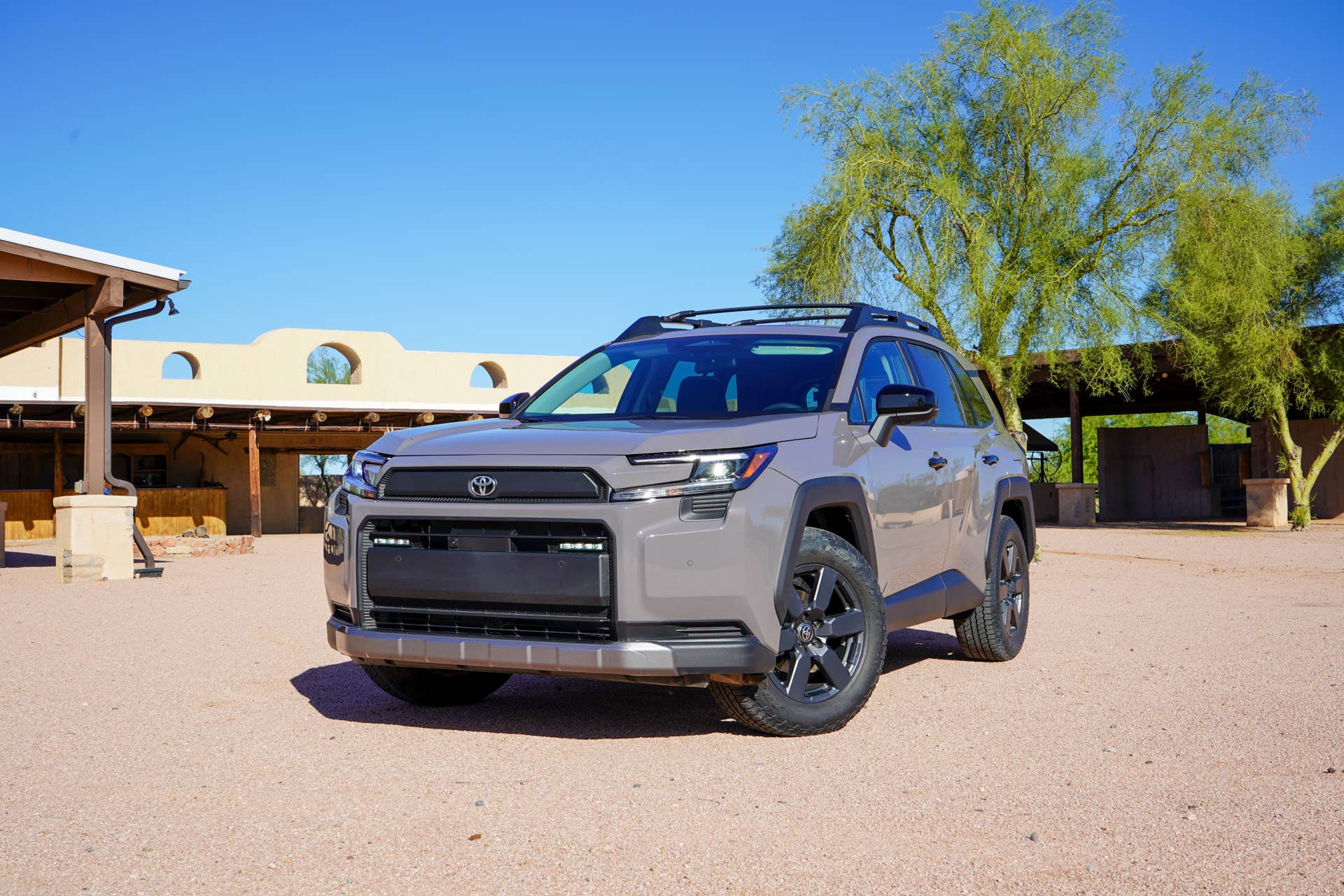
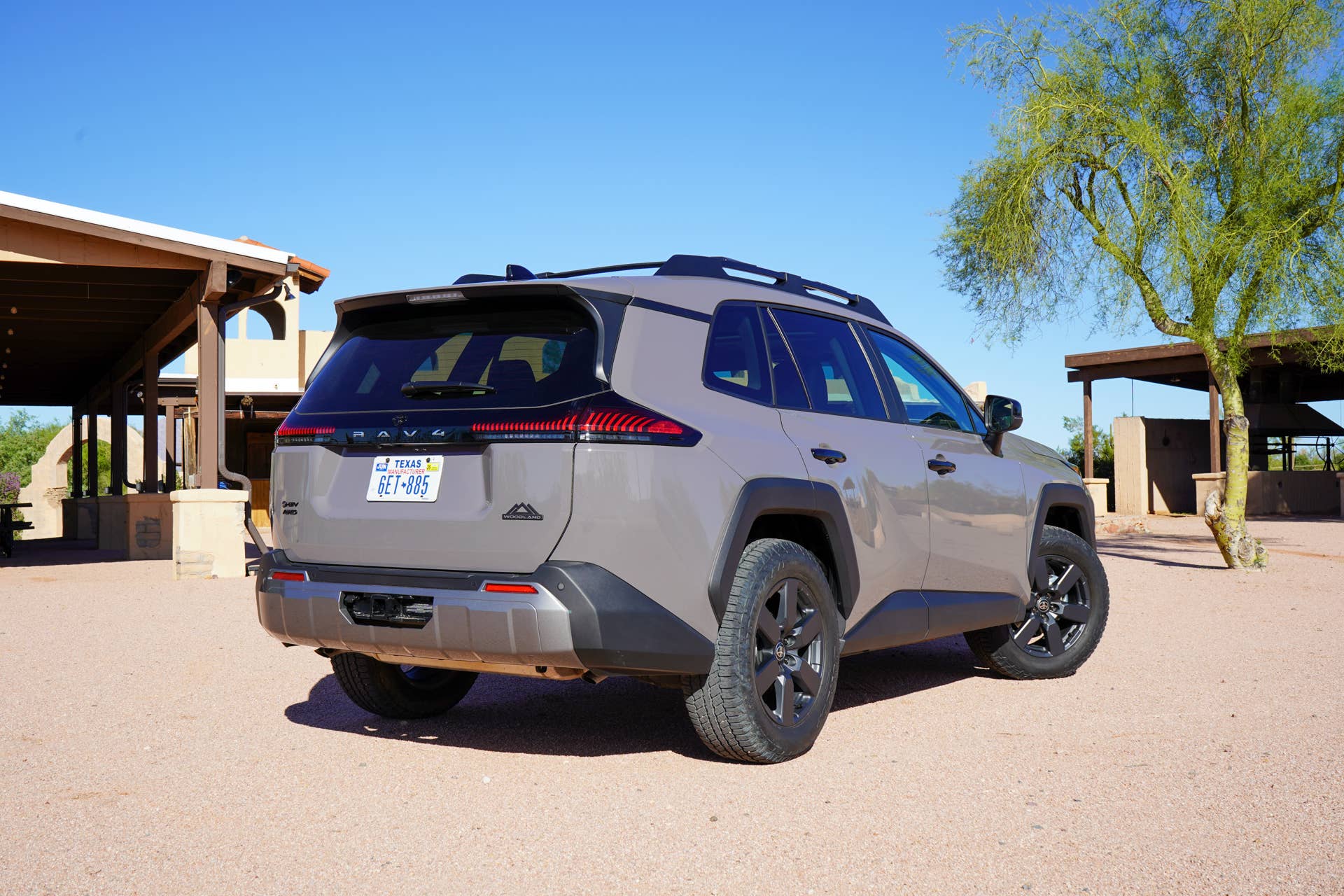
I’ll tell you plainly that the Toyota RAV4 Hybrid Woodland only made fourth place on this list because it’s not the most capable off-road, and it’s also not the most friendly on the road. The RAV4 Woodland does what Toyota does best—it plays it safe. This SUV splits the difference between a trail-capable sneaker (like the Rogue Rock Creek) and proper mountain-climbing boots (like rivals I’ll mention later). Perhaps the most well-rounded offering in this segment, the RAV4 Hybrid Woodland boasts 8.5 inches of ground clearance (up from the measly 8.1 inches last year’s model offered) and an impressive max towing capacity of 3,500 lbs—matched only by the Subaru Forester Wilderness in this segment.
Above and beyond the standard RAV4 Hybrid, the Woodland features 18-inch matte metallic gray alloy wheels, all-terrain tires, Woodland-branded raised black roof rails with cross bars, factory-integrated Rigid Industries LED fog lights, a uniquely patterned interior with red-orange accents, Woodland all-weather floor mats and cargo liner, and a 120V/1500W AC power outlet in the cargo area. It features a naturally aspirated 2.5-liter four-cylinder engine paired with a hybrid system to produce a combined 236 horsepower—the most out of any other SUV on this list, besides its very own plug-in hybrid counterpart. More on that one later. So, the RAV4 Hybrid Woodland is both significantly more powerful and vastly more efficient than the Rogue Rock Creek, boasting 41 City MPG and 35 Highway MPG. What’s the catch?
Cole Attisha
Well, that would be the price. The RAV4 Hybrid Woodland starts at $39,900—more than any of its rivals, except for, again, its own PHEV counterpart. For that, you get an experience behind the wheel on the road that’s perhaps more dialled in than the Rogue, but certainly less entertaining as its hybrid powertrain lacks the charisma of the Rogue’s brilliant VC-Turbo three-cylinder. Of course, off-road performance is greatly enhanced over the Rogue, and, being entirely new for the 2026 model year, it does not look or feel dated or cheap.
Inside, the RAV4 benefits from a massively refined infotainment system over its predecessor, as well as a completely redesigned cabin that looks fresh and feels high-quality. It offers slightly less space to the Rogue Rock Creek, featuring 41 inches of front legroom, 37.8 inches of rear legroom, and 37.8 cubic feet of cargo space behind the rear seats (or 70.4 cubic feet with the seats down). Still, it’s somewhat made up for by unique features like its removable centre console lid, an available power sunroof (for an additional $850), and a massively more refined design (to the right buyer).
2026 Toyota RAV4 Woodland Hybrid Cole Attisha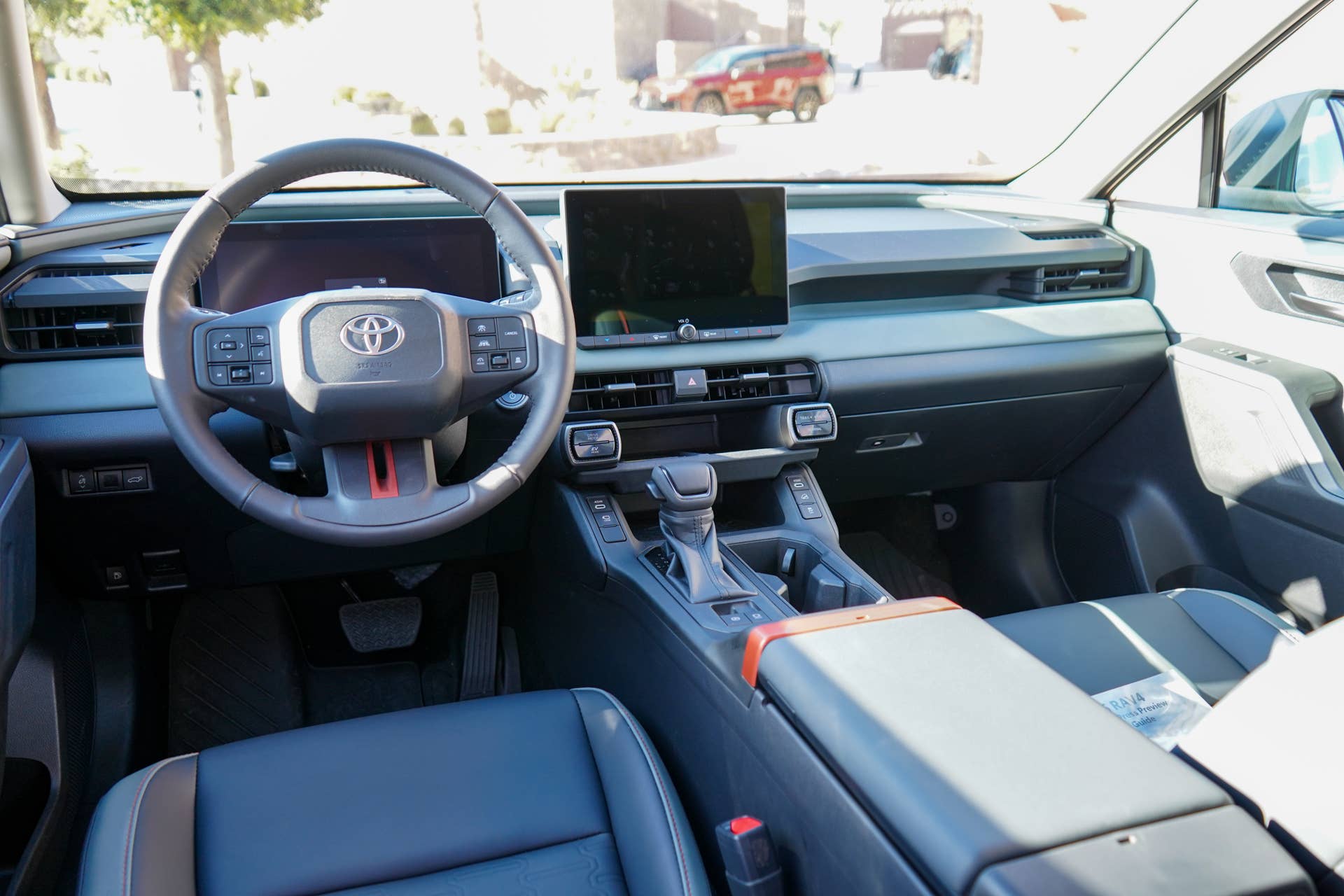
View the 4 images of this gallery on the
original article
During my relatively short time spent with the 2026 RAV4 Hybrid Woodland in Arizona, Toyota allowed us to experience the SUV in “Trail Mode” on a short hill with mild boulders, accompanied by a technical expert to guide us in the right direction and, primarily, to ensure we didn’t get too wild. The quick course proved the RAV4 Woodland could handle leaving the safety of paved roads behind, but not necessarily that it could climb any mountain and ford every stream.
All things considered, the RAV4 Hybrid Woodland might very well be the best all-rounder on this list, even if it’s a bit pricier than the rest. The RAV4 is the pair of hiking shoes you might buy for steep, physically challenging hikes that aren’t overly technical, but you could also wear them around town without looking like a buffoon. It’s like the Nike of hiking shoes—there are certainly superior, more purpose-built options out there, but if you want to buy from the brand that everyone recognizes and respects, it’s difficult to go wrong with a good ol’ pair of Nikes. Read my focused 2026 Toyota RAV4 Woodland review by clicking here.
3. 2026 Honda CR-V Hybrid TrailSport
Cole Attisha
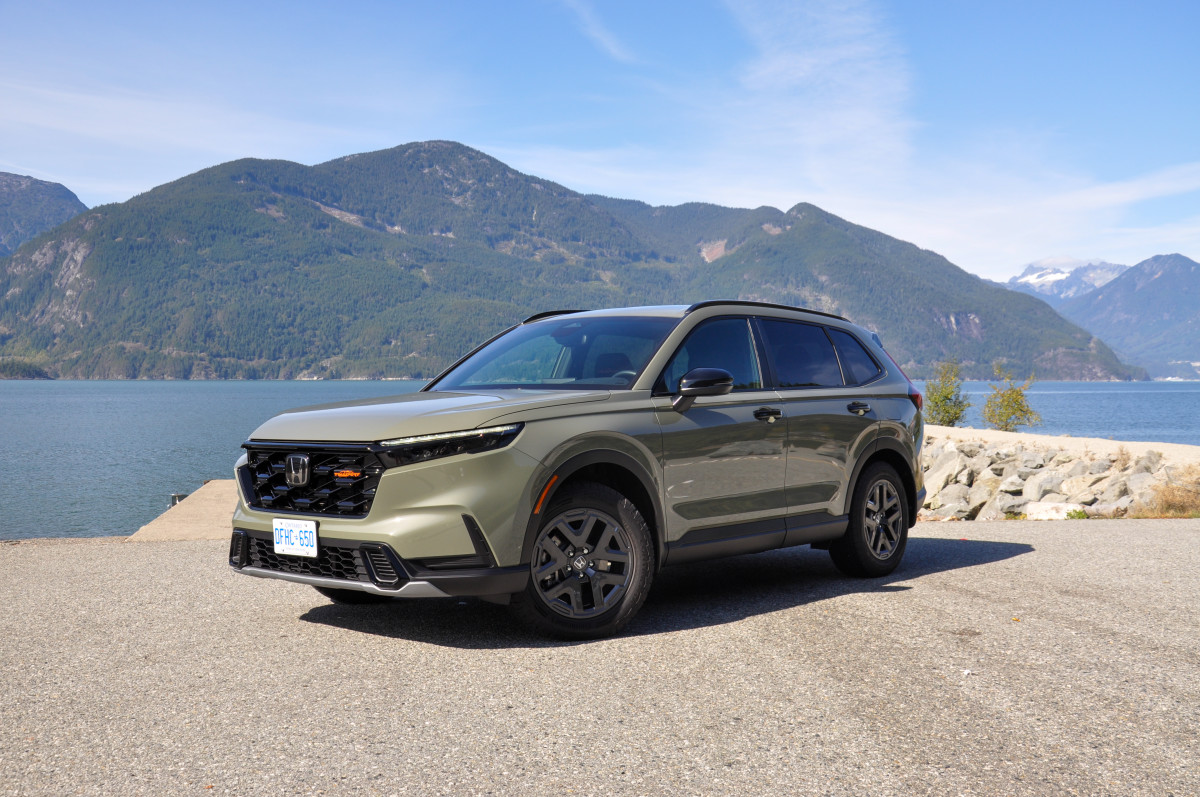
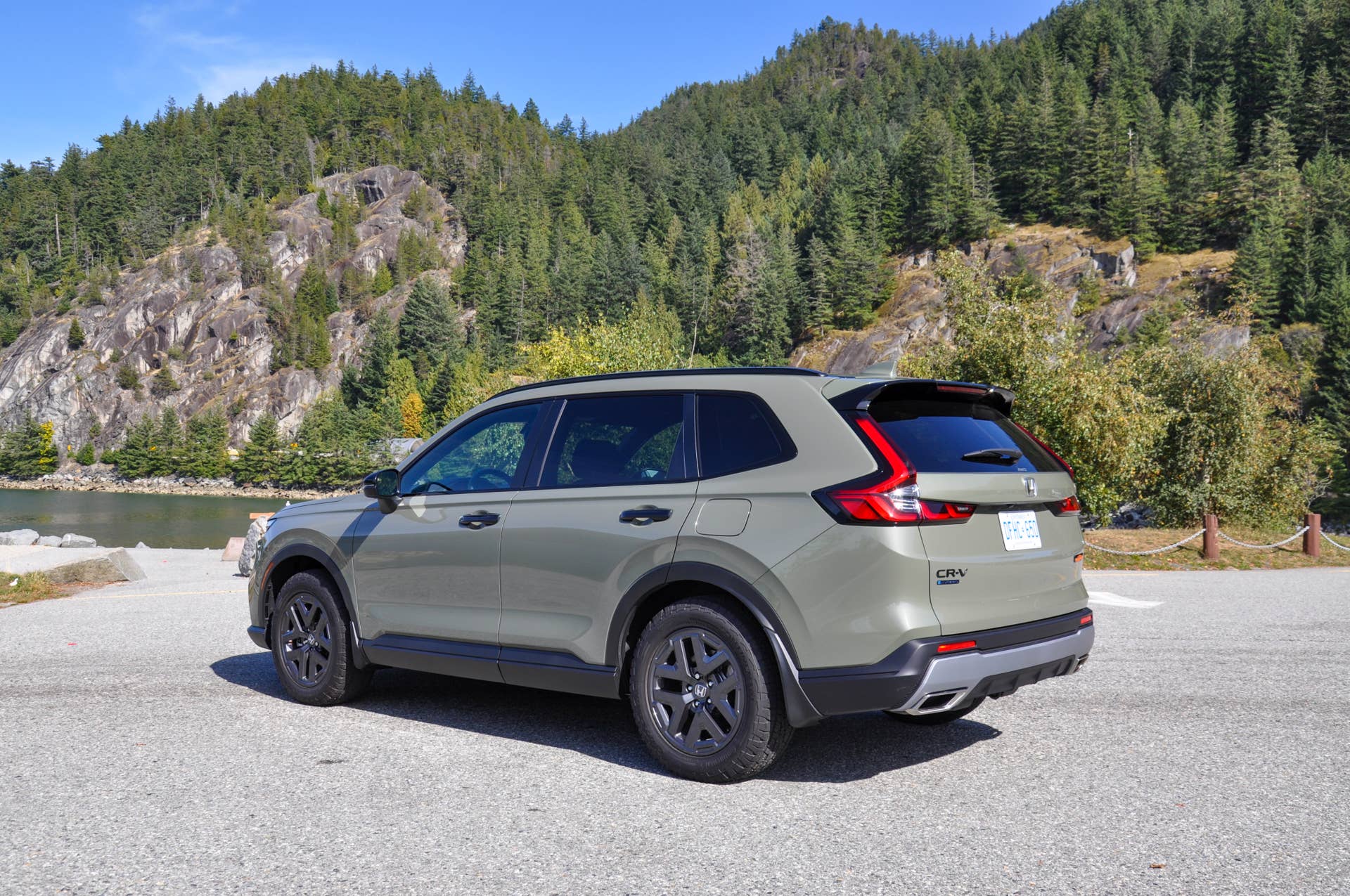
Admittedly, I struggled the most with placing the CR-V Hybrid TrailSport in my rankings. On paper, and in reality, the TrailSport is by far the least competent when it comes to off-roading. Opting for the TrailSport package in the CR-V Hybrid lineup literally adds nothing more than all-terrain tires, unique design elements like badges (ugh), unique interior upholstery, and TrailSport-specific paint colors like Ash Green Metallic, as pictured. Honda didn’t even bother to raise its suspension, meaning the TrailSport’s 8.2-inch ground clearance is the lowest in its segment and is no higher than that of a standard AWD-equipped CR-V. Giving this CR-V the same badges as what you’d find on the Passport TrailSport is a serious case of overpromising and underdelivering. Yet, out of every SUV on this list, I miss this one the most.
Cole Attisha
Among all the SUVs here, the CR-V Hybrid TrailSport leans the heaviest into road- and city-friendliness, away from compromising comfort and convenience for off-road capability. I fundamentally struggled with this when I first reviewed this SUV because I couldn’t quite wrap my head around why anyone would buy one over the standard CR-V Hybrid, which is slightly more comfortable, more efficient, and handles better thanks to its lighter all-terrain tires. Then, it suddenly hit me how simple the answer was: it just looks better. So, essentially, the CR-V Hybrid TrailSport is a pair of sneakers you can wear for a quick day-hike on a local trail without feeling bad about getting them a little dirty.
While that may not be everyone’s preferred criteria for hiking shoes, perhaps I loved the Honda so much because I’m precisely the type who takes my everyday sneakers hiking. Hiking shoes are only as capable as the person wearing them, and considering that the vast majority of my life behind the wheel is spent on paved roads rather than off of them, the Honda won me over because it was, by far, the most satisfying SUV here to drive. Its steering is sharp and communicative, and its two-motor hybridized 2.0-liter four-cylinder powertrain sends its 204 horsepower to all four wheels rapidly and smoothly. Even with its all-terrain tires, the Honda inspired more confidence than any other option here on the windy bends of the Sea-to-Sky Highway and on the rainy streets of Vancouver.
2026 Honda CR-V TrailSport Hybrid Cole Attisha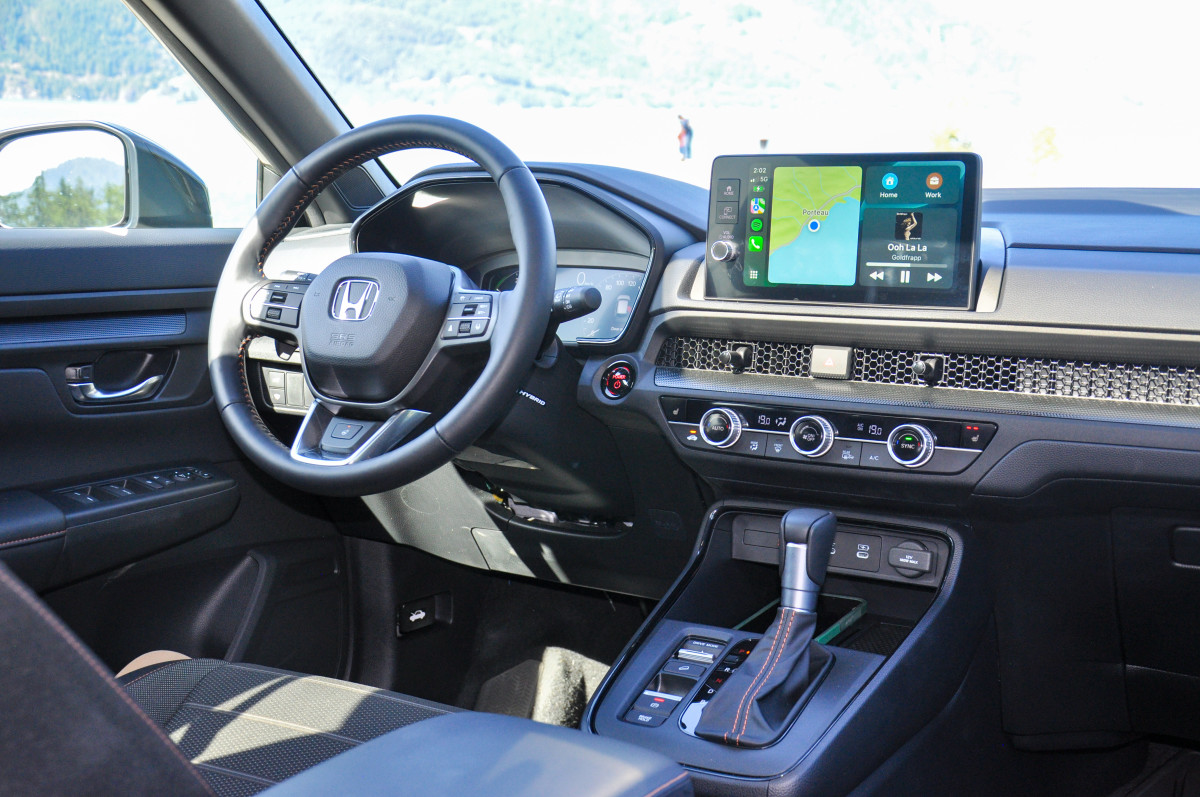
View the 4 images of this gallery on the
original article
The CR-V’s interior is both comfortable and impressively spacious, boasting 41.3 inches of front legroom, 41 inches of rear legroom, around 40 inches of front headroom, 38.2 inches of rear headroom, and 57.9 inches of front shoulder room. Cargo space is ample, too, with the CR-V boasting 36.3 cubic feet of trunk space behind the rear seats, or up to roughly 76.5 cubic feet with the seats down, making it more spacious than both the Rogue and the RAV4. Keep in mind, though, that the CR-V can tow just 1,000 lbs., making it one of the least capable vehicles in its segment for hauling. It’s also the only vehicle that doesn’t come with leather or leatherette/vinyl interior upholstery, instead opting for a sport fabric material.
With an MSRP starting at $38,800, the CR-V sits in the middle of its rivals in terms of pricing. It’s not as efficient as the RAV4 Hybrid Woodland, but it still boasts 38 City MPG, 33 Highway MPG, and 35 Combined MPG—making it far more efficient than any non-hybrid segment rival. Essentially, then, the CR-V Hybrid TrailSport is the option to buy if you need a competent family hauler and would like it to be able to tackle some tougher stuff, but don’t necessarily need it to. In my opinion, it’s the most satisfying example here when it actually comes down to driving, and it’s also one of the more spacious offerings in its class. If I knew I’d rarely be taking my adventure-ready crossover on off-road expeditions, and instead it’d be destined for long road trips on mostly paved asphalt, this is the one I’d get for my money.
Read fellow writer Larry Printz’s focused 2026 Honda CR-V Hybrid TrailSport review by clicking here, or read about how I compared it directly to the Subaru Forester Wilderness by clicking here.
2. 2026 Toyota RAV4 Woodland PHEV
Cole Attisha
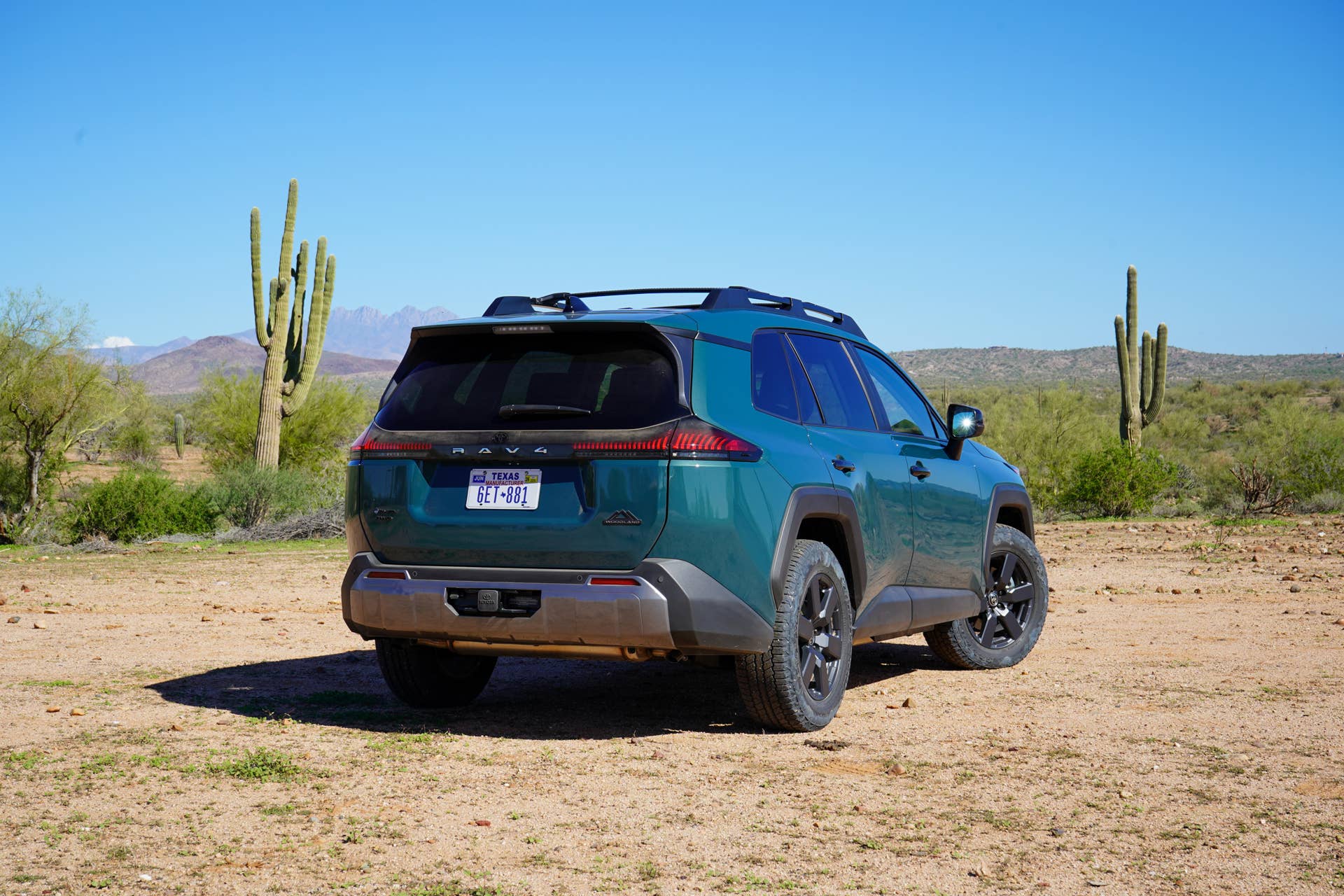
The same 324-horsepower plug-in hybrid mill from the RAV4 GR Sport. All the goodies of the standard RAV4 Hybrid Woodland. Need I say more? Although I loved the CR-V’s overall driving dynamics most, the plug-in RAV4 Woodland’s massive, on-demand power delivers top-notch acceleration paired with class-topping efficiency, which is certainly nothing to scoff at. With its electric-first plug-in hybrid powertrain, the RAV4 Woodland PHEV boasts over 107 MPGe when combining both the electric and combustion-powered motors. This astonishing figure will surely save you plenty of dough at the pumps, but you will, however, notice a difference in this SUV’s up-front cost. Although Toyota has yet to release official pricing for the plug-in Woodland, sources expect the SUV to cost somewhere around the high-40-thousand- or low-50-thousand-dollar range—a massive jump from its classmates.
Cole Attisha
Despite its likely high price tag, the RAV4 Woodland PHEV can travel up to 49 miles on a single charge without ever using the combustion engine. With the gas engine, however, this SUV can achieve a combined range of around 500-550 miles. For me, the combination of the all-new RAV4 Woodland’s wicked good looks, its fresh interior, its potent performance, and its class-topping efficiency makes it one of the most intriguing offerings in the segment. If the RAV4 Hybrid is one of the best all-rounders here, the RAV4 PHEV is the best-est. Still, the RAV4 Woodland PHEV’s greatness won’t come cheap, and it’s not even the best “hiking boot” here for actual hiking (or off-roading, rather). That, my friends, is undoubtedly the Subaru. Read my focused 2026 Toyota RAV4 Woodland review by clicking here.
1. 2026 Subaru Forester Wilderness
Cole Attisha
As a long-time Subaru loyalist and an avid enthusiast of the brand’s storied past, I’ve often found myself extremely critical of modern-day Subaru. When I first drove the 2026 Forester Wilderness, I was unhappy with its squeamish little 180-horsepower 2.5-liter four-cylinder engine, its dinky CVT, and the fact that it still possessed the same awful infotainment screen that I was forced to suffer through life with in my very own 2023 WRX, despite other 2026 models such as the Outback receiving updated, and massively improved, software and hardware. Despite an entirely new platform and model generation, the 2026 Forester Wilderness didn’t even look all that different from the one it replaced, unless you looked closely enough. The Forester is also the least efficient crossover here, achieving just 24 City MPG, 28 Highway MPG, and 26 MPG combined.
Cole Attisha
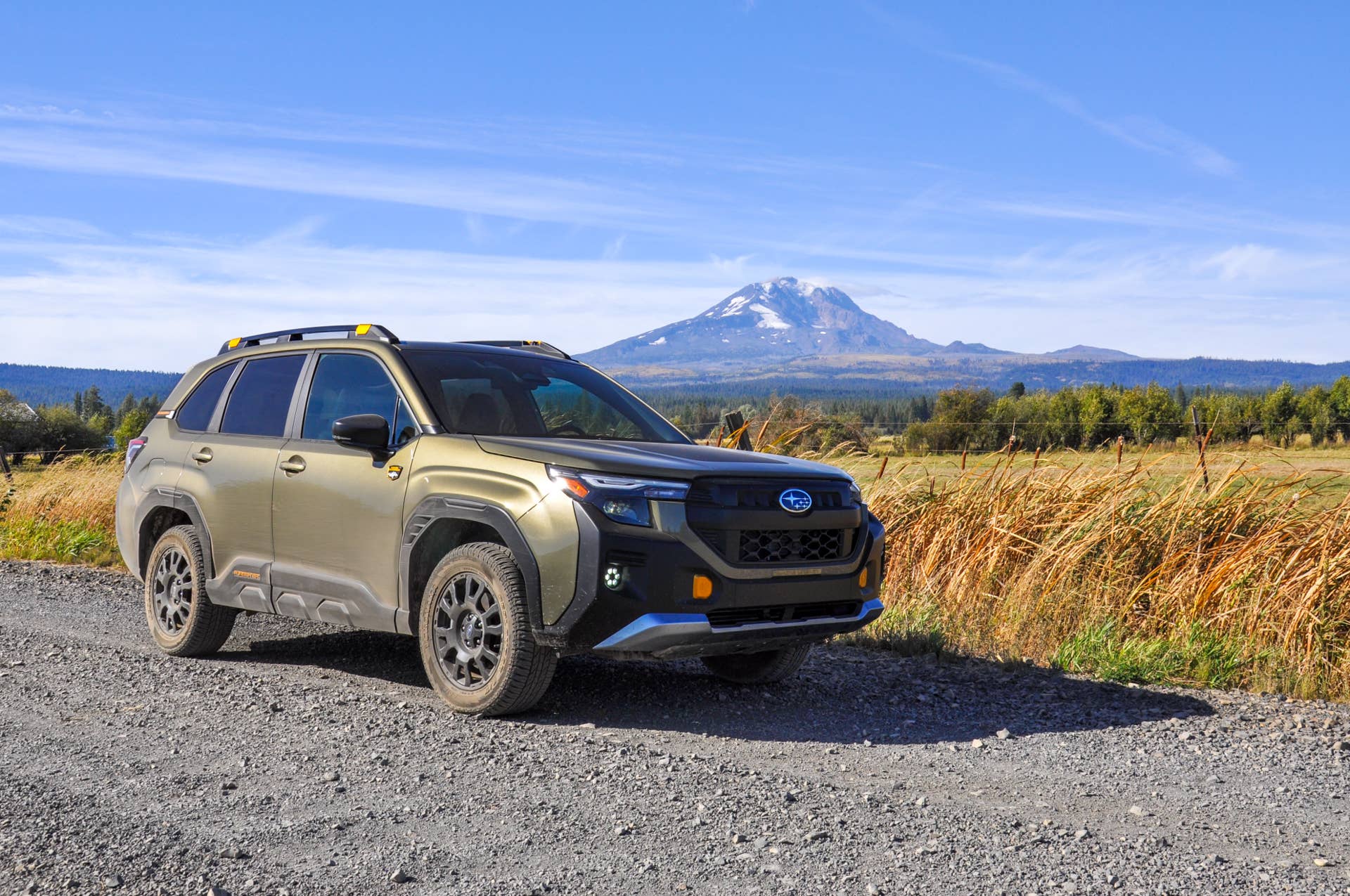
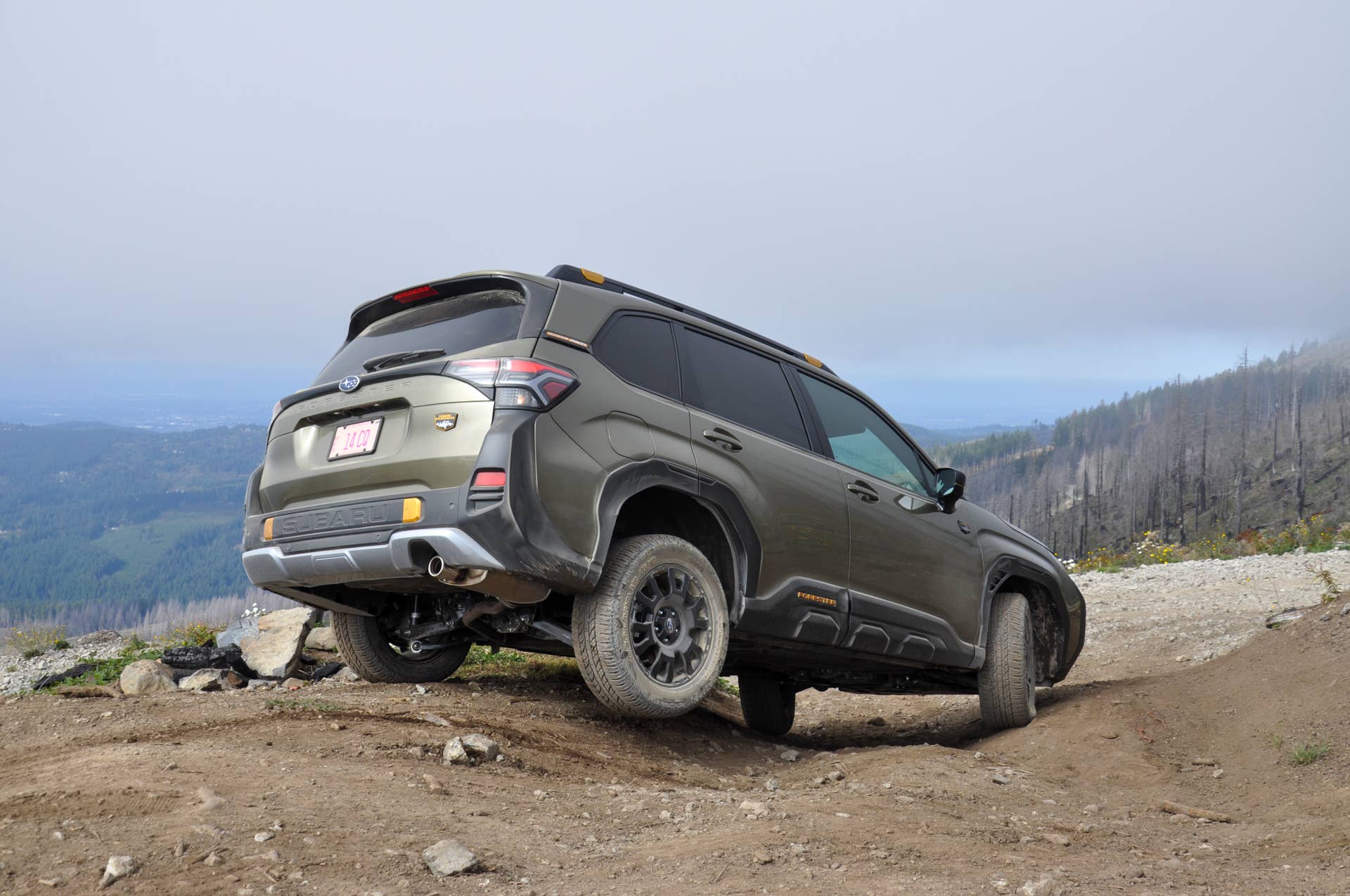
Then I left paved roads behind. For the rest of the day. Then I saw the light. With 9.3 inches of ground clearance, a 23.5-degree approach angle, a 25.5-degree departure angle, and a 21-degree breakover angle, the Forester Wilderness wasn’t just the best off-roader on this list on paper; it even proved itself in practice. Using “X-Mode,” the Forester Wilderness climbed up literal mountains with no hesitation, took brutal underbody beatings from sharp, jagged boulders like they were mere creekside pebbles, and drove on loose surfaces as if they had magically become fresh tarmac. If I had to take any of these five SUVs off-road, the Forester Wilderness would be my immediate top choice.
Beyond its off-road excellence, the Forester offers additional features that enhance its durability and overall ruggedness. For example, its StarTex upholstery is waterproof, scratch-resistant, easy to clean, and can withstand even the sharpest puppy paws. It benefits from class-leading towing, tied with the RAV4 at 3,500 lb. Perhaps most importantly, especially for off-roading, the Forester Wilderness is also the lightest offering in its segment, weighing just 3,675 lbs. Of course, it’s one of the least expensive offerings, priced at just $38,385, beaten only by the Rogue Rock Creek.
2026 Subaru Forester Wilderness Subaru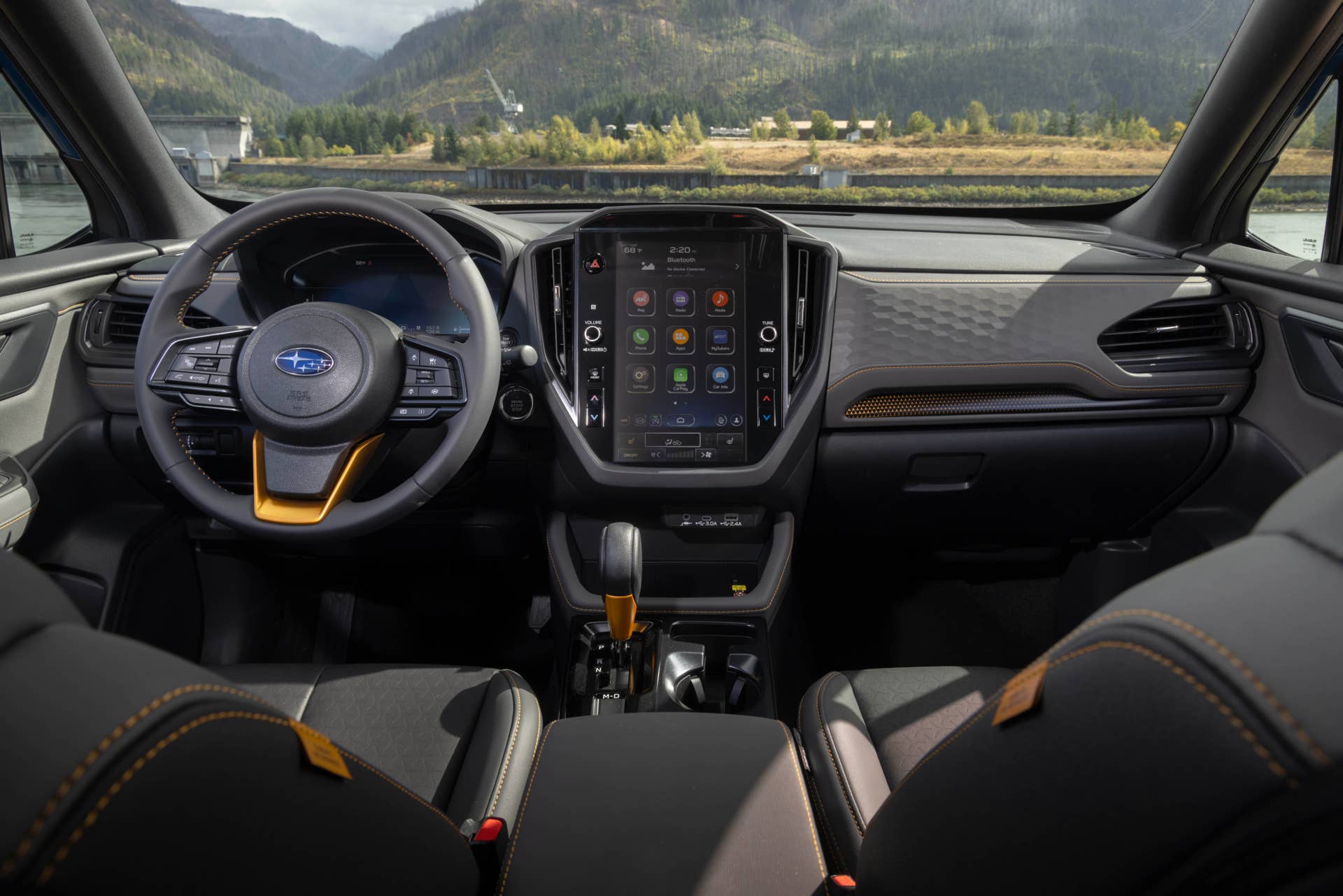
View the 4 images of this gallery on the
original article
The fact is, when you’re shopping for hiking boots, you want the ones that are best for hiking. Sure, maybe that rugged pair of sneakers is more comfortable, and perhaps those trail-capable runners will let you run faster. At the end of the day, when your life is on the line, and you’re barely hanging on to a jagged rock face, you’ll wish you had chosen the most capable boots to get you out of there alive. That’s just what the Forester Wilderness is. All of these SUVs will get you deep into uncharted territory, but the Forester is the most likely to get you back out again. If the RAV4 Woodland is a capable pair of Nike hiking shoes, then the Forester Wilderness is like a pair of Solomon Gore-Tex boots. Read my focused 2026 Subaru Forester Wilderness review by clicking here.
Cole Attisha
Final thoughts: Do any of these crossovers really make any sense?
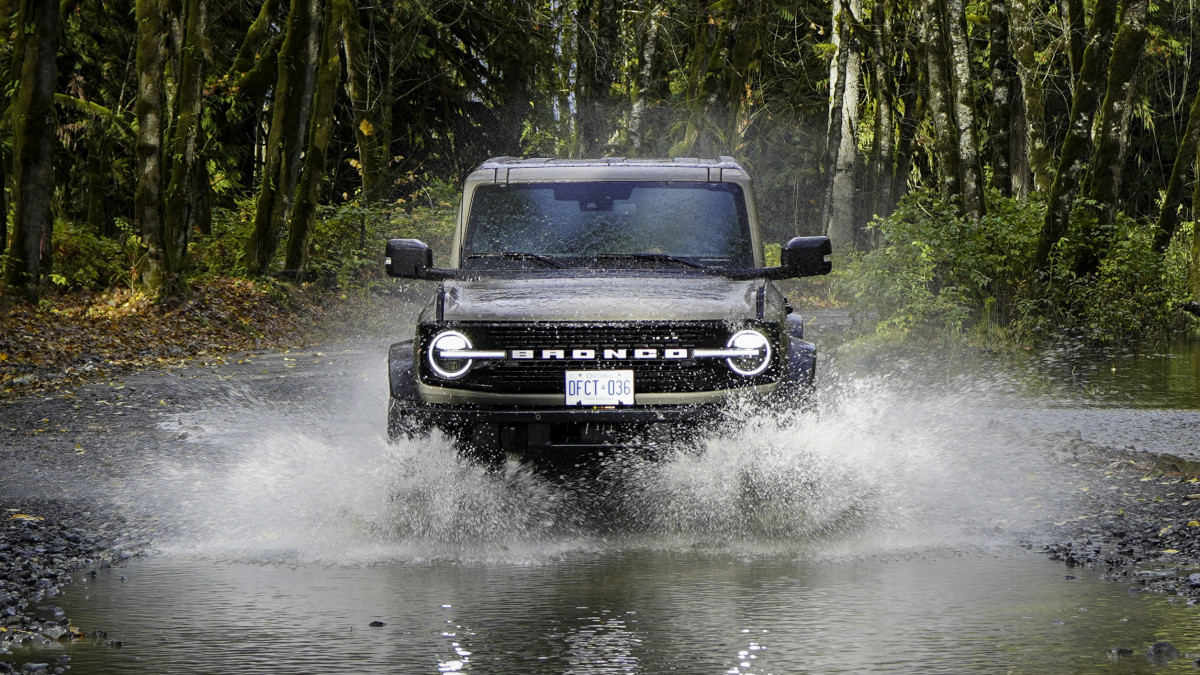
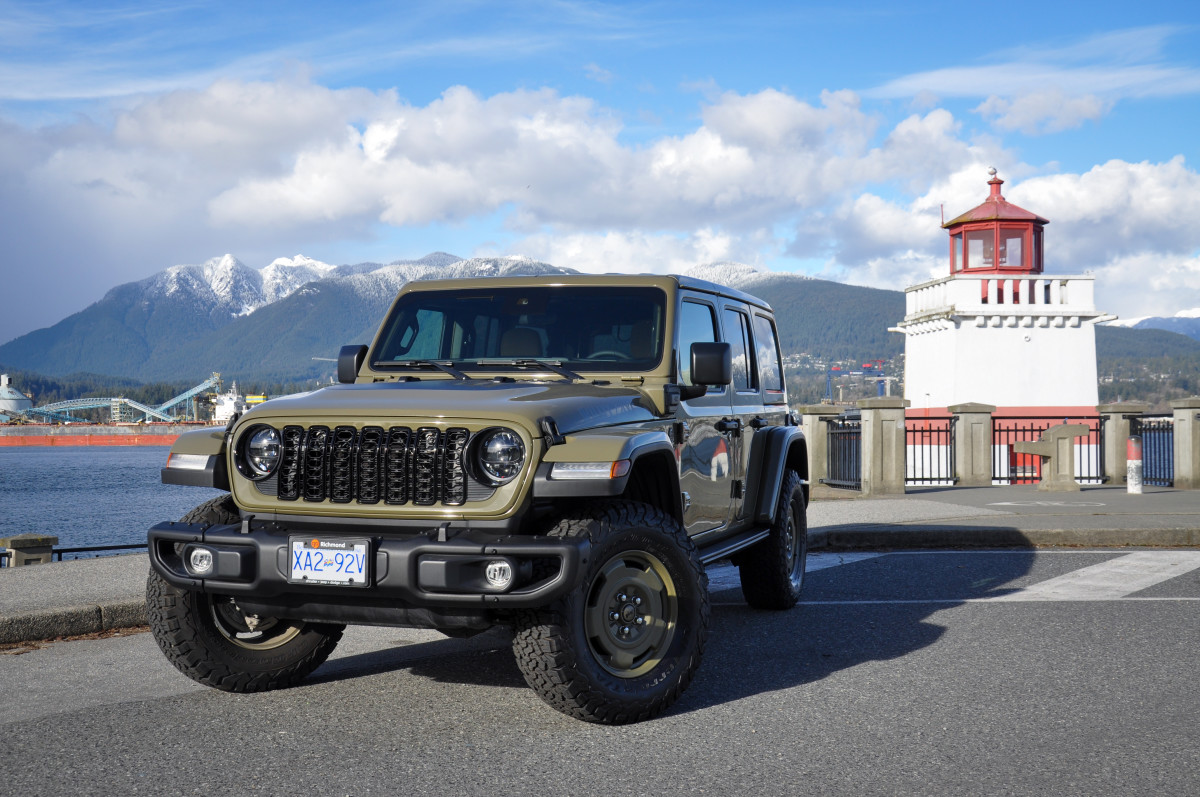
Although each of these crossovers has undeniable charm and is, for the most part, surprisingly capable off-road, I still have some doubts about this entire segment in general. For example, for essentially the same price as most of these SUVs (except for the Rogue), you could instead buy a four-door Ford Bronco Base, which offers authentic body-on-frame ruggedness and the capability of true four-wheel drive with a two-speed transfer case. For even less, you could purchase a similarly-equipped Jeep Wrangler Sport four-door. Those off-roaders are not only more capable off-road, but they’re also more powerful and more spacious. So, if you’re really after heavy-duty hiking boots, why not purchase something that makes every aforementioned crossover seem like a pair of bowling shoes?
Cole Attisha
Of course, unless you pony up the extra cash for the plug-in hybrid Wrangler 4XE, neither of these hardened off-roaders will provide you with anything close to the efficiency of these Japanese crossover offerings, nor will they offer much in the way of inner-city comfort. So, then, the appeal of these adventure-ready crossovers must be that they are capable of city duty, AND also capable of off-road duty. Don’t mistake that with “finding a balance between” city-friendliness and off-road readiness, because that’s what the standard crossover variants of each of these models—the Rogue, the CR-V, the RAV4, and the Forester—were designed for. No, for an adventure-ready off-road crossover to truly make sense, it must be, first and foremost, extremely capable off-road, but also viable to live with in a densely populated city.
Ultimately, while its rivals make genuinely compelling attempts to blend off-road chops with daily-driver convenience, and some, like the excellently handling CR-V TrailSport, won over my heart and soul more easily, the Subaru Forester Wilderness is the only offering that delivers genuine off-road excellence without compromise. Yes, it may not be as efficient or as powerful as the Rogue, it may not be as exhilarating to drive as the CR-V, and it may not be as efficient as the RAV4, but the Forester is still compact enough, spacious enough, and comfortable enough to satisfy most of the needs of daily life. To offer all that without sacrificing its surprisingly adept off-road performance is a truly impressive feat for Subaru, and so I believe the Forester Wilderness is more than deserving of the top spot here.
Do you think I’ve gone insane and that obviously the RAV4 PHEV should have won for its massive power figures? Should the Rogue have taken the crown for its budget-friendly price tag? Should I have given the trophy to the CR-V merely because it was the most memorable of the bunch? Feel free to share your thoughts in the comments!