

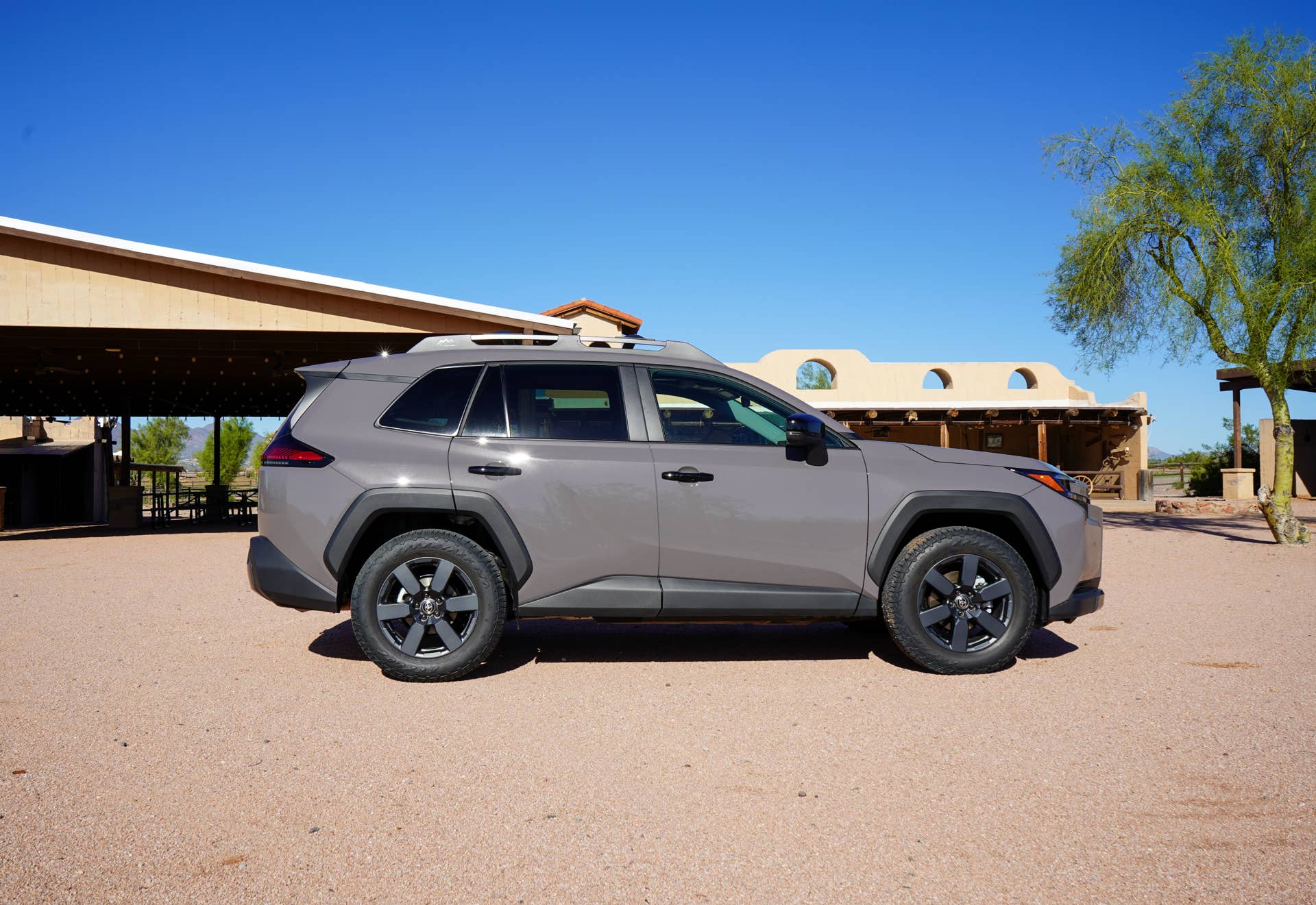
The Woodland trim was introduced to the RAV4 in 2023, and while it didn’t come with any crazy off-road specific updates like a factory lift, metal underbody protection, or dedicated trail software, it did come with TRD-tuned suspension for better trail damping, Falken WILDPEAK All-Terrain tires, and bronze-colored flow-formed wheels. It boasts increased ground clearance (up to 8.5 inches), standard AWD with Trail Mode, matte black exterior cladding, and high-profile roof rails. The interior was black cloth, and if you wanted, it could come with all-weather cargo mats for the footwells and trunk. It wasn’t built to handle anything crazy, but it sure looked like it could.
Cole Attisha
The 2026 model follows the same philosophy as the first Woodland RAV4, with minimal meaningful off-road updates. The main—and most important—difference this time around is the updated hybrid system. The 2023 model was a hybrid, too, but it didn’t make as much horsepower. The 2026 Woodland uses the company’s new 2.5-liter four-cylinder hybrid powertrain, producing 236 net combined system horsepower, which is an increase over the 219 horsepower found in the last Woodland.
Kristen Brown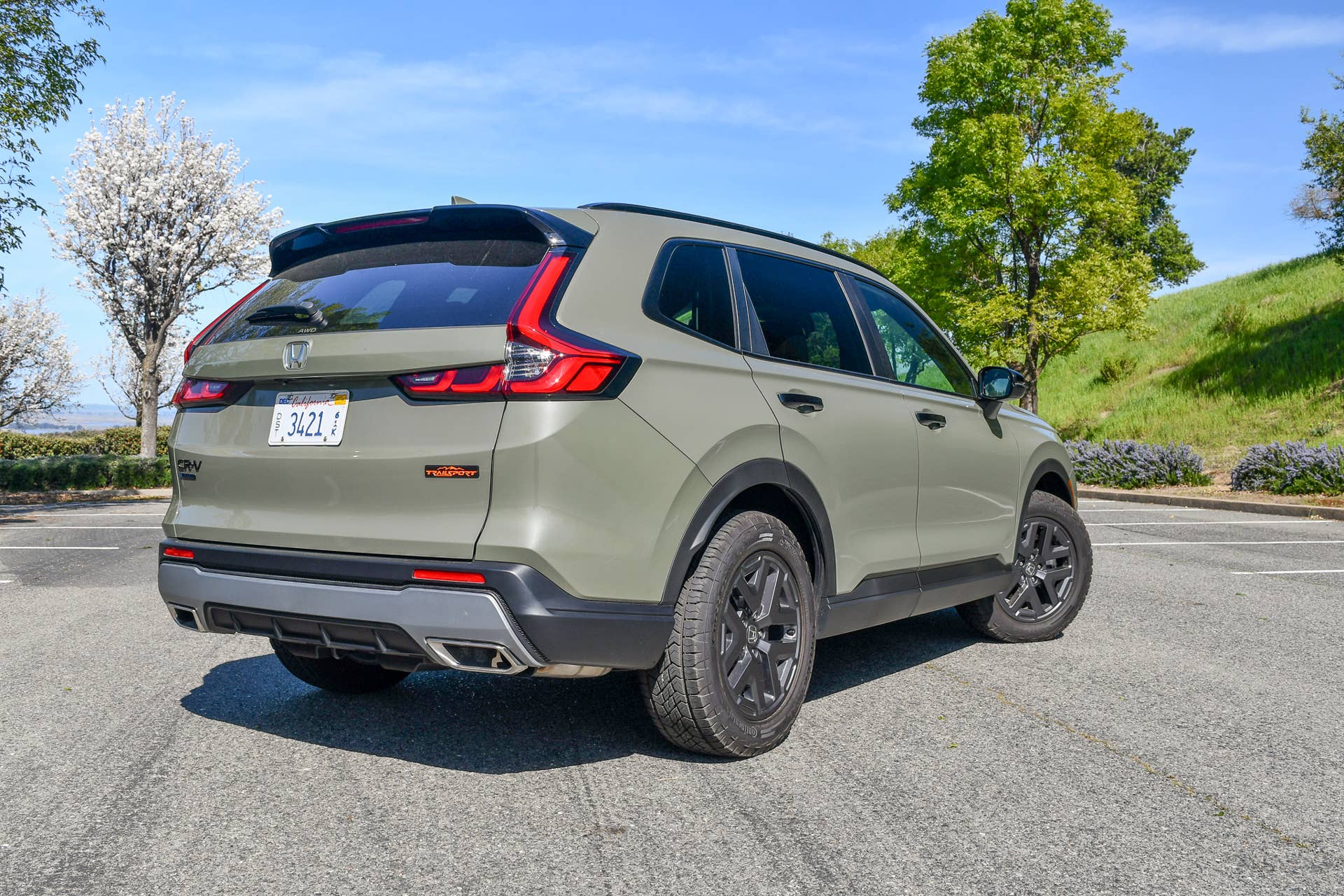
The 2026 Honda CR-V TrailSport, on the other hand, is all-new for the lineup. Until now, the only TrailSport models were the Pilot, Ridgeline, or Passport. It’s very similar to the Toyota in the sense that it’s hybrid-only, AWD-only, and around the same size, without there being heavy-duty off-road-oriented updates involved other than all-terrain tires and updated exterior styling. In that case, which is best? Let’s dig in.
Related: Road Ethos Launches: The New Automotive Lifestyle Site You Should Read
As far as off-road updates go, they’re about the same
The 2026 RAV4 Woodland and the 2026 CR‑V TrailSport both lean into the same soft‑roader formula, but they get there in slightly different ways. Toyota essentially carries forward Woodland’s original playbook: TRD‑tuned suspension, Falken Wildpeak A/T tires, bronze wheels, and a mild bump in ground clearance remain the core upgrades. What’s new—and genuinely meaningful—is the stronger, higher-horsepower hybrid system. Beyond that, the updates are mostly cosmetic or equipment‑based: the same matte black cladding, the same roof rails, and the same rugged‑themed cabin. Toyota still doesn’t add skid plates, a lift, or any mechanical hardware that would materially change its off‑road ceiling.
Cole Attisha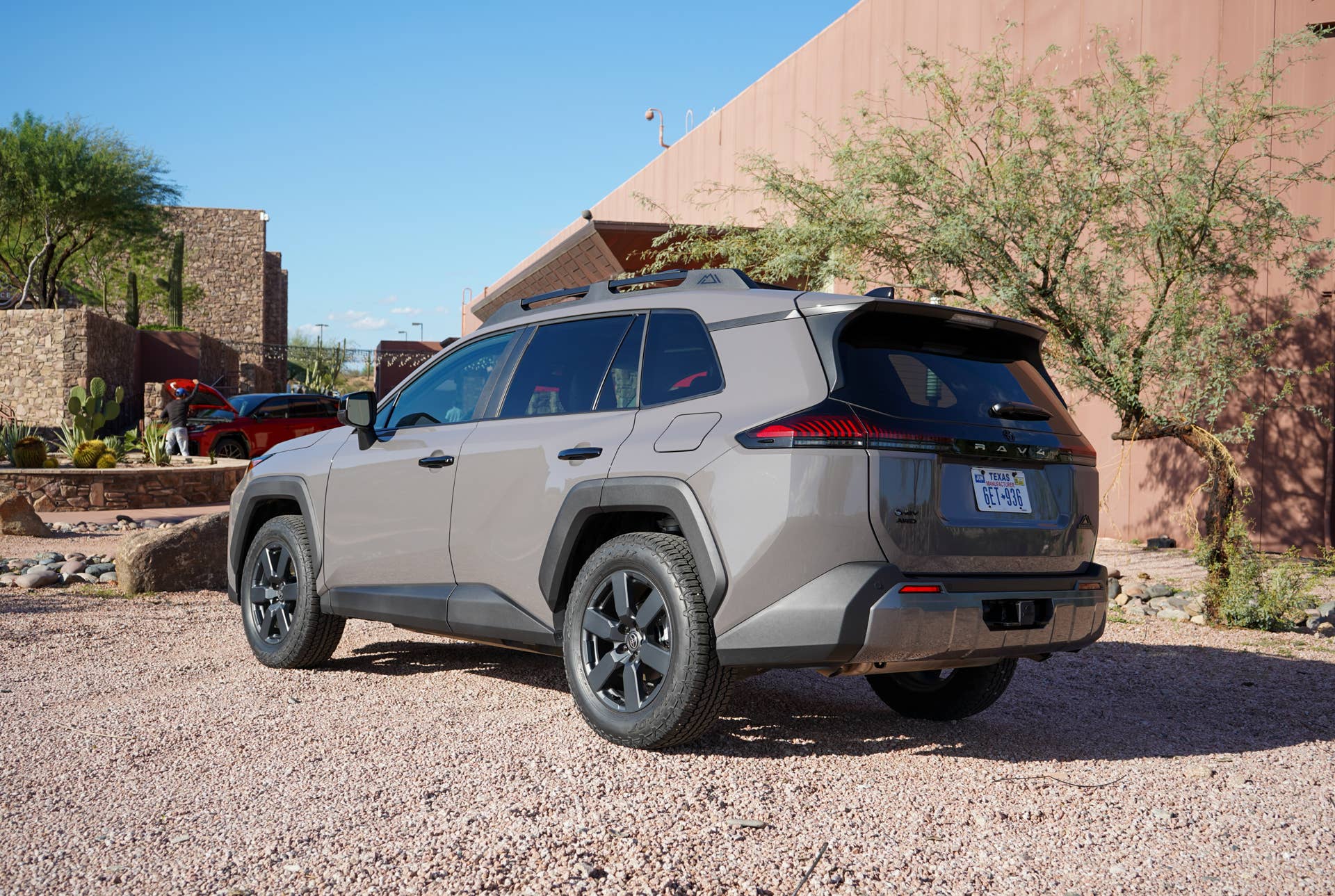
Honda’s approach with the CR‑V TrailSport is similar in spirit but feels more “new” simply because this is the trim’s first appearance on the CR‑V. Its upgrades mirror the Woodland’s—chunkier all‑terrain tires, unique wheels, revised bumpers, and a slightly retuned suspension for better compliance on rougher surfaces—but Honda also folds in a few TrailSport‑specific touches borrowed from its bigger siblings. You get a bit more underbody protection than the standard CR‑V (though still not full steel skid plates), a wider track, and a more comfort‑oriented hybrid system that prioritizes smoothness over outright power.
Kristen Brown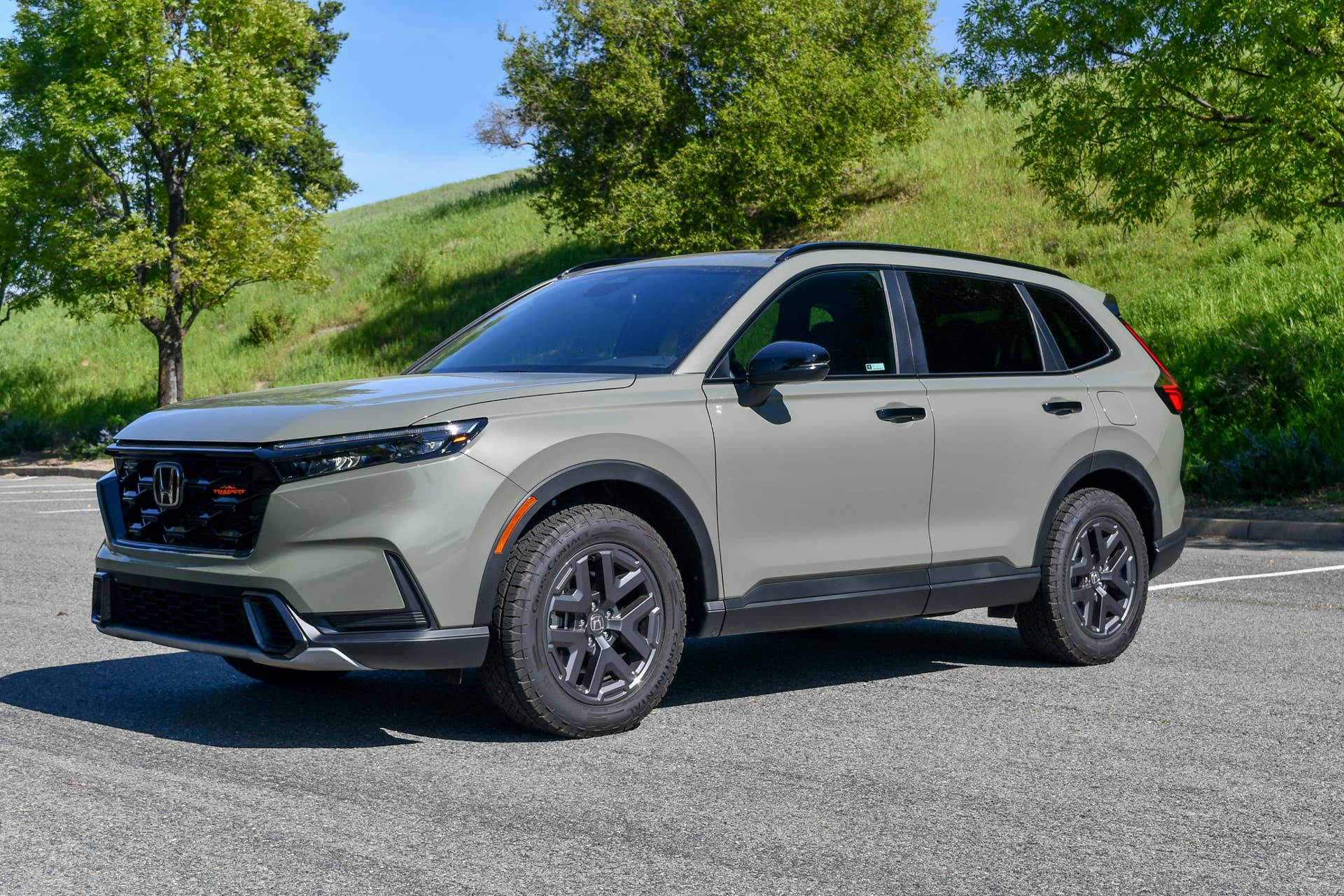
Both SUVs stop short of true off‑road hardware like locking differentials or low‑range gearing, but the CR‑V’s newness and Honda’s more cohesive TrailSport branding make its upgrades feel more intentional, whereas the Woodland continues to be a light‑duty adventure package built on familiar bones.
When it comes to AWD, I would trust Honda’s system a bit more
Toyota’s AWD system, in case you didn’t know, isn’t a true AWD system in the sense that there’s no physical connection between the rear differential and the engine (or transmission). Instead, Toyota relies on an electronic connection to work. So, until slipping is detected or it’s put into a terrain mode that demands a 50/50 split, the RAV4 is front-wheel drive. But, Toyota’s system is reactive, meaning it only kicks on after slipping is detected, not before (unless, again, it’s put into an off-road terrain mode). This is a great system for the sake of mileage, and it’s why Toyota says the Woodland will see more than 30 mpg combined, even with all-terrain tires.
The Honda, on the other hand, combines the best of both worlds. Honda’s all-wheel drive hybrid system uses a mechanical rear differential with a physical connection (meaning a driveshaft) between it and the engine. Instead of an electronic connection to activate it, a computer will connect or disconnect the rear differential when it’s needed. As a bonus, the AWD system is predictive, not reactive—so the computer will connect the rear differential before slipping occurs or traction is lost based on steering, acceleration, and braking data. When I reviewed the CR-V TrailSport, I averaged the same as the RAV4: an astonishing 38 mpg combined.
Kristen Brown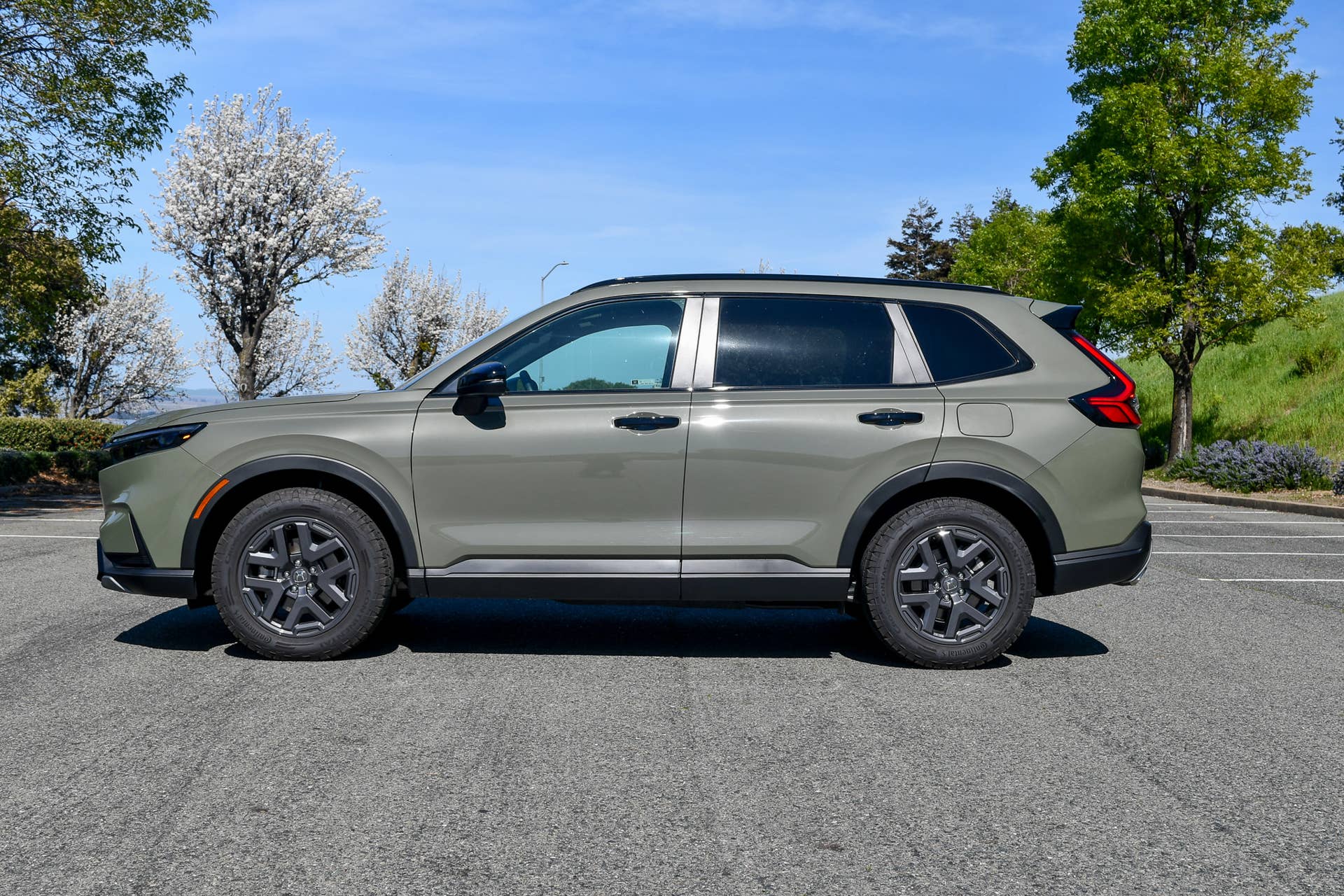
I trust the Honda’s system just because I’m a big fan of a physical, mechanical all-wheel drive system. It feels more reliable and capable of handling stickier situations. A driveshaft, a clutch‑pack rear differential, and physical torque transfer tend to be more consistent under heat, load, and repeated use—especially on long climbs or loose surfaces where the rear axle is working harder. Electric rear motors, like Toyota’s, are efficient and simple, but they can overheat under sustained demand and temporarily reduce rear‑axle assistance, which limits performance when you need it most. Honda’s setup avoids that limitation: the mechanical coupling can deliver torque continuously, and the predictive software reduces shock loads by engaging the rear before slip occurs. The result is an AWD system that not only feels more confident in real-world conditions but is also less likely to fade or disengage when pushed.
Related: Is the 2026 Honda CR-V TrailSport Hybrid Worth $40,650? A Week Revealed Its Strengths and Weaknesses
Price-wise, they’re so similar, it’s hard to tell which is the better deal
The price for both SUVs is eerily similar. The base MSRP for the Toyota is $39,900, while the Honda CR-V TrailSport starts at $40,150. So, trying to decide which is better for the money is harder than I thought it would be. The Honda CR‑V TrailSport gives you a newer hybrid system, a more sophisticated AWD layout, nearly identical fuel economy to the Toyota, and a cabin that feels simpler and more user-friendly, all while costing less than the fully-loaded RAV4 Woodland (often just over $42,000). And crucially, Honda’s upgrades aren’t just cosmetic. The predictive AWD system actually changes how the vehicle behaves on loose surfaces. The suspension tuning improves ride quality on broken pavement. You’re getting functional improvements that matter to someone who wants a family‑friendly SUV that can be driven every day and that can also handle dirt roads without drama.
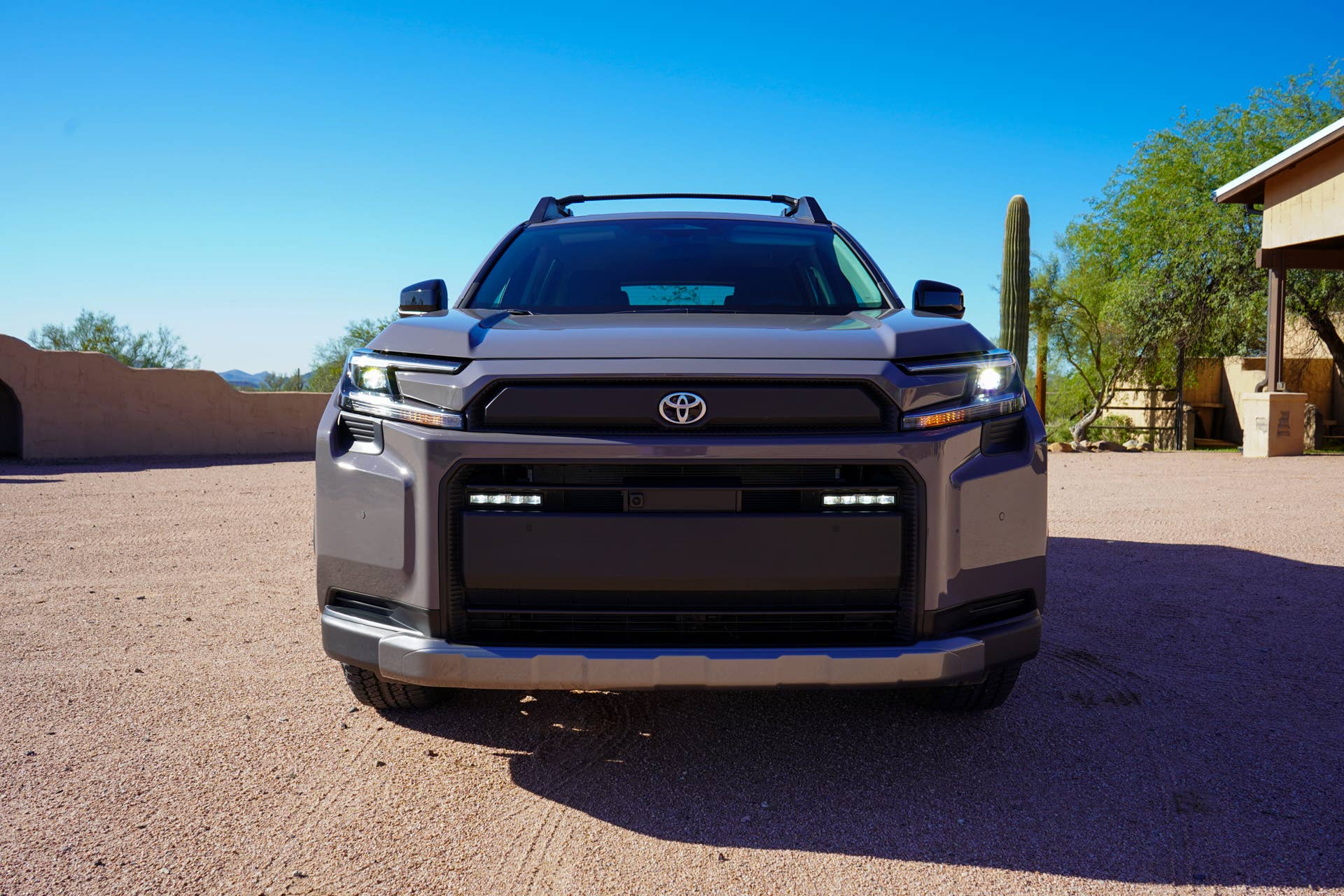
Toyota’s Woodland packaging is charming and undeniably cool‑looking, but most of what you’re paying for is the aesthetic—bronze wheels, A/T tires, black cladding, and the TRD‑tuned suspension. The new hybrid system is a real improvement power-wise, but the AWD hardware is still the same reactive, motor‑driven setup, and the rest of the upgrades don’t fundamentally change how the RAV4 behaves off‑road or on pavement. The new RAV4 is a great option and it’s bound to be exceptionally popular, but the CR-V will be for the same reasons. It’s adaptable, affordable, adorable, and capable. The interior is nicer in the Toyota compared to the Honda, but that’s subjective.
Kristen Brown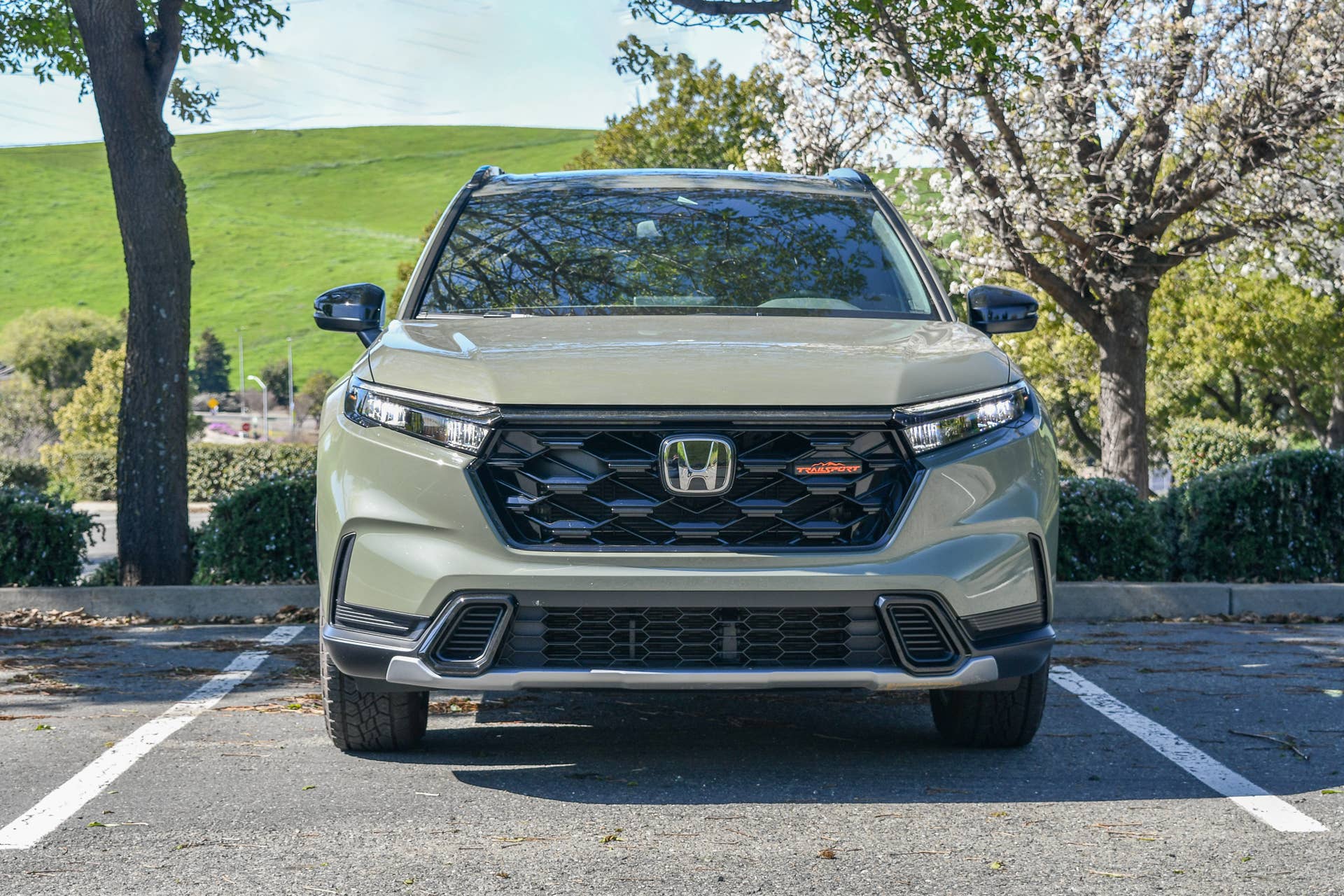
What makes it harder is the fact that both companies are reputable and known for being reliable. So, it’s harder for me to recommend one over the other when the conversation is strictly about pricing.
The Honda has more cargo and passenger space, making it better for everyday driving
The 2026 Honda CR‑V TrailSport offers 36.3 cubic feet of cargo space behind the second row. That’s one of the strongest numbers in the segment and a big part of why the CR‑V is such a family favorite—it’s wide, tall, and very usable, especially for strollers, wagons, or dogs.
Kristen Brown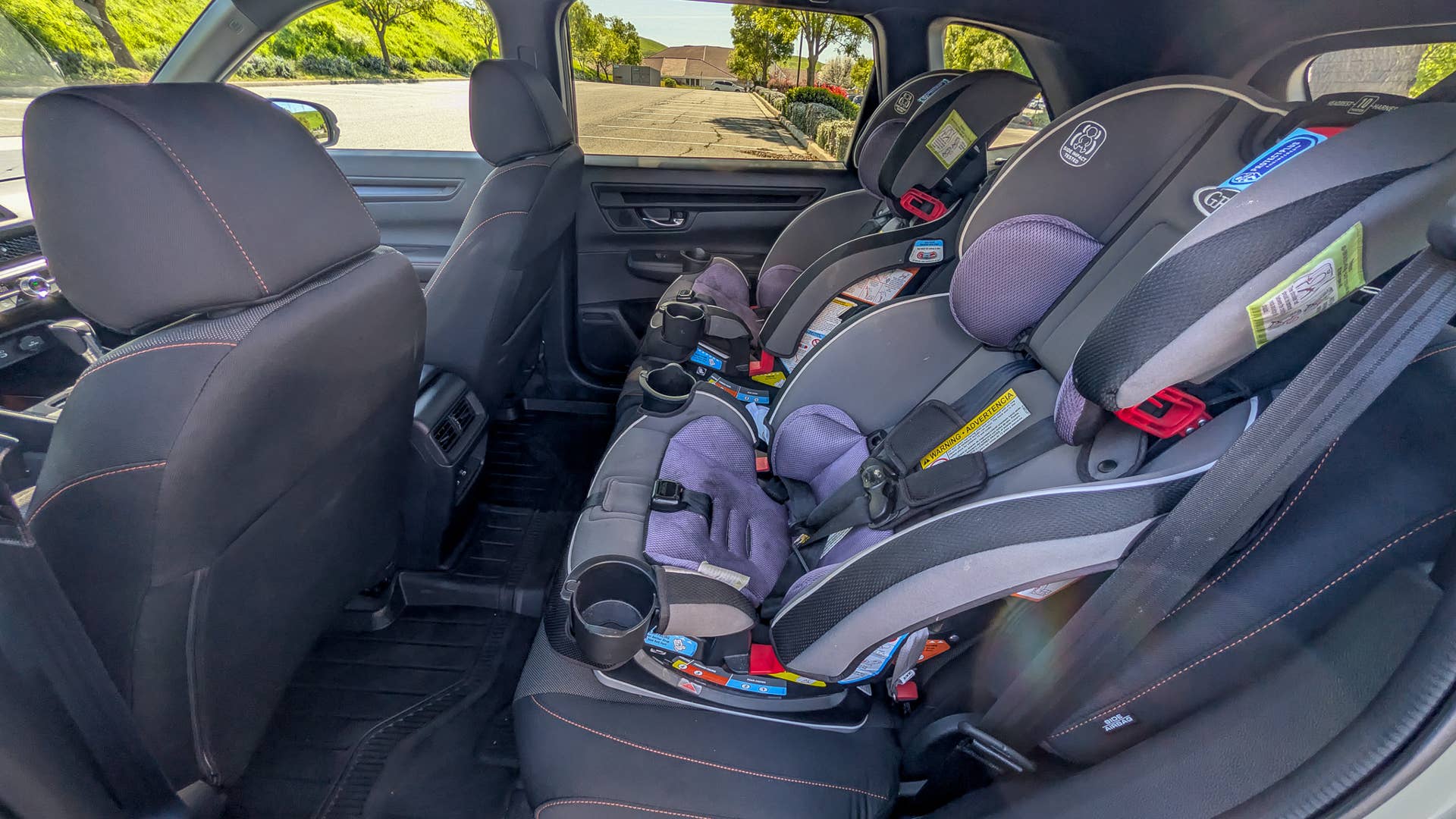
The 2026 Toyota RAV4 Woodland comes in lower. Toyota hasn’t published final numbers for the refreshed model yet, but the Woodland historically mirrors the standard hybrid’s cargo rating, which is 37.5 cubic feet in the non‑moonroof trims and around 35–36 cubic feet in trims with the panoramic roof. The Woodland includes the pano roof, so its real‑world usable space ends up slightly below the CR‑V’s. So while the numbers are close, the Honda gives you more consistent, more accessible cargo room, and the shape of the space is friendlier for bulky family gear.
If rear legroom is called into question, there’s more in the Honda. The 2026 CR‑V TrailSport offers 41.0 inches of rear legroom, which is one of the most generous second rows in the compact SUV class. It’s long‑leg‑friendly, car‑seat‑friendly (ask me how I know that), and just generally more comfortable for adults or growing teens. Kids can stretch out, rear‑facing seats fit without crushing the front row, and taller passengers don’t feel like they’re being punished. And rear passengers are treated to their own A/C vents and USB-C charging ports, too.
Toyota USA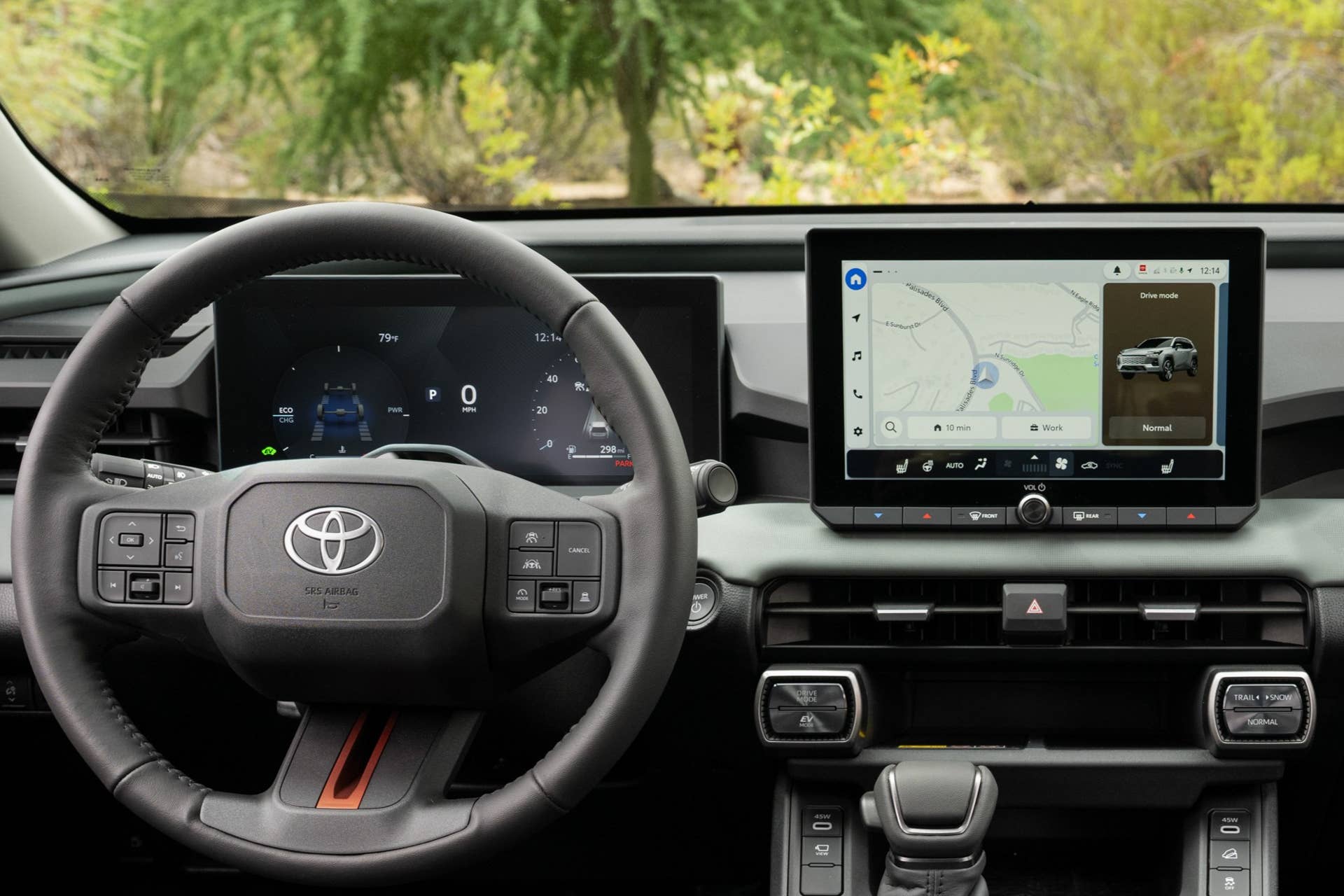
The 2026 RAV4 Woodland comes in noticeably tighter. The RAV4’s rear legroom is 37.8 inches, which is fine for kids but much less accommodating for adults. It’s one of the smallest rear rows in the segment, and you feel it immediately if you’re tall or if you’re installing a bulky car seat. So if rear‑seat comfort is part of the buying equation—and for most families it is—the Honda has a clear advantage.
Related: Toyota RAV4 Woodland Gets the Hardcore Off-Road Upgrades It Deserves
Both are incredibly safe options for families, so it’s a tie
Both SUVs come well‑equipped with modern safety tech, thank goodness. The CR‑V TrailSport includes Honda Sensing as standard, which means you get adaptive cruise control, lane‑keeping assist, lane‑centering, traffic‑jam assist, forward collision mitigation, and blind‑spot monitoring with rear cross‑traffic alert. Honda’s tuning tends to feel smoother and less intrusive, especially with lane‑centering and adaptive cruise—features parents rely on during long highway stretches with kids in the back. The CR‑V also adds a wide‑angle front camera and improved radar for better object detection, too, which came in handy when parking.
Kristen Brown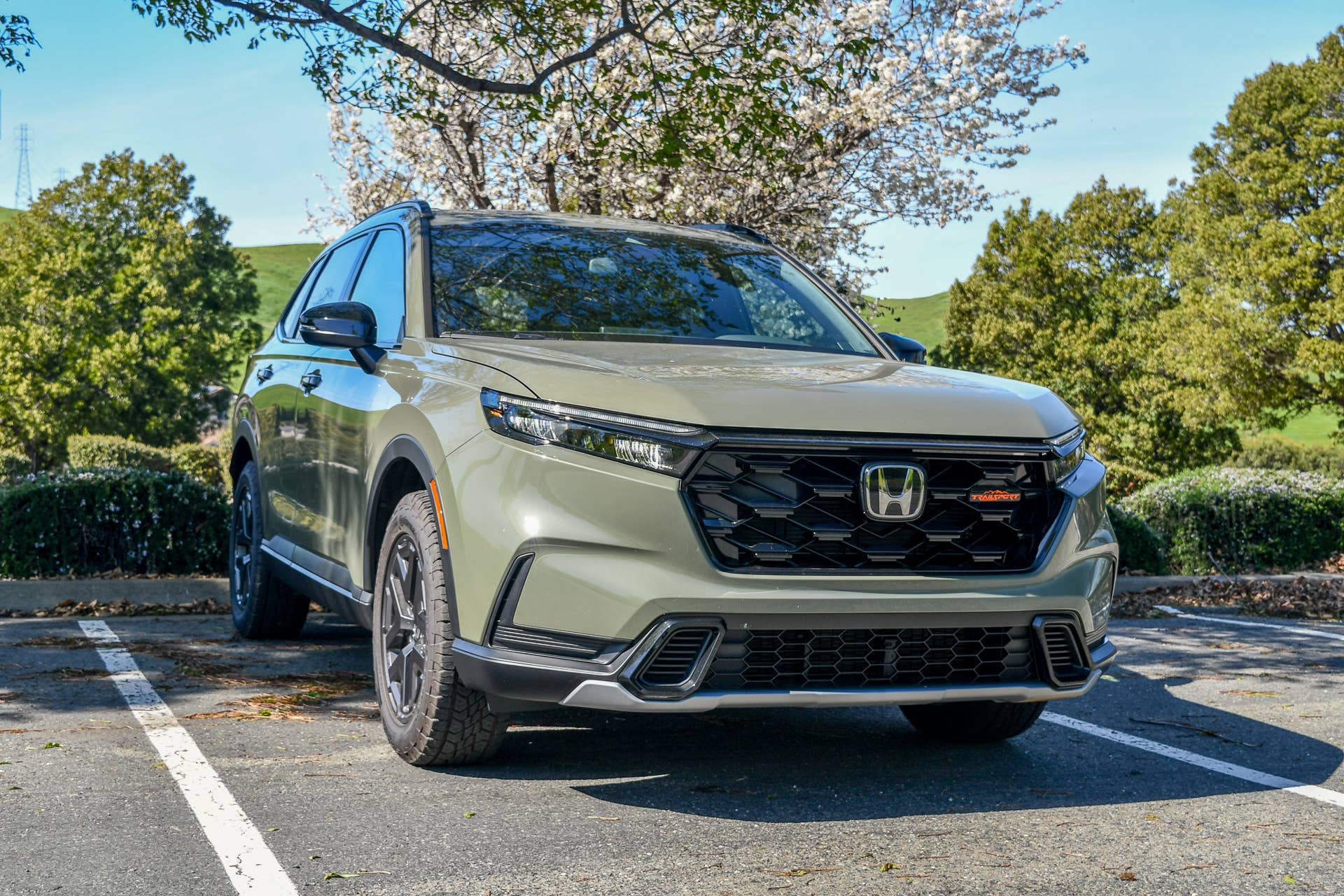
View the 2 images of this gallery on the
original article
The RAV4 Woodland brings Toyota Safety Sense 3.0, which is a strong suite in its own right—pre‑collision braking, lane‑tracing assist, adaptive cruise, road‑sign assist, and blind‑spot monitoring are all standard. The forward camera has a wider field of view, and the radar unit is more precise, which helps the system detect pedestrians, cyclists, and vehicles earlier and in more complex situations (like intersections or low‑light conditions). Pre‑Collision System with pedestrian detection is standard, and it now supports intersection‑turning assist, which can warn you—or even brake—if you’re about to turn across oncoming traffic. Lane Tracing Assist is smoother than older versions, keeping the RAV4 centered with less ping‑ponging, and the adaptive cruise control reacts more naturally to speed changes ahead. Road Sign Assist and automatic high beams round out the suite, making the Woodland feel well‑equipped even without stepping up to a higher trim.
When it comes to convenience features, the Toyota holds the crown
One thing I noticed—almost immediately—about the Honda was its lack of convenience features. For the money, it didn’t have things like a 360-degree view when parking (or any other parking assist feature, now that I think about it), seat memory functions, and more. The Woodland, on the other hand, can have one as an add-on, and you can opt for features like a power passenger seat, memory settings for the driver’s seat, and a more robust parking sensor setup—though it will drive up the price. Toyota’s infotainment system also supports a larger available screen than Honda’s, which makes camera views and navigation easier to see at a glance.
Cole Attisha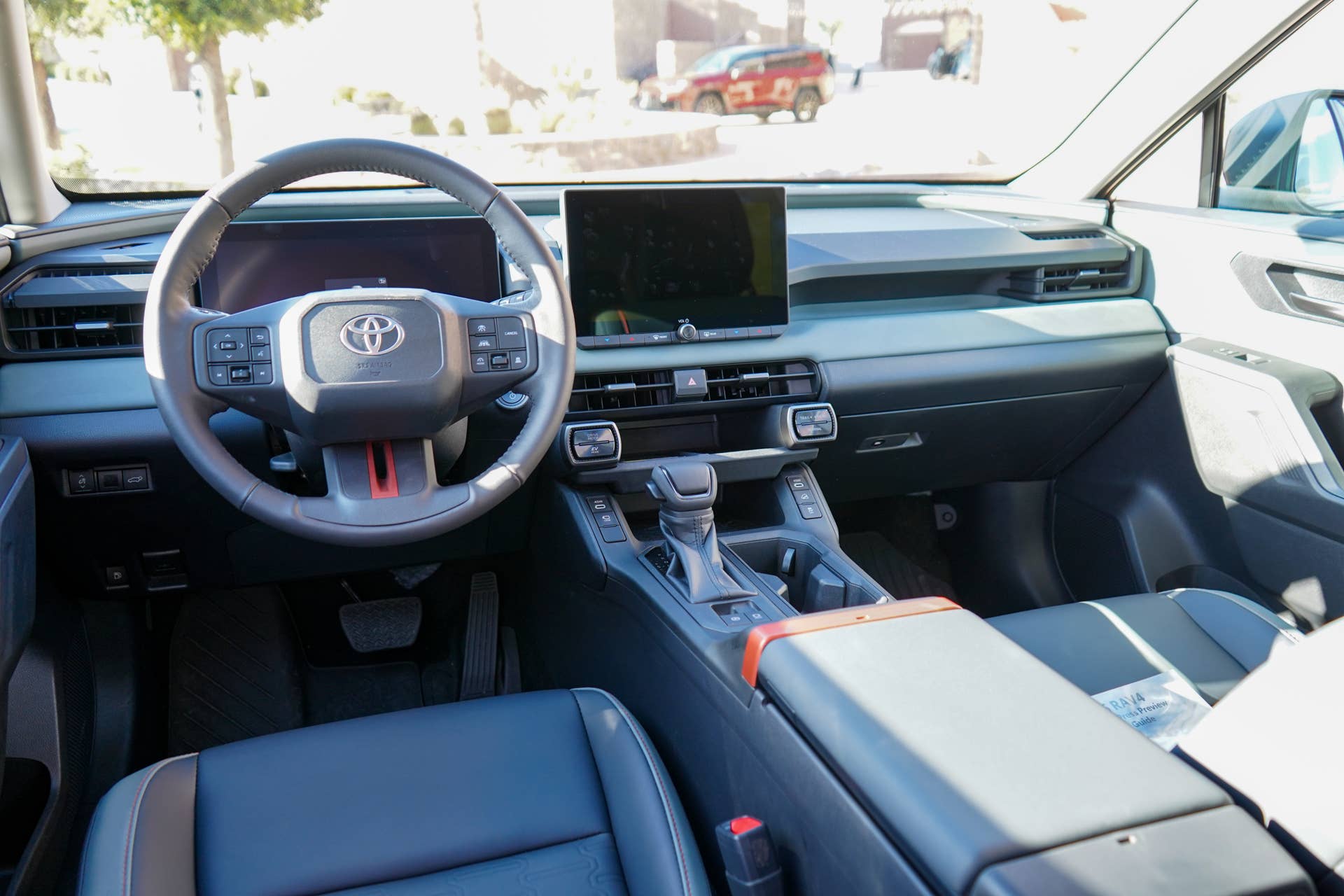
Honda, by contrast, keeps the CR‑V TrailSport focused on the essentials. You get a backup camera (albeit a low-res one), front and rear parking sensors, and Honda’s excellent safety suite, but no 360‑degree camera, no seat memory, and fewer luxury‑leaning touches overall. The TrailSport’s interior is comfortable, well‑designed, and family‑friendly, but Honda clearly prioritized durability and simplicity over premium convenience. For some buyers, that’s a non‑issue; for others—especially those used to higher‑end features in compact SUVs—it’s a noticeable omission. In this specific category, Toyota simply offers more.
Related: Ranking The 5 Most Fuel-Efficient SUVs You Can Buy in 2026
Final thoughts
In the end, both SUVs deliver on the promise of a light‑duty adventure trim, but the Honda simply feels like the more thoughtfully engineered package. The CR‑V TrailSport keeps things simple—no flashy bronze wheels, no rugged‑themed marketing—but backs it up with a more robust, mechanically driven AWD system that engages predictively rather than reactively. Add in the CR‑V’s excellent fuel economy, generous rear‑seat and trunk space, and pricing, Honda’s approach starts to look less like a compromise and more like smart prioritization.
Cole Attisha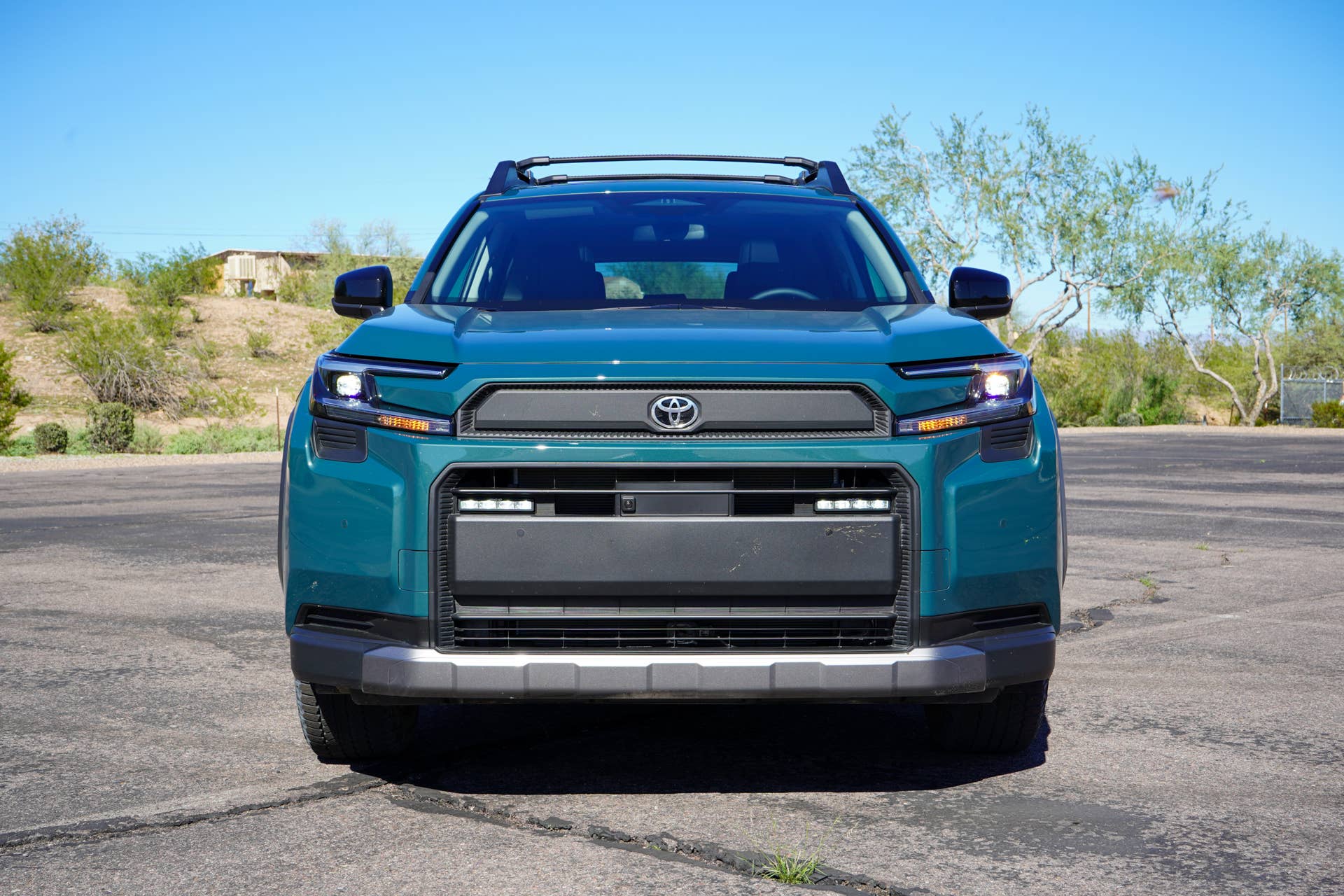
Toyota’s Woodland still has plenty of charm, and its upgraded hybrid system is a welcome improvement, and I most definitely appreciated the increased amount of convienience features and technology compared to the relatively bare-bones Honda. So, which is best comes down to what you’re really looking for at that price range. If you want more technology and creature comforts, the Toyota is a no-brainer. If you want something a bit more no-nonsense, I’d recommend the Honda wholeheartedly.