

MSRP: $24,595, Sedan and Hatchback body styles are available
Use the table of contents to jump to a section
Overview
The 2026 Honda Civic remains one of the most balanced compact cars on sale today. Offered as both a sedan and a hatchback, it blends responsive handling, strong fuel economy, modern technology, and day-to-day practicality without leaning too far in any one direction. Honda’s long-standing reputation for reliability shows through in the Civic’s engineering and execution, while the design and tech feel current rather than carried over. Standard advanced safety features come across as thoughtful rather than intrusive, and the driving dynamics feel polished and predictable. With an available 200-hp hybrid powertrain capable of nearly 50 mpg, the 2026 Honda Civic continues to set the pace for the segment. It suits commuters, young professionals, small families, and anyone who wants efficiency without giving up a sense of engagement behind the wheel.
Honda
What’s New for 2026
The 2026 Civic carries over largely unchanged, which is not a drawback, given how strong the current formula already is. Honda keeps the two-motor hybrid system introduced for 2025, delivering 200 hp alongside excellent fuel economy. The current Civic is part of the 11th generation that debuted for 2022, retaining its crisp exterior design and well-sorted chassis.
Higher trims still offer Google Built-In infotainment, while every version includes the Honda Sensing driver assistance suite. LED exterior lighting remains standard across the lineup, along with improved cabin materials and available 18-inch alloy wheels. In short, Honda focused on consistency rather than reinvention for the 2026 Civic.
Honda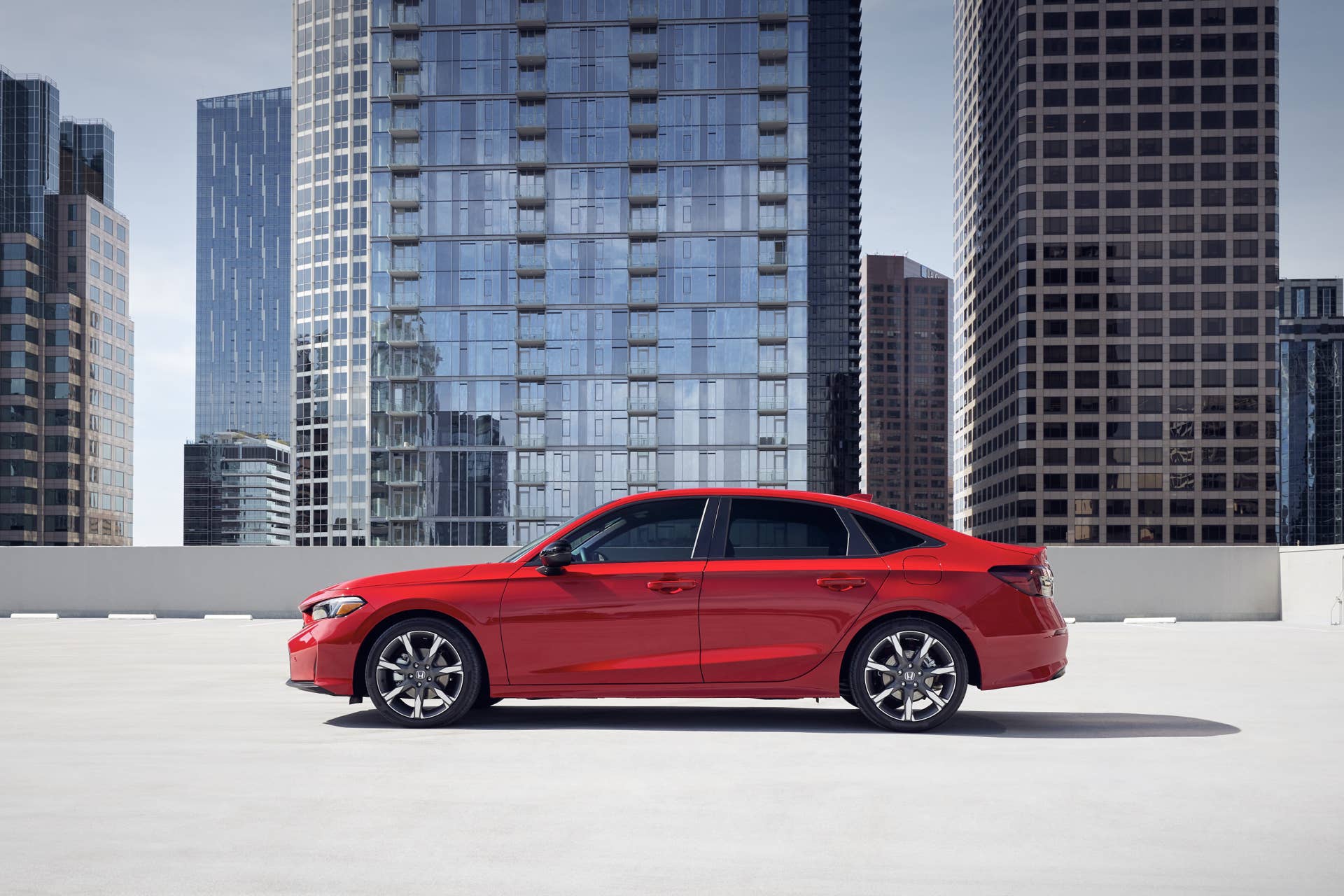
View the 3 images of this gallery on the
original article
Exterior
The exterior design of the 2026 Honda Civic strikes a clean balance between sporty and restrained. Slim LED headlights give the front end a sharp, focused look, while the low, wide stance helps the car sit confidently on the road. Subtle creases run along the sides, adding visual tension without making the design feel busy.
Base LX models ride on 16-inch wheels with full covers, while Sport and hybrid trims move up to 18-inch gloss-black alloy wheels. The Sport Touring Hybrid adds matte shark gray wheel inserts that set it apart visually. Chrome exhaust finishers, body-colored mirrors with integrated LED turn signals, and a fin-style roof antenna round out a design that feels cohesive. A hatchback body style is also available, but only in hybrid format and in Sport, Sport Hybrid, and Sport Touring trim levels
Honda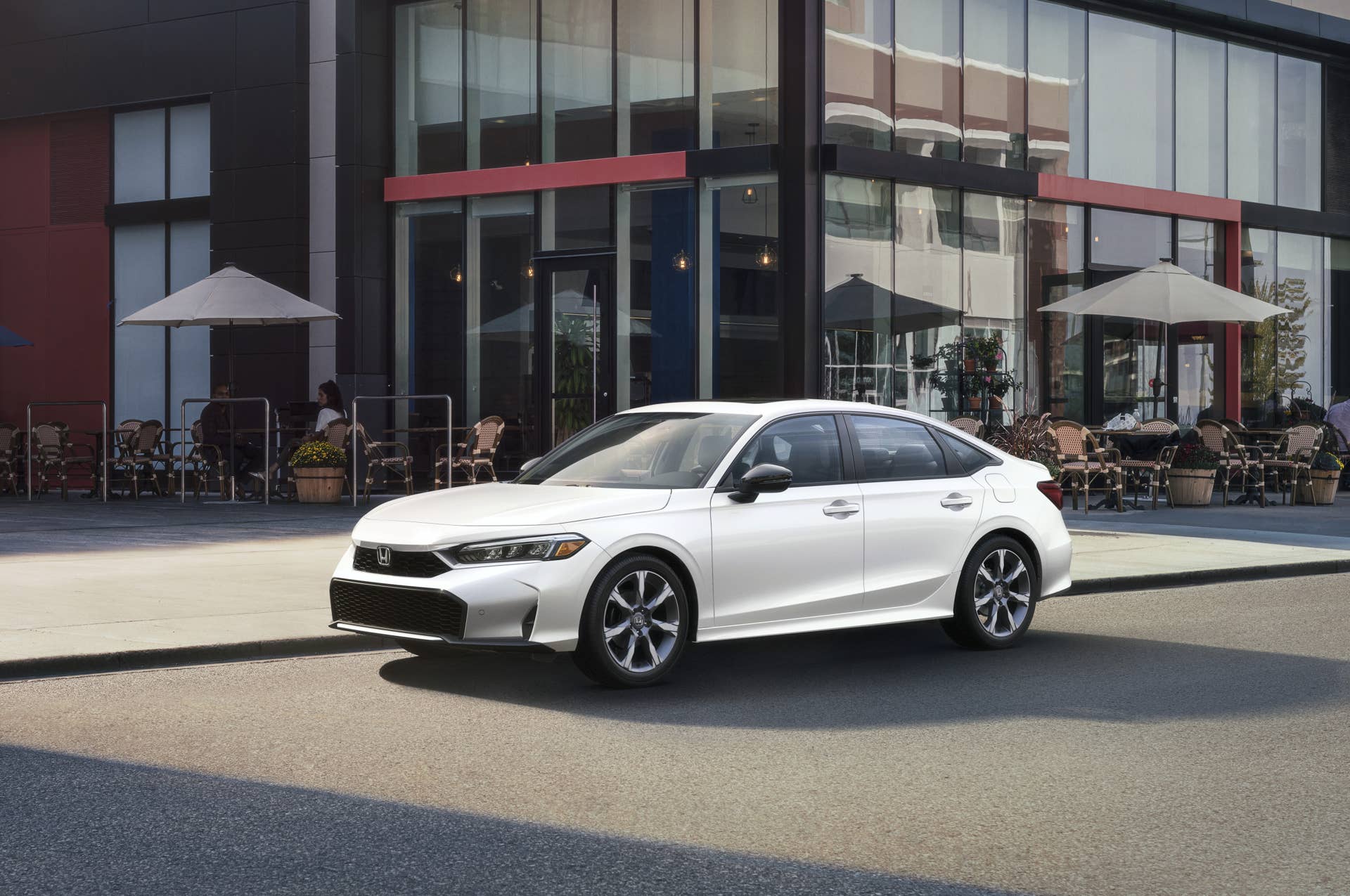
Interior
Inside, the Civic continues to impress with a layout that is both modern and easy to live with. The dashboard design is clean and horizontal, helping visibility and reducing visual clutter. Soft-touch materials across the dash and doors elevate the cabin beyond what many expect from a compact sedan. Controls fall naturally to hand, which keeps daily driving simple and distraction-free.
Front-seat occupants benefit from a generous 42.3 inches of legroom and 39.3 inches of headroom, making even long drives comfortable. A center console with a sliding armrest offers useful storage, and multiple USB-C ports allow for mobile device charging. Available features include heated leather-trimmed seats, dual-zone automatic climate control, a 60/40 split-folding rear seatback, and red ambient lighting that adds a subtle evening glow without feeling flashy.
Honda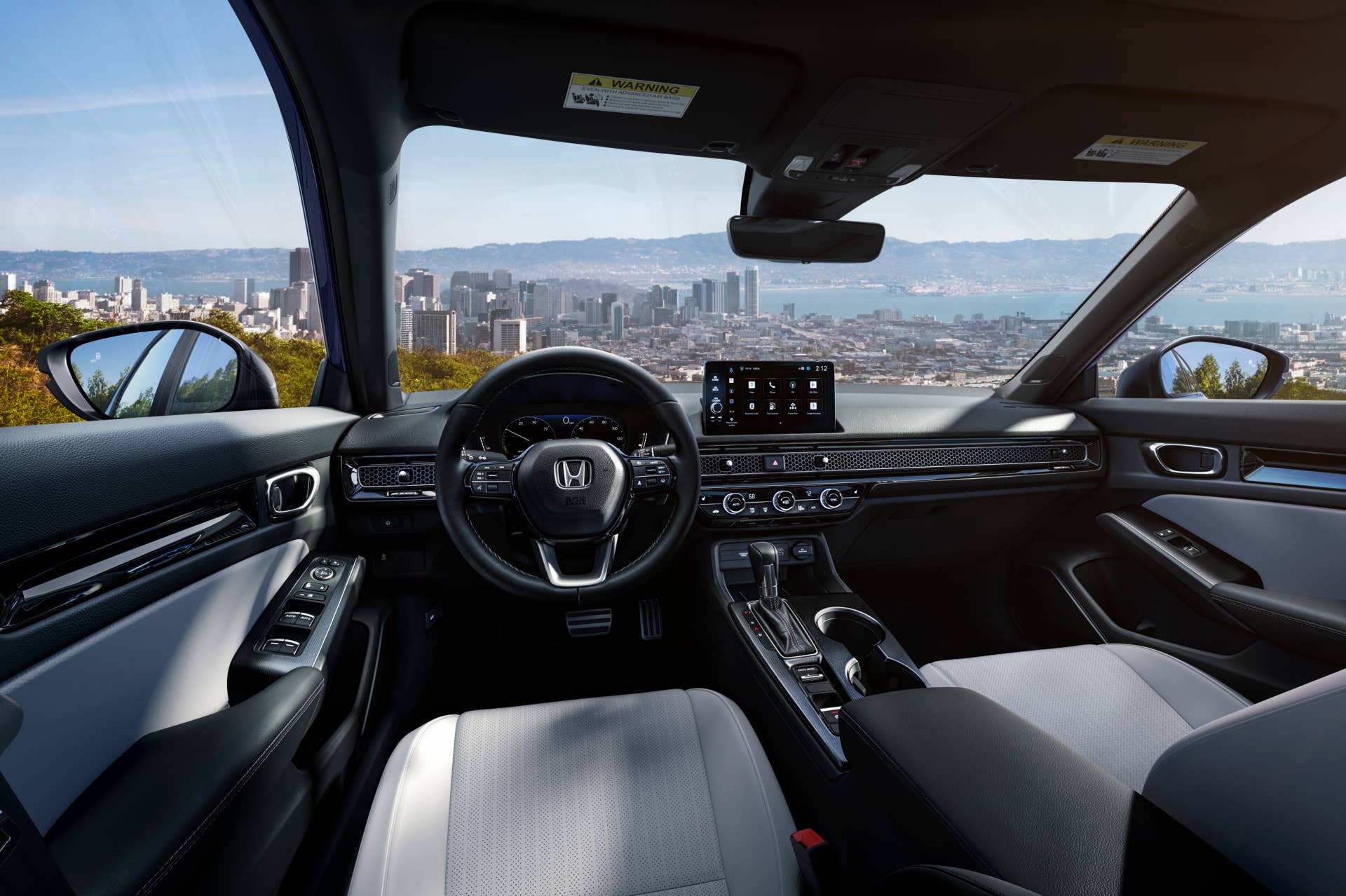
View the 3 images of this gallery on the
original article
Price Range and Best Value Trim
|
Trim Level |
Price |
Description |
|
Base trim: LX Sedan |
$24,595 |
Entry point with essential features, 150-hp engine, standard Honda Sensing safety suite |
|
Top trim: Sport Touring Hybrid Sedan |
$32,295 |
Fully loaded with a 200-hp hybrid, Google-enabled touchscreen with wireless CarPlay, Bose audio, and wireless charging |
|
Best value trim: Sport Hybrid Sedan |
$29,295 |
Optimal balance with 200-hp hybrid power, 50 mpg economy, heated seats, and powered moonroof |
2026 Honda CivicSpecs Overview
The 2026 Civic lineup keeps things straightforward by offering two distinct powertrains. LX and Sport trims use a naturally aspirated 2.0-liter Atkinson Cycle inline four-cylinder engine, while Sport Hybrid and Sport Touring Hybrid models feature Honda’s two-motor hybrid system. Both setups send power to the front wheels and prioritize smooth delivery and efficiency. The Civic’s chassis tuning focuses on balance, giving the car a composed feel through corners and a stable ride on the highway. Whether the goal is maximum efficiency or a more energetic driving experience, the Civic’s engineering supports real-world usability rather than chasing numbers for their own sake.
Powertrain Options
|
Engine |
Horsepower |
Torque |
Transmission |
Drivetrain |
|
2.0L I4 (LX, Sport) |
150 hp @ 6,400 rpm |
133 lb-ft @ 4,000-5,000 rpm |
CVT |
FWD |
|
2.0L I4 + Two-Motor Hybrid (Sport Hybrid, Sport Touring Hybrid) |
200 hp total system |
232 lb-ft (electric motor) @ 0-2,000 rpm |
e-CVT |
FWD |
Note: The hybrid system pairs a 141-hp Atkinson-cycle gasoline engine with a 181-hp electric motor, combining for a total output of 200 hp.
Performance and 0-60 MPH
Performance is where the hybrid Civic quietly surprises. The standard Civic sedan is just plain slow, reaching 60 mph in around 8.9 to 9.6 seconds, depending on the trim or testing conditions, while the Civic Hybrid sedan sprints from 0 to 60 mph in around 6.1-6.6 seconds, which is quick for the segment and even beats the manual 200-hp gas Civic Si, which typically comes in between 6.6 and 7 seconds.
Instant torque from the electric motor gives the car strong low-speed response, making city driving and highway merges feel effortless. Steering remains precise and predictably weighted, reinforcing the Civic’s reputation for confidence-inspiring handling. The standard gas engine delivers competent performance for everyday use, though it lacks the urgency of the hybrid setup. Across the range, suspension tuning and steering calibration work together to create a composed, responsive driving experience without sacrificing comfort.
Honda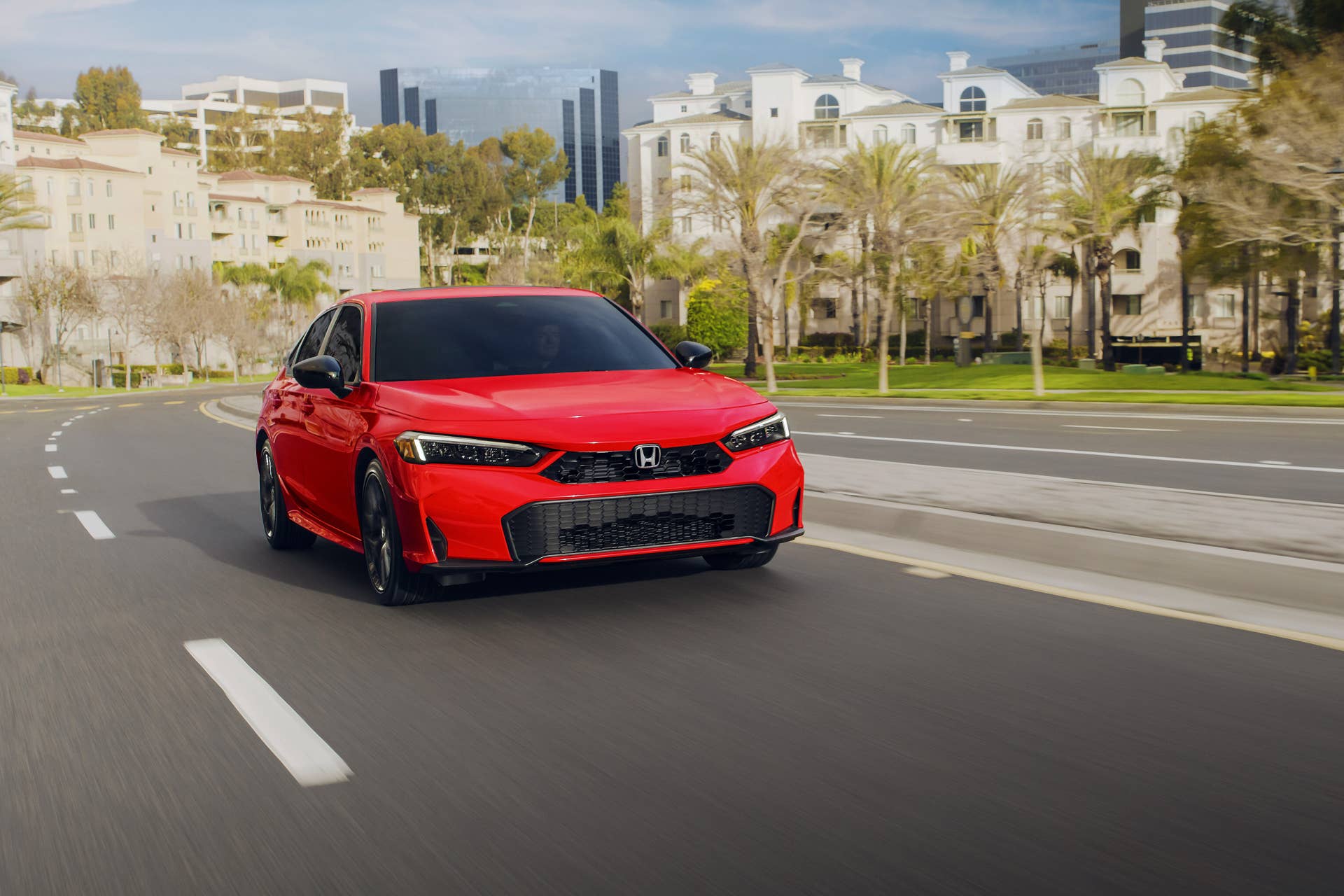
Fuel Economy (MPG)
Fuel efficiency remains one of the Civic’s strongest attributes. Sport Hybrid and Sport Touring Hybrid models earn EPA ratings of 50 mpg city, 47 mpg highway, and 49 mpg combined, numbers that hold up well in everyday driving. Gas-powered LX trims achieve 32 mpg city and 41 mpg highway, while the Sport sees slightly lower figures at 31 mpg city and 39 mpg highway due to its larger wheels. Regenerative braking helps recapture energy in stop-and-go traffic, keeping fuel costs low without changing driving habits. However, the Civic Hybrid falls short in fuel economy against rivals like the Toyota Corolla Hybrid that returns up to 51-53 mpg in the city.
Dimensions
|
Dimension |
Sedan |
Hatchback |
|
Length |
184.8 inches |
179.0 inches |
|
Width |
70.9 inches |
70.9 inches |
|
Height |
55.7 inches |
55.7 inches |
|
Wheelbase |
107.7 inches |
107.7 inches |
Interior Space (Front and Rear)
|
Measurement |
Front |
Rear |
|
Headroom |
37.6-39.3 inches |
37.1 inches |
|
Legroom |
42.3 inches |
37.4 inches |
|
Shoulder Room |
57.0 inches |
56.0 inches |
|
Hip Room |
54.3 inches |
48.9 inches |
|
Passenger Volume |
99 cubic feet (total) |
Cargo Space
The Honda Civic Sedan offers 14.8 cubic feet of trunk space, and that figure remains unchanged in hybrid models. Unlike some competitors, the battery placement does not eat into usable cargo room. The trunk opening is wide, and the low liftover height makes loading groceries or luggage easy. Buyers who want more flexibility can opt for the hatchback, which provides 24.5 cubic feet of space with the seats up and expanded capacity when the rear seats fold flat.
Ground Clearance
With approximately 5.5 inches of ground clearance, the Civic stays firmly in sedan territory. It handles speed bumps, winter roads, and parking lot obstacles without issue, while the low ride height supports stable handling and aerodynamic efficiency. This setup is strictly for on-road driving rather than off-road ambition, which aligns with the Civic’s mission.
Warranty
Honda backs the 2026 Civic with standard coverage that reflects its reliability-focused approach. Coverage includes comprehensive protection for the vehicle’s key systems and components, backed by Honda’s reputation for reliability and build quality.
|
Coverage Type |
Duration |
|
Basic/Bumper-to-Bumper |
3 years / 36,000 miles |
|
Powertrain |
5 years / 60,000 miles |
|
Rust Perforation |
5 years / unlimited miles |
|
Roadside Assistance |
3 years / 36,000 miles |
|
Maintenance |
1 year / 12,000 miles |
Pros and Cons
Pros:
- Strong 200-hp hybrid powertrain with 50-mpg fuel economy
- Precise handling with a well-judged ride
- Spacious interior with quality materials
- Standard safety features across all trims
- Proven reliability and solid resale value
Cons:
- The base 7-inch touchscreen is smaller than that of some rivals
- Noticeable road noise
- No adjustable lumbar support in front seats
- Pricing runs slightly higher than key competitors
- Rear headroom may feel tight for taller passengers
Verdict
The 2026 Honda Civic continues to define what a compact sedan should be. It does not rely on flash or gimmicks, instead delivering a carefully balanced mix of efficiency, performance, comfort, and long-term dependability. The Sport Hybrid trim stands out as the best overall choice, pairing the 200-hp hybrid system with nearly 50 mpg fuel economy and a strong set of comfort features, without pushing buyers into the highest price bracket.
Commuters benefit from low running costs and smooth power delivery, while drivers who enjoy being behind the wheel will appreciate the Civic’s composed handling, though they must be reminded that the base powertrain is sluggish. Small families gain usable interior space and a practical trunk, and long-term owners can lean on Honda’s reliability record. For buyers weighing whether the Civic is worth their time and money, the answer remains a resounding yes.
Honda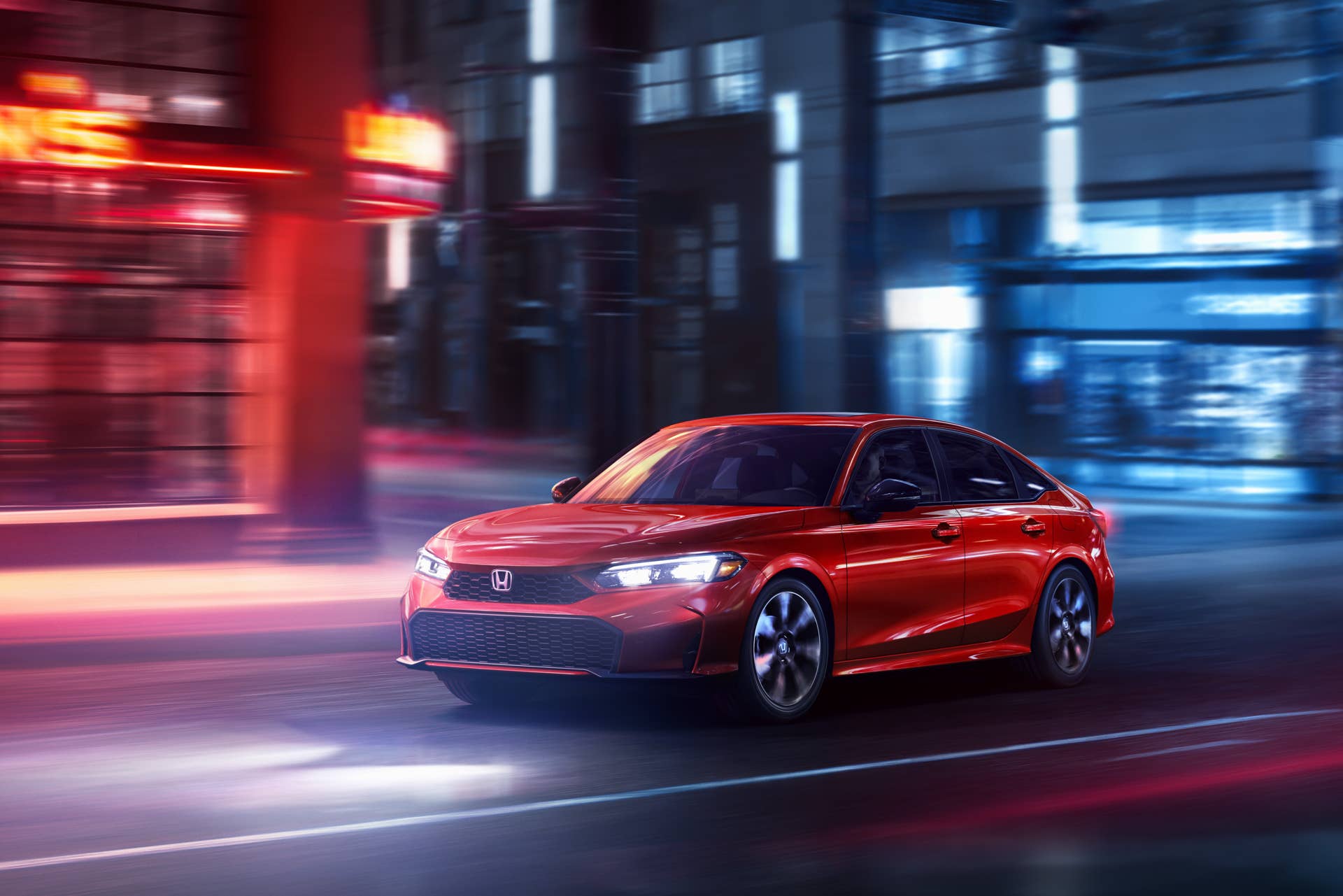
Competitors
- Toyota Corolla
- Hyundai Elantra
- Mazda3
- Kia Forte/K4
- Nissan Sentra