

Once home to many of America’s best-selling cars, the midsize sedan segment has morphed into a shell of its former self. Largely replaced by more in-demand crossovers, these sedans seem to have been almost completely forgotten, aside from occasional use as Ubers or as cheap rental cars. The Toyota Camry and Honda Accord are no exception to this phenomenon.
For example, although the Toyota Camry was still America’s best-selling passenger car for 2024, with 309,876 units sold according to Car & Driver, both the Honda CR-V and Toyota RAV4 made those look like rookie numbers, selling 402,791 and 475,193 units, respectively. Other notable entries in this segment include the Nissan Altima, Hyundai Sonata, Subaru Legacy, and the Kia K5.
The tide has clearly shifted towards crossovers these days, so the Camry and Accord have their work cut out for them to chase after buyers. Let’s take a look at how they compare with one another and what unique strategies each model employs to tackle their fierce competition.
Related: 2025 Hyundai Tucson: 3 reasons to love it, 2 reasons to think twice
Toyota
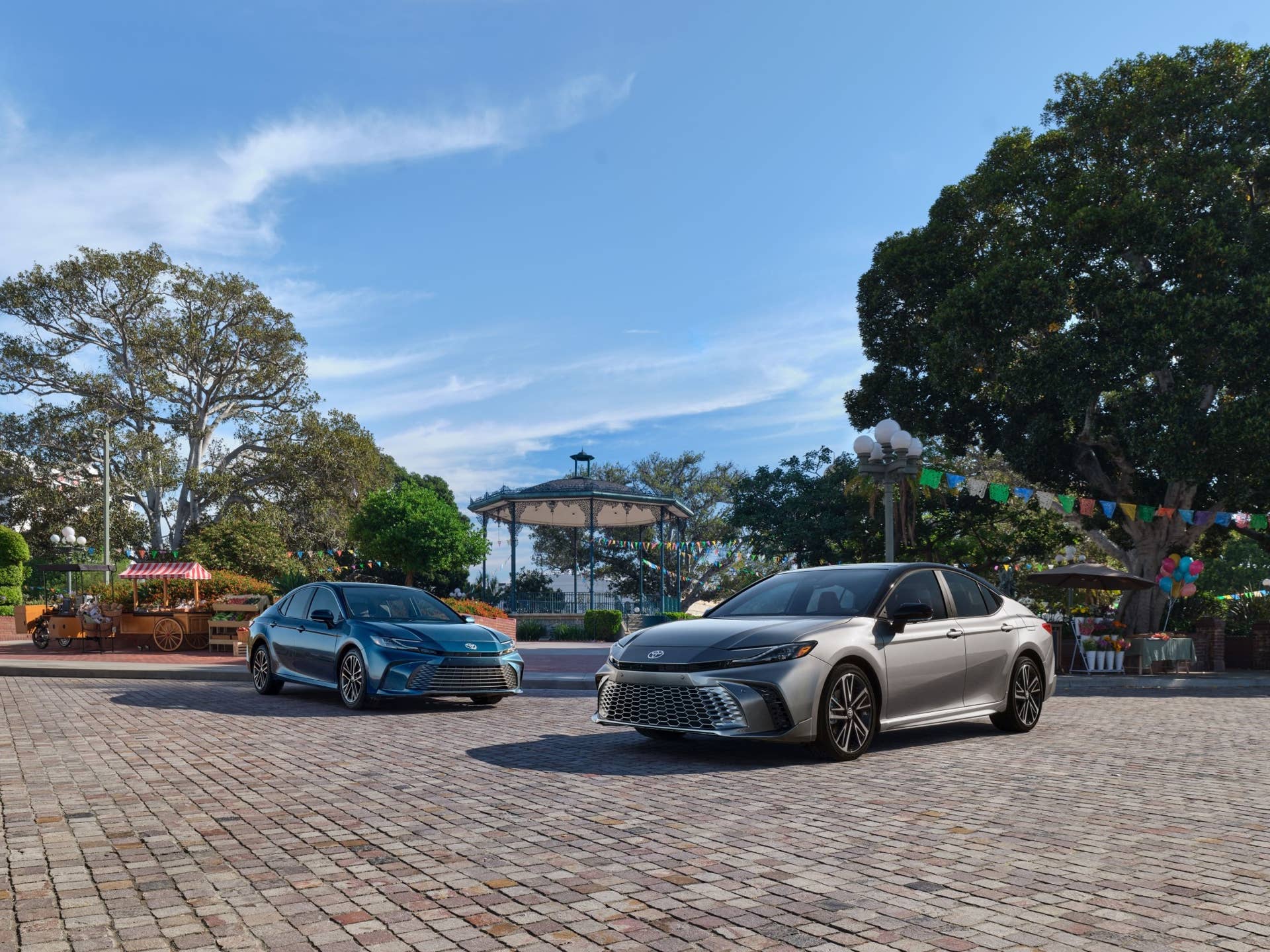
The Toyota Camry offers a less-expensive hybrid entry point
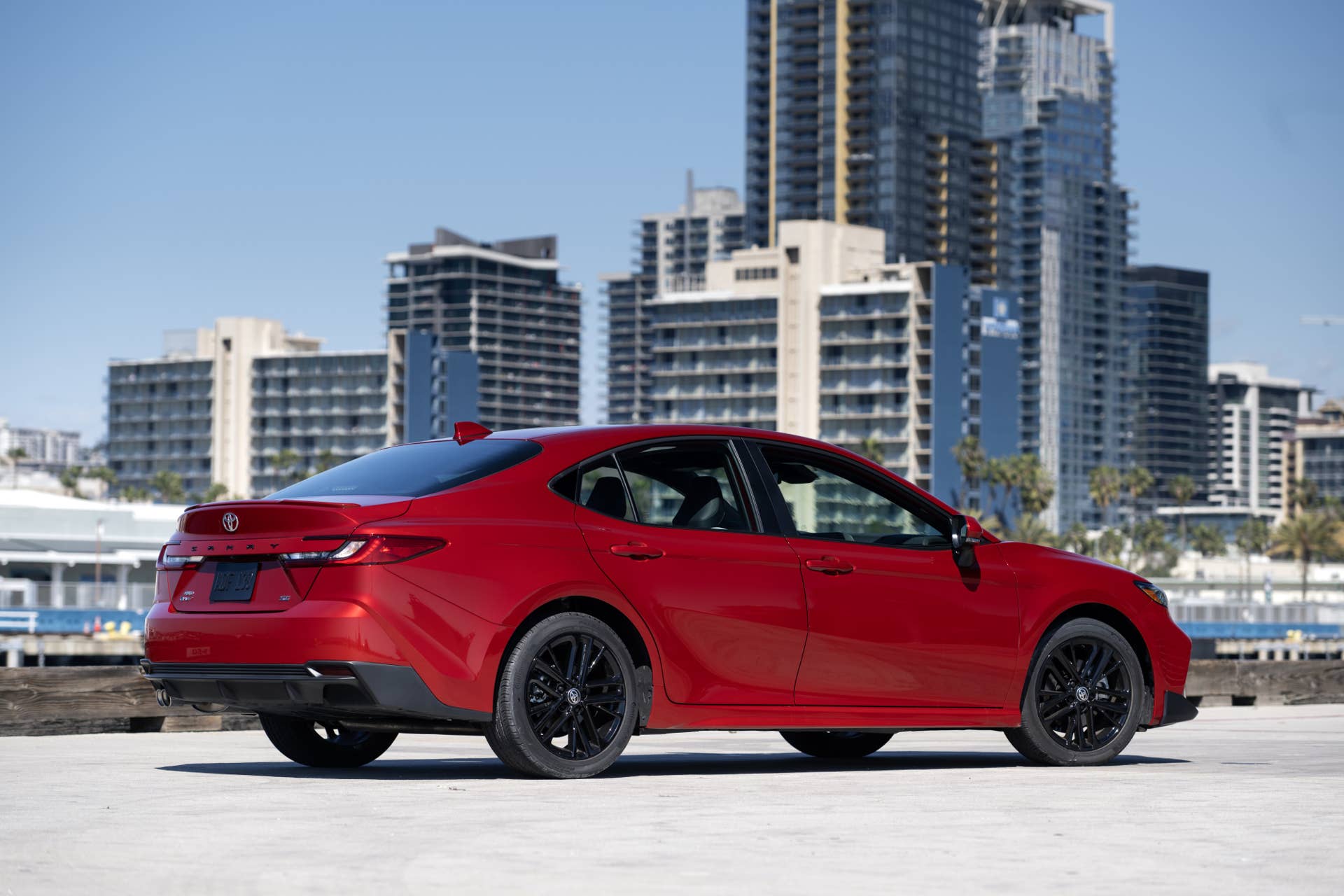
With a starting MSRP of just $28,700, the 2025 Toyota Camry LE is $405 more expensive than the base Honda Accord LX, but benefits from superior power and fuel economy thanks to its standard, 2.5-liter four-cylinder hybrid powertrain. While the base Camry benefits from 225 horsepower and 51 mpg combined, the base Accord has just 192 horsepower from a turbocharged, 1.5-liter four cylinder, and gets just 32 mpg combined.
Thus, unless you possess some sort of aversion to hybrids, the Camry’s base trim offers notable value over the Accord LX for similar money. The Camry even goes a step further, offering optional all-wheel drive for an additional $1,525–a feature that can’t be optioned with any Accord trim package. If you’d like your Accord in hybrid guise, it will cost you upwards of $33,655–almost $5,000 more than the base Camry.
Toyota
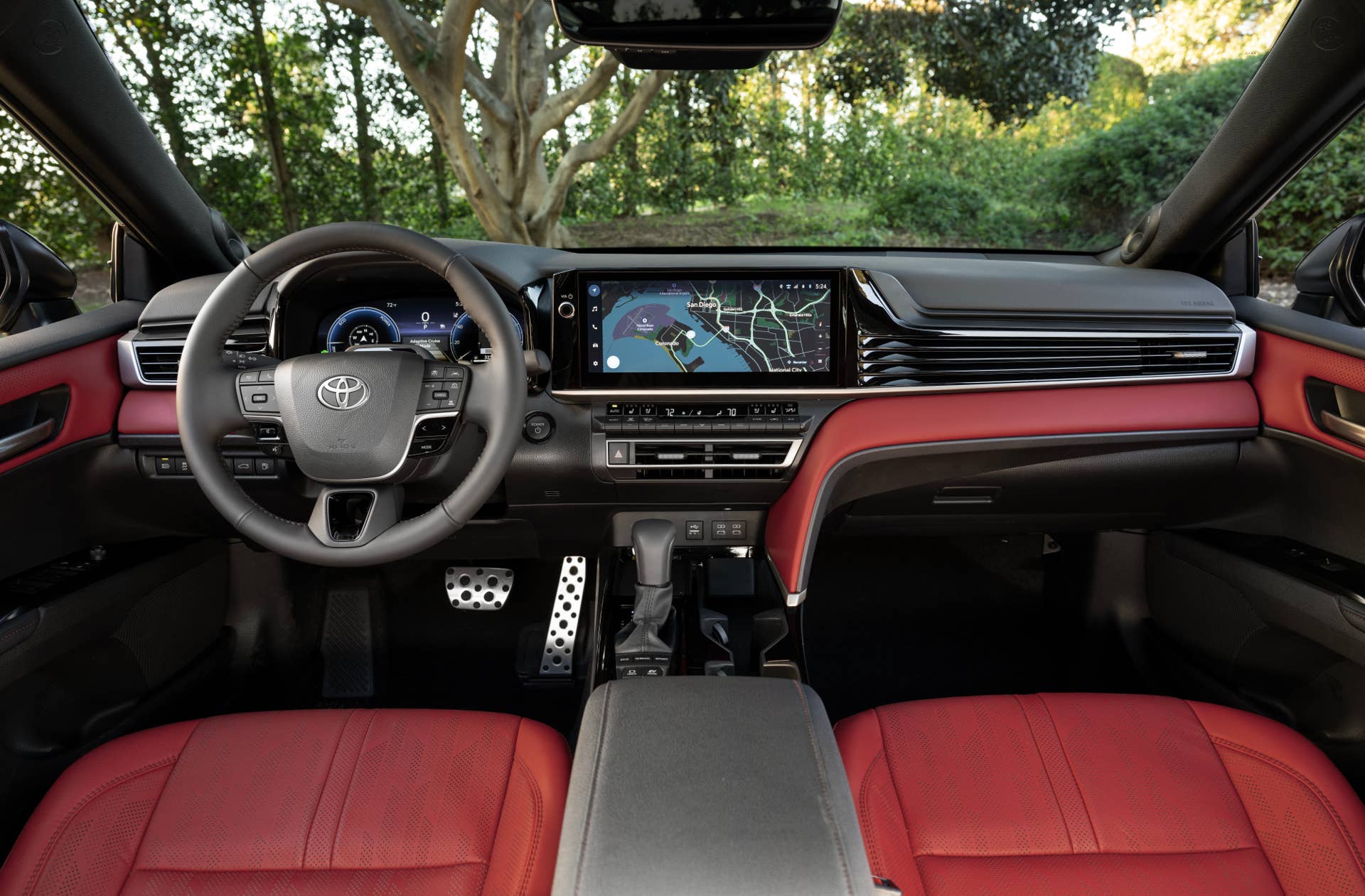
Move towards the higher end of the trim level selection, and you might notice that the top-trim Honda Accord–the Touring Hybrid–is almost $5,000 more expensive than the Camry’s top trim XSE. That’s because the Accord Touring Hybrid’s standard equipment is more competitive with the Camry XSE when it’s equipped with additional packages such as the $4,075 Premium Plus Package. When that box is ticked, the top-trim Camry’s MSRP is nearly identical to that of the Accord Touring Hybrid.
Included in the aforementioned Premium Plus Package is a panoramic glass moonroof, an upgraded, 9-speaker JBL Premium Audio system, ventilated front seats, head-up display, and a suite of active safety technology. Opting for the XSE trim also opens up the possibility for two-tone paint schemes, which typically pair a vibrant exterior paint colour with a Midnight Black Metallic painted roof.
Related: 2025 Hyundai Venue: 3 reasons to love it, 2 reasons to steer clear
Toyota
It’s important to note, as well, that the Camry’s financial value proposition extends further than its ability to beat similarly- or lesser-equipped Accord packages. If you’re one of many people who plan on financing their next vehicle, don’t overlook the fact that Toyota is currently offering more aggressive finance rates (APR) on the Camry than Honda is with the Accord.
Of course, actual rates largely depend on your personal credit situation, but Toyota is advertising a 5.99% rate for a 72-month finance, whereas Honda advertises a rate of 7.03% for the same term length. That reduced rate will make a significant difference in your monthly payment and in the overall interest paid over the course of your loan. Rates are also subject to change and often do so on a month-to-month basis.
Honda
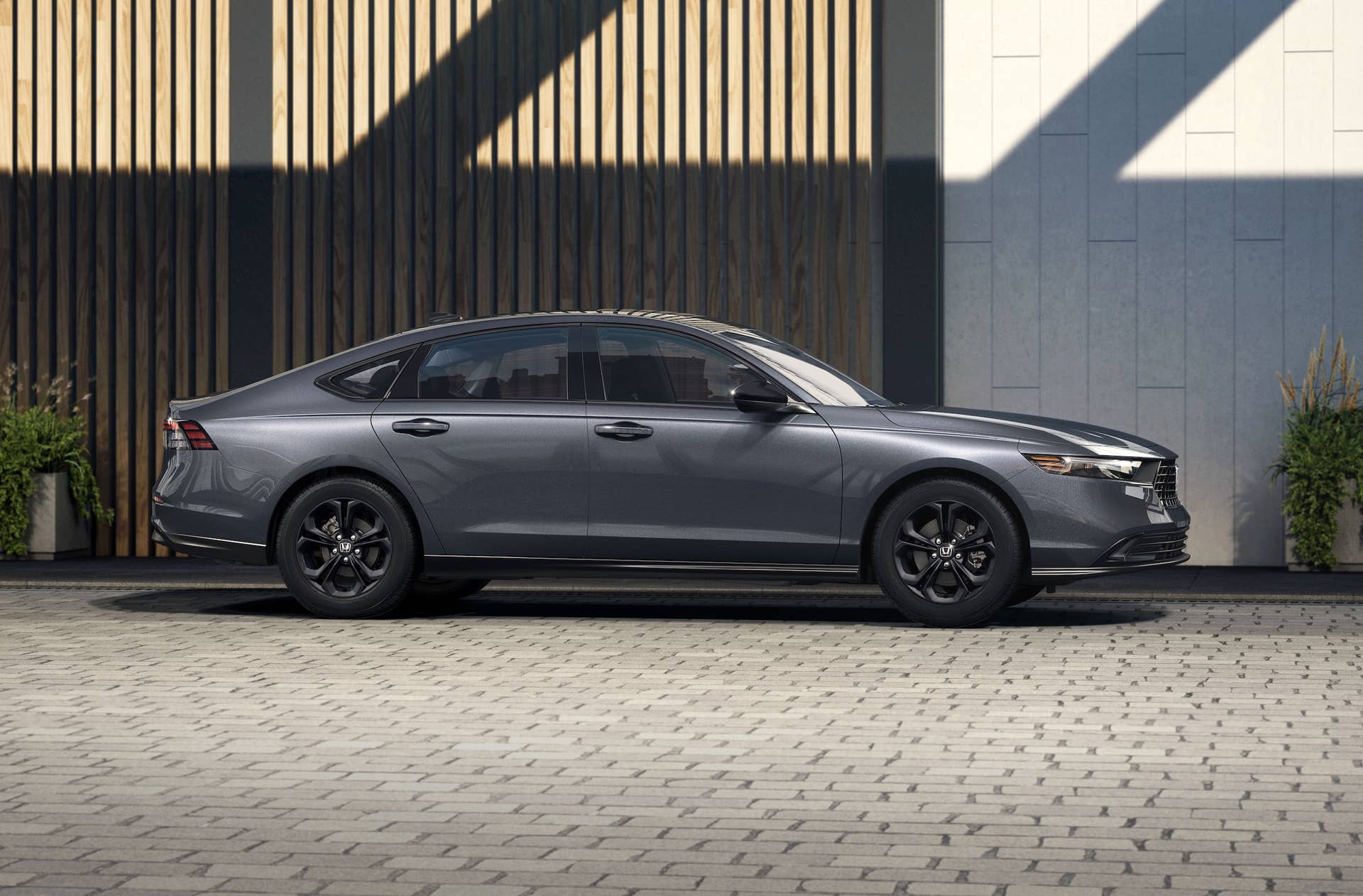
The Honda Accord focuses on ergonomics and smarter packaging
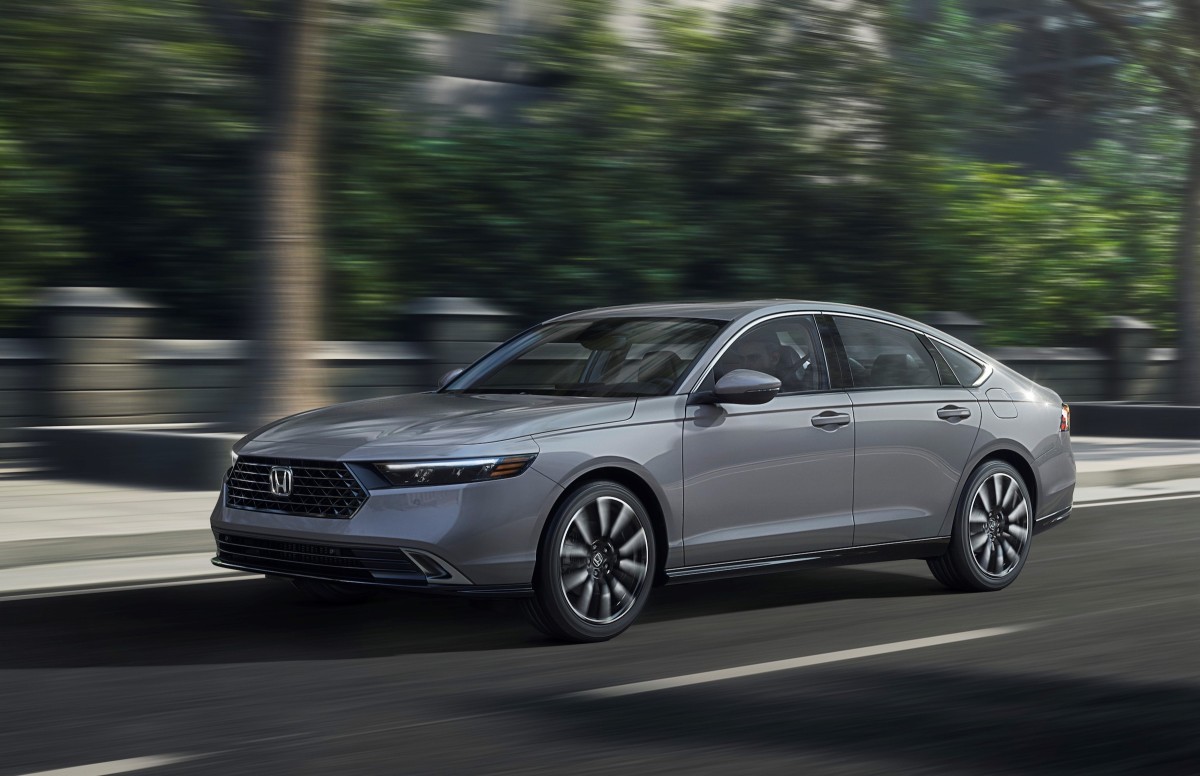
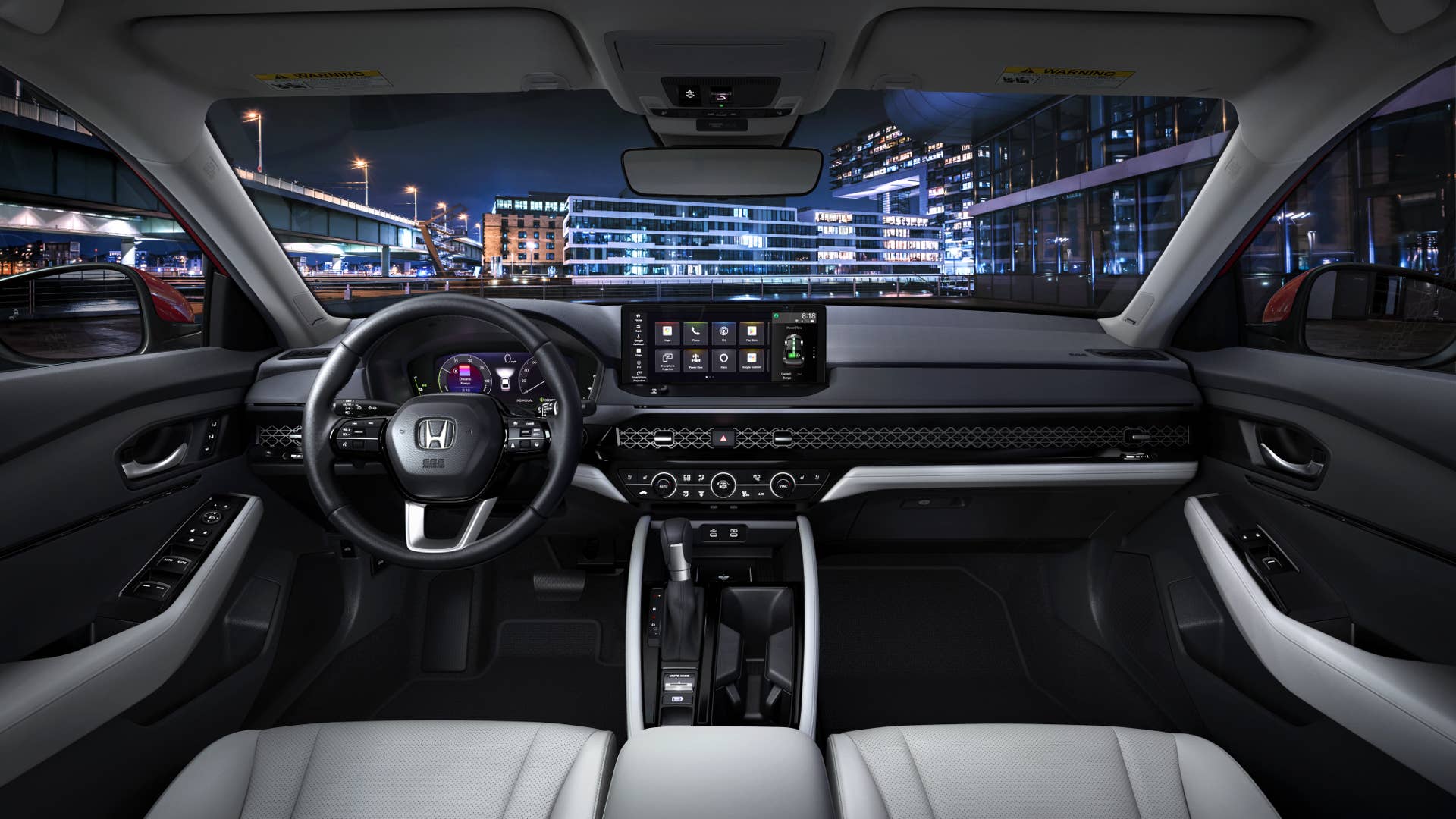
Although the Camry offers a less expensive hybrid entry point, the Accord wins out in terms of ergonomics. With the seats raised, the Honda Accord has a 16.7 cubic-foot cargo capacity, whereas the Camry has just 15.1 cubic feet of trunk space. Perhaps more importantly, the Accord has almost three more inches of rear-seat legroom than the Camry, while their rear-seat headroom and shoulder room are nearly identical.
Although it’s somewhat more ergonomic on the inside, the Accord is less efficient than the Camry under the hood. Both the 192-horsepower, turbocharged 1.5-liter four-cylinder engine and the 204-horsepower, 2.0-liter four-cylinder hybrid engine produce less horsepower than the Camry’s standard, 225-horsepower, 2.5-liter four-cylinder hybrid. The Toyota also beats out both powertrains in terms of fuel economy.
Related: 2025 Hyundai Santa Fe: 5 reasons to love it, 2 reasons to think twice
Honda
Where the Accord Touring Hybrid’s fuel economy is rated at 44 mpg combined, the Camry XSE Hybrid’s fuel economy is rated at 47 mpg combined. Opt for all-wheel drive on the Camry XSE, and its fuel economy rating is identical to the Accord Touring Hybrid, at 44 mpg combined.
The Honda Accord has also steered away from its sporty pedigree in recent years, with the deletion of its available manual transmission and six-cylinder engines throughout its range. Despite these efforts, the Accord’s drivability can’t quite match that of the Camry, with its enhanced horsepower, superior fuel economy, and available all-wheel drive for improved year-round traction and handling.
Toyota
Final thoughts
Although the Honda Accord has some notable points over the Toyota Camry, such as its enhanced interior space and slightly larger cargo capacity, the Camry ultimately offers more value all-around. Perhaps this can account for why Toyota sold nearly twice as many Camrys as Honda sold Accords in 2024, as per Car & Driver.
It also seems like something of a missed opportunity for Honda to deny buyers a driver-oriented package, as they have done in past generations, which ultimately drove up excitement for the product and helped establish its reputation for being excellent fun to get behind the wheel of. Hyundai and Kia, for example, have taken this route with the Sonata and K5, with the inclusion of the 290-horsepower, turbocharged 2.5-liter four-cylinder-powered N-Line and GT packages, respectively.
Honda
Regardless of which option you prefer, both the Toyota Camry and Honda Accord represent best-sellers within their respective segment, and for sound reason. It’s difficult to go wrong with either of them, as they both benefit from fantastic resale value, proven reliability, intuitive driving dynamics, and comforting fuel economy.
Do you have a stark preference between the two midsize sedans, or are you a bigger fan of alternatives like the Hyundai Sonata, Nissan Altima, Subaru Legacy, or Kia K5? Do you think midsize sedans have become irrelevant in 2025, or do you still prefer their lower ride height compared to worse-handling crossovers? Let us know how you feel in the comments–we love to hear from you!
Love reading Autoblog? Sign up for our weekly newsletter to get exclusive articles, insider insights, and the latest updates delivered right to your inbox. Click here to sign up now!
Related: Ford Mustang Mach E Rally vs Hyundai Ioniq 5 XRT: Battle of the unlikely off-roaders