

MSRP: $30,100
Use the table of contents to jump to a section
Overview
The 2025 Honda CR-V compact SUV remains one of the most balanced models in its segment on sale. This sixth-generation model gives buyers two powertrain choices: a 190-hp turbocharged 1.5-liter four-cylinder and a 204-hp 2.0-liter hybrid (a 174-hp plug-in hydrogen fuel-cell is new this year). Front-wheel drive comes standard on both setups, with all-wheel drive offered as an option. Hybrid trims return impressive efficiency, reaching up to 40 mpg combined.
Honda focuses on fundamentals, and it shows. Build quality feels solid, the ride stays comfortable, handling remains tidy, and cargo space ranks near the top of the segment. Some competitors, such as the Mazda CX-50, lean harder into driving feel, but the CR-V prioritizes everyday usability. As a result, the Honda CR-V continues to suit commuting, errands, and longer family trips without feeling out of place in any role.
What’s New for 2025
The 2025 CR-V carries over unchanged from the prior model year. Honda introduced the full sixth-generation redesign for 2023, which brought a longer wheelbase, increased interior room, refreshed exterior styling, and the current hybrid system. A new plug-in hydrogen fuel-cell e:FCEV arrives this year, developed in collaboration with GM.
Exterior
The CR-V combines modern styling with clean, functional proportions. An upright grille sits between automatic LED headlights. Wheel sizes start at 17 inches with steel wheels on the LX and extend to 19-inch gloss-black alloys on the Sport Touring Hybrid. Sport trims add gloss black exterior accents that give the SUV a sharper look. The e:FCEV has many distinguishing touches, such as monochrome exterior treatment and blacked-out taillights. With all-wheel drive, ground clearance measures 8.2 inches, enough for light trail use and uneven roads.
Honda
View the 3 images of this gallery on the
original article
Interior
Inside, the CR-V features a honeycomb-style dashboard that hides the air vents. LX and EX trims have a 7.0-inch touchscreen, while EX-L and higher trims upgrade to a 9.0-inch display with navigation, wireless Apple CarPlay, and Android Auto. Rear-seat passengers benefit from generous legroom and a reclining 60/40 split-folding seatback. EX-L trims add leather-trimmed seating, while Sport-L and Sport Touring Hybrid models stand out with orange contrast stitching.
Honda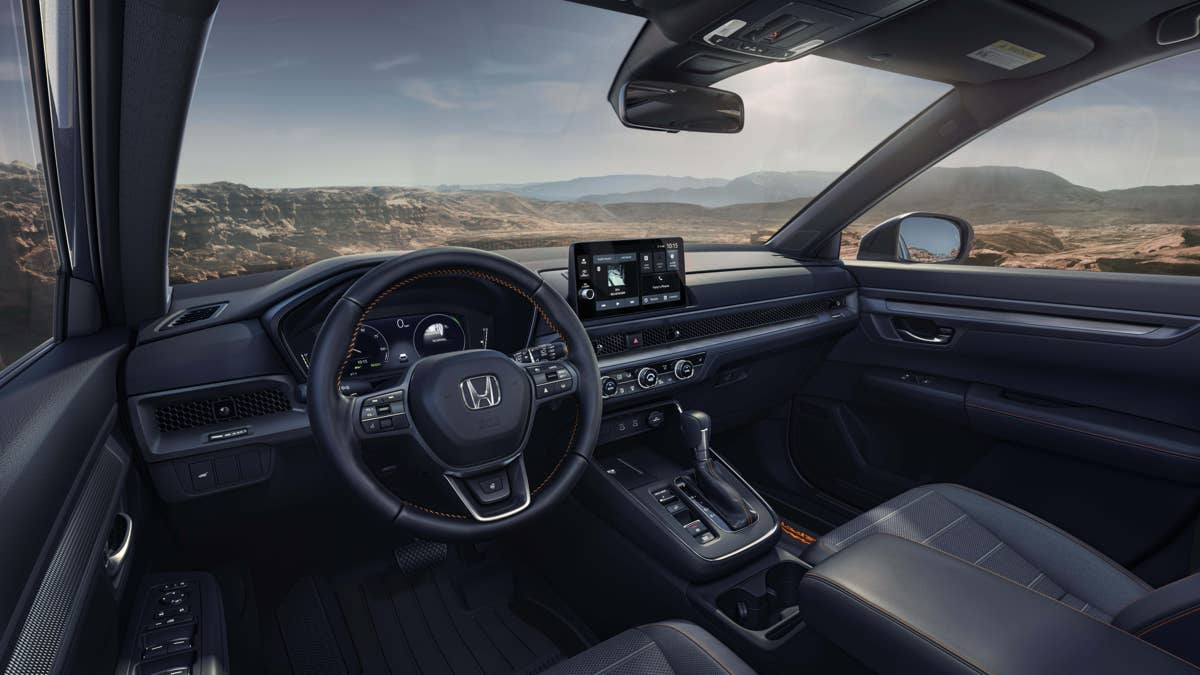
View the 3 images of this gallery on the
original article
Price Range and Best Value Trim
|
Trim Level |
Price |
Powertrain |
|
Base Trim LX |
$30,100 |
1.5L Turbo |
|
Best Value Trim Sport Hybrid |
$34,650 |
2.0L Hybrid |
|
Top Trim Sport Touring Hybrid |
$41,100 |
2.0L Hybrid (AWD only) |
The Sport Hybrid stands out as the value pick. At $34,340, it undercuts the EX-L while delivering stronger performance and notably better fuel economy, making it a smart entry point into the hybrid lineup and a key part of the 2025 Honda CR-V’s price appeal.
2025 Honda CR-V Key Specs
Powertrain Options
|
Engine |
Horsepower |
Torque |
Transmission |
Drivetrain |
|
1.5-L I4 Turbo |
190 hp |
179 lb-ft |
CVT |
FWD/AWD |
|
2.0-L I4 Hybrid |
204 hp |
247 lb-ft |
Two-Motor Hybrid |
FWD/AWD |
|
Hydrogen Fuel Cell PHEV |
174 hp |
229 lb-ft |
Single-speed |
FWD |
Performance
The 1.5T CR-V reaches 0 to 60 mph in about 8.1-8.7 seconds, depending on trim, which aligns with class expectations. The hybrid is a touch quicker at around 7.6-8.0 seconds, and its power delivery is smooth and linear, with strong braking. Steering feels confident and natural. Ride quality stays composed over rough pavement, and while the CR-V does not chase sharp handling, it avoids feeling dull or disconnected. The new e:FCEV should be able to complete the benchmark sprint in around nine seconds.
Fuel Economy (MPG)
|
Configuration |
City |
Highway |
Combined |
|
2.0L Hybrid FWD |
43 mph |
36 mpg |
40 mpg |
|
2.0L Hybrid AWD |
40 mpg |
34 mpg |
37 mpg |
|
1.5L Turbo FWD |
28 mpg |
34 mpg |
30 mpg |
|
1.5L Turbo AWD |
26 mpg |
31 mph |
28 mpg |
|
e:FCEV |
61 MPGe |
52 MPGe |
57 MPGe |
Dimensions
|
Dimension |
Measurement |
|
Wheelbase |
106.3 in |
|
Length / Width / Height |
184.8-187.6 / 73.4-73.5 / 66.2-66.6 in |
|
Cargo Volume |
34.7-39.3 / 71.8-76.5 cu-ft (25.2-61 cu-ft e:FCEV) |
|
Towing Capacity |
1,500 lbs (1,000 hybrid) |
Warranty
|
Coverage |
Duration |
|
Limited Warranty |
3 years / 36,000 miles |
|
Powertrain Warranty |
5 years / 60,000 miles |
|
Complimentary Maintenance |
1 year / 12,000 miles |
Pros and Cons
Pros:
- Hybrids return up to 40 mpg combined
- Up to 76.5 cu-ft of cargo space
- Honda Sensing safety features standard
- Build quality and reliability reputation
Cons:
- Non-hybrid models feel slow
- CVT drones during hard acceleration
- Interior design favors function over flair
- Hybrids tow only 1,000 lbs
Verdict
The 2025 Honda CR-V continues to set the standard in the compact SUV class by executing the basics exceptionally well. The hybrid system leads the lineup, combining 204 hp with efficiency figures that reach 40 mpg combined, all at a reasonable step up from non-hybrid trims. The turbocharged 1.5-liter engine supplies adequate power, though it feels relaxed rather than eager.
Where the CR-V truly earns its reputation is in daily use. The cabin feels well put together, ride comfort stays high, handling remains predictable, and the cargo area accommodates real-world needs with ease. Standard Honda Sensing safety tech adds reassurance, and Honda’s track record supports long-term ownership confidence. For buyers considering a CR-V as a dependable all-rounder, this compact SUV remains the benchmark worth measuring against.
Honda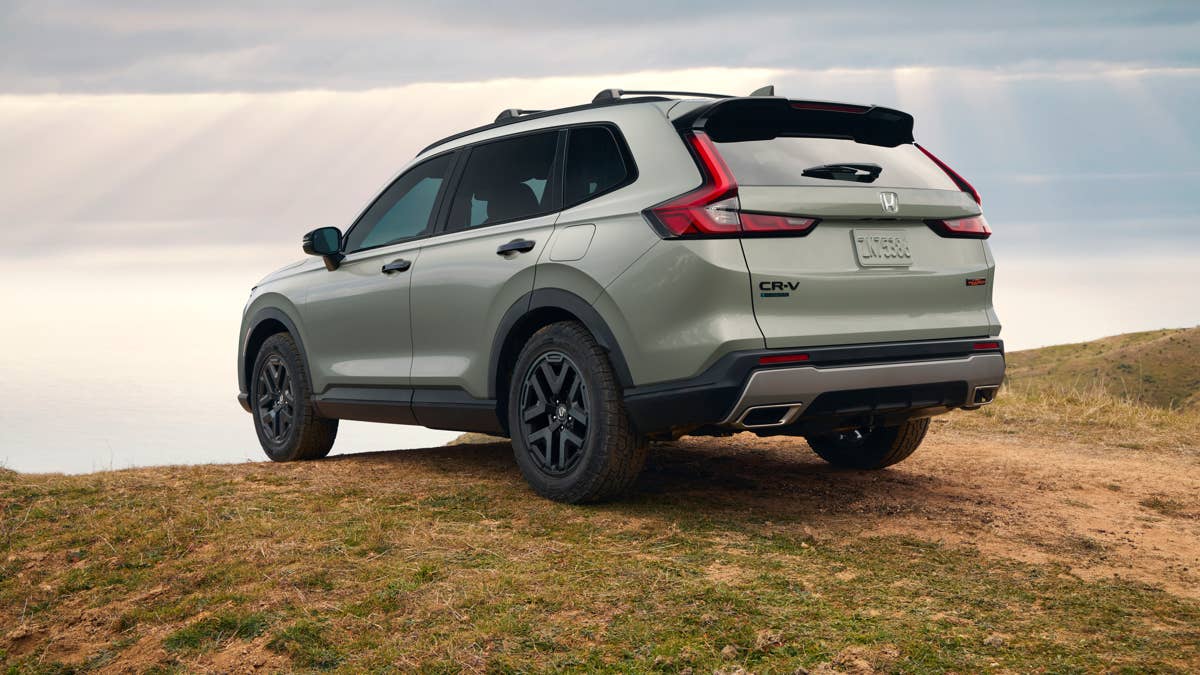
Competitors:
Mazda CX-50
Toyota RAV4
Kia Sportage
Hyundai Tucson
Nissan Rogue