

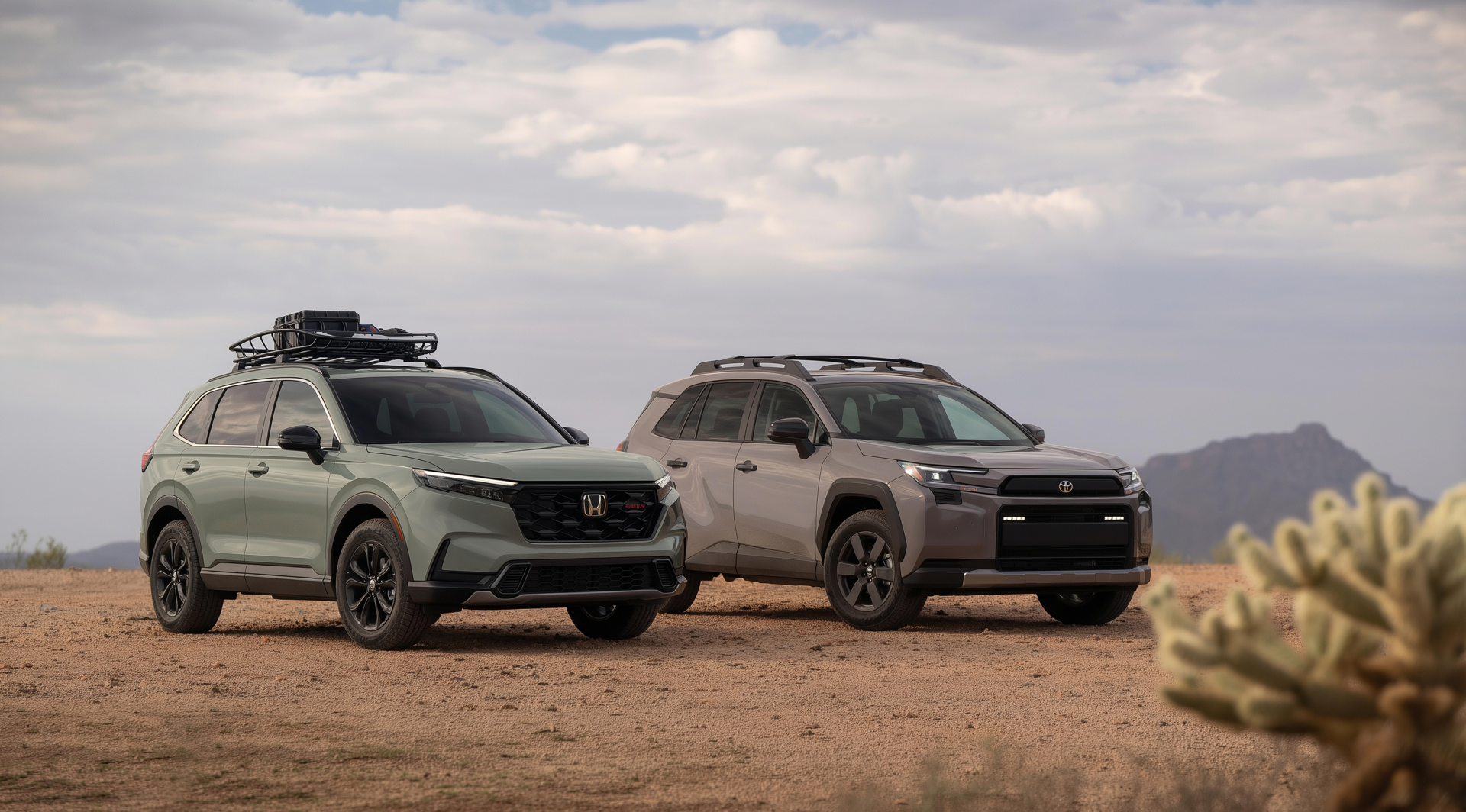
Put the CR-V, which starts around $32,370, alongside the now-hybrid-only RAV4, which opens around $33,350, and you have two SUVs that trade blows on price, efficiency, and features without a decisive winner. Compared to hybrid to hybrid, the pricing gap widens, since the CR-V Hybrid starts near $37,080, roughly $3,700 more than the RAV4. Cargo capacity differs because it’s based on published measurements rather than preference. Both are among the roomiest choices in the compact class, so neither will leave you wanting for space, but one consistently holds a little more, and the details depend on whether you are looking at gas or hybrid versions.
Honda
The numbers behind the second row
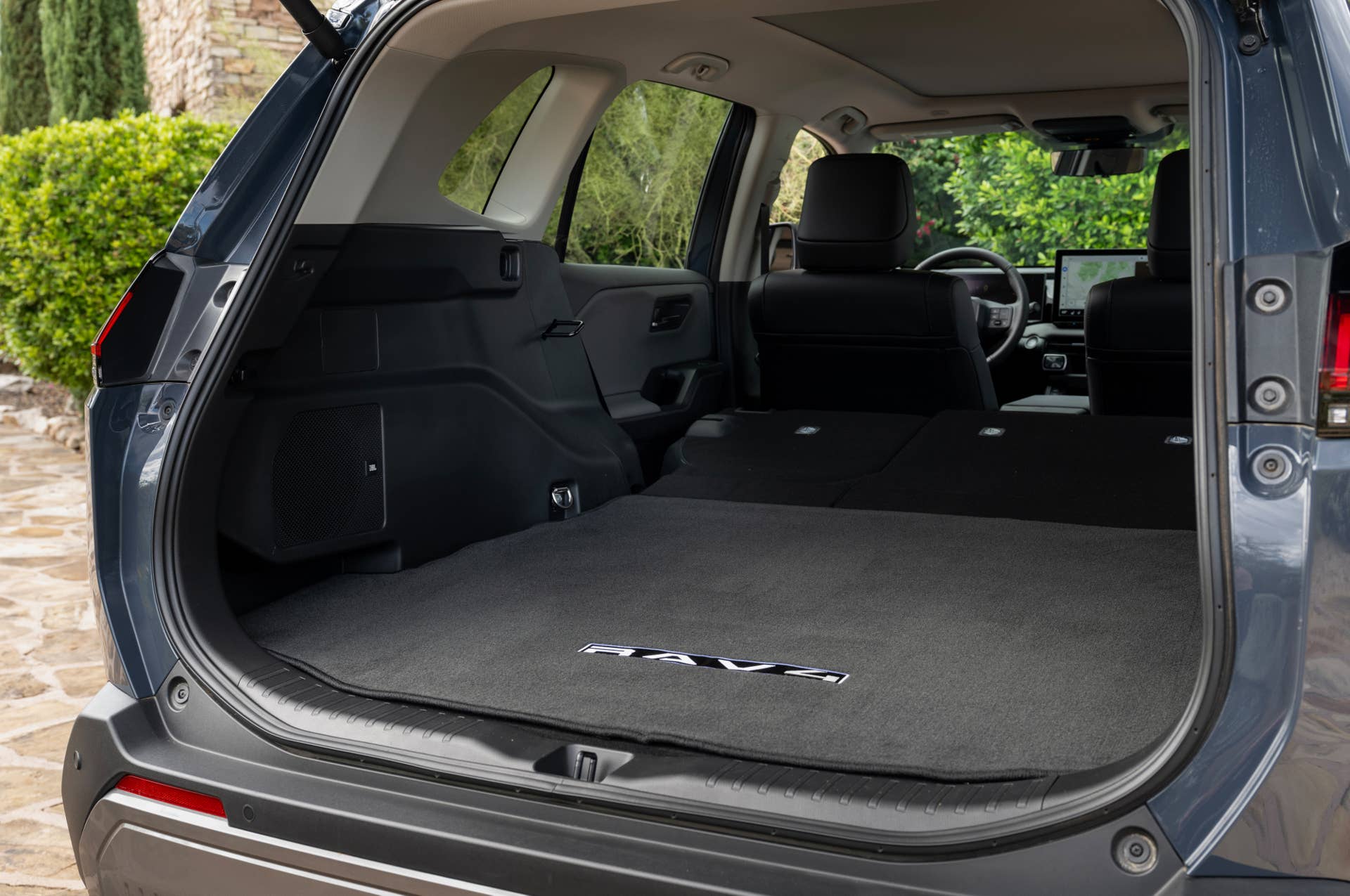
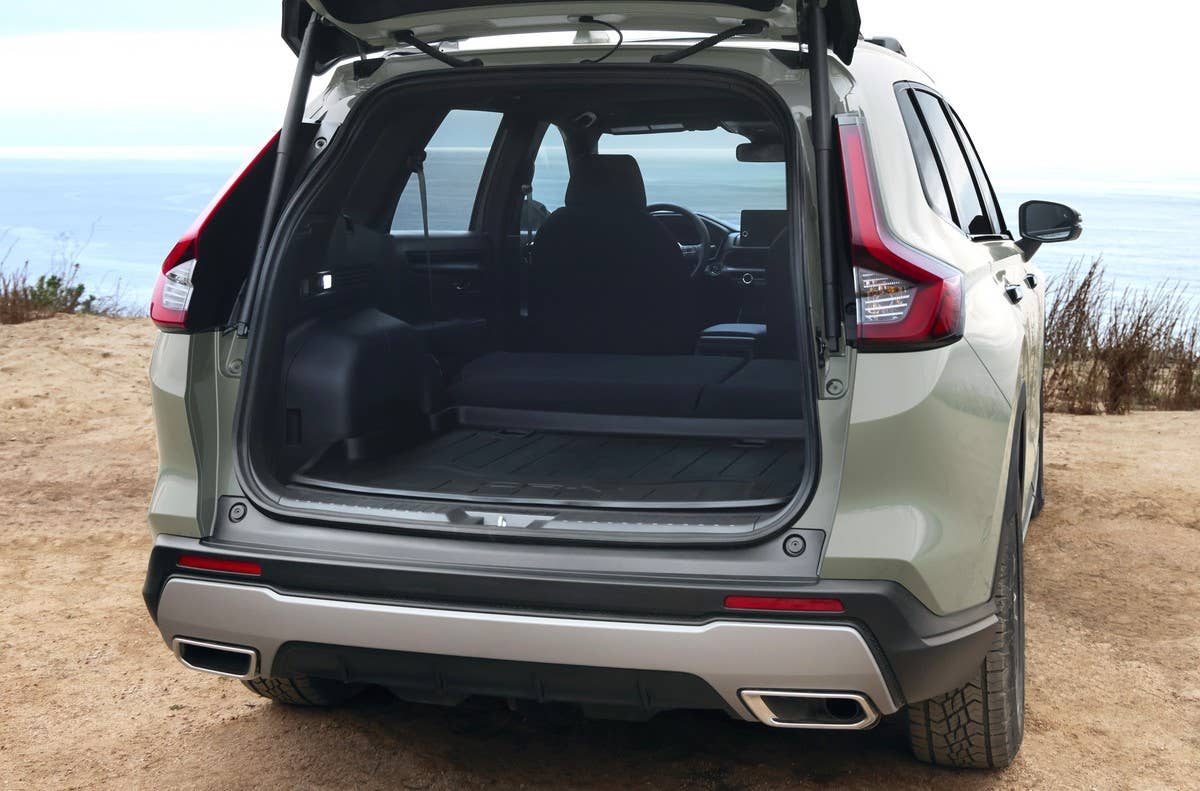
With the rear seats up, which is how these SUVs spend most of their lives, the gas CR-V leads. It offers 39.3 cubic feet behind the second row, among the best figures in the compact class, and enough to swallow a big grocery run or several suitcases with room to spare. The RAV4 provides 37.8 cubic feet in the same measurement, a competitive number that trails the CR-V by about 1.5 cubic feet. That gap is modest on paper but noticeable in practice, and the CR-V pairs it with a more spacious rear seat, so passengers and cargo are less likely to compete for the same room. Some CR-V trims also add a dual-level cargo floor for extra flexibility.
Toyota
Maximum cargo with seats folded
Fold the rear seats, and the CR-V’s advantage grows. It offers 76.5 cubic feet of total cargo volume, versus 70.4 for the RAV4, a difference of about 6 cubic feet. For anyone who regularly hauls bulky items like furniture, bikes, or camping gear, that is the kind of margin that decides whether a load fits in one trip. The CR-V’s longer body and boxy cargo area work in its favor here, giving it one of the largest maximum cargo figures in the segment. The RAV4’s space is genuinely useful, and its cabin is full of clever small-item storage, but on raw volume with the seats down, the Honda is clearly the bigger hauler.
Honda
Hybrid versus hybrid
The comparison tightens when you match electrified versions, which matters more than ever now that the RAV4 has moved to a hybrid-only lineup. Behind the second row, the RAV4 Hybrid actually edges the CR-V Hybrid, with roughly 37.5 cubic feet to 36.3 cubic feet, because the CR-V’s hybrid hardware raises its cargo floor and reduces rear-seat space. Total volume flips back to the CR-V, though. With the seats folded, the CR-V Hybrid offers around 71.8 cubic feet, compared with the RAV4 Hybrid’s 69.8, so the Honda still offers more overall capacity. The upshot is that a hybrid shopper who mostly loads behind the seats might slightly prefer the RAV4, while one who frequently folds the seats for big loads is better served by the CR-V.
Gemini 3 Pro
So which one has more cargo space?
The Honda CR-V has more cargo space. Its gas models lead in both key measurements, 39.3 cubic feet behind the seats and 76.5 with them folded, and even its hybrid keeps the advantage in total volume. Combined with a roomier rear seat, that makes it the better hauler for most shoppers. The Toyota RAV4 stays close and even wins one narrow measurement, offering slightly more room behind the seats in hybrid form, along with excellent small-item storage throughout the cabin. For a buyer who rarely folds the seats and values cabin cubbies, that is worth noting