

MSRP: From ~$31,550
Use the table of contents to jump to a section
Overview
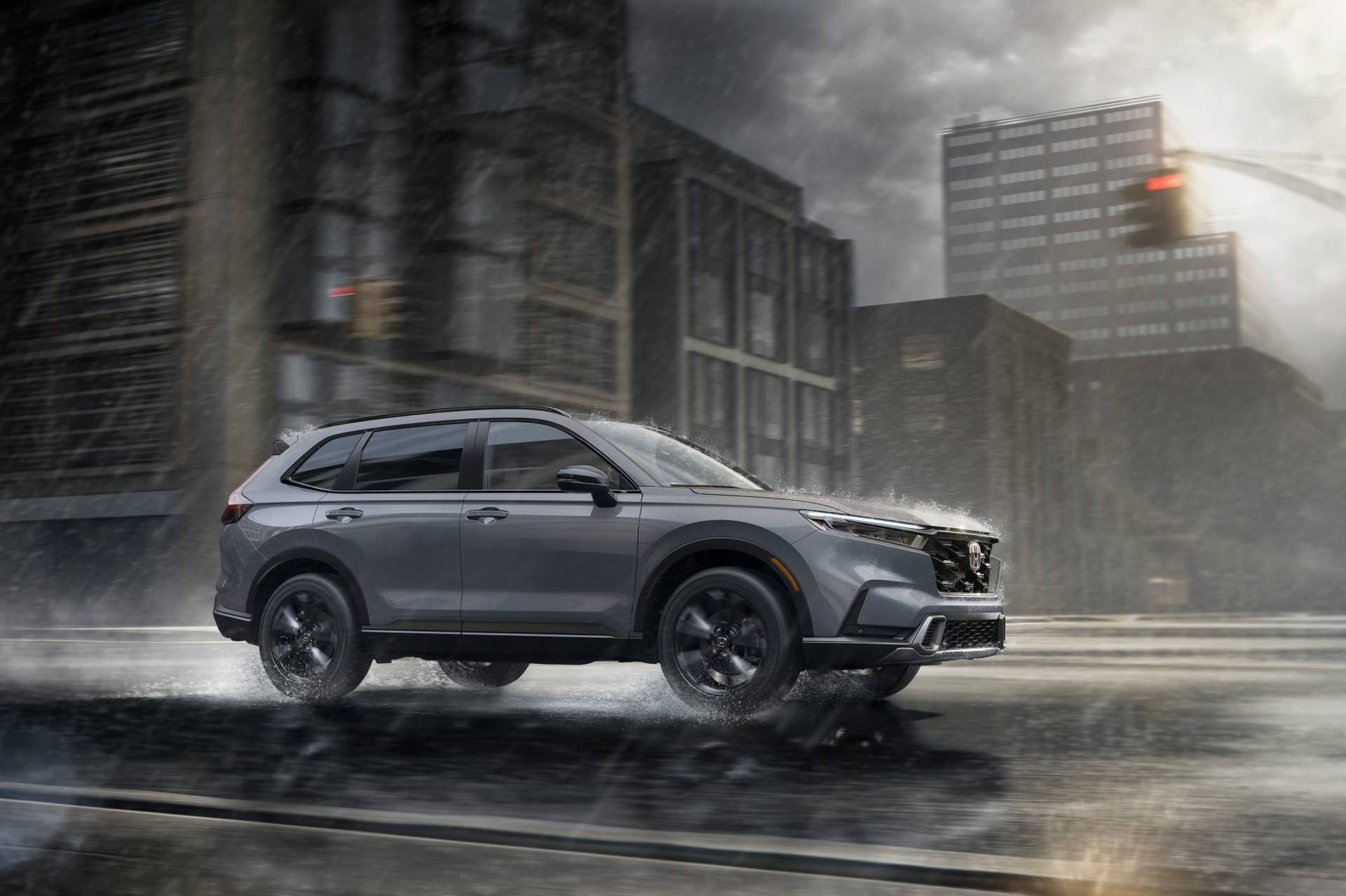
The 2027 Honda CR-V is a compact SUV that competes with the Toyota RAV4, Hyundai Tucson, and Subaru Forester, and stands out for being one of the roomiest in this class, along with a reputation for build quality and reliability. The powertrain lineup includes a 190-hp 1.5L turbo, a 204-hp 2.0L NA hybrid, and a 174-hp plug-in hybrid fuel-cell, so there’s no shortage of propulstion choices.
Cole Attisha
What’s New for 2027
After last year’s infotainment system overhaul, the 2027 CR-V is expected to be unchanged, though a small price increase may be possible.
2026 Honda CR-V in Radiant Red Honda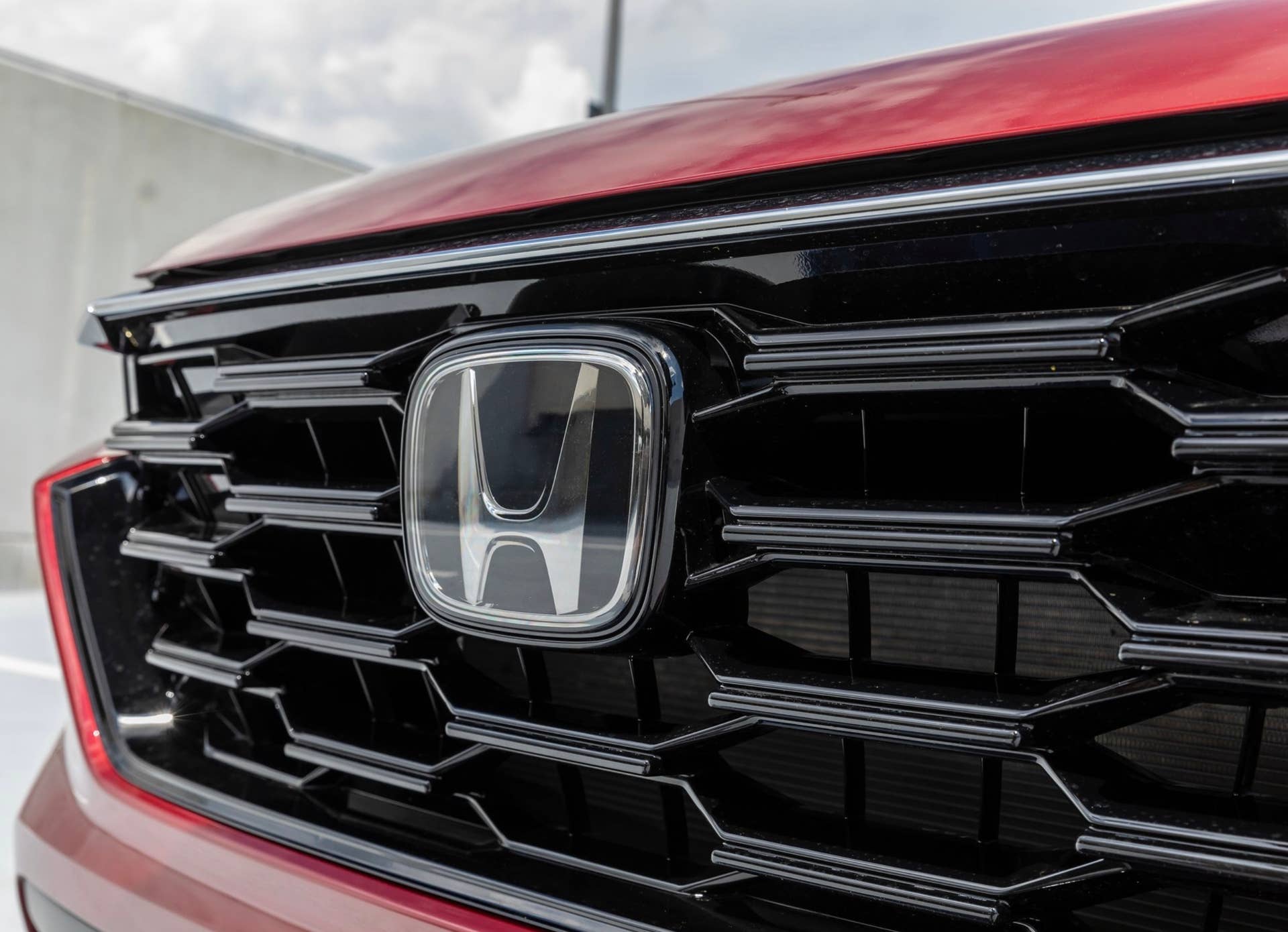
View the 2 images of this gallery on the
original article
Exterior
The CR-V is modern and cleanly styled, with slim LED headlights, a bold grille, and fairly boxy proportions to maximize space, but with premium detailing and a wide stance. Hybrids get black mirrors, roof rails, and wheels, and wheels measure 18 inches on all but the LX, which has 17s. Rear privacy glass is standard, and all trims above the LX get a power moonroof; EX-L and above also get a power liftgate.
2026 Honda CR-V TrailSport Hybrid in Ash Green Kristen Brown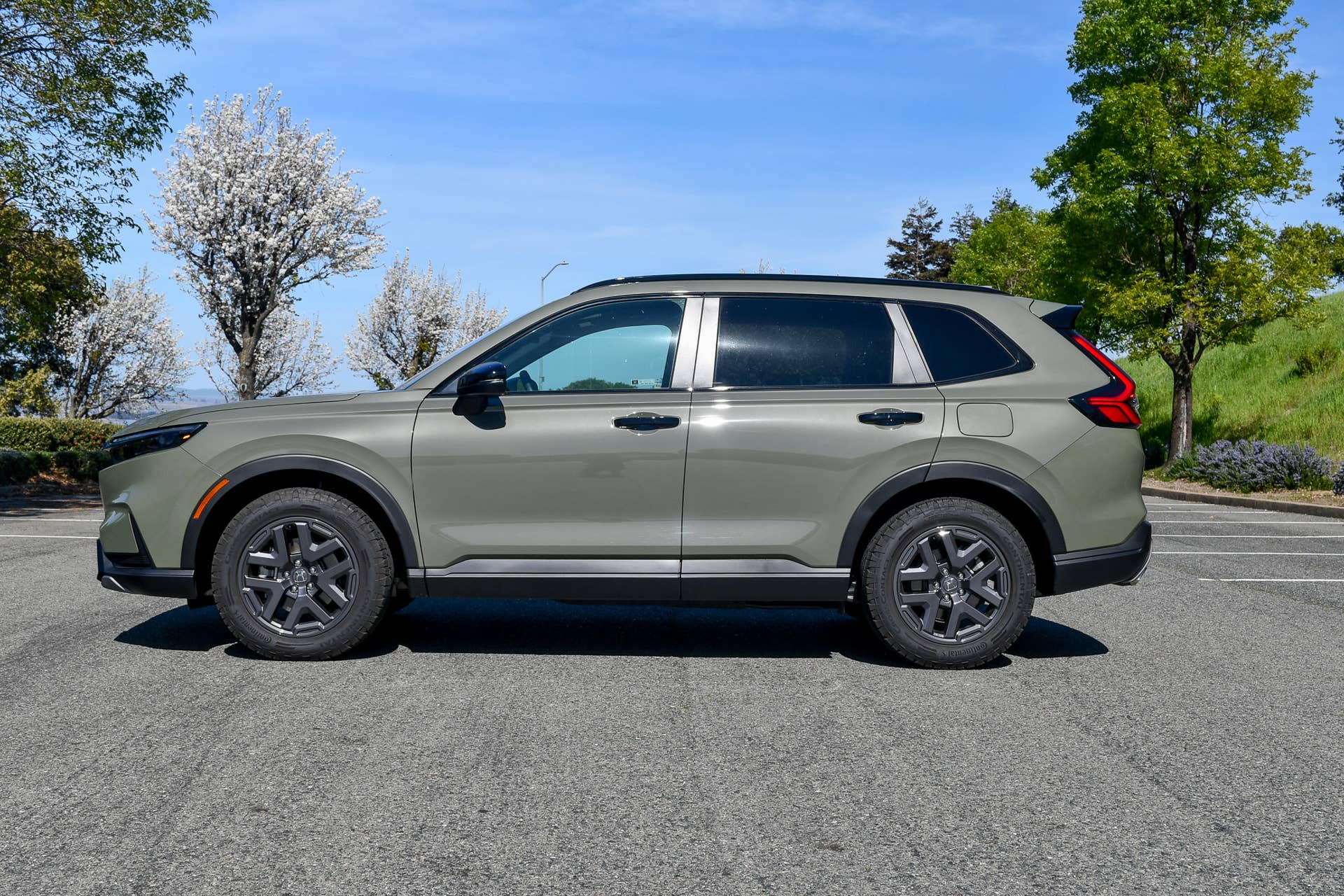
View the 3 images of this gallery on the
original article
Interior
The recently overhauled tech offering is composed of a 9.0-inch touchscreen with wireless Apple CarPlay/Android Auto, 4-speaker audio, and a wireless charging pad; higher trims gain a 10.2-inch digital gauge cluster and 6- or 8-speaker audio. Only the Sport Touring Hybrid comes with Google Built-In and 12-speaker Harman Kardon audio. By EX-L level, leather, heated power front seats, and driver’s memory have made their appearance. The TrailSport comes with contrast stitching and orange ambient lighting.
2026 Honda CR-V TrailSport interior Honda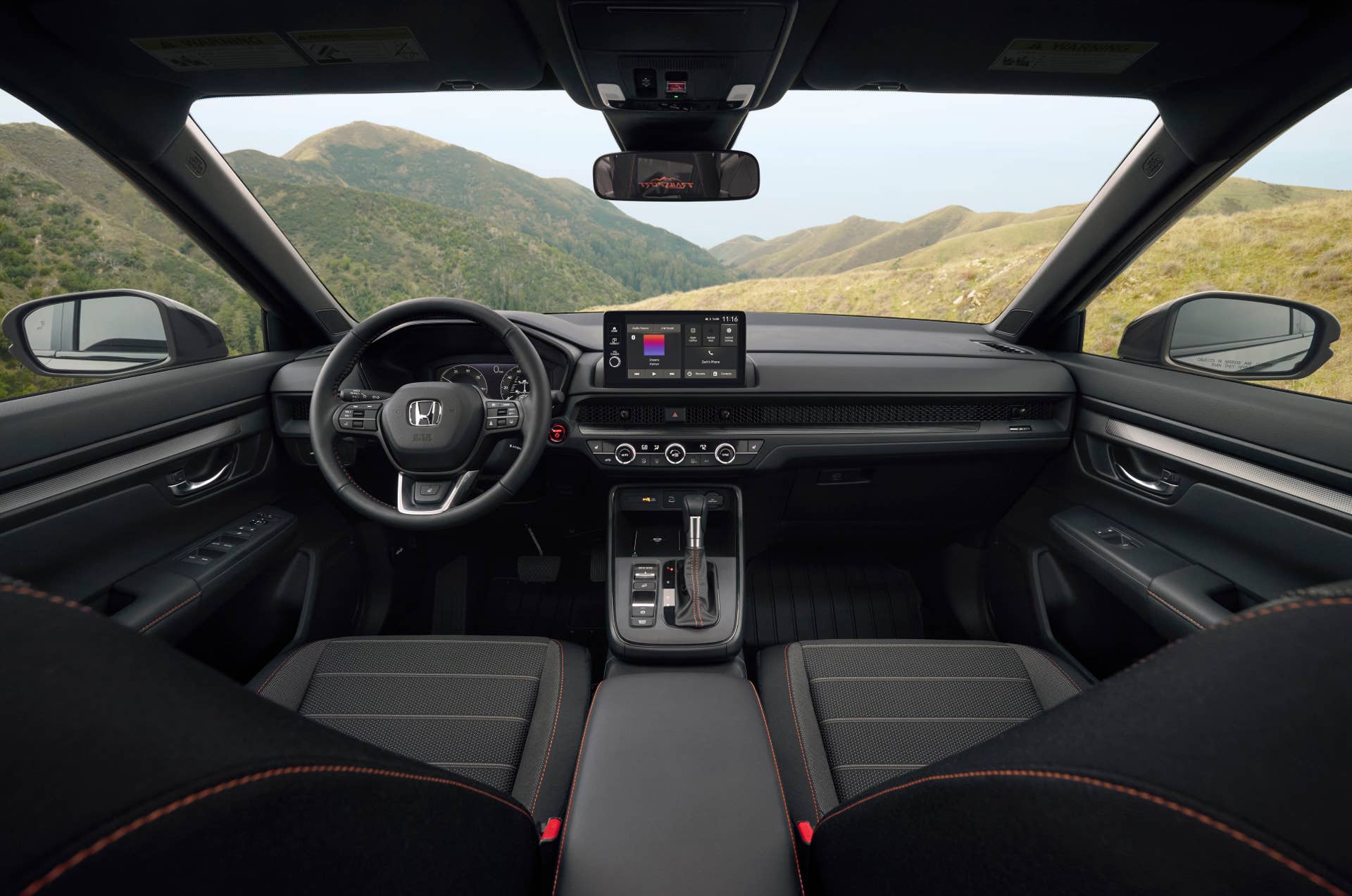
View the 3 images of this gallery on the
original article
Price Range and Best Value Trim
|
Trim Level |
Price |
|
Base trim: LX |
~$31,550 |
|
Top trim: Sport Touring Hybrid/e:FCEV |
~$43,000/$50,000 |
|
Best value trim: EX-L |
~$36,000 |
|
Best value hybrid trim: Sport-L |
~$39,400 |
The 2027 Honda CR-V’s price is expected to start at between $31K and $32K, but the EX-L is the high-value buy at around $36K, with features like a power liftgate, leather upholstery, power front seats, a digital gauge cluster, and upgraded audio. Stretching to just under $40K gives you the Sport-L, which is the best-value hybrid.
2027 Honda CR-V Specs Overview
Powertrain Options
|
Engine |
Horsepower |
Torque |
Transmission |
Drivetrain |
|
1.5L Turbo I4 |
190 hp |
176 lb-ft |
CVT |
FWD/AWD |
|
2.0L Hybrid I4 |
204 hp |
247 lb-ft |
Direct-Drive |
FWD/AWD |
|
Hydrogen Fuel Cell PHEV |
174 hp |
229 lb-ft |
Single-speed |
FWD |
Note: The TrailSport Hybrid and Sport Touring Hybrid have standard AWD.
Performance and 0-60 MPH
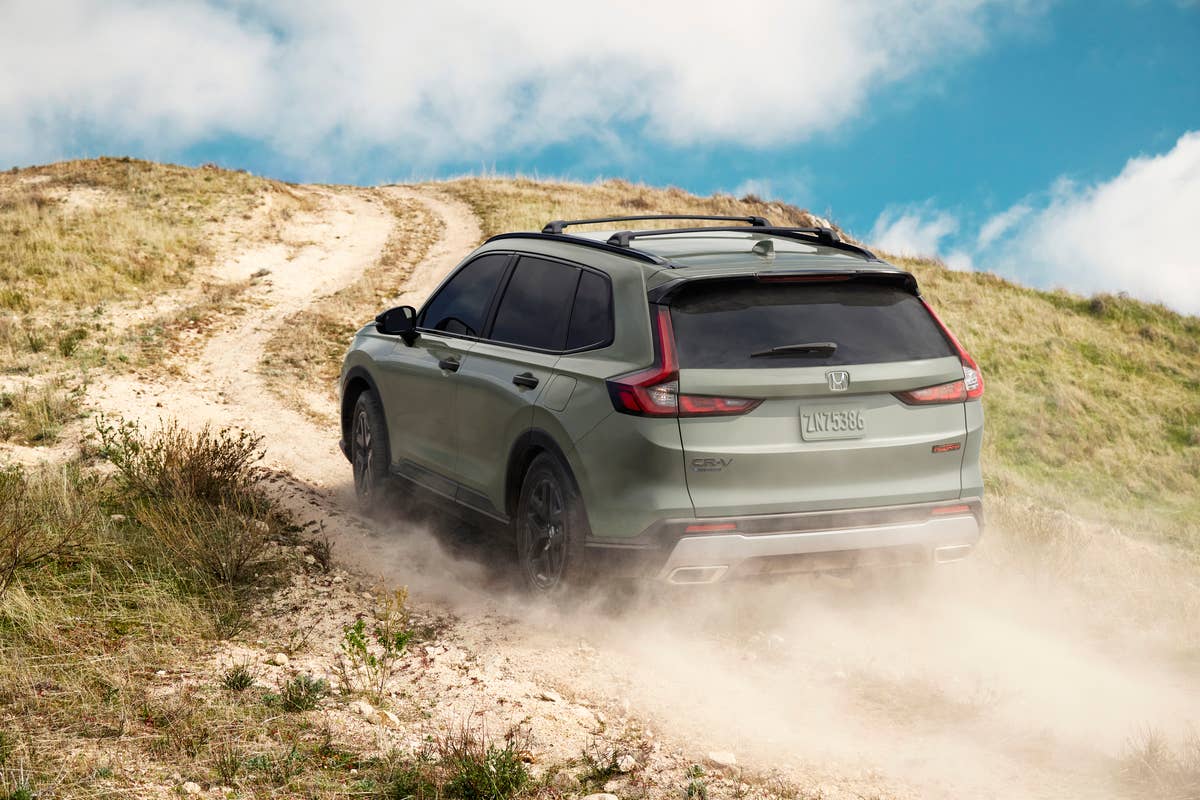
The 1.5 turbo powertrain is adequate, not quick, reaching 60 MPG in around 8.1 to 8.7 seconds, depending on the drivetrain and test weight, but it feels nicely torquey in everyday use. The refined hybrids are considerably quicker, dispatching the sprint in 7.1 to 8.0 seconds, with far better economy. The e:FCEV is the slowest at an estimated 9.0 seconds or so.
Fuel Economy (MPG)
|
Configuration |
City |
Highway |
Combined |
Electric Range |
|
1.5L Turbo FWD |
28 |
33 |
30 |
– |
|
1.5L Turbo AWD |
27 |
31 |
29 |
– |
|
2.0L Hybrid FWD |
43 |
36 |
40 |
– |
|
2.0L Hybrid AWD |
40 |
34 |
37 |
– |
|
TrailSport Hybrid AWD |
38 |
33 |
35 |
– |
|
e:FCEV |
– |
– |
87 MPGe; 57 MPGe on hydrogen only |
29 miles |
Towing and Capability
The 1.5-liter turbo CR-Vs can tow up to 1,500 pounds, but the hybrids are restricted to just 1,000 pounds, which is considerably worse than most rivals.
Dimensions
|
Dimension |
Measurement |
|
Length |
184.8 – 187.6 inches |
|
Width |
73.4 – 73.5 inches |
|
Height |
66.2 – 66.6 inches |
|
Wheelbase |
106.3 inches |
Interior Space (Front and Rear)
|
Row |
Headroom |
Legroom |
|
Front |
38.2 – 40.0 inches |
41.3 inches |
|
Rear |
38.2 inches |
41.0 – 41.1 inches |
Cargo Space
Cargo space is class-leading, and hybrids lose out very little, but the e:FCEV takes a big hit:
|
Configuration |
Cargo Space Behind Row 2 |
Cargo Space Behind Row 1 |
|
1.5L Turbo |
39.3 cu-ft |
76.5 cu-ft |
|
2.0L NA Hybrid |
36.3 cu-ft |
71.8 cu-ft |
|
e:FCEV |
25.2 cu-ft |
61.0 cu-ft |
2026 Honda CR-V TrailSport in Ash Green trunk Cole Attisha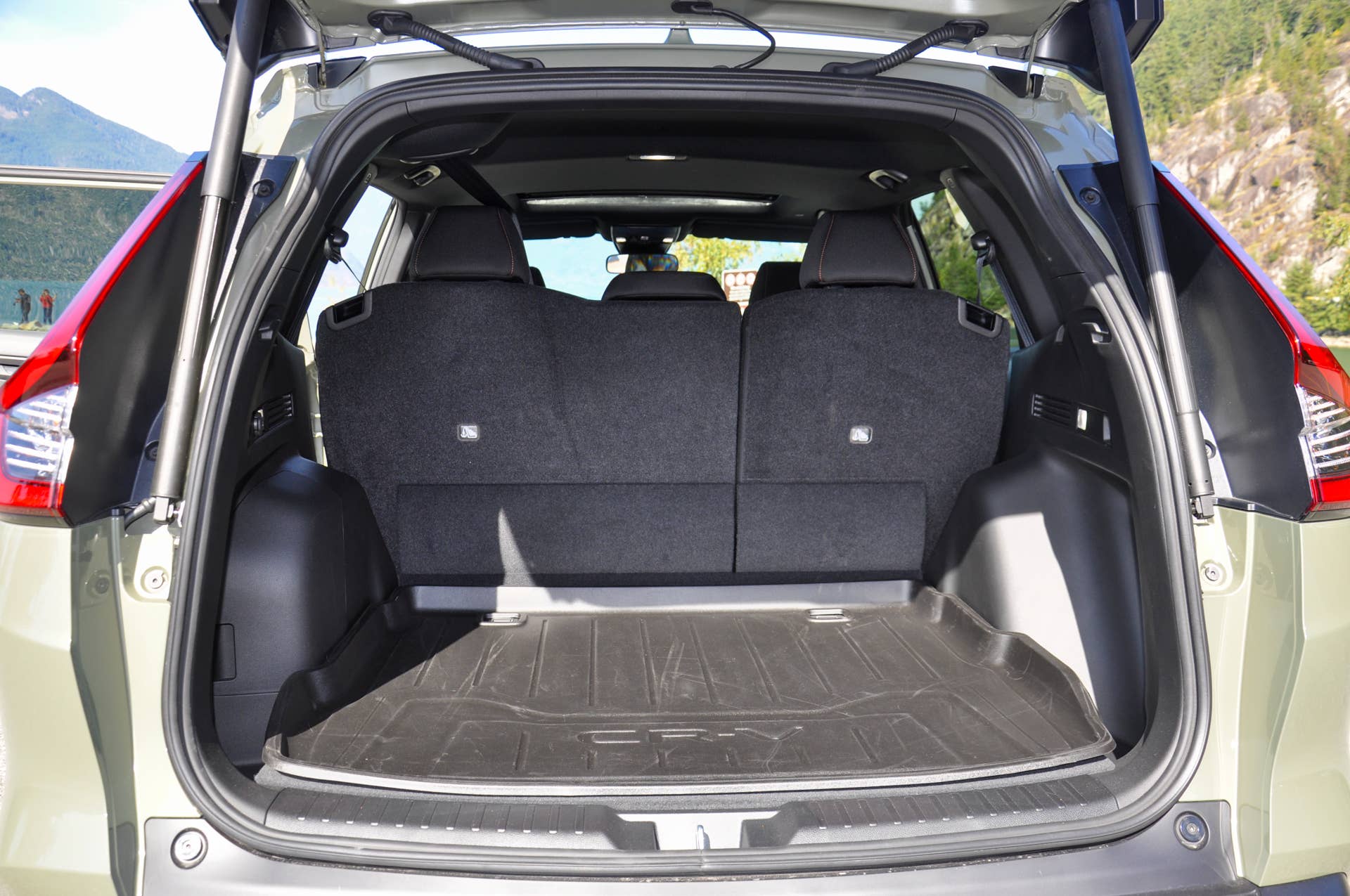
View the 3 images of this gallery on the
original article
Ground Clearance
The 7.8-inch ground clearance is typical for a crossove, and increases to 8.2 inches on AWD models, which is good enough for winter driving and rough roads.
Warranty
|
Coverage Type |
Duration |
|
Basic/Bumper-to-Bumper |
3 years / 36,000 miles |
|
Powertrain |
5 years / 60,000 miles |
|
Hybrid Components |
8 years / 100,000 miles |
|
Complimentary Maintenance |
1 year / 12,000 miles |
Pros and Cons
Pros:
- Excellent cabin and cargo space
- Hybrids are strong and very efficient
- Ride more refined than most rivals
- Build quality and reputation for reliability
Cons:
- Limited in-cabin storage options
- 9-inch touchscreen quite small
- No ventilated seats offered
- TrailSport lacks real off-road capability
Verdict
The CR-V comes with very few negatives, most notably a smaller-than-average infotainment screen and a few iffy cabin plastics here and there. It does enough to stay at the top of the class: It has the space of the Tucson, the reliability reputation of the RAV4, and generally an excellent combination of class-winning attributes in this segment. The e:FCEV is an intriguing, if very niche, fuel-cell aternative as well. The CR-V is best as a gas EX-L or hybrid Sport-L. Stretch for the hybrid if you can, because it’s noticeably swifter and a lot lighter on gas.
Competitors
- Mazda CX-50
- Toyota RAV4
- Kia Sportage
- Hyundai Tucson
- Nissan Rogue