

MSRP: $50,000
Use the table of contents to jump to a section
Overview
The 2026 Honda CR-V e:FCEV plug-in hydrogen fuel-cell compact SUV is the only hydrogen-electric fuel-cell vehicle for sale in the U.S., and was launched last year. It’s only sold in California, where some hydrogen refuelling infrastructure exists, and it’s aimed at environmentally minded early adopters who live near hydrogen refuelling stations in the state.
Its second-generation fuel-cell stack was codeveloped with GM, and in combination with a 17.7-kWh battery pack and 174-hp electric motor driving the front wheels, you get a 29-mile electric range and a 270-mile combined range on hydrogen, making it usable as an EV on short trips, but an extended range burning hydrogen.
Honda
What’s New for 2026
The 2026 CR-V e:FCEV is largely unchanged and carries over from 2025 as a single fully loaded trim based on the CR-V Touring. Honda has been working on the powertrain software to more smoothly transition between the fuel-cell and battery sources, but that’s about it. The 2026 Honda CR-V e:FCEV’s price is unchanged from last year and is still $50,000 on lease only.
Exterior
unique front fascia with better aerodynamics. The LED headlights are shared, but the LED taillights are darkened monochrome items, while the wheels are unique black 18-inch alloys. Fog lights, rain-sensing wipers, a power liftgate, rear privacy glass, and heated power side mirrors are standard.
It’s just as long (187.6 inches) and wide (73.5 inches) as a regular CR-V, but at 4,460 pounds, it’s about 567 pounds heavier than the AWD CR-V Hybrid. The hydrogen tanks sit under the rear floor, and the refuelling door is on the rear quarter panel, with a charge port supporting Level 1 or 2 charging on the opposite side.
Honda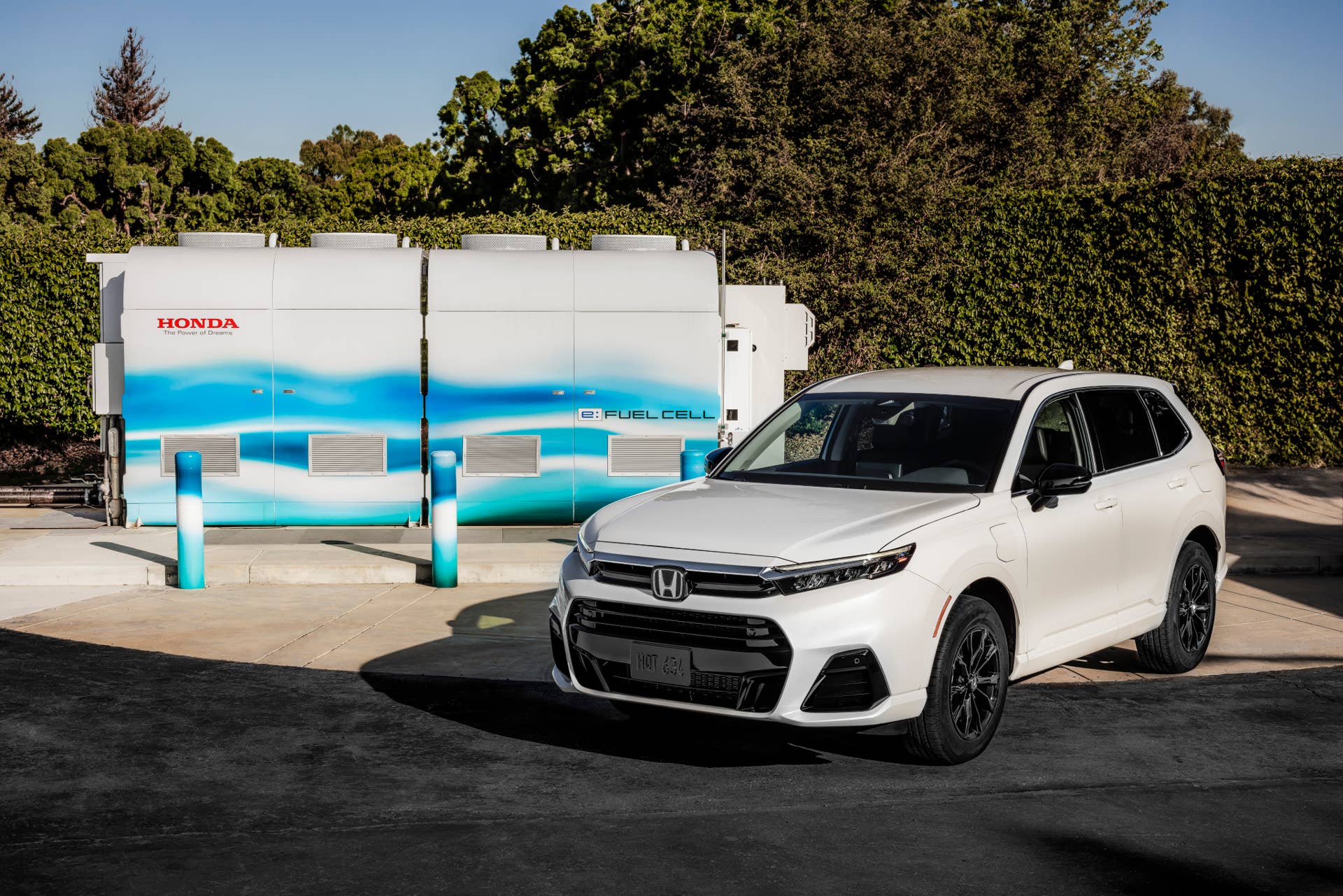
View the 3 images of this gallery on the
original article
Interior
The cabin is the same as that of the CR-V Touring, with leatherette upholstery, heated power front seats with driver’s memory, a heated steering wheel, a wireless charging pad, and dual-zone climate control. The 10.2-inch digital gauge cluster is complemented by a 9-inch touchscreen with wireless Apple CarPlay and Android Auto, navigation, the Honda Sensing driver-assistance suite, and a 12-speaker Bose audio system.
Cargo capacity is 25.2 cu-ft behind the rear seats, down from the CR-V Hybrid’s 36.3 cu-ft, due to the space taken up by the under-floor hydrogen tanks. With the rear seat folded, the total volume is 61 cu-ft, down from 71.8 cu-ft.
Honda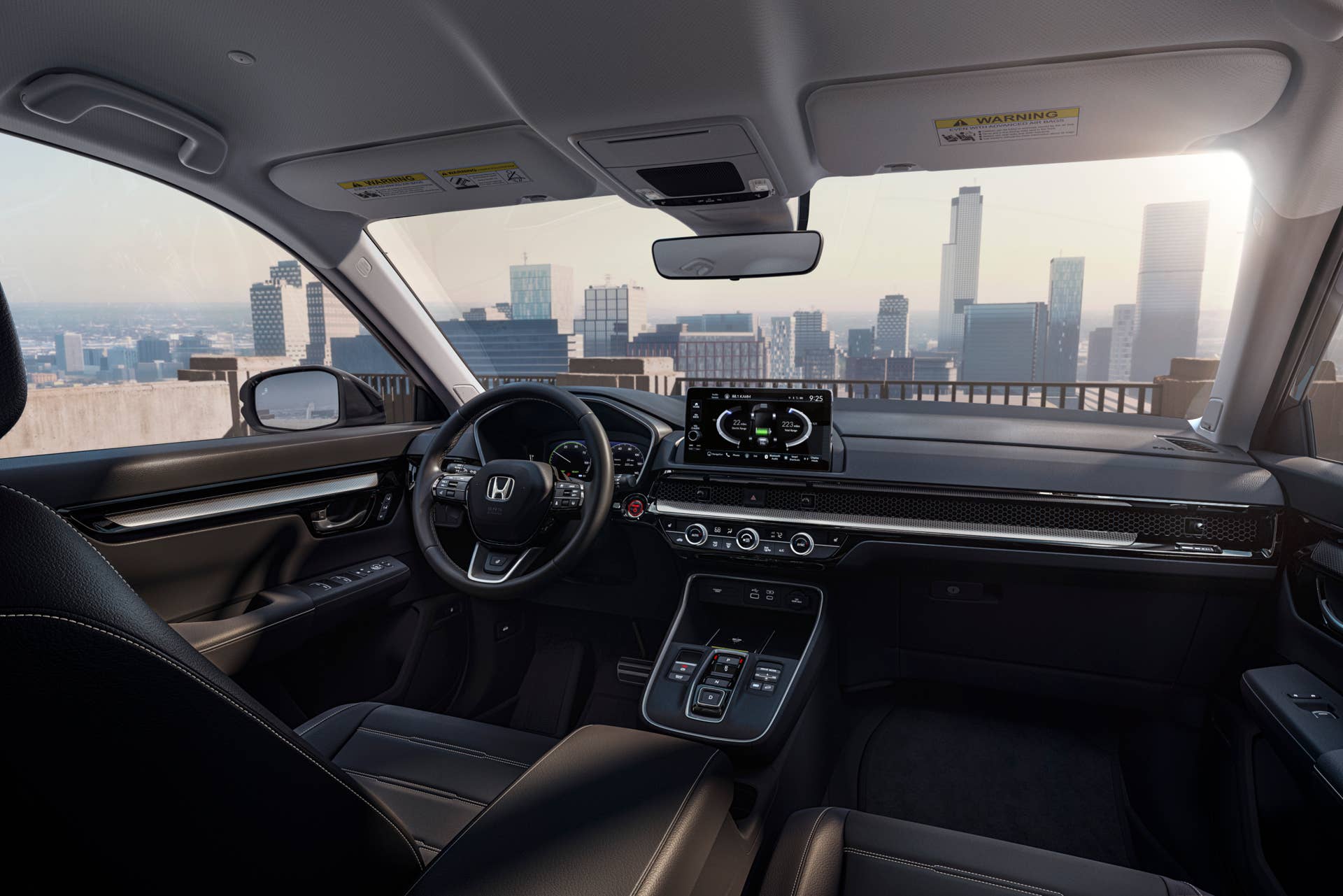
View the 3 images of this gallery on the
original article
Price Range and Best Value Trim
|
Trim Level |
Trim Name |
Price |
|
Base/Only trim |
CR-V e:FCEV |
$50,000 |
2026 Honda CR-V e:FCEV Key Specs
Powertrain Options
|
Motor |
HP |
Torque |
Drive |
Battery |
|
Electric (Fuel Cell + Plug-in) |
174 hp |
229 lb-ft |
FWD |
17.7 kWh |
Fuel Economy (MPG)
|
Configuration |
City |
Highway |
Combined |
Total Range |
EV Range |
|
CR-V e:FCEV |
61 MPGe |
52 MPGe |
57 MPGe |
270 miles |
29 mi |
Hydrogen refuelling: 3-5 minutes
Level 2 charging: ~2.5 hours
Hydrogen tank: 4.3 kg capacity
Cargo: 25.2-61 cu-ft
Seating: 5
Warranty
|
Coverage |
Term |
|
Basic Vehicle |
3 years / 36,000 miles |
|
Powertrain |
5 years / 60,000 miles |
|
Fuel Cell System |
8 years / 100,000 miles |
|
Complimentary Maintenance |
1 year / 12,000 miles |
Pros and Cons
Pros:
- 270-mile zero-emission range with only water vapor as output
- 3-to-5-minute hydrogen refueling is faster than any EV charging
- 29 miles of plug-in EV range covers short daily commutes
- Rides better than the standard CR-V thanks to reworked suspension
- Fully loaded single trim simplifies the buying decision
Cons:
- Lease only, available exclusively in California
- Hydrogen fueling infrastructure remains extremely limited
- 174 hp is less powerful than the CR-V Hybrid (204 hp)
- Front-wheel drive only with no AWD option
- Cargo space reduced versus the standard CR-V due to hydrogen tanks
Verdict
The Honda CR-V e:FCEV is a concept demonstration, more than anything else, with severely limited availability to the tune of around 300 units per year in California only, and with a very limited use case. Owners are early adopters of a niche technology, and would have to live close to hydrogen refuelling stations and be able to live with a maximum range of 270 miles.
It’s certainly pleasant to drive, with the same roomy cabin and generous standard spec as the CR-V Touring, but with a more planted and comfortable feel thanks to the retuned suspension and higher weight. It’s also eerily quiet, with no combustion engine intruding.
It solves the biggest problem that hydrogen-powered cars have hitherto had, by adding a battery that can be charged at home for at least 29 miles of electric range – enough to run most daily errands, even when the hydrogen tanks are empty. But with fewer than 70 hydrogen fuelling stations in California, and reliability being patchy, the fundamental limitation remains infrastructure, and this will remain a very rare niche vehicle with a severely restricted use case until that infrastructure expands.
Honda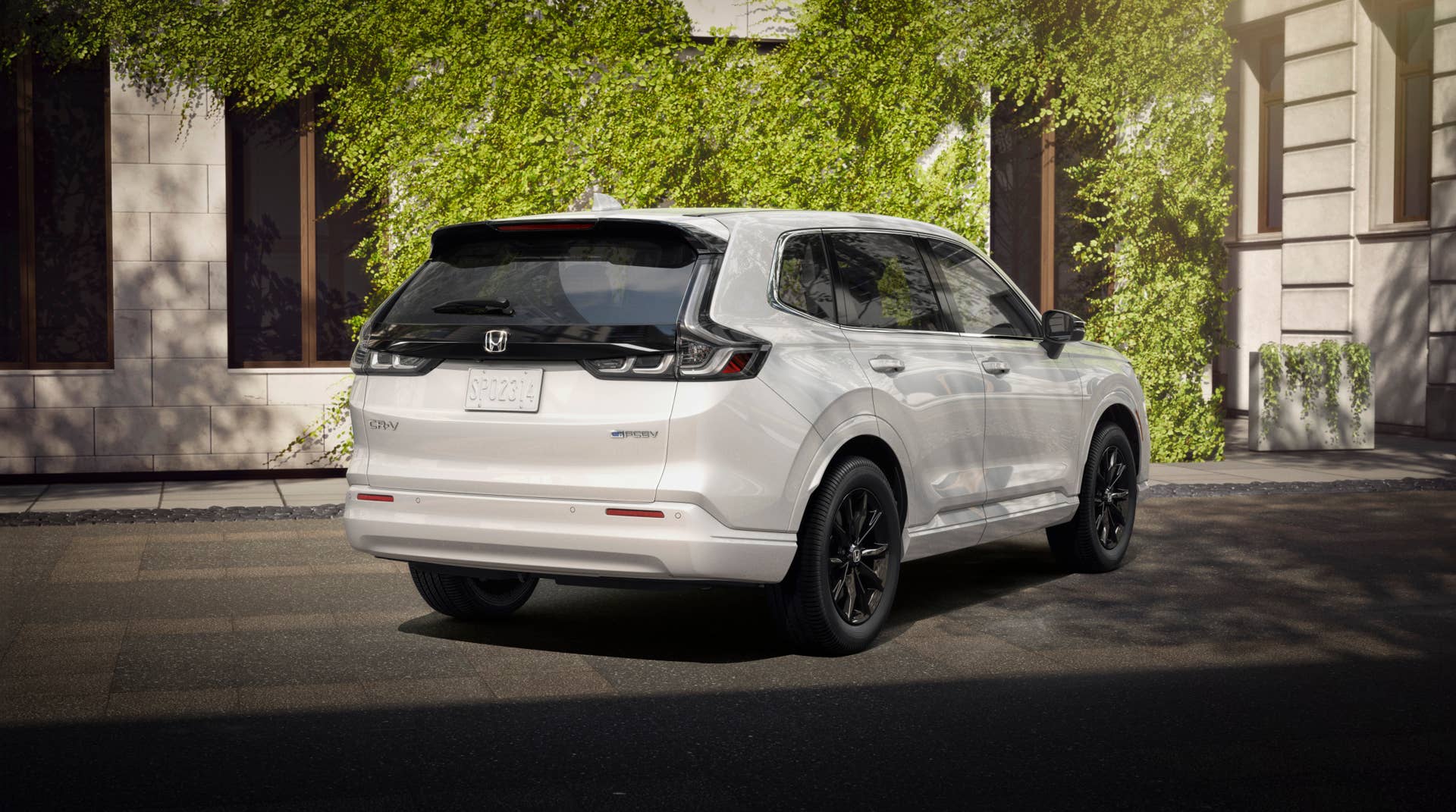
Competitors
- Honda CR-V Hybrid
- Hyundai Ioniq 5
- Kia EV6
- Ford Mustang Mach-E
- Tesla Model Y