

MSRP: $50,000
Use the table of contents to jump to a section
Overview
The 2025 Honda CR-V e:FCEV compact plug-in electric fuel-cell SUV arrives as the only vehicle of its type in America, and is based on the current 6th-generation gas CR-V. It uses a fuel-cell system, a 17.7-kWh battery, and a single electric motor that produces 174 horsepower and 229 lb-ft of torque, driving the front wheels.
An electric range of 29 miles is possible, and overall range amounts to 270 miles using hydrogen. Hydrogen refuelling takes only around 3-5 minutes, but only California has hydrogen infrastructure, so the car is only sold in this state at a rate of around 300 per year. The only emission while driving is water vapor.
What’s New for 2025
The 2025 CR-V e:FCEV is all-new, and it’s the first Honda that combines hydrogen fuel-cell technology with a plug-in hybrid battery system in a production vehicle. The fuel cell has been jointly developed with General Motors and is fitted to a 6th-generation CR-V with a modified platform and recalibrated suspension to account for the extra weight of the fuel-cell hardware and hydrogen tanks. Curb weight is 4,460 pounds (the heaviest AWD CR-V Hybrid weighs 3,893 pounds).
The CR-V succeeds Honda’s previous effort in this field, the Clarity Fuel Cell sedan, moving to the more popular compact SUV format. The 2026 Honda CR-V e:FCEV’s price is $50,000.
Honda
Exterior
The CR-V e:FCEV shares its body and design with the gas CR-V, but with unique detailing setting it apart, including trim-specific badging, a unique fascia with a big lower grille, darkened monochrome LED taillights, and gloss-black 18-inch alloy wheels. Its length of 187.6 inches and its 106.3-inch wheelbase are the same as the standard CR-V. The high-pressure hydrogen tanks are installed under the rear seat, so a flat cargo floor is maintained.
Honda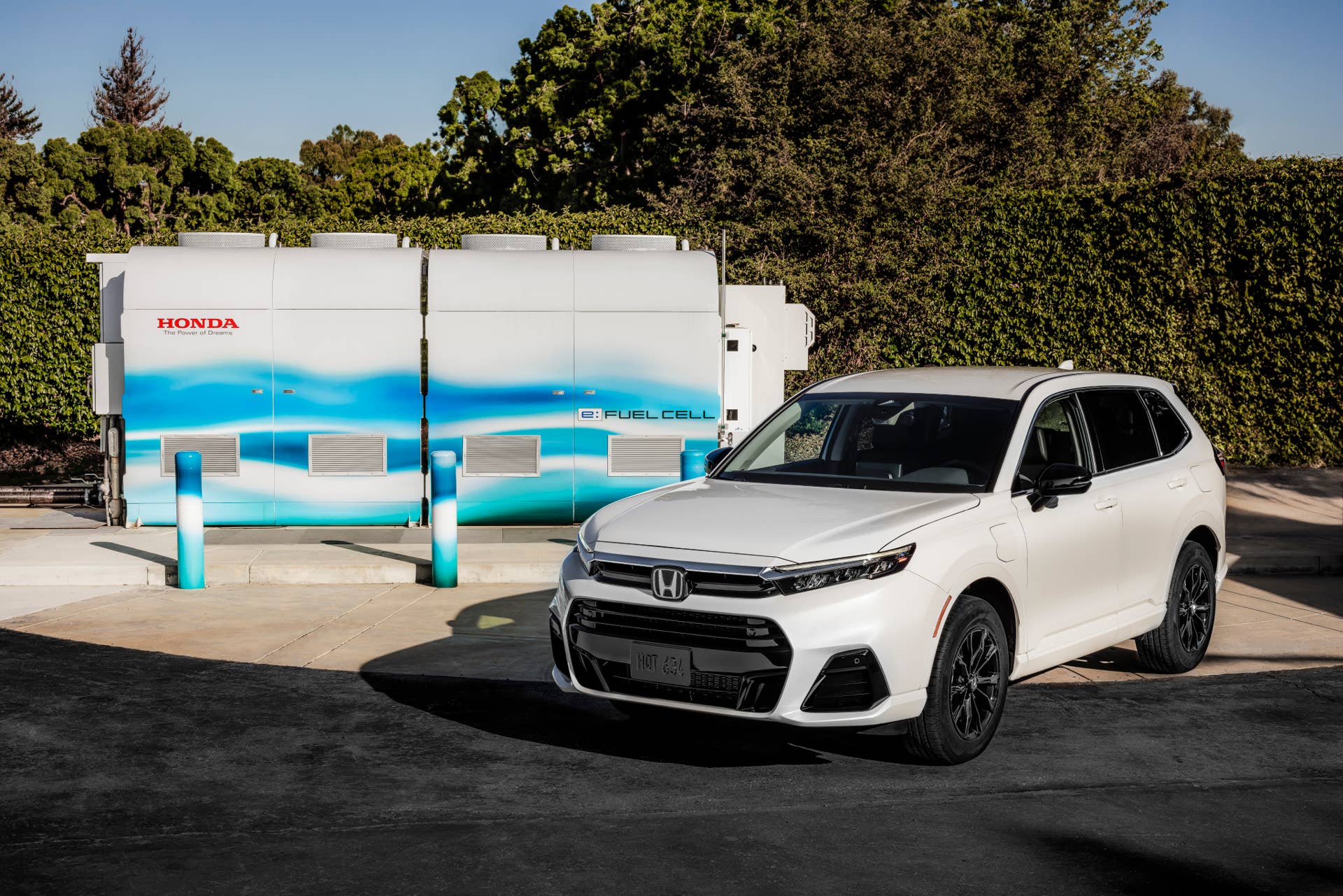
View the 3 images of this gallery on the
original article
Interior
The cockpit has a 10.2-inch digital gauge cluster and a 9-inch center touchscreen with wireless Apple CarPlay and Android Auto, three USB-C ports, navigation, SiriusXM, HD Radio, Wi-Fi, and a 12-speaker Bose audio system. Standard amenities include a wireless charging pad, leatherette upholstery, a heated steering wheel and (power) front seats, and dual-zone climate control. There are four driving modes: Normal, Econ, Sport, and Snow, as well as an EV mode control to manage energy.
The rear seat is just as spacious as that of the regular CR-V, but cargo capacity is reduced to 25.2 cu-ft with the rear seat up and 61 cu-ft with it down. The gas CR-V’s figures are 39.3 and 76.5 cu-ft, while the CR-V Hybrid’s are 36.3 and 71.8 cu-ft.
Honda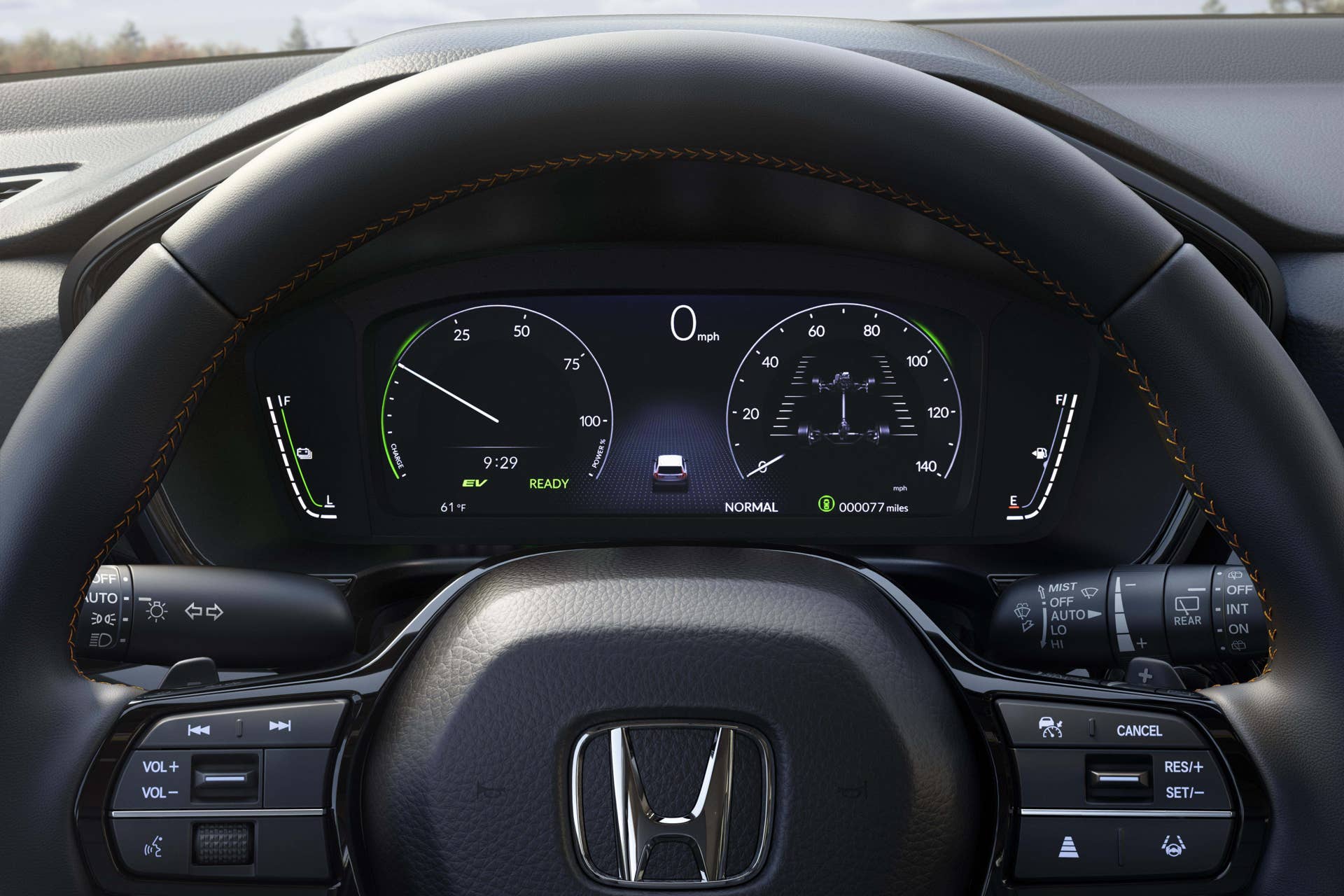
View the 3 images of this gallery on the
original article
Price Range and Best Value Trim
|
Configuration |
Price |
|
Base/Top/Best Value: CR-V e:FCEV (FWD) |
$50,000 |
There is just one trim configuration at $50,000 MSRP. Lease terms include $15,000 worth of hydrogen refueling credits and up to 21 days of Avis car hire access per year.
2025 Honda CR-V e:FCEV Key Specs
Powertrain Options
|
System |
HP |
Torque |
Drive |
0-60 |
Total Range |
|
PEMFC + 17.7 kWh battery |
174 hp |
229 lb-ft |
FWD |
~8.6 sec |
270 mi + 29 mi EV |
Fuel Economy (MPG)
|
Config |
City |
Highway |
Combined |
|
CR-V e:FCEV |
61 MPGe |
52 MPGe |
57 MPGe |
Hydrogen tank: 4.3 kg
Refuelling: 3-5 min
Level 2 charge: ~2.5 hrs
Emission: water vapor only
Seating: 5
Warranty
|
Coverage |
Term |
|
Basic |
3 years / 36,000 miles |
|
Powertrain |
5 years / 60,000 miles |
|
Fuel Cell |
8 years / 100,000 miles |
|
Complimentary Maintenance |
1 year / 12,000 miles |
Pros and Cons
Pros:
- Combination of hydrogen fuel cell and plug-in battery a world first, providing 270-mile zero-emission range, 5-minute hydrogen refueling, and no long EV charging times
- 29 miles of EV-only range covers most short commutes, while the fuel cell handles longer trips without range anxiety, offering the best of plug-in and hydrogen technologies
- Lease includes $15,000 in hydrogen fuel credits, rental car access, HOV lane eligibility, and familiar CR-V packaging with Honda Sensing safety suite
Cons:
- Available only in California through lease-only program and no purchase option, limiting the CR-V e:FCEV to about 300 units per year and excluding buyers in all other states
- Hydrogen infrastructure extremely limited even in California, with station reliability issues that can leave drivers stranded, making the e:FCEV impractical outside major metros
- 174 hp and an 8.5-second 0-60 time are modest for a $50,000 vehicle, and front-wheel drive only limits capability compared to the standard CR-V’s available AWD
Verdict
The Honda CR-V e:FCEV isn’t really a mass-market vehicle, but more a concept demonstration to show how the combination of hydrogen fuel-cell technology and a plug-in battery system is genuinely innovative, and can provide zero-emissions driving with the same quick refuelling as a gas car. Making it even more attractive is the fact that it comes in the most popular passenger-vehicle body style in America – the compact SUV – and with the familiarity and practicality of the top-selling CR-V, as well as very favorable lease terms and $15K of hydrogen credits.
But it’s strictly a vehicle for early adopters, and it’s subject to very limited availability, for lease only, and just in California, so you’d have to be willing to navigate hydrogen’s current limitations. It’s a glimpse into Honda’s vision for the future of zero-emission driving, but will remain extremely niche until the infrastructure catches up with the technology.
Honda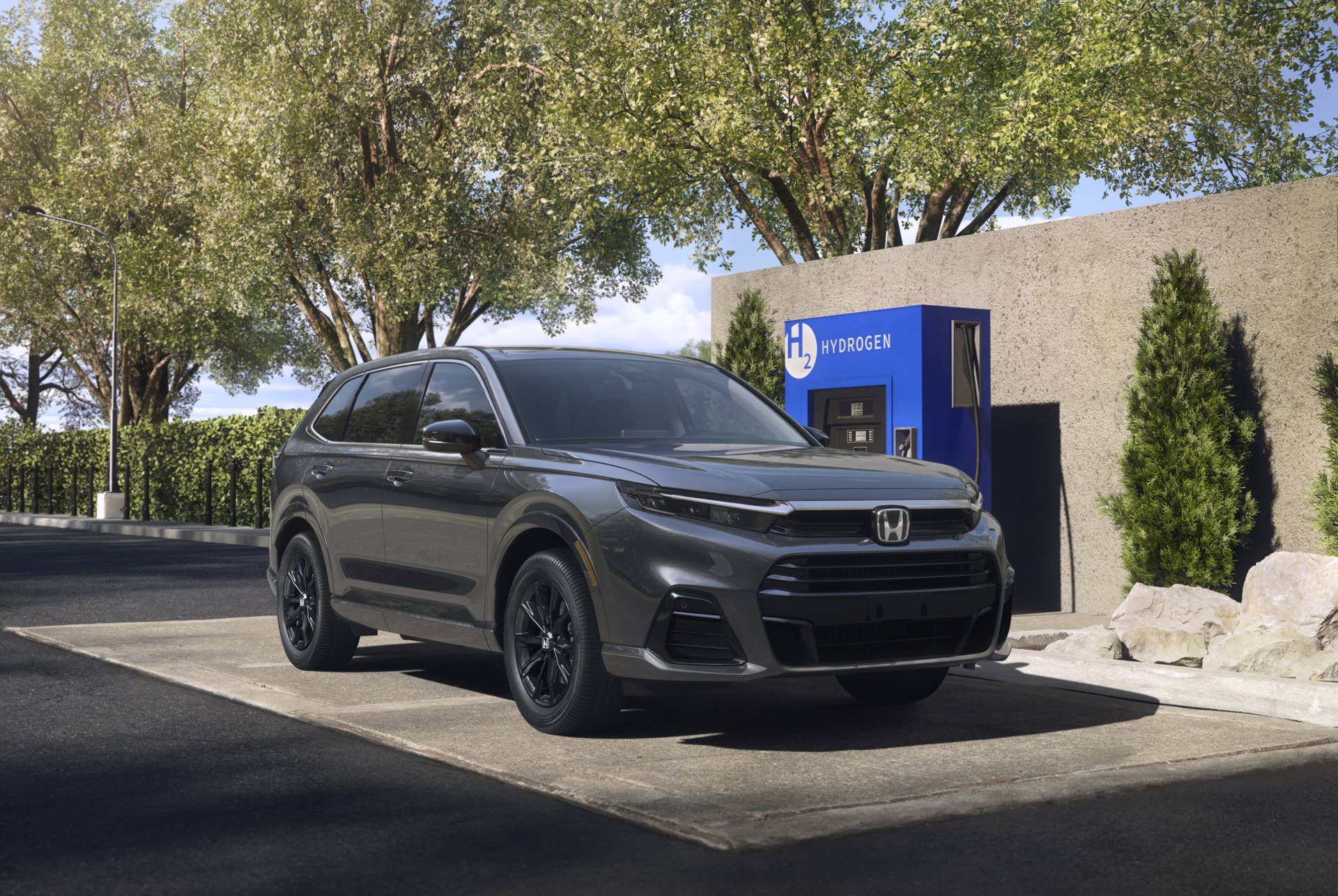
Competitors:
- Honda CR-V Hybrid
- Hyundai Ioniq 5
- Kia EV6
- Ford Mustang Mach-E
- Tesla Model Y