

Back to the Motherland
On March 5, 2026, American Honda confirmed earlier reports that it would be reverse-importing some of its US-market vehicles to be sold over in Japan. The two vehicles slated for sale, the range-topping Honda Passport Trailsport adventure crossover and the red-hot Acura Integra Type S, are two significant U.S.-made products built with a significant amount of American-origin parts, including engines made at facilities in Alabama and Ohio.
In a statement, Jun Jayaraman, the senior vice president of the Manufacturing Management Center at Honda Development & Manufacturing of America said that the products that it intends to bring back to Japan are made with pride at their respective facilities and reflect a decades-long legacy of American-made success.
“Since Honda began auto production in America more than four decades ago, we have been dedicated to delivering quality for the world, made in the U.S.A.,” Jayaraman said. “From the onset, Honda has believed in our American manufacturing talent, and we are proud to export quality vehicles built by our associates in Alabama to Honda customers in Japan.”
Against all odds, Japan is obsessed with American cars
Although it may seem a little farfetched to sell American-market cars in Japan; a country known for narrow roads, immense road taxes and cute “little tiny cars,” Honda is assured that its latest offerings back in its home nation will sell. They stated that well before its decision, it showed off both the Trailsport and Type-S at both the Tokyo Auto Salon and Osaka Auto Messe earlier this year, noting that the public showed “strong interest” and “expressed excitement” when asked if they’d buy the cars if made available in the Japanese market.
Believe it or not, Japanese car enthusiasts are not a monolith; the scene doesn’t exactly look like Tokyo Drift, Wangan Midnight, or Initial D. Beyond their own domestic models, enthusiasts in the Land of the Rising Sun show a strong interest in a diverse variety of cars, including and especially American cars.
Japan’s obsession with American cars is multifaceted and romanticizes the American automotive lifestyle in a way that is uniquely Japanese. Their fascination with the unique swagger and subcultures that American cars carry makes Honda’s plan a smart way to tap into a niche but enthusiastic import-obsessed subculture.
Kiyoshi Ota/Bloomberg via Getty Images
View the 2 images of this gallery on the
original article
By the numbers, it shouldn’t make sense
If you look at the rules regarding cars in Japan, it should be no surprise that American cars are a hard sell in Japan. However, the die-hard Japanese enthusiasts who like American cars really like American cars, and sacrifice a lot to keep their metal on the road. Japan has very strict import laws and regulations, which make it very difficult and expensive to have an American-made machine in the country.
In an interview with Reuters, Yumihito Yasue, the president of Johnan Jeep Petit, a Tokyo-based importer and service provider for vintage American cars, said that “American cars are designed for wide roads and freeway driving, so handling them on narrow Japanese streets can be tricky,” adding that driving such cars “takes a bit of technique.”
However, apart from narrow roads and tight parking spaces, what tends to be the nail in the coffin for American cars in Japan is something called the annual road tax, which is taxed by vehicle class categorized by engine size. This system was established for car owners to contribute to road maintenance costs, though owners of larger cars bear a larger share. While owners of kei cars; those little cars with little 660cc motors, pay just ¥3,700 (~$23.48) yearly, while owners of cars with a 1-1.5-liter engine pay around ¥34,500 (~$219) yearly. These taxes increase by engine size, ultimately costing ¥111,000 (~ $704) for cars with engines over six liters.
As a result, preliminary data from Japan’s finance ministry shows that while Japanese car firms exported 1.35 million vehicles to the U.S. in 2025, just 18,624 cars were imported from the United States to Japan. In addition, 2024 data from the Japanese Automobile Manufacturers Association cited by Reuters showed that foreign cars accounted for just 6% of new car sales in the country, including “around 570 Chevys, 450 Cadillacs and 120 Dodges.”
View this post on Instagram
Niche subcultures
Despite these perceived incompatibilities with their roads and motoring lifestyle, some dedicated Japanese enthusiasts have broken from the mold and established communities surrounding certain American cars including muscle cars, off-roaders and other stateside vehicles.
One of these cool subcultures even includes lowered and modified DodgeRam Vans souped up for racing. Dajibans, a Japanese portmanteau derived from the literal pronunciation of “Dodge Vans,” `revolves around modified short wheelbase Dodge Ram Vans, particularly those from the 1998 to 2003 model years. These machines became a beloved part of Japan’s automotive community, largely in part, to its utilitarian roots.
In a 2018 report for Road & Track, Takahiro Okawa told writer Sam Smith that these vans became part of the Japanese tuner mystique when motorcycle racers began hauling their two-wheelers in American vans, only to find the V8-powered Dodge Ram 1500 fit for their brand of thrills. With its Hemi V8 powertrain and sedan-sized length, the short-wheelbase Ram became a formidable canvas for proper speed machines.
These days, large groups of thrillseekers gather regularly to thrash around their Dajibans at organized events at tracks like Ebisu, where they sport a number of upgrades that emulate both Japanese style and functional high-speed fun. Apart from a full course of stickers and aero mods, drivers swap in more powerful motors, Ferrari 360-derived brakes, side exit exhausts, and a lower and wider suspension planted on sticky rubber mounted on wide eight-spoke Wantanabe wheels.
View this post on Instagram
But while Dajibans incorporate Japanese flair and know how to transform an existing American utility product for track and racing use, another subsect of Japanese car enthusiasts are keen to show off their appreciation for the cars that its domestic car companies sell in the United States. While contemporary western and American car enthusiasts are obsessed with JDM (meaning Japanese Domestic Market) vehicles and styling, the parallel opposite is true in Japan.
An even tighter community of enthusiasts are practitioners of USDM, or United States Domestic Market style, who aim to visually modify their Japanese-market vehicles to resemble their US-market counterparts. For instance, this means that dedicated owners of something like an 1994-2001 Honda Integra would swap their bumpers and headlights with the ‘four-eyed’ Acura-badged ones, as well as swapping Honda badges and other visual indicators for the equivalent Acura-branded versions.
Why would dedicated Japanese USDM enthusiasts go through the trouble of sourcing rare US-market parts when the demand by the majority enthusiasts in the States wants the “good stuff” from Japan? Turns out, it’s their own form of respecting American-market cars and reflecting the kind of respect and appreciation American Japanese car enthusiasts have for JDM.
”’USDM’ shares the common view that cars are more American than American, and they are a group that is committed to an American lifestyle, especially their cars,” Organizers of the USDM Jam car show wrote on their about page, translated from Japanese. “[…] their thinking is a little different from that of people who drive rare left-hand drive Japanese cars. America is said to be a melting pot of races, a place where many different races and cultures coexist. There was a time when Japan admired white and black America, but you could also say that “USDM” conveniently traced the Asian and Japanese cultures that are prevalent on the West Coast and in Hawaii in Japan.”
Honda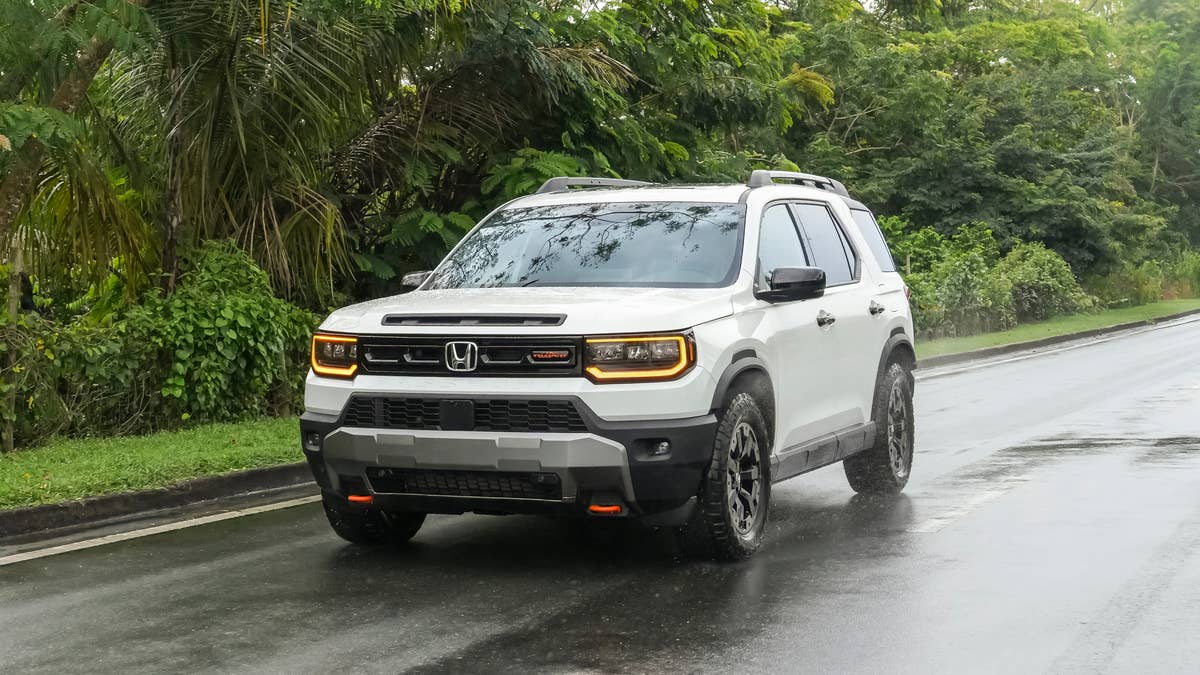
View the 2 images of this gallery on the
original article
Everything, for everyone
While economic and auto industry experts would logically point to conditions like tariff protections as a primary reason behind Honda’s decision to reverse-import the American-made Passport Trailsport and Integra Type S, it can be interpreted as more than a logistical move by enthusiasts.
A passionate and distinct automotive subculture revolving around America and Americana exists in Japan and by bringing these authentic, American-built versions of their vehicles back to their motherland, Honda is providing Japanese USDM enthusiasts and American car fans direct access to the very cars they go to great lengths and expense to emulate and/or obtain.
Ultimately, Honda’s decision to reverse import is an opportunity to explore the universal language of car enthusiasm. This appreciation is a give-and-take relationship, where American desire for JDM rarity and the Japanese desire for USDM authenticity highlights how automotive culture transcends borders and specifications. In turn, the Honda Passport Trailsport and Acura Integra Type S reflect Honda’s decades-long legacy of American-made success, delivering high-quality cars for everyone, regardless of borders.