

The TrailSport name, at least in the case of the Pilot, Ridgeline, and Passport, meant something. It meant upgrades to the suspension, tweaks to the all-wheel drive system, additional off-road-focused software and features (like hill descent and braking), and a bit of a lift from the factory. Then, last year, Honda revealed it was adding the CR-V to the TrailSport lineup. When I read it, I pictured smaller wheels, taller all-terrain tires, a lift kit, underbody protection, and the same software as the others. What we got instead was a CR-V in that cool Ash Green Metallic color, with black exterior accents, a hybrid-only powertrain, and all-terrain tires. That’s it.
Kristen Brown
I was a bit disappointed by it. I went into my review with a bitter taste in my mouth because of it. But I walked away with a fairly deep sense of appreciation and love for it because it doesn’t pretend to be anything other than an appearance package. In the mid-sized softroader SUV segment, it makes an incredibly strong case for itself: it’s a good size, has a decent amount of cargo space, is comfortable, insanely efficient, and, most importantly, is affordable. Sure, it might not pack as big a punch as the Passport or Pilot TrailSport, but it doesn’t have to. However, it doesn’t come without a few flaws. Let’s dig in.
The Honda CR-V TrailSport does an excellent job of packaging the basics nicely
One of the first things I noticed, especially compared to the larger (and more expensive) TrailSport models, was that the interior was fairly bare bones. The seats weren’t made with a rich, black leatherette—but black cloth with orange stitching, and an embroidered “TrailSport” badge on the headrest. There wasn’t a memory seat function, and there were a surprising number of poverty buttons (or plastic blockers where more premium function buttons would be). The main screen was smaller than I anticipated, and it didn’t come with a premium sound system, even as an option. There was a lot of black plastic, too. And then I took a look at the Monroney, and it all made sense. The starting MSRP of the CR-V TrailSport is $38,800. Mine, with the destination fee and other taxes, came out to $40,650. That’s insanely affordable, when average new car prices are considered.
Kristen Brown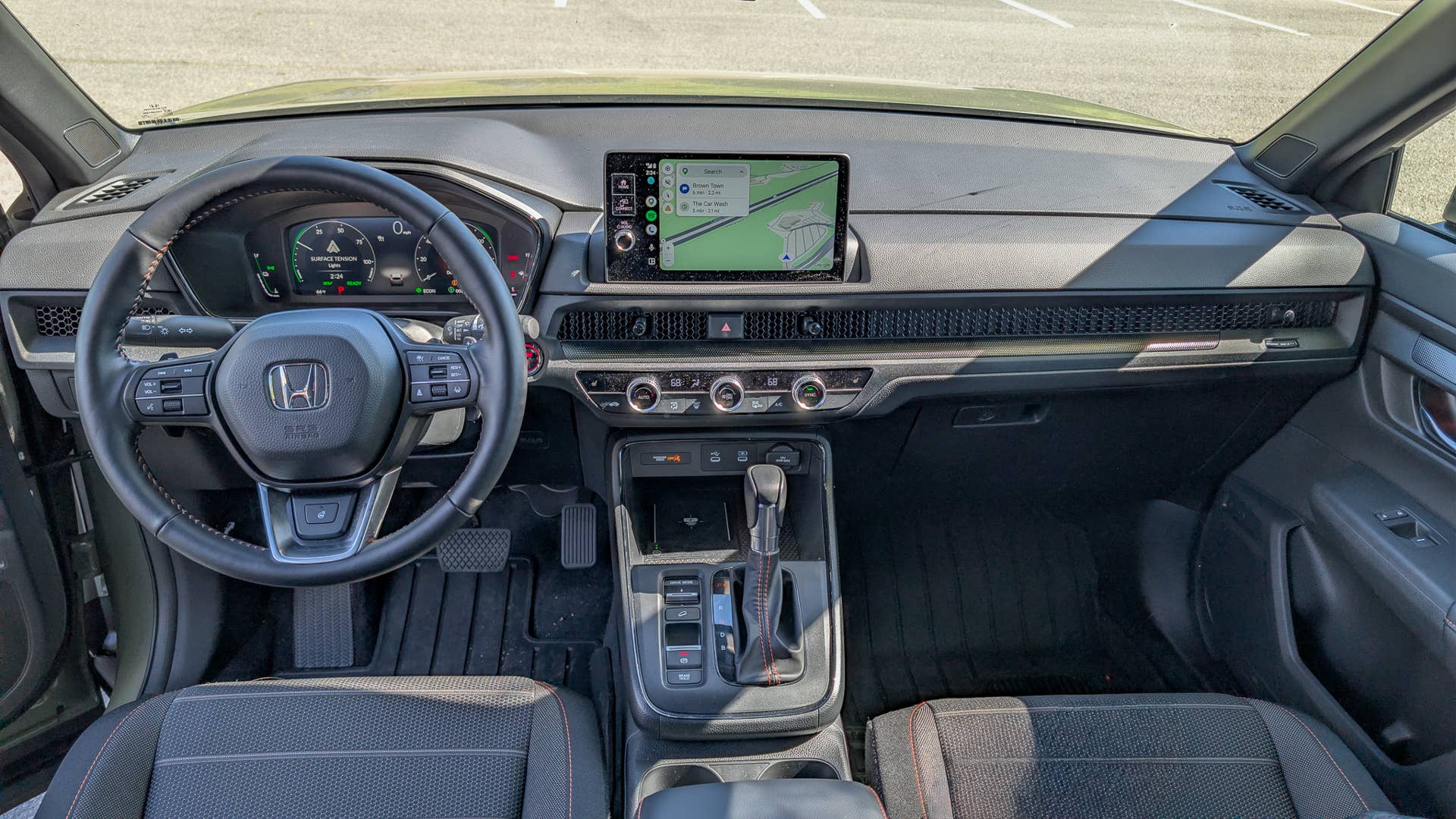
And that’s with nice, sturdy Continental all-terrain tires, a heated steering wheel, heated seats, all-wheel drive, and an excellent hybrid system (which, let’s be honest, is more of what you’re paying for here). Once I saw the price, everything made sense. It still came with the essentials that every new car should come with, like a comprehensive safety suite—more on that later—usable space, a comfortable ride, rear A/C vents with USB-C charging ports, and game-changing mileage. The HVAC controls were all physical buttons, too, which is a welcome comeback. And it still came with wireless Android Auto or Apple CarPlay and a wireless phone charger. Some modern cars don’t offer those features in base models. So, nicely done, Honda.
Kristen Brown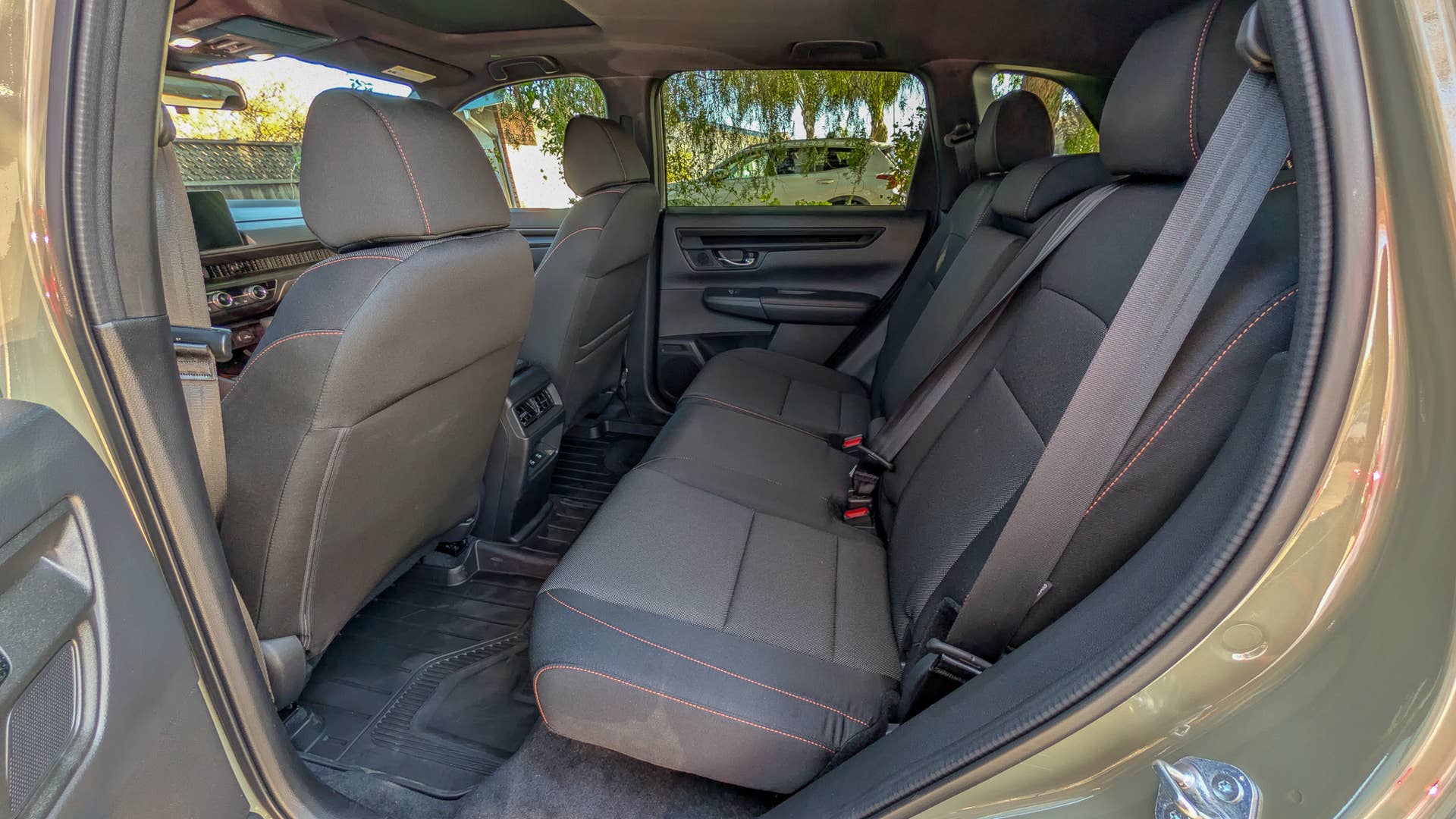
I was still pretty amazed by what it didn’t have, though. Even as an option. It didn’t have any sort of advanced parking assistance features, like a 360-degree view camera. It did have a backup camera, albeit a low-resolution one, but at least you had one. And it had sensors that would alert you to obstacles in the front and rear, but that’s about it. Which, again, is everything you need from an affordable, new car. You don’t need a 360-degree view camera; it’s just nice to have. So, in a way, the CR-V TrailSport sort of forces you to be aware of your surroundings, which is a skill we can all use a refresher on.
Related: Road Ethos Launches: The New Automotive Lifestyle Site You Should Read
Here’s why I say it’s more of a softroader than an off-roader
The Honda CR‑V TrailSport gets chunkier tires, a slightly lifted stance, and some suspension retuning, but its core hardware—the hybrid powertrain, on‑demand AWD system, and lack of underbody protection—is still built for pavement first. It’s great for gravel roads, campsites, and mild trails, but without low‑range gearing, locking differentials, or serious articulation, it’s not engineered for true off‑road terrain. In short, it’s adventure‑themed rather than adventure‑capable.
Kristen Brown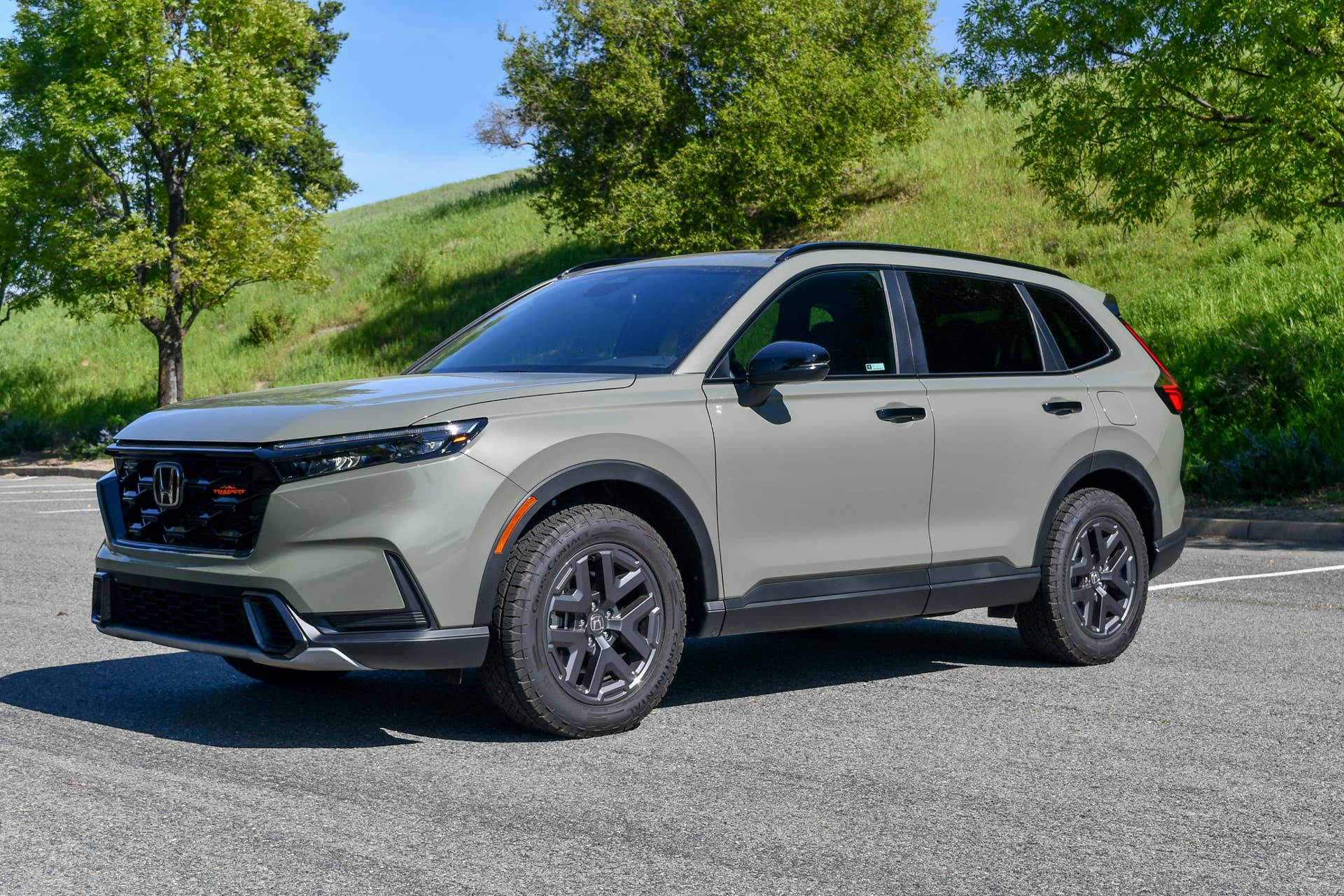
I do want to give the hybridized all-wheel drive system a shoutout here, though, because I love how it’s engineered. Unlike Toyota’s on-demand AWD system for hybrid SUVs, which utilizes a fully-electronic rear differential without a physical driveshaft, Honda uses a mechanical rear differential with a clutch pack that’s connected to the engine with a physical driveshaft. Unless slipping is detected or you put it into a drive mode like Trail or Snow, it’s front-wheel drive—that’s how I was able to get 38 mpg combined in the TrailSport hybrid. I also appreciated that Honda’s system is predictive and more proactive, too, while Toyota’s system was more reactive—meaning it kicks on after slipping is detected, not before, as Honda’s does with a computer that analyzes throttle, steering, and braking patterns that suggest you might lose traction.
I adored it as an everyday driver, though
All that aside, it does have all the makings of an excellent daily driver. I mentioned it before, but I averaged an impressive 38 mpg, and that was with a pretty even split between highway and city driving. Even when it was full of people (like my husband and two toddlers), and a trunk full of tools to do a 100k service on my dad’s Mustang, mileage only dropped by 1.6 mpg. I loved the seating position, since it was on the higher side and allowed me to see both corners of the hood as well as over the hood, the outward visibility, and the mid-level entry point for the front and rear. The tall doors and low floor made it easy to install both of my daughter’s car seats, and I loved the mechanical reclining feature that made it simple to remove the headrests for the top tether connectors. You’d be amazed by how many “family” cars and SUVs I’ve reviewed that had fixed headrests.
Kristen Brown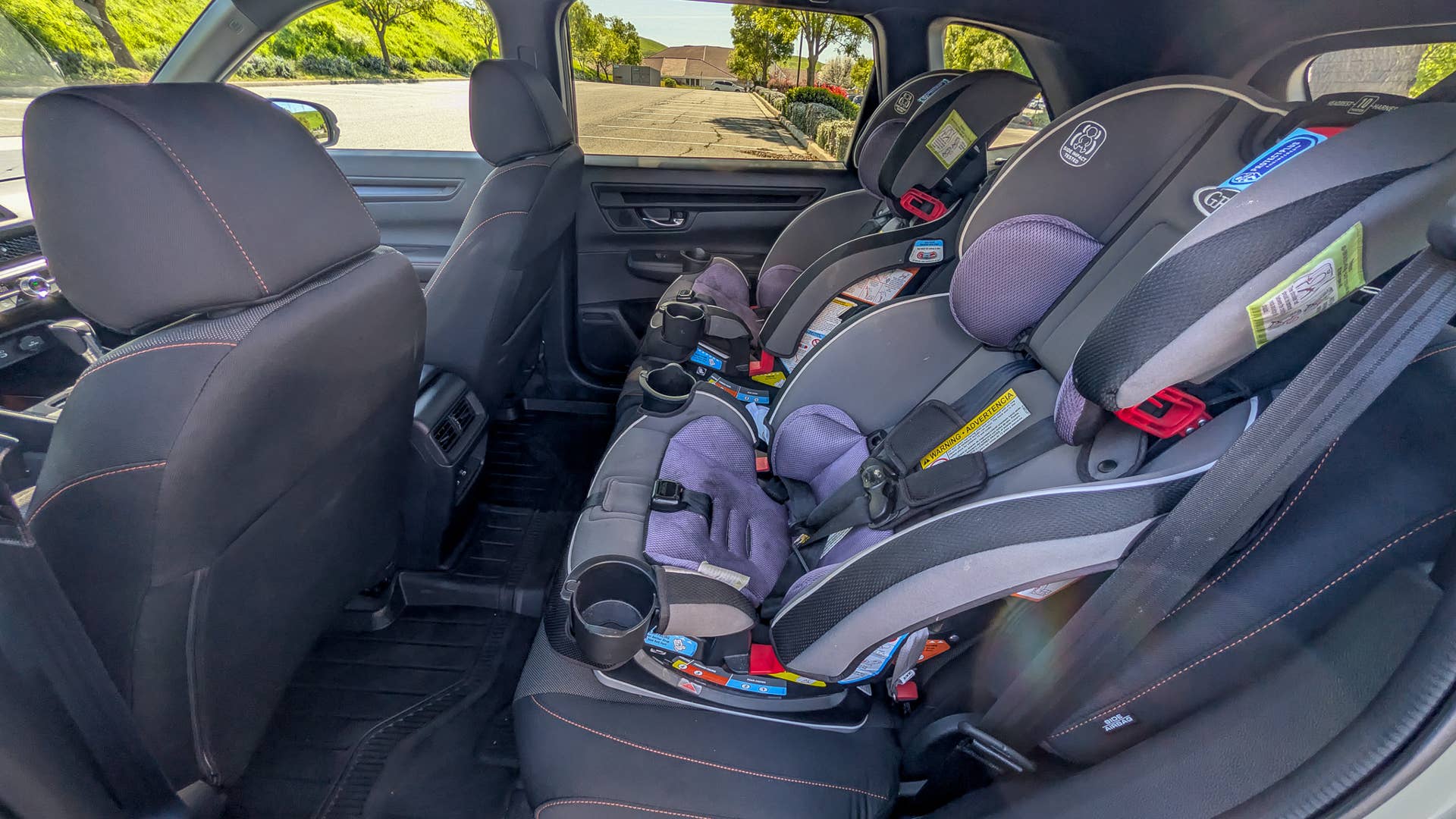
Because there were A/C vents in the rear, my tots were kept nice and cool. If they were older, they’d be able to charge devices back there, too, with two USB-C charging ports, and they’d be able to keep their drinks steady with a folding elbow rest stowed into the middle seat. The driving dynamic was comfortable and very quiet, though it’s worth noting that the all-terrain tires certainly added some road noise to the ambience—though it wasn’t loud enough to make it a deal breaker for me. There was plenty of legroom in the second row, too, and that’s a plus with toddlers in car seats because it made it harder for them to kick my seat as hard as they usually do. They also loved the large windows in the back, and my usually car-sick youngest daughter felt so much better because of the sunroof. It’s small, but it definitely made a difference.
Related: Lease Deals for Honda CR-V and Go for Less Than $300 Per Month This March
Cargo space was adequate for an SUV of its size
Since it’s about the same size as a Subaru Forester, Toyota RAV4, Kia Sportage, Chevy Equinox, or a Hyundai Tucson, it makes sense to compare them. The Honda CR-V has a mid-grade trunk of the bunch at 36.3 cubic feet of space, making it marginally smaller than the Kia Sportage (39.6), Toyota RAV4 (37.6), and Hyundai Tucson (38.7), but bigger than the Subaru Forester (28.9) and Equinox (29.6). It’s perfectly in the middle. I found it to be more than enough for daily errands and school runs, and it would be the perfect amount for camping gear. Because it comes with a roof rail and rack system from the factory, you can upgrade it with a cargo box or basket if you need it, too.
Kristen Brown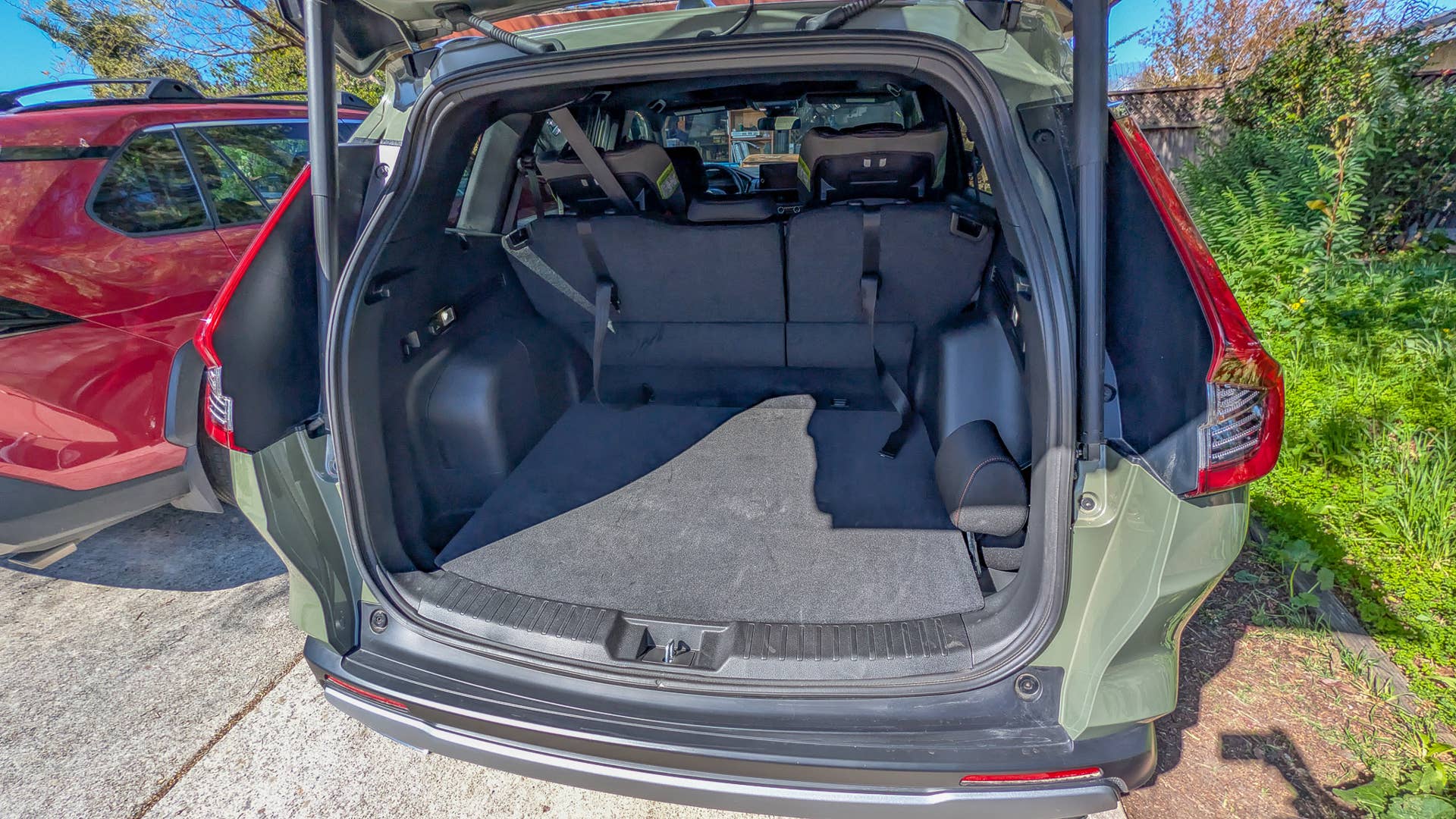
The Honda CR-V TrailSport has 41 inches of legroom, putting it in the same league as the Kia Sportage (41.3) and Hyundai Tucson (also 41.3). In third place is the Equinox with 39.9 inches of rear legroom, with the Forester following closely behind (39.4), and the Toyota RAV4 with the least amount (37.4) of legroom back there. So, for the money, you’re getting a very respectable amount of space to work with.
As far as pricing goes, the CR-V TrailSport loses a bit of traction—but I’d pick it over the others
When you look strictly at the hybrid competition, the CR‑V TrailSport Hybrid’s $40,650 sticker puts it near the top of the segment. Subaru’s new Forester Hybrid lineup undercuts it until you reach the Touring Hybrid at $41,545, which is actually a hair more than the Honda; the other three Forester Hybrid trims all come in cheaper. The Kia Sportage Hybrid and Hyundai Tucson Hybrid also land below the CR‑V for most configurations, ranging from $30,490 to $34,285 for the Sportage and $32,450 to $42,290 for the Tucson, depending on trim and equipment. That leaves Toyota’s RAV4 Hybrid Woodland, which is the most comparable trim, as the only consistently higher‑priced rival at $41,350. Interestingly, the TrailSport isn’t the most expensive model in the CR-V lineup. It’s just under the Touring hybrid—so if you look at mid-level trims of its hybrid competitors, every single one of them is less expensive.
Kristen Brown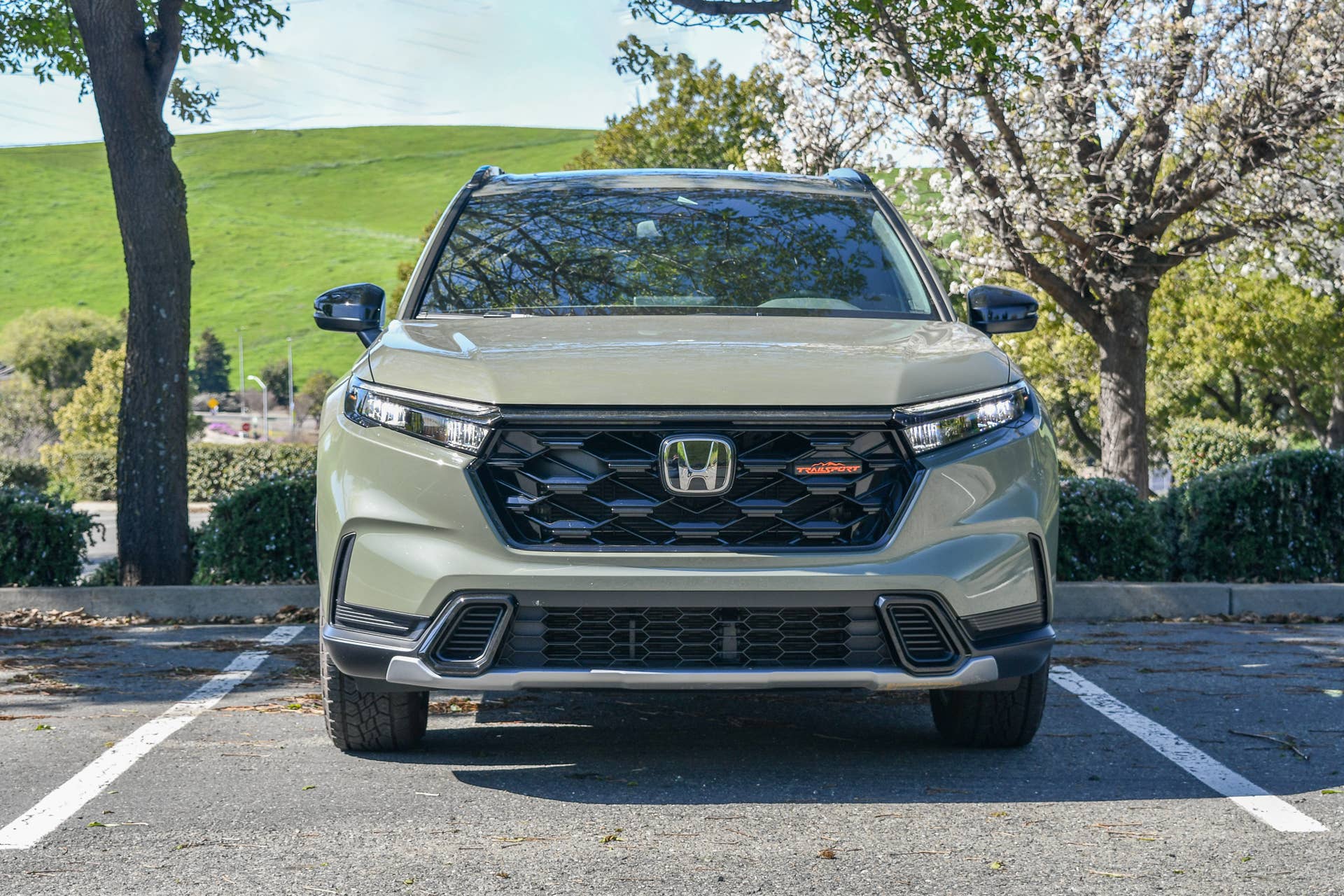
So, it begs the question: what makes the CR-V TrailSport worth it when most of the competition are less expensive? The argument becomes a bit watery when you consider the interior of the Subaru is nicer, with leatherette and thus waterproof seating, the Tuscon has more cargo space, and Toyota’s Woodland comes with Toyota’s famed reliability and more off-road-focused software and hardware. Honda’s also known for reliability and safety, but what I liked the most about the CR-V TrailSport was how simple it was. Nothing, and I do mean nothing, was difficult or annoying to figure out. The interior and all driver functions weren’t screen-dominant like it was in the Subaru. The Hyundai Tucson and Kia Sportage have nicer interiors and more creature comforts, but they don’t have the reliability that Honda boasts.
Kristen Brown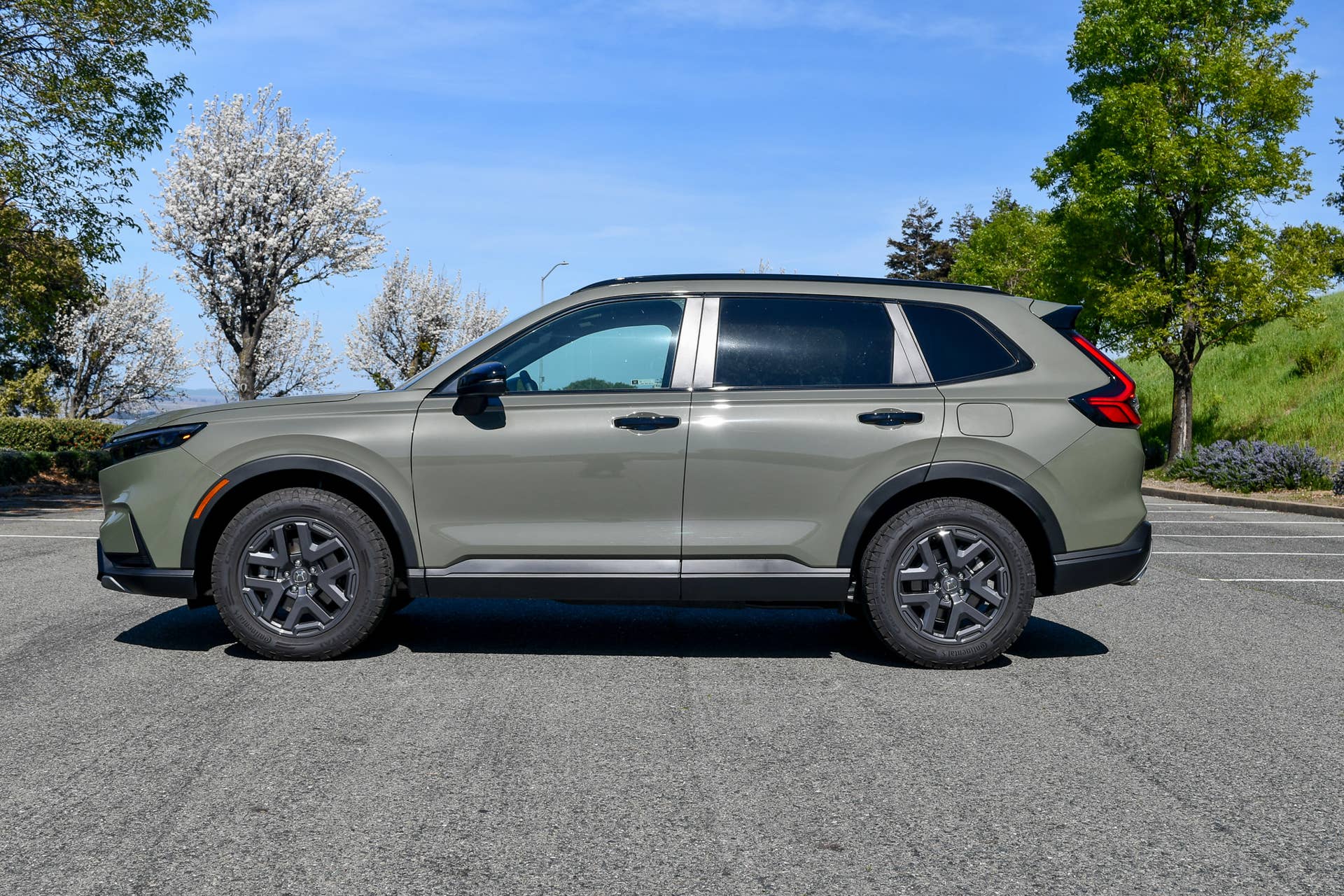
It doesn’t have the longest list of features (nearly all of its competitors come with a standard or optional 360-degree camera or seat memory, for one), but it does also have a very strong resale value, and for some reason, the CR-V TrailSport just felt better than the others. I’m a Forester owner, so I thought I’d like the Subaru more, but the Honda felt the same way I feel when I talk to an old friend. It was easy and incredibly lovable, and that’s hard to come by in an industry that’s always trying to be better than the car sitting next to it. If I had to choose between all of them—and I’ve driven all of them—I’d pick the Honda. The all-wheel drive system is a perfect blend of mechanical and electronic. The space was great, I loved the AT tires, and you just can’t help but smile at the mileage. With all-wheel drive, the competition barely comes close (especially not you, Subaru).
Related: Subaru Forester Just Got a Whole Lot Cheaper for 2026
Final thoughts: The price is justified, though high
Yes, comparing it to the competition made me a bit hesitant to say the price was justified. My initial impressions when I noticed its lack of typical convenience features weren’t great, but the mileage, space, family friendliness, and cargo space made up for it pretty quickly. I also thought a lot about why they’re so popular where I live: they’re affordable, reliable, and incredibly efficient hybrids, and the TrailSport trim is no exception. There are two cheaper trims of the CR-V hybrid, the Sport and Sport-L, ranging from $35,630 to $37,250 (and here, all-wheel drive is optional, unlike the TrailSport), but the TrailSport just looks cooler. Throwing all-terrain tires on it doesn’t make it an off-roader, but it makes it more fun. It adds some personality. No one ever buys a hybrid for the personality—they buy one for the mileage—but with the TrailSport, you get both, and that’s a rare combo. It’s a bit pricey compared to the others, but if you value curb appeal, the Honda takes first place.