

Minivans are criminally underrated
On the sales charts, this battle isn’t even close. SUVs outsell minivans by a wide margin, and have done so for many years now. Take Toyota, for example. In the first three quarters of the year, Toyota has sold 75,876 Sienna minivans and 723,865 crossovers or SUVs over the same period.
But minivans have seen a bit of a resurgence this year, and despite their unfashionable reputation, there are many reasons to buy a minivan over a crossover or SUV. Here are five of them.
Related: It’s The Year 2000 Again As Minivans Soar In Popularity
1. Unmatched Space and Versatility
2025 Honda Odyssey H
View the 3 images of this gallery on the
original article
Even with the massive selection of crossovers and SUVs on sale, the minivan is still unmatched for sheer practicality and interior space utilization. Let’s do a quick comparison between the Honda Odyssey and the full-size Jeep Grand Wagoneer. The Jeep is significantly longer, taller, and wider, yet the Odyssey has more third-row legroom, much more cargo space behind every row of seats, and runs the Jeep close in other metrics, too.
Thanks to the unibody design, the Odyssey doesn’t have the Jeep’s body-on-frame setup or complicated 4×4 system, both of which take up space that could otherwise go into the passenger compartment.
The Grand Wagoneer’s main advantage is in headroom, thanks to the much taller body, but that advantage disappears if you equip a sunroof, which a few trims have.
Overall, the Jeep is a much bulkier vehicle but that’s not reflected in the cabin. Go down to the midsize SUV segment, and minivans typically have a massive edge in interior space.
Related: Honda Has a Hybrid Odyssey — But Americans Still Can’t Buy It
2. Easier Interior Access
Toyota
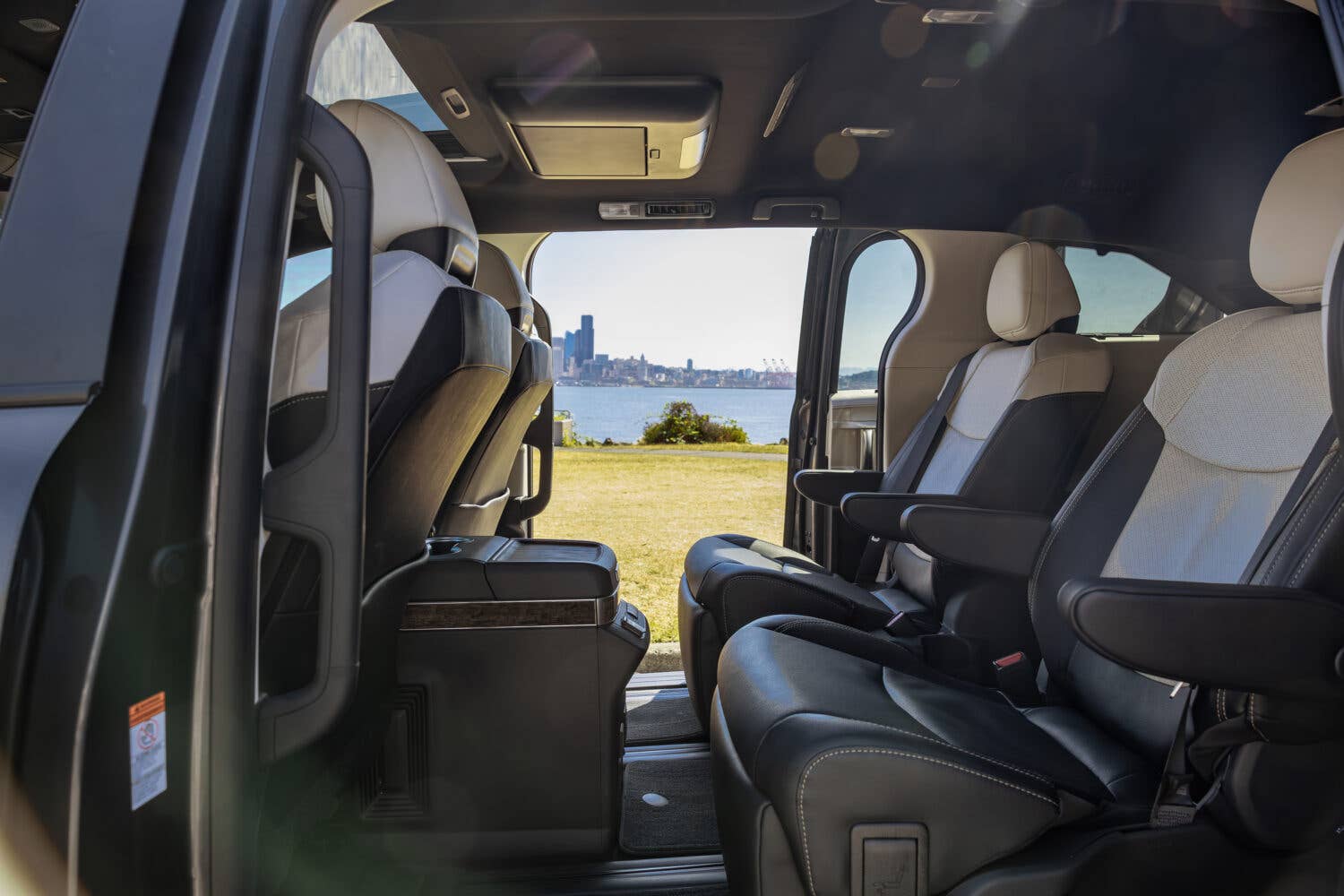
If you have younger, smaller kids or often transport older passengers, a minivan is much better, as it allows these occupants to more easily enter and exit the vehicle. The lower step-in height of a minivan is more comfortable for some, whether you’re entering or exiting.
Furthermore, most minivans have sliding doors (powered in many cases), which make entry/exit easier. There’s also no chance of your kid slamming a large SUV door into an adjacent vehicle.
Once inside the cabin, you’ll also appreciate the seating capacity and flexibility of the average minivan. Most seat eight, while many SUVs are limited to seven people. Honda’s Odyssey has a Magic Seat that allows you to remove the second-row center seat, making third-row access a breeze. You can then position the second row in four different ways. Chrysler’s Pacifica comes with second- and third-row Stow ‘n Go seats—these seats can disappear into the floor in a flash. You’ll find similarly flexible seating configurations in other minivans.
3. More Bang For Your Buck
Kristen Brown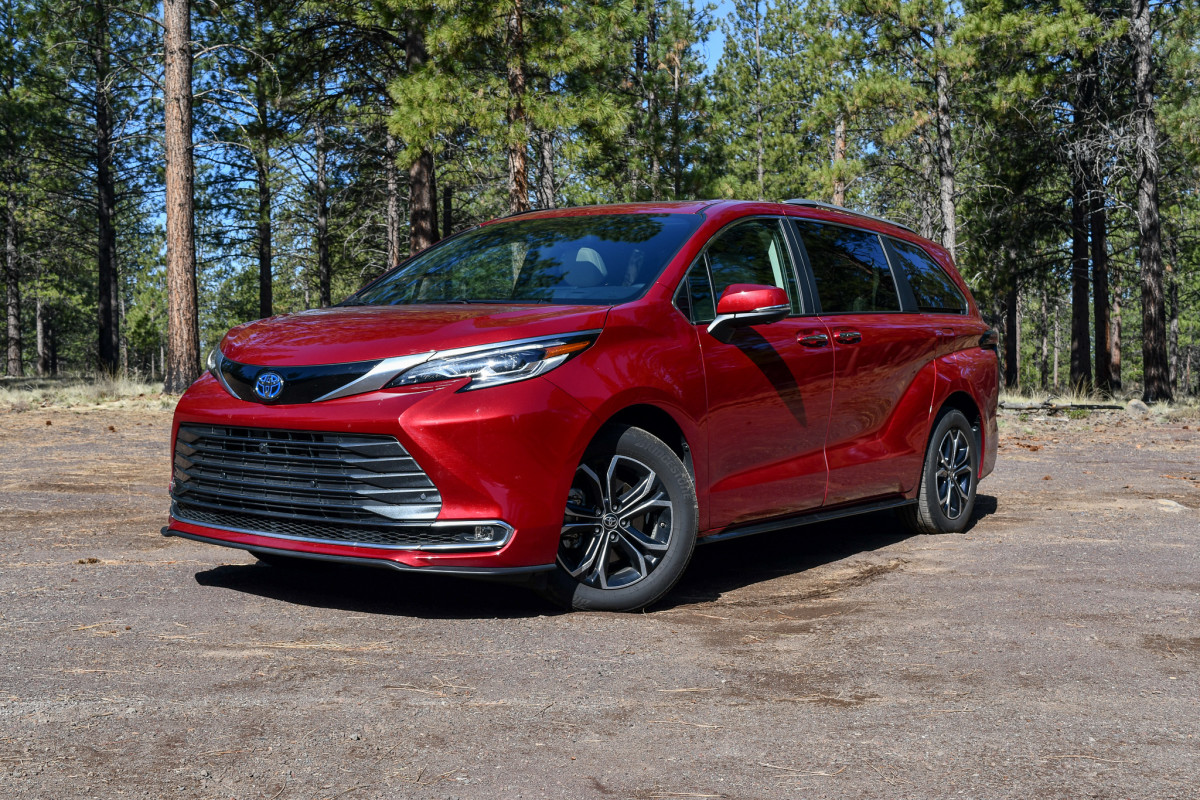
View the 3 images of this gallery on the
original article
Minivans tend to be better value for money than equivalent SUVs. If you’re not using your SUV for serious towing or off-roading, you’re missing out on the extra features, nicer finishes, and space in a minivan.
To demonstrate this point, let’s compare a Toyota crossover to a Toyota minivan at the same price point. We’ve gone with the three-row Toyota Grand Highlander Hybrid LE and Toyota Sienna XLE, also a hybrid. The Sienna costs just $110 more than the Highlander ($44,820 to $44,710), but offers a lot more equipment.
The Sienna XSE gets the following standard features, none of which are standard with the Grand Highlander Hybrid LE, and only some are optional:
- Hands-free dual powered sliding doors
- Power tilt/slide moonroof
- 20-inch dark alloy wheels
- Four-zone automatic climate control
- Wireless smartphone charging
- Heated front seats
- SofTex upholstery
- Powered front passenger seat
- 12.3-inch digital gauge cluster
- Second-row captain’s chairs
- Auto-dimming rearview mirror
- 12-speaker JBL sound system
- Front/rear parking assistance
At some point, it’s almost laughable how much more you get in a minivan at the same price. The Grand Highlander LE sticks with analog gauges, half the speakers, cloth-upholstered seats with no heating or powered adjustments, and one less zone for the climate control system. It also has a lot less space than the Sienna.
Both these vehicles have 245 horsepower and both tow 3,500 pounds, so even the expected towing advantage of an SUV isn’t always apparent. The one advantage in the Grand Highlander Hybrid LE’s favor is standard all-wheel drive, but if you don’t need it, the Sienna XSE is far better value.
4. SUVs Aren’t Always Safer
IIHS
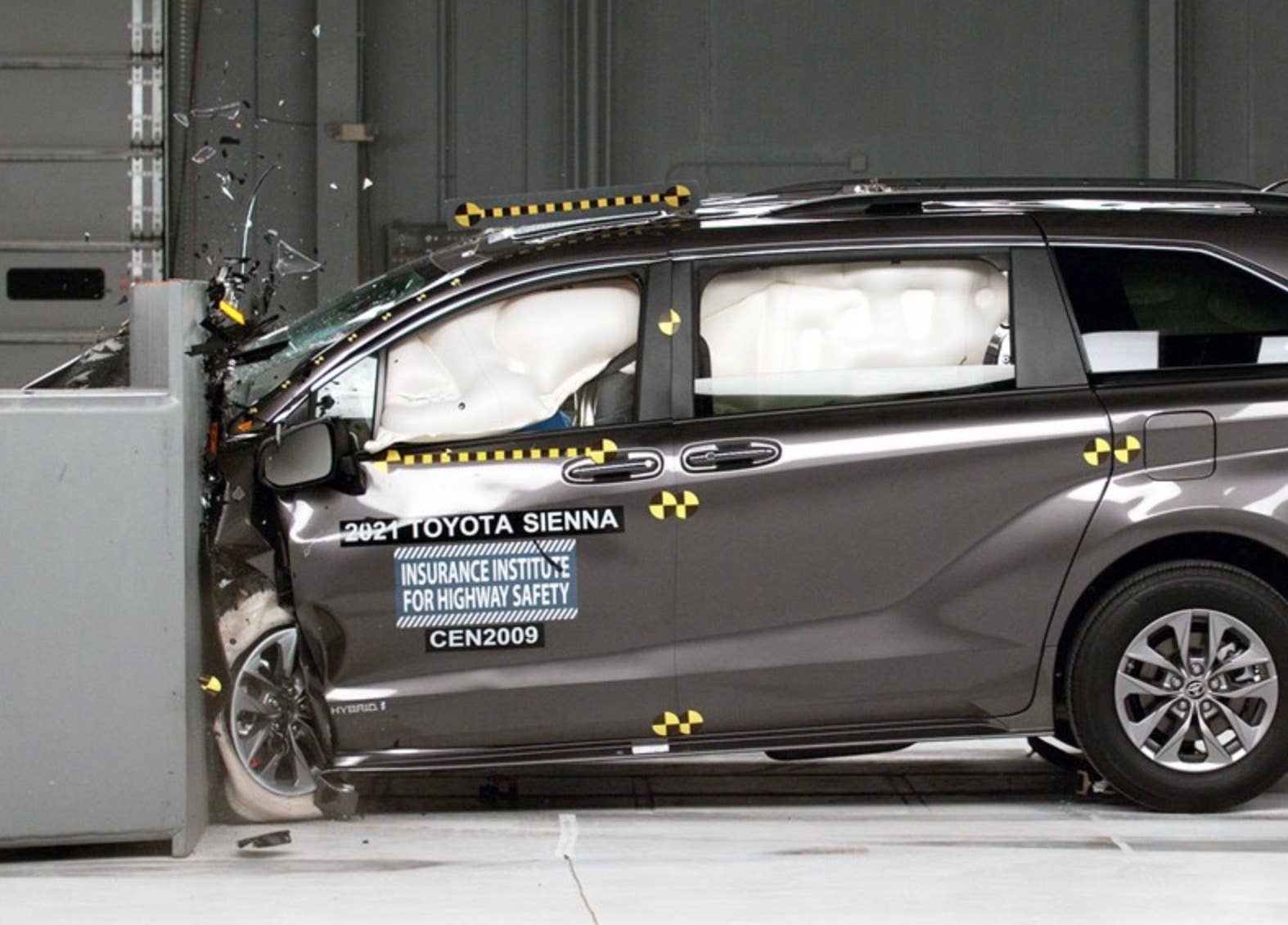
There’s a common misconception that taller, wider trucks and SUVs are safer than other vehicle types. However, when comparing the latest crash-test results of the Sienna and Grand Highlander, only the Sienna achieved a Top Safety Pick award from the IIHS.
The Sienna achieved a better result in the small overlap front test and was rated as having more effective headlights, while the Grand Highlander got a better score for the moderate front overlap test.
Toyota
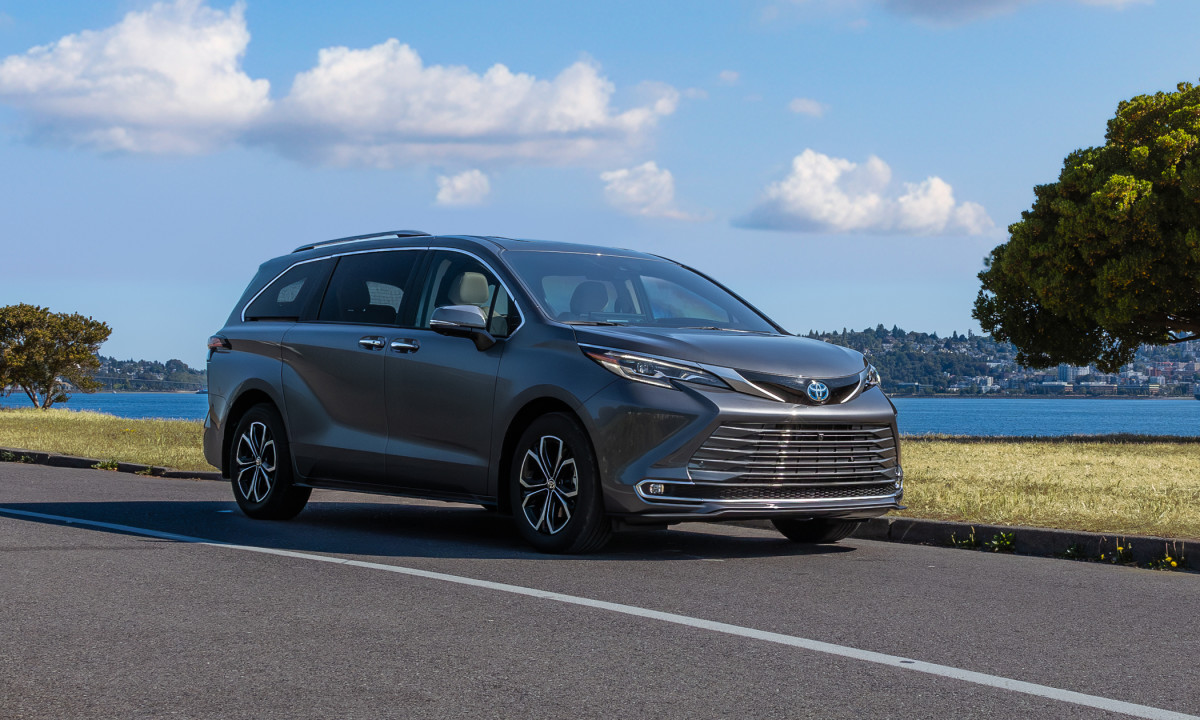
Vehicle safety involves more than just the protection provided for occupants in a crash, though. If you can avoid a crash in the first place, that’s first prize, and doing so often requires quick, sharp maneuvers that some vehicle types handle better than others. Not only are SUVs more prone to rollovers due to their higher center of gravity, but NHTSA data shows that the percentage of fatalities in rollover crashes are higher in pickups (41%) and SUVs (37%) than vans (26%).
Furthermore, SUVs have become significantly harder to see out of, in part due to higher and higher hood designs that are appreciated for their aggression. Taller vehicles are also deadlier for pedestrians and other vulnerable road users.
Related: See Less, Hit More: How Your New Car’s Blind Spots Are Expanding
5. Smoother Driving Experience
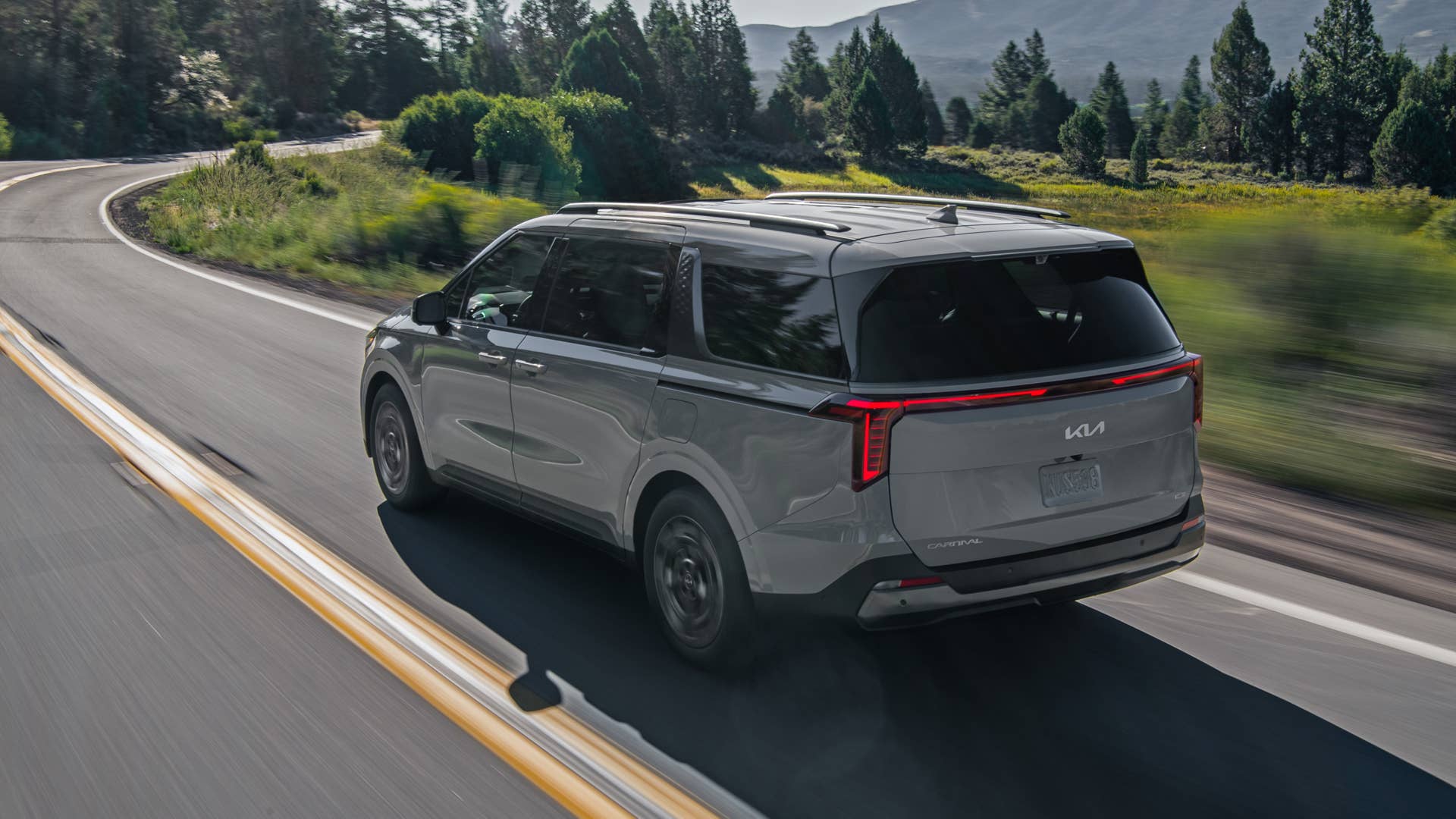
Kia
The unibody structure of a minivan is generally preferable if you prefer a smooth, stable driving experience. While many modern crossovers have closed the gap, body-on-frame SUVs that approach the interior spaciousness of a minivan are often more difficult to control and less comfortable over bumpy surfaces. Many modern minivans also exhibit much less lean through the corners than older ones, such as the Kia Carnival, a minivan that convinced at least one of our staffers that it’s a better package than an equivalent SUV.
Related: I Was an Anti-Minivan Mom for Decades, Until I Reviewed the 2025 Kia Carnival
Final Thoughts
This is not an SUV-bashing piece. If you need to tow, go off-road, or are in search of more power, many SUVs will be preferable to a minivan. There are also many more SUV models to choose from and most are more aesthetically pleasing than minivans. But for a sizable percentage of buyers who need a comfortable family vehicle, the minivan is criminally underrated.