

Getting the most from your next three-row midsize SUV
When comparing sales between three-row midsize SUVs like the 2025 Honda Pilot and the 2025 Subaru Ascent, the Pilot wins hands down. However, more sales don’t necessarily mean a vehicle is the better option in a given year, and that’s why we’re giving a feature-focused breakdown of the 2025 Pilot and Ascent, exploring performance, interior amenities, connectivity, and safety to guide your SUV choice. The Honda Pilot starts at $40,200, and the Subaru Ascent’s entry-level cost is slightly less at $39,995.
For 2025, the Honda Pilot is a carryover model, with limited changes including a new Black Edition trim featuring (you guessed it) blacked-out exterior trim, 20-inch wheels, embossed leather front seats, red interior accents, and standard all-wheel drive (AWD). Honda also eliminated the base LX from the Pilot’s lineup, making the Sport this model’s new entry-level trim. The 2025 Subaru Ascent is similarly a carryover model that removed the last model’s base trim from its lineup in favor of the Premium grade. Other tweaks to the Ascent include a new Bronze Edition trim with bronze-colored wheels and accents, along with a new Onyx Edition Touring trim that crowns the lineup. Learn more about how each vehicle compares with the rest of our guide below.
Honda
View the 4 images of this gallery on the
original article
The Ascent’s standard AWD and towing capacity stand out
Neither the 2025 Honda Pilot nor the Subaru Ascent is available as a hybrid. Instead, both models offer one engine option: the Pilot, a 3.5-liter V6 producing 285 horsepower and 262 lb-ft of torque, and the Ascent, a 2.4-liter turbocharged four-cylinder Boxer engine with less horsepower at 260, but slightly more torque at 277 lb-ft. The Pilot’s 3.5-liter V6 is paired with a 10-speed automatic transmission, complemented by paddle shifters, while the Ascent’s turbocharged 2.4-liter four-cylinder is paired with a continuously variable transmission (CVT). Those looking for a more engaging, responsive driving experience will benefit from the Pilot’s 10-speed automatic transmission. In comparison, the Ascent’s CVT is better suited to easygoing drives.
Most 2025 Pilot trims offer standard front-wheel drive (FWD) and available AWD, but AWD is the only drivetrain option with the TrailSport, Elite, and Black Edition trims. Naturally, Subaru stays true to its brand persona by equipping each 2025 Ascent with standard AWD. Fuel economy for the Pilot is 19/27 city/highway mpg in FWD and 18-19/23-25 city/highway MPG in AWD. You’ll get 20/26 city/highway mpg in the Ascent Premium’s eight-passenger and seven-passenger versions, and 19/25 city/highway MPG in the remaining trims. While the Ascent’s fuel economy across all trims is slightly better than the Pilot’s, this difference is marginal, leaving the Ascent’s standard AWD as a primary consideration.
Regarding towing, the Pilot’s maximum capacity ranges from 3,500 lbs to 5,000 lbs, while the Ascent sits at 5,000 lbs across all trims. Still, the Pilot comes standard with a tow mode and more terrain-specific modes. If you want less manual mode adjustment, the Ascent is the better choice with its sensors and software automatically fine-tuning AWD and traction.
Honda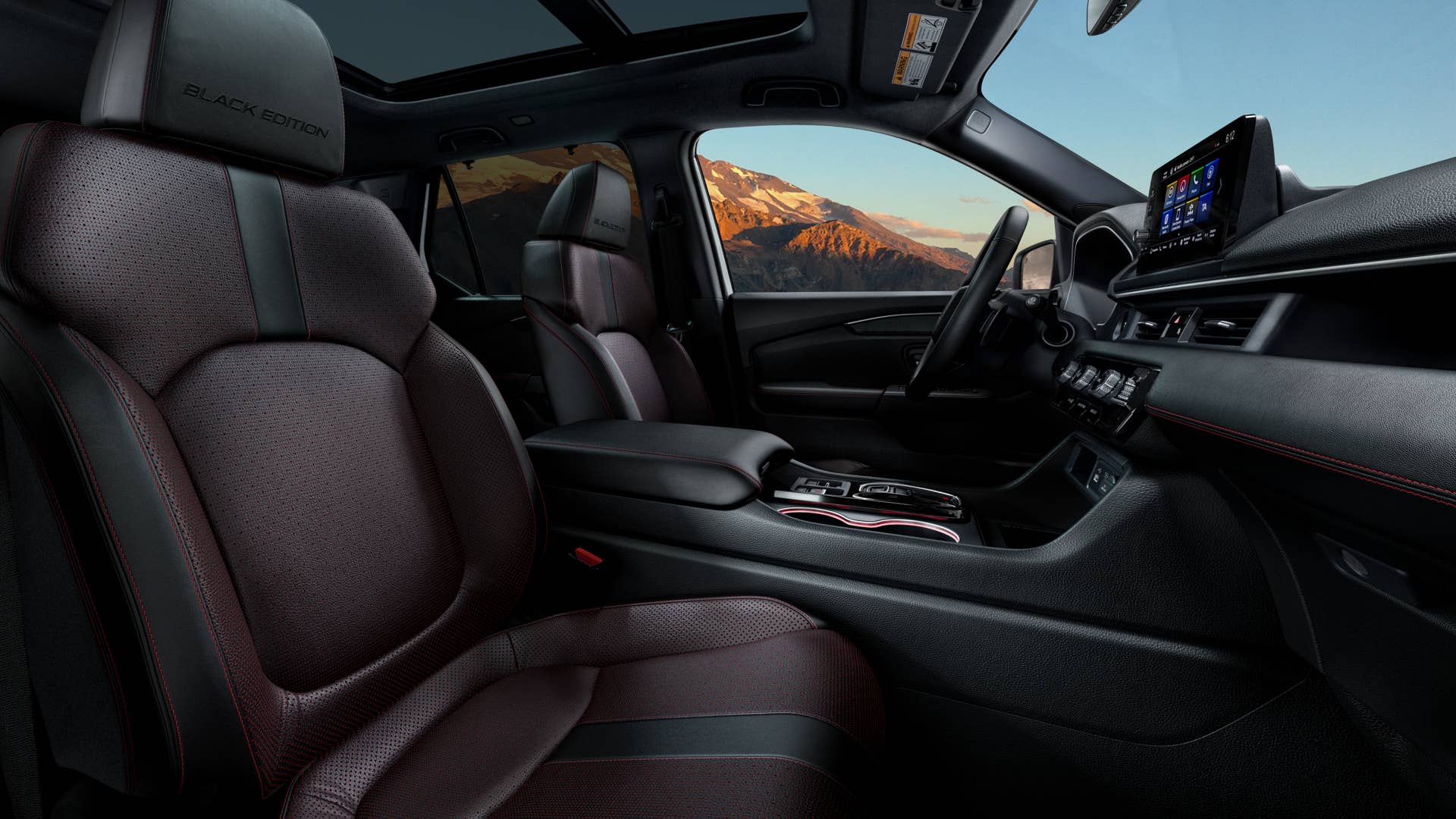
View the 4 images of this gallery on the
original article
Standard leather-trimmed seats cost less in the Pilot, and its additional cargo space doesn’t hurt
Honda gives 2025 Pilot shoppers the choice between seats clad in cloth, leather-trimmed, durable synthetic leather with orange stitching, perforated leather-trimmed, and perforated leather-trimmed with red stitching. The main advantage that the Pilot’s seating materials have over the Ascent’s is the availability of standard leather-trim earlier in its lineup. A Pilot EX-L, which sits one level above the base Sport trim, contains leather-trimmed seats and starts at $43,500. In contrast, the first 2025 Ascent trim to feature standard leather-trimmed seats, the Limited, holds a $47,885 base price. If your budget is higher, the Ascent offers the nicest upholstery option of Nappa leather in the Touring and Onyx Edition Touring trims.
The Pilot comes standard with a 10-way power driver’s seat, beating the Ascent’s standard eight-way power driver’s seat. However, Ascent Limited trims and higher receive a 12-way power driver’s seat. Front Ascent passengers also receive 1.2 inches of additional legroom over the Pilot at 42.2 inches, but the Pilot tops the Ascent in second and third-row legroom, along with cargo capacity across all three rows. The Pilot’s rear cargo capacity measures 18.6 cu ft behind the third row, 48.5 cu ft behind the second row, and 87 cu ft behind the first row, while the Ascent’s spans 17.8 cu ft, 43.5 cu ft, and 75.6 cu ft in those three areas, respectively.
The Pilot’s connectivity is more versatile with additional display options
Each Subaru Ascent is equipped with an 11.6-inch infotainment touchscreen, enhancing the value of lower-tier trims. Comparatively, the Pilot features either a seven-inch or nine-inch touchscreen. While the Ascent offers a larger central touchscreen, it uses an analog gauge cluster with a small central information screen. The Pilot has either a seven-inch or nine-inch digital instrument cluster and offers an available head-up display, unlike the Ascent.
Honda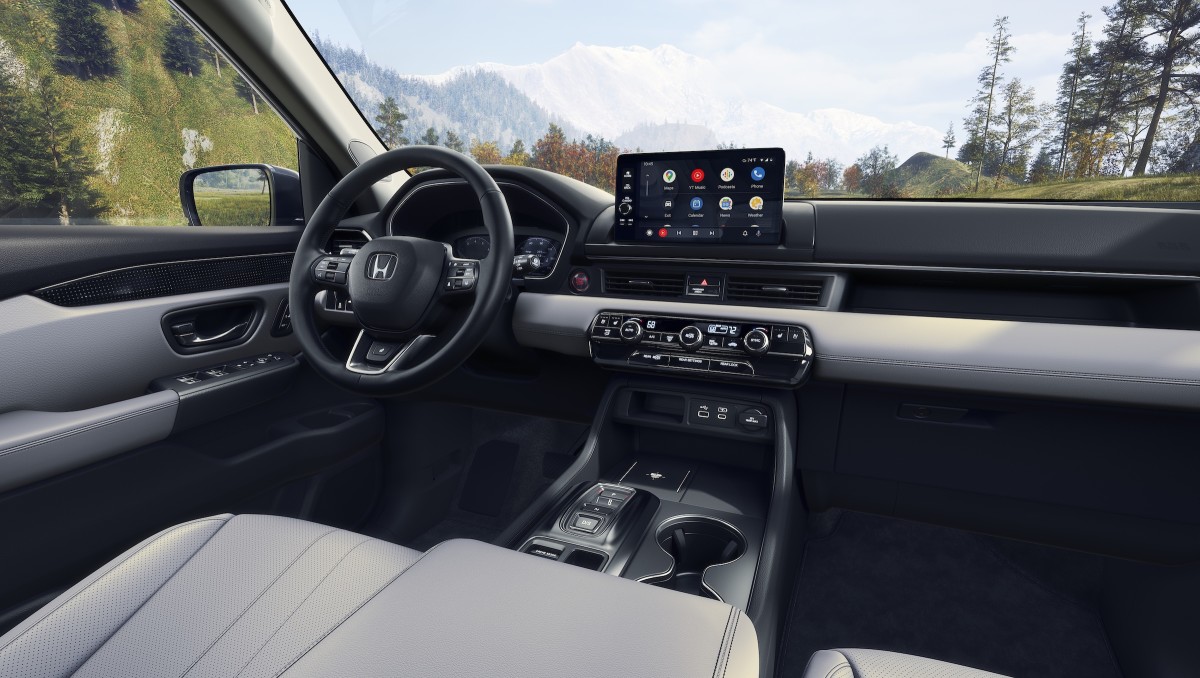
View the 2 images of this gallery on the
original article
Wireless Apple CarPlay and Android Auto are standard on all Pilot trims except the base Sport, whereas the Ascent offers them across its lineup. You’ll get one additional speaker over the Ascent with the Pilot’s standard seven-speaker audio system, which you can upgrade to a 12-speaker Bose configuration. Still, the Ascent’s available Harman Kardon premium audio system boasts 14 speakers, more than you can get in any Pilot trim.
Neck-and-neck safety
Both the 2025 Honda Pilot and Subaru Ascent received Top Safety Pick awards from the Insurance Institute for Highway Safety (IIHS). When evaluating each model’s specs, the Pilot includes a broader range of other safety features at the base level, but its Subaru counterpart has more standard technologies that you might find in higher Pilot trims, such as automatic emergency steering. The Pilot has standard automatic steering for lane-keep assistance, but the Ascent’s automatic emergency steering can help you automatically avoid obstacles when there’s a safe path.
Honda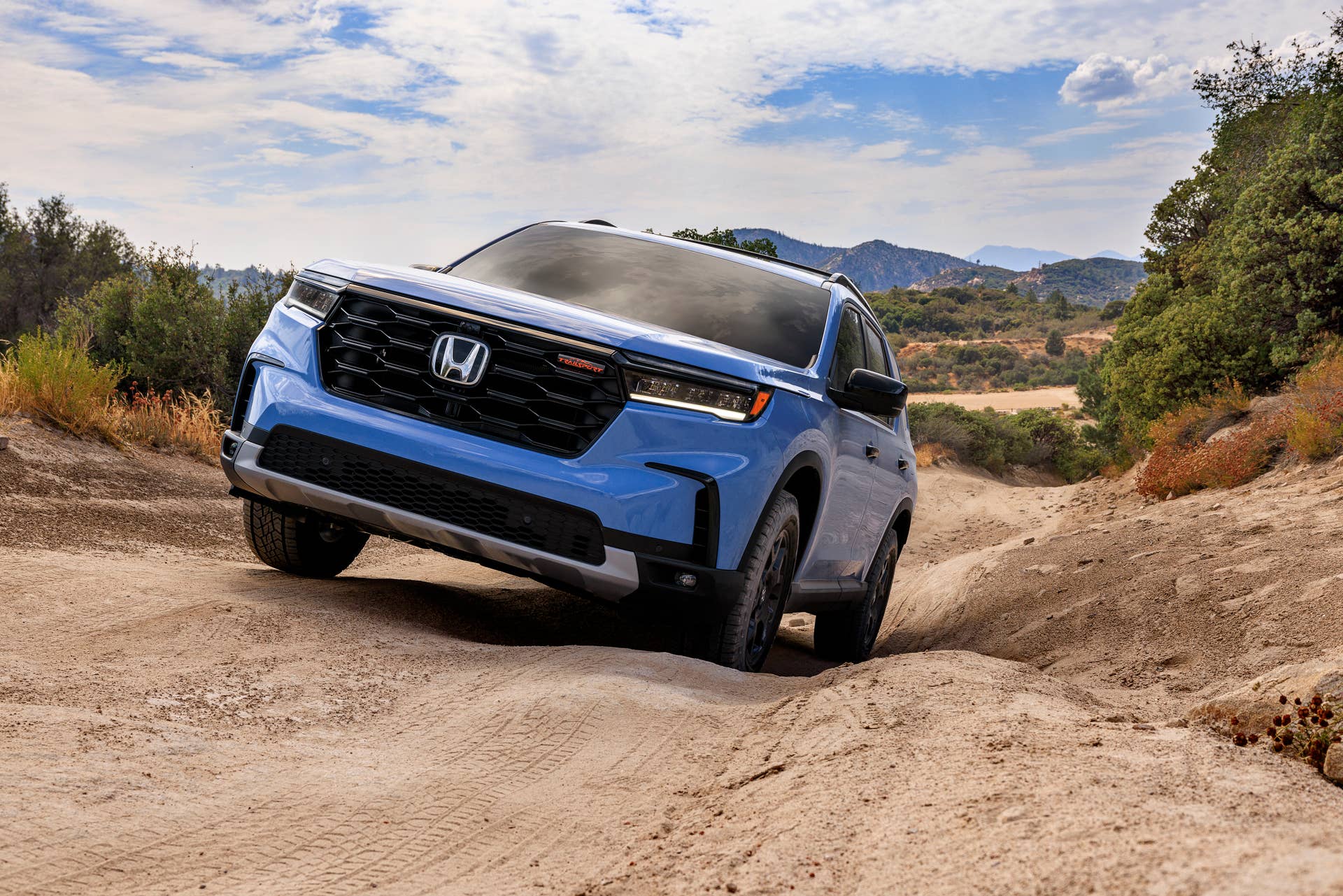
View the 2 images of this gallery on the
original article
Exterior spotlight: The Pilot holds a slight edge
Overall, the 2025 Pilot has more crucial standard and available exterior features catering to daily driving than the Ascent. Unlike the Ascent, however, the base Pilot gets LED fog lights and an available hands-free power tailgate. If you regularly off-road, the Ascent’s exterior is better equipped with roof rails and a higher ground clearance on every trim. Both SUVs start with 18-inch wheels on base trims and upgrade to 20-inch wheels on higher trims. The Pilot’s peak Black Edition trim draws attention with gloss-black alloy wheels, but the Ascent offers a broader range of wheel finishes across its trims. The Honda Pilot gets gray and black wheels, while the Ascent’s wheels come in gray, dark gray, black, or bronze finishes. On the flip side, the Pilot provides more exterior color choices.
Final thoughts
The 2025 Honda Pilot is the better buy over the 2025 Subaru Ascent because of its greater interior space — which includes a significantly larger cargo area — smoother on-road driving experience, standard leather-trimmed seats in less expensive trims, and a quieter cabin, especially considering the Ascent’s louder engine. While the Ascent maintains Subaru’s adventurous brand image with features like standard AWD and roof rails, the Pilot keeps up with its TrailSport trim, which offers all-terrain tires, an off-road-tuned suspension, a 360-degree camera, and AWD. Both models are relatively equal in average resale value and have matching warranties. Be sure to test drive each vehicle before making a decision.