

The multi-faceted nature of off-roaders
Over the past few decades, I’ve driven just about every kind of off-road machine: ATVs, UTVs, quads, trikes, dirt bikes, and strange in-between experiments. In that time, I’ve grown to both appreciate and criticize side-by-sides. I love the multiple personalities they’ve evolved into: you can have one that hauls hay on a ranch and another that rips across the desert like it’s late for judgment day.
ND Adlen
But the downside? They’ve gotten huge – and hugely expensive. A perfect example is the Can-Am Maverick R, which starts around $40,000 and is physically massive. At 158 inches long and 74 inches wide, it’s only 8 inches shorter than a Jeep Wrangler and actually wider. It’s also six inches longer than a Honda Talon 1000R-4. Machines like this are phenomenal to drive, but a pain to trailer and live with.
That’s what makes the Honda Talon 1000R-4 so appealing. It’s still big, still capable, still fun, but significantly more manageable. And that’s just the start.
What is the Honda Talon 1000R-4?
Honda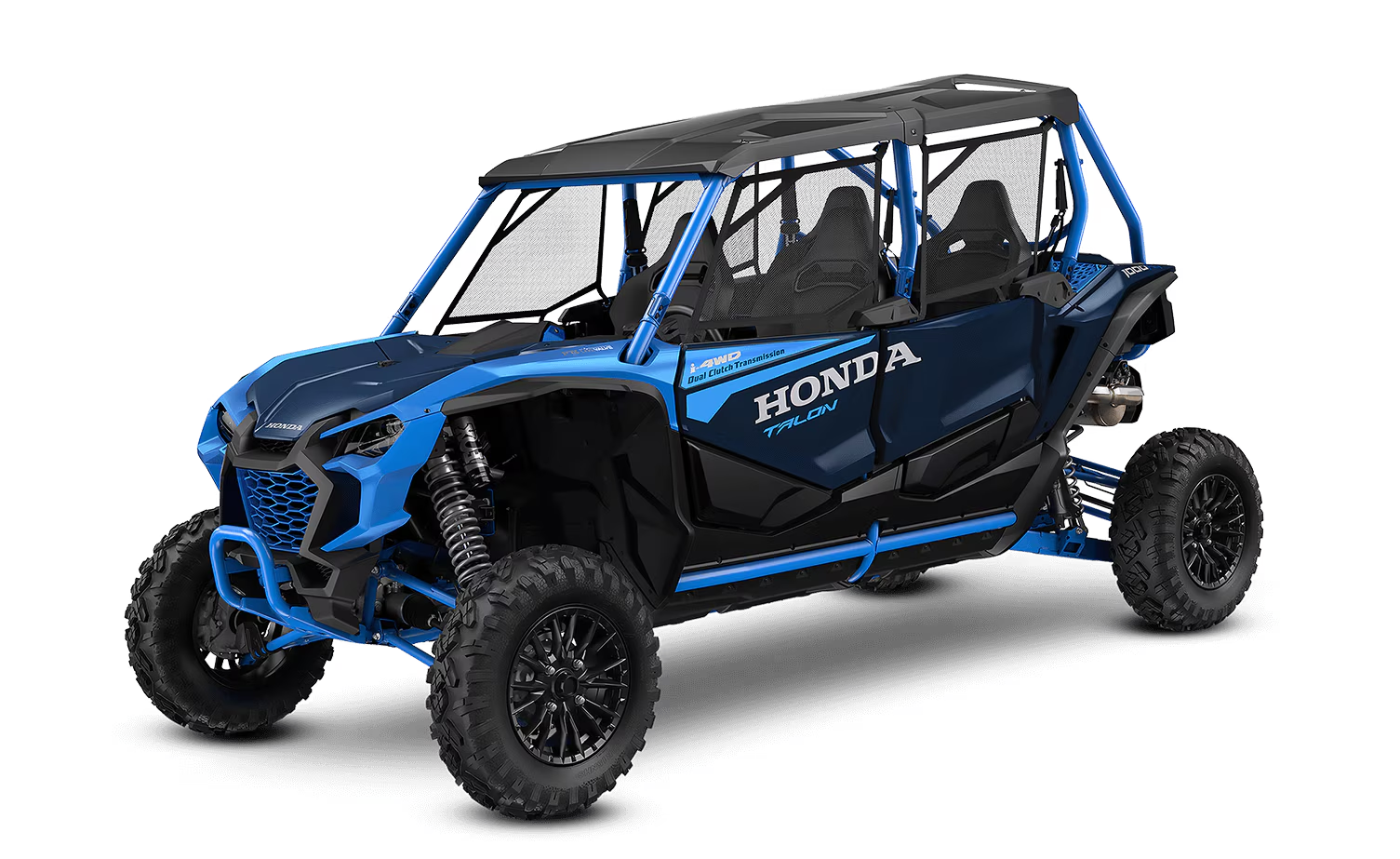
The Talon 1000R-4 is Honda’s high-performance, four-seat sport UTV. It carries over the characteristics of the two-seat Talon: sharp handling, performance-oriented suspension, and a lively powertrain, but adds room for more passengers and benefits from the stability of its longer wheelbase.
Power comes from a 999cc liquid-cooled parallel twin producing around 106 hp. Honda even offers a dealer-installed turbocharger option that bumps output by roughly 60 percent, and that’s epic. Unlike many competitors, the Talon doesn’t use a belt-driven CVT. Instead, it runs a six-speed dual-clutch transmission (DCT) with automatic, sport, and fully manual paddle-shift modes. There’s also a proper low-gear range for slow, high-torque crawling.
Traction comes from Honda’s i-4WD system, a blend of traction control, torque management, and braking that acts like a smart limited-slip differential. It can be switched between 2WD and i-4WD depending on conditions. On real trails, it works impressively smoothly, especially climbing loose or rocky terrain.
Honda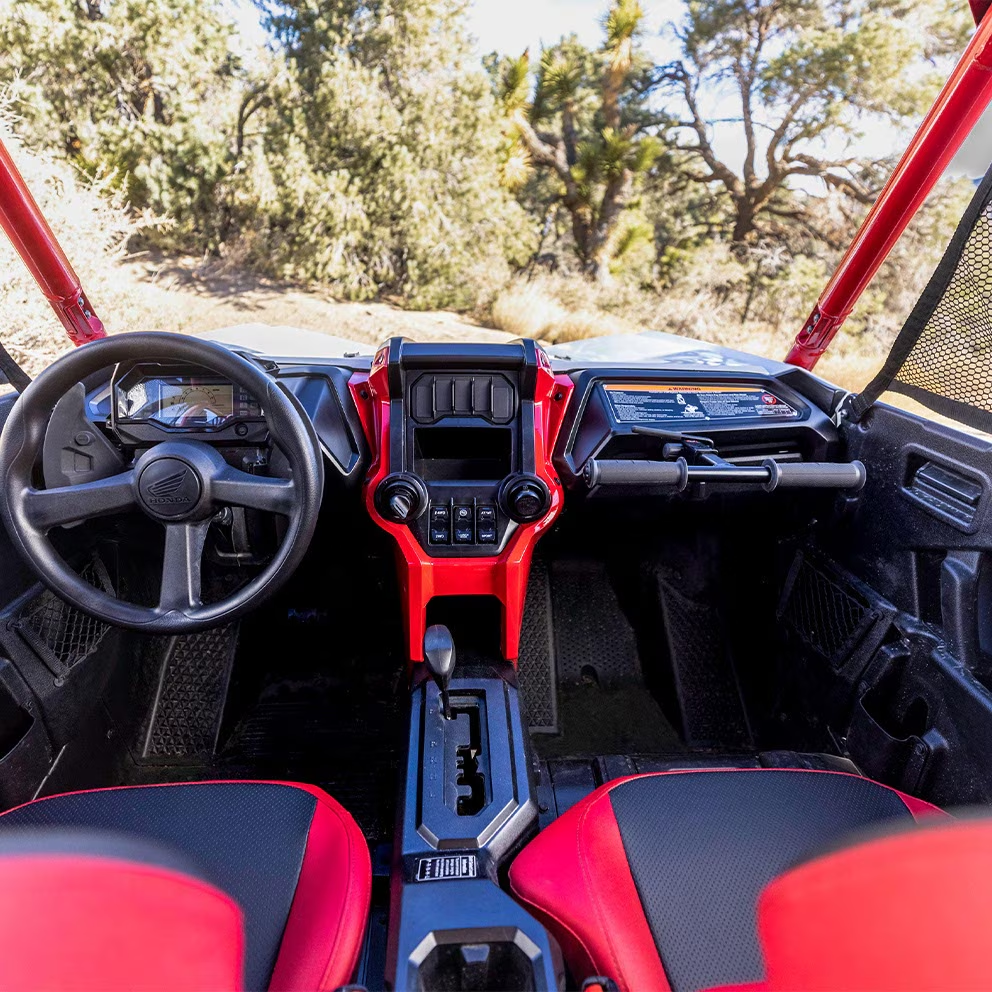
Suspension is where the Talon 1000R-4 really shines. Up front, it uses a double-wishbone setup; out back, a beefy 4+-link trailing arm system. FOX Live Valve shocks continuously adjust damping in real time, with 17.7 in. of travel in the front and 20.1 in. of travel in the rear.
The long 118.7-inch wheelbase gives it stability in high-speed whoops and fast desert sweepers. Honda also rebalanced the weight to roughly 44/56 front/rear to improve handling at speed. Steering comes from an updated electric power steering system that adds more precision and nicer return-to-center behavior. Braking is handled by 250 mm discs at all four corners with electronic brake-force distribution. The ROPS (Roll-Over-Protective Structure) is beefed up, too, with thicker tubing in high-stress areas.
Honda also made some key refinements for the latest model, with new full doors (a huge improvement), internal engine updates including roller rockers and improved breathing, and smoother low-end power delivery. The 7.7-gallon tank should yield around 100 miles of real-world trail use.
ND Adlen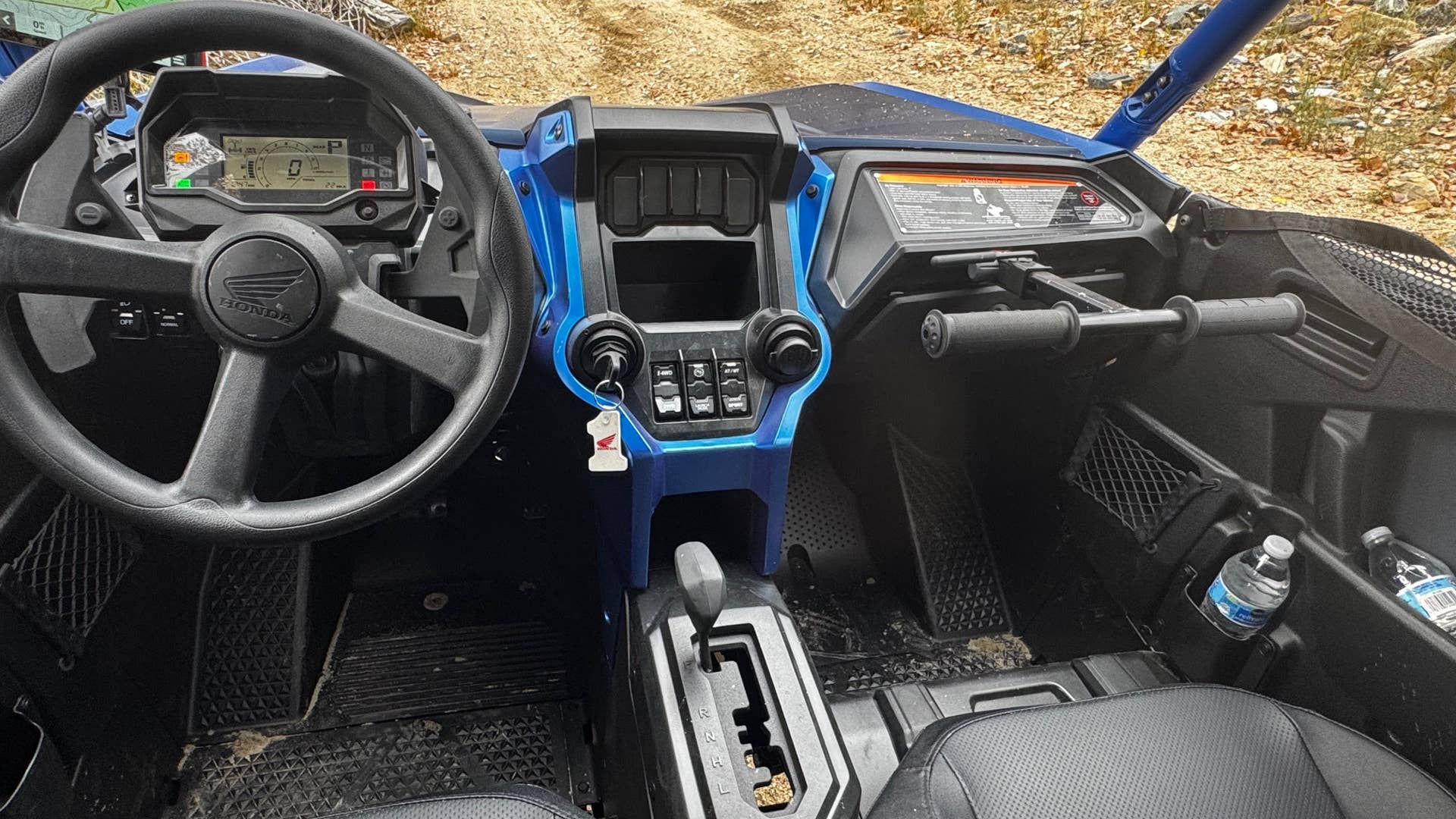
View the 3 images of this gallery on the
original article
Blasting through Rattlesnake Canyon in the rain, mud, and everything else
Rattlesnake Canyon lies inside the Johnson Valley OHV area near Lucerne Valley, California, home to sandy washes, rocky climbs, sudden ruts, Joshua trees, and long stretches of flowing terrain. We hit the trail right after a large rainstorm, which meant deep puddles and chunky mud.
The Talon 1000R-4 was in its element. Charging through sandy riverbanks, scrambling over boulders, threading between Joshua trees – it never felt overwhelmed. The steering felt a bit light for my taste, but it was very easy to center, and turn-in control was sharp. Throttle response felt slightly delayed at times, but only when needing a downshift before accelerating hard. In Sport mode, the DCT fired off shifts quickly and confidently.
ND Adlen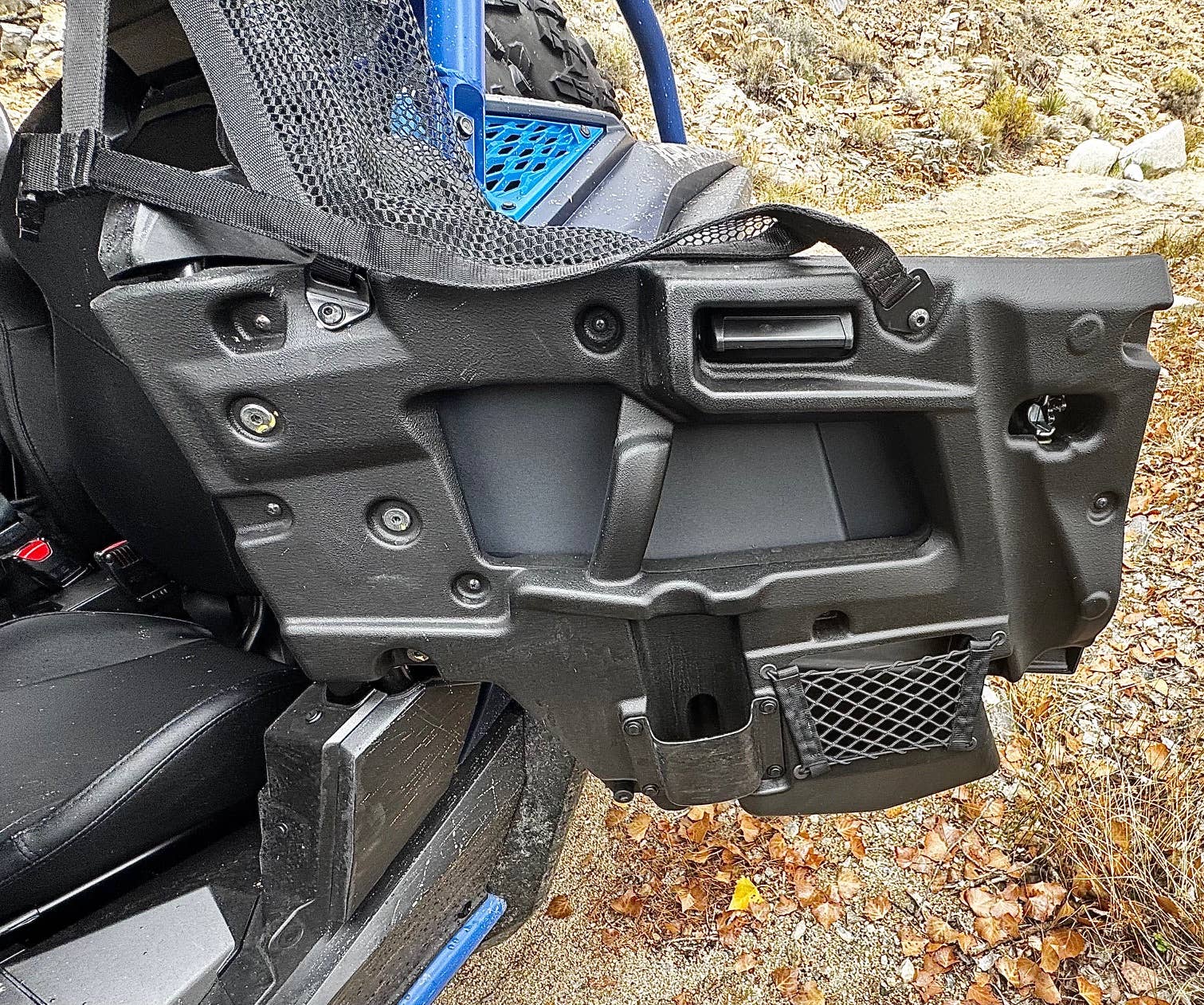
View the 3 images of this gallery on the
original article
It doesn’t have the raw punch of the biggest machines out there, but the power delivery is smooth, predictable, and surprisingly strong at higher speeds. Suspension composure is excellent, allowing you to confidently push it through whoops without white-knuckling the wheel.
The only real compromise of the 1000R-4 is its size. While smaller than the new mega-UTVs, it’s still over 1,800 pounds and has a wider turning radius than the two-seat Talon. But the payoff is stability, comfort, and room for gear. Honda rates the rear cargo area at 299 pounds, and we carried two full-size spare tires without issue.
ND Adlen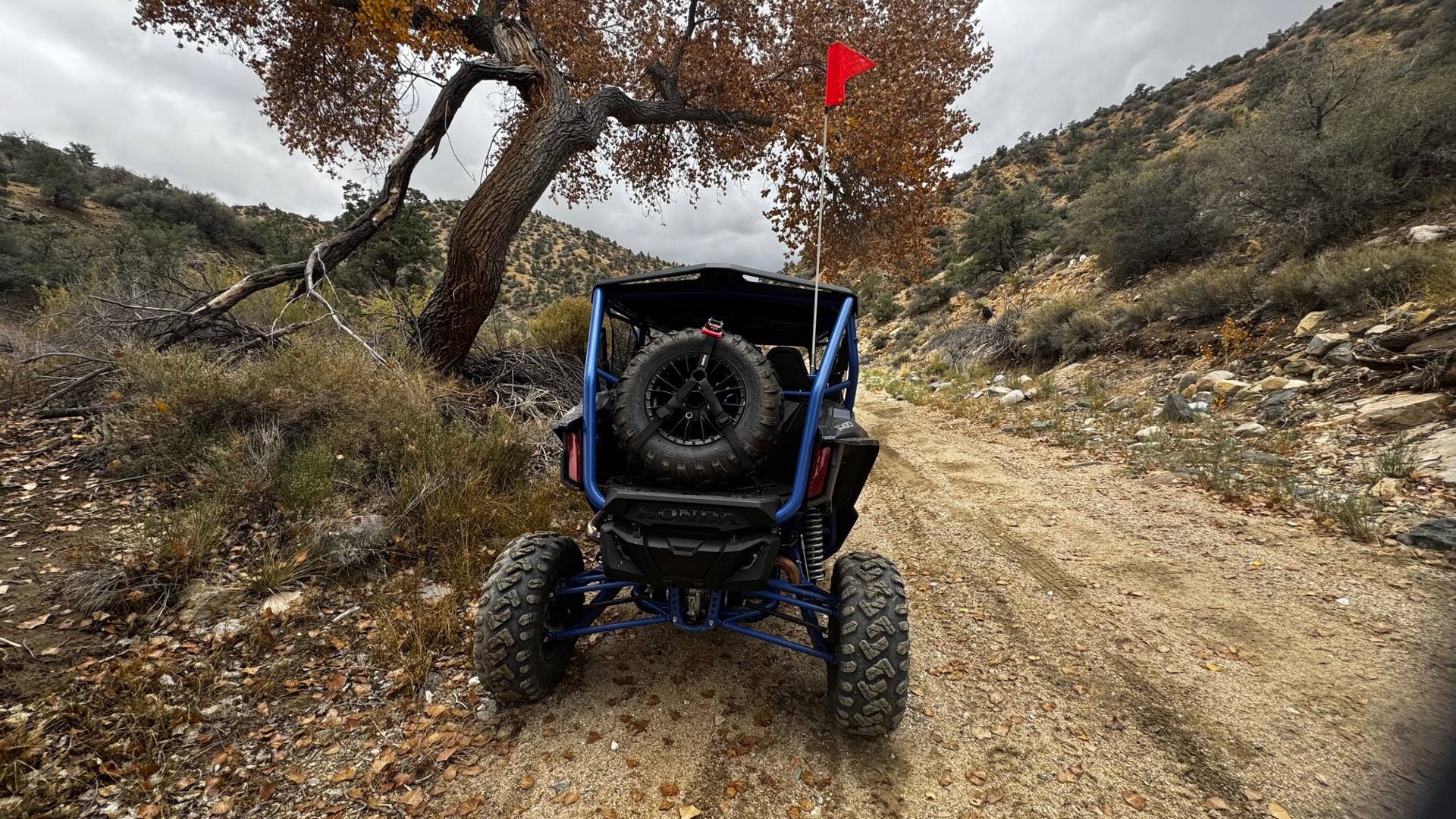
View the 2 images of this gallery on the
original article
Final thoughts
I had an absolute blast driving the Honda Talon 1000R-4. It feels intuitive straight away, and the blend of stability, suspension capability, smooth power, and usable cabin space makes it one of the most balanced four-seat sport UTVs on the market. It’s not trying to be the biggest, wildest, or most extreme UTV – it’s trying to be the one you can actually live with, trailer, maintain, and enjoy every weekend without banking on a second mortgage.
At around $26,000 as equipped, it’s far more reasonable than much of the segment, and it brings Honda’s reputation for durability and thoughtful engineering. If you want a sport UTV that can rip high-speed trails, handle whoops with confidence, take passengers comfortably, and still be manageable to own, the Talon 1000R-4 is absolutely worth a long look.