

Breaking down the RAV4 and CR-V battle
The Toyota RAV4 and Honda CR-V are consistently a lock as two of the most popular compact SUVs, but in any given year, one option is going to be the better buy.The 2025 RAV4 starts at $29,800 and is available in 11 trims, four of which are pure internal combustion engine (ICE) variants, with the remaining seven sold as hybrids. In comparison, the 2025 CR-V has a base price of $30,100 and a more streamlined trim lineup of six variants: three are ICE, and the other three feature a hybrid powertrain. Both of these competing SUVs are carryovers for the 2025 model year. You won’t find any minor changes in the CR-V, but Toyota narrowed the RAV4’s trim lineup from 2024 by eliminating the robust Adventure and TRD Off-Road models, along with adding its advanced all-wheel-drive (AWD) system with better dynamic torque vectoring for better traction.
Toyota
View the 2 images of this gallery on the
original article
Curious to learn more about what these compact SUVs bring to the table? Below you’ll find a comparison of the 2025 Toyota RAV4 and the 2025 Honda CR-V, prioritizing features and in-cabin amenities, to help inform your buying decision.
The RAV4 delivers more power and better off-road capability
Both the pure ICE and hybrid 2025 RAV4 variants feature a 2.5-liter four-cylinder engine, with the latter adding an electric motor at the front and another at the rear. ICE trims produce 203 horsepower, 184 lb-ft of torque, and feature an 8-speed automatic transmission. Like all RAV4 trims, front-wheel drive (FWD) is standard, and AWD is optional. Fuel economy for each 2025 RAV4 ICE variant is rated at 27 mpg in the city and 35 mpg on the highway. Moving into a hybrid RAV4 gives you 219 horsepower, 149 lb-ft of torque in the front, 89 lb-ft of torque in the rear, and an electronically controlled continuously variable transmission (CVT). RAV4 hybrid trims provide up to 41 mpg in the city and 38 mpg on the highway, except for the rugged Hybrid Woodland Edition, which gets up to 38 mpg in the city and 35 mpg on the highway. There’s also a plug-in electric hybrid (PHEV) 2025 RAV4, but we’ll be focusing our comparison on standard models, especially since there’s no 2025 PHEV Honda CR-V available in the U.S.
The 2025 CR-V’s pure ICE variants feature a turbocharged inline-four-cylinder paired with a continuously variable transmission, producing 190 horsepower and 179 lb-ft of torque. All CR-V trims are offered in standard FWD or optional AWD, with the peak Sport Touring Hybrid trim featuring standard AWD. A non-hybrid CR-V provides up to 28/34 city/highway mpg, and a hybrid CR-V delivers up to 43/36 city/highway mpg while producing 204 horsepower and 247 lb-ft of torque.
Compact SUV shoppers aren’t going to get much towing capability, but it’s still worth noting that the RAV4’s towing ranges from 1,500 (gas) to 1,750 lbs (hybrid), and the CR-V’s spans 1,000 (hybrid) to 1,500 lbs (gas). As for selectable drive modes, both the RAV4 and CR-V receive standard sport, eco, and normal modes. However, the RAV4’s available AWD drive modes edge out the CR-V by adding Multi-Terrain Select with Mud & Sand, Rock & Dirt, and Snow modes — underscoring its off-road superiority. In contrast, hybrid AWD CR-Vs only offer Snow.
Toyota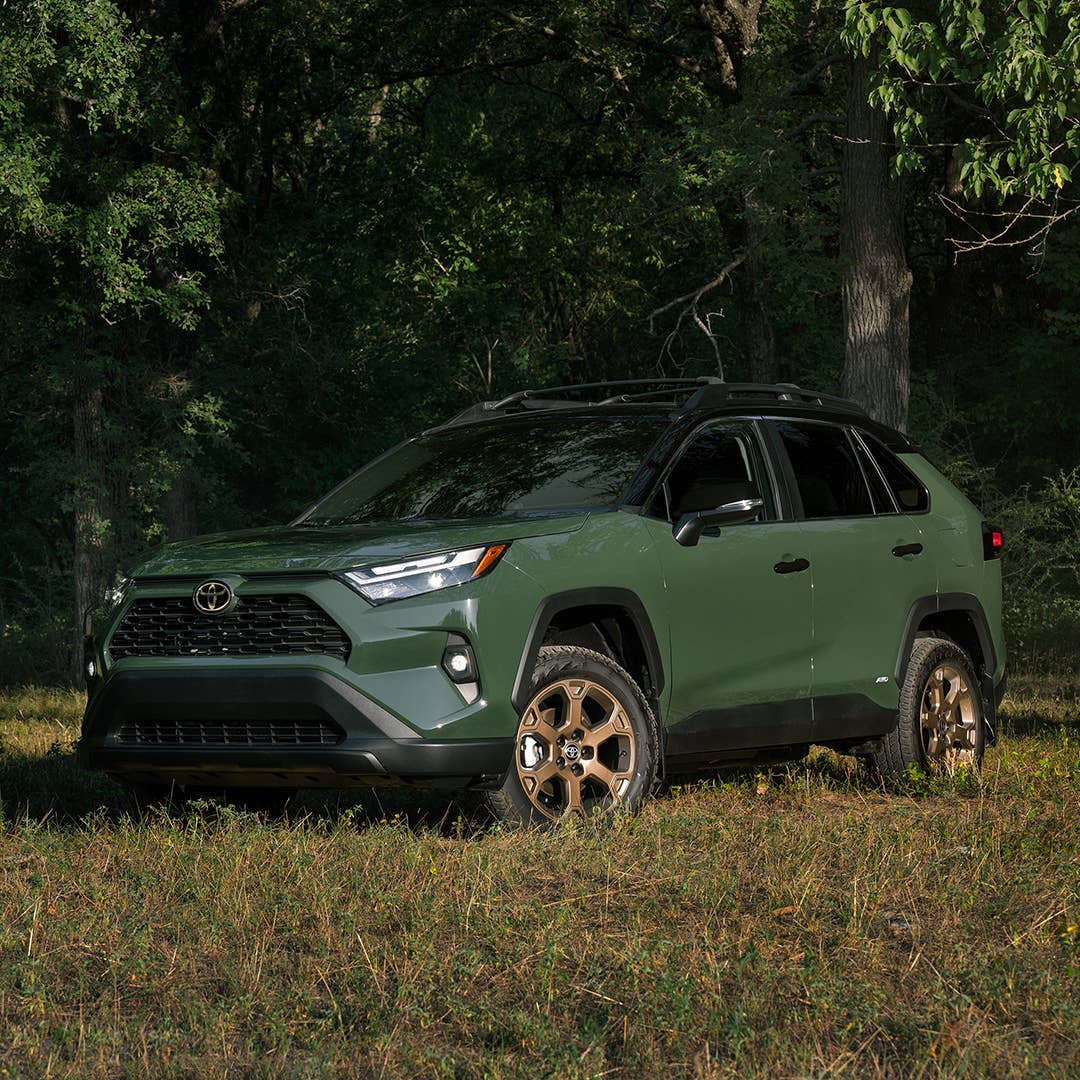
View the 4 images of this gallery on the
original article
Choose the RAV4 for a more rugged appearance, or the CR-V for sleek urban looks
Toyota highlights the 2025 RAV4’s off-road capabilities with more aggressive exterior styling, including angular lines, accentuated fender flares, a boxier overall profile, and higher available ground clearance. This available ground clearance comes thanks to the TRD-Tuned off-road suspension, whereas the CR-V doesn’t offer any adjustable or sport-tuned suspension packages.
Honda distinguishes the CR-V with a longer wheelbase and a more contemporary, urban aesthetic, manifested in cleaner, sculpted lines complemented by chrome trim. This more conservative approach is also evident in the CR-V’s color palette, which is generally more muted. Unlike the CR-V, the RAV4 offers multiple two-tone color combinations for a more dynamic look. Regarding wheels, both the RAV4 and CR-V come with sizes ranging from 17 to 19 inches. Those looking to spend less on their next compact SUV purchase and frequently driving in cold and/or wet conditions might favor the RAV4, as its base trim offers available heated side mirrors, whereas the CR-V doesn’t.
The CR-V’s interior comfort and practicality shine
The CR-V enhances its value with commendable interior comfort, including a quieter cabin. Front legroom between the RAV4 and CR-V is nearly equivalent at 41.3 inches and 41 inches, respectively, but the CR-V offers 3.2 more inches of rear legroom than its rival at 41 inches. You’ll also receive available 10-way power adjustability with two-way lumbar support in the CR-V’s driver’s seat compared to the RAV4’s optional 8-way power adjustability and two-way lumbar support. These competing SUVs diverge slightly in their seating materials, with the RAV4’s more expansive trim lineup offering cloth, synthetic leather, and leather options — and the CR-V’s streamlined lineup offering cloth, leather-trimmed, or more premium leather-perforated upholstery.
It’s also vital to note that the CR-V’s longer wheelbase helps give it a larger cargo capacity. The CR-V features 39.3 cu ft of room behind the second row and 76.5 cu ft with the second row folded, while the RAV4 has 37.6 cu ft of space behind the second row and 69.8 cu ft with the second row down.
Kristen Brown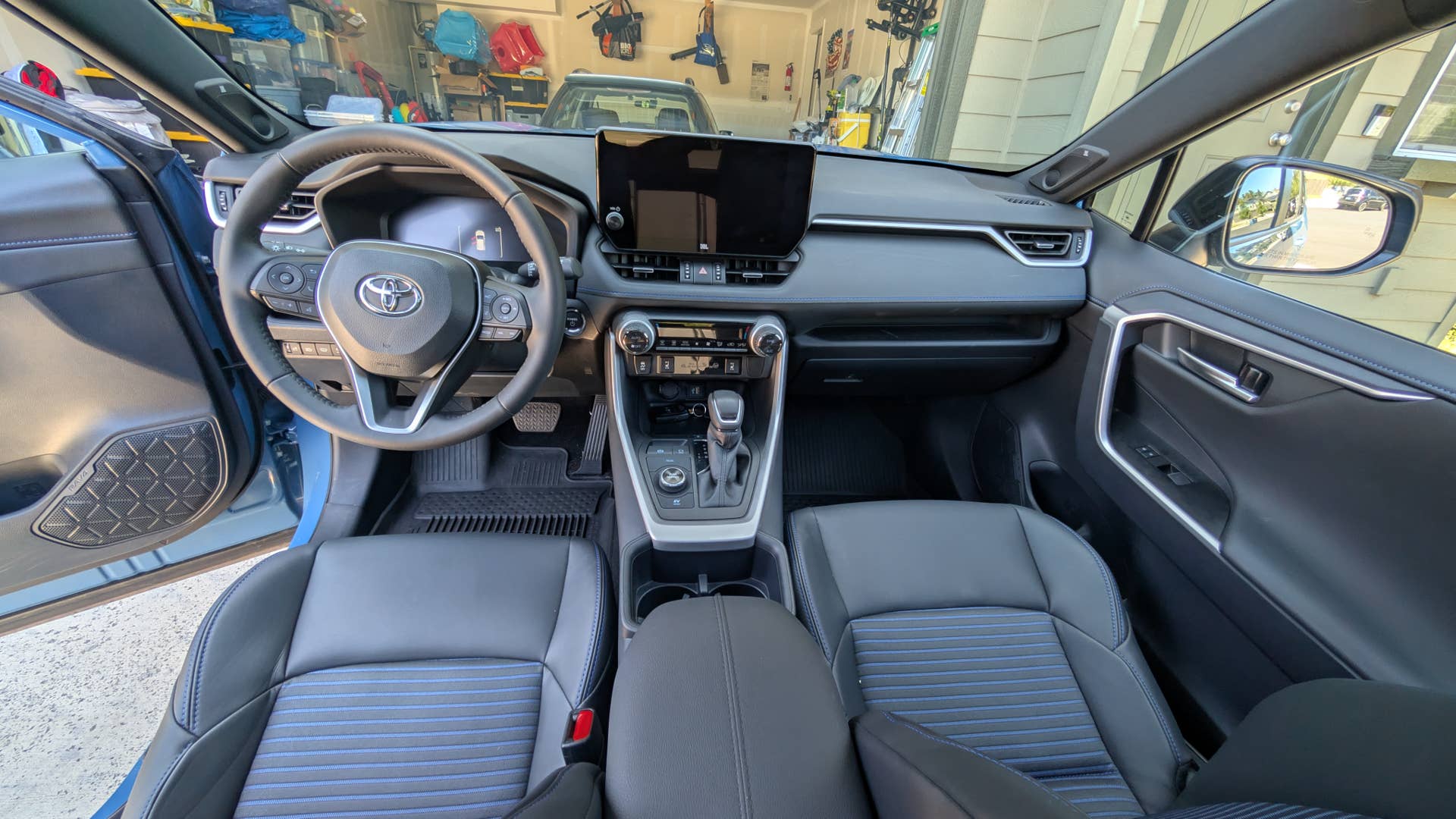
View the 3 images of this gallery on the
original article
The RAV4’s standard connectivity outperforms the CR-V’s
While the CR-V’s interior generally feels more premium and comfortable, the RAV4 offers better standard connectivity. The 2025 RAV4’s standard touchscreen measures 8 inches, and its optional touchscreen is 10.5 inches. The 2025 CR-V’s standard and optional touchscreens are 7 and 9 inches, respectively. The RAV4 also features an available 12.3-inch fully digital instrument cluster, whereas the CR-V’s larger digital cluster is 9 inches. Both models offer Apple CarPlay and Android Auto, but wireless compatibility is standard on the RAV4 and optional on the CR-V. In terms of speakers, the RAV4 has a higher base count at six speakers versus the CR-V’s four, but the CR-V has a greater maximum count of 12 speakers instead of the RAV4’s 11.
The RAV4’s expansive trim lineup benefits those wanting premium safety features for a mid-tier price
Neither the 2025 RAV4 nor the 2025 CR-V received a Top Safety Pick award from the IIHS (Insurance Institute for Highway Safety). The 2025 CR-V was named a 2024 Top Safety Pick, but no longer holds that designation after the IIHS implemented its updated, more challenging moderate overlap front test, for which the CR-V received a “Poor” rating. While the RAV4 has slightly more base advanced driver-assist features, both models’ entry-level offerings are comparable. Still, the RAV4’s greater selection of trims means you can get certain advanced safety features — such as rear cross-traffic alert and a blind spot monitor — without splurging on an upper trim level, like you would with the CR-V.
Toyota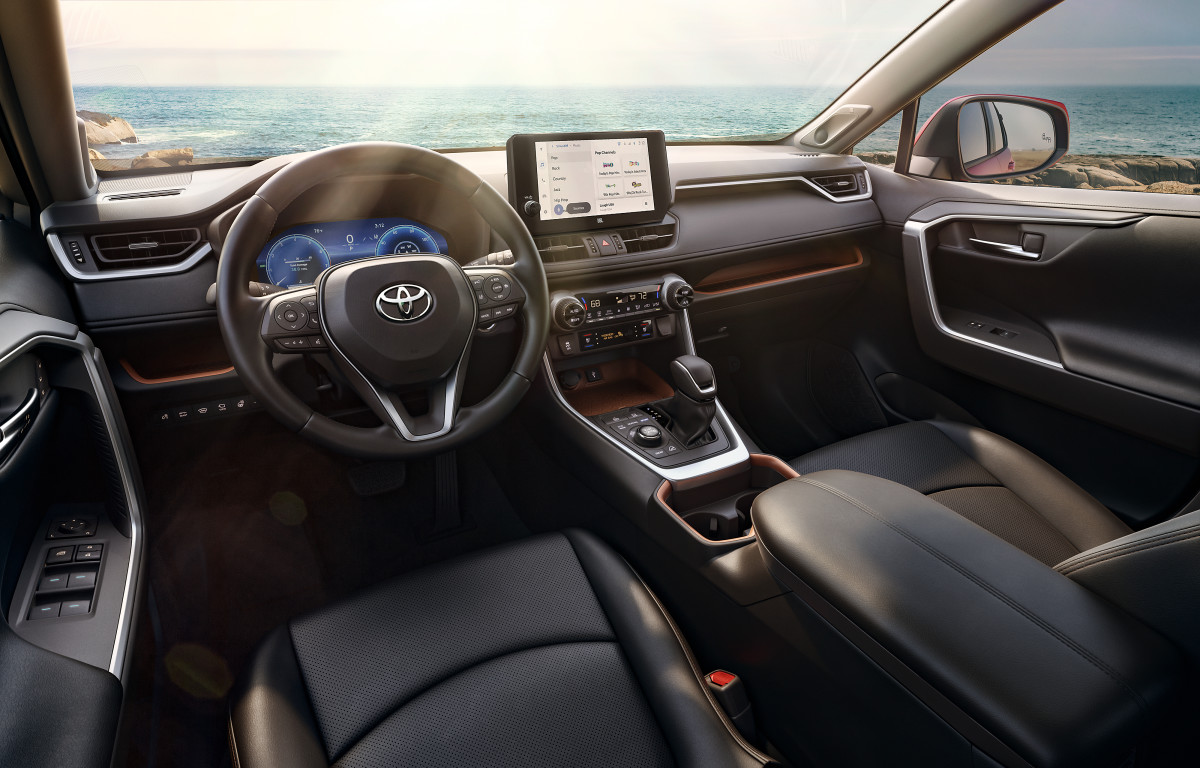
View the 2 images of this gallery on the
original article
Additional considerations
The RAV4 and CR-V offer the same basic and powertrain warranties lasting three years or 36,000 miles and five years or 60,000 miles, respectively. Roadside assistance on the RAV4 is good for two years with unlimited mileage and three years or 36,000 miles on the CR-V. If you purchase a hybrid, Toyota covers your battery for 10 years or 150,000 miles, while Honda offers eight years or 100,000 miles of protection. Markets suggest that RAV4s tend to hold their value better, while used CR-Vs are often priced lower on average, but the 2025 CR-V is predicted to cost slightly less to repair while offering greater reliability.
Final thoughts
From a spec standpoint, the 2025 Toyota RAV4 positions itself as the better buy on many fronts, but the 2025 CR-V’s refinement, interior comfort, tech usability, and smooth daily driving dynamics make it the superior option. However, if you’re prioritizing power, off-road capability, and tech feature availability, the RAV4, especially the Hybrid Woodland Edition, is a solid choice. No matter your initial thoughts, test drive each option before making a final decision.