

What’s new in the 2026 Honda HR-V and the 2026 Hyundai Kona
The Honda HR-V and Hyundai Kona have gained popularity for their ability to bring perks like fuel efficiency, practicality, and solid tech to the subcompact SUV segment. However, each model has unique strengths and weaknesses that may or may not align with your driving preferences. For starters, the 2026 Honda HR-V starts at $26,200, while the 2026 Hyundai Kona has a base price of $26,675.
Hyundai
Honda has updated the HR-V with a standard 9-inch infotainment screen, previously limited to the top-of-the-line EX-L trim. Last year, the SUV’s standard infotainment display size was 7 inches. All trims also now receive wireless Apple CarPlay and Android Auto, along with a wireless smartphone charging pad. The base HR-V LX variant gets new standard rear privacy glass, the EX-L’s rims now measure 18 inches, and each trim gains a new wheel design. Boost Blue Pearl and Solar Reflection Metallic are also fresh additions to the HR-V’s exterior palette. The Sport trim receives gloss-black tailgate badges, and Honda emphasizes illumination in areas such as the climate control knobs and front footwell.
The 2026 Kona is primarily a carryover model, but Hyundai has replaced the SEL, SEL Convenience, N Line S, and N Line trims with the SEL Sport and SEL Premium, while also making adaptive cruise control standard across all trims. Check out the rest of our guide below for more information to help you decide whether the 2026 Honda CR-V or the 2026 Hyundai Kona is a better fit.
Interior highlights and lowlights
The 2026 Honda HR-V offers 24.4 cu ft of cargo space behind the back row, and when folding the 60/40 split rear seats, this capacity expands to 55.1 cu ft. In contrast, the 2026 Hyundai Kona, which also has 60/40 split rear seats, has 25.5 cu ft of cargo volume behind the back row and a 63.7 cu ft storage capacity with the rear seats folded. Regarding passenger volume, the HR-V delivers 98.7 cu ft in the LX and Sport trims and 97.3 cu ft in the EX-L trim. You’ll receive 101.2 cu ft of passenger volume in the Kona’s SE and SEL Sport trims, and 99 cu ft in the SEL Premium and EX-L variants.
Honda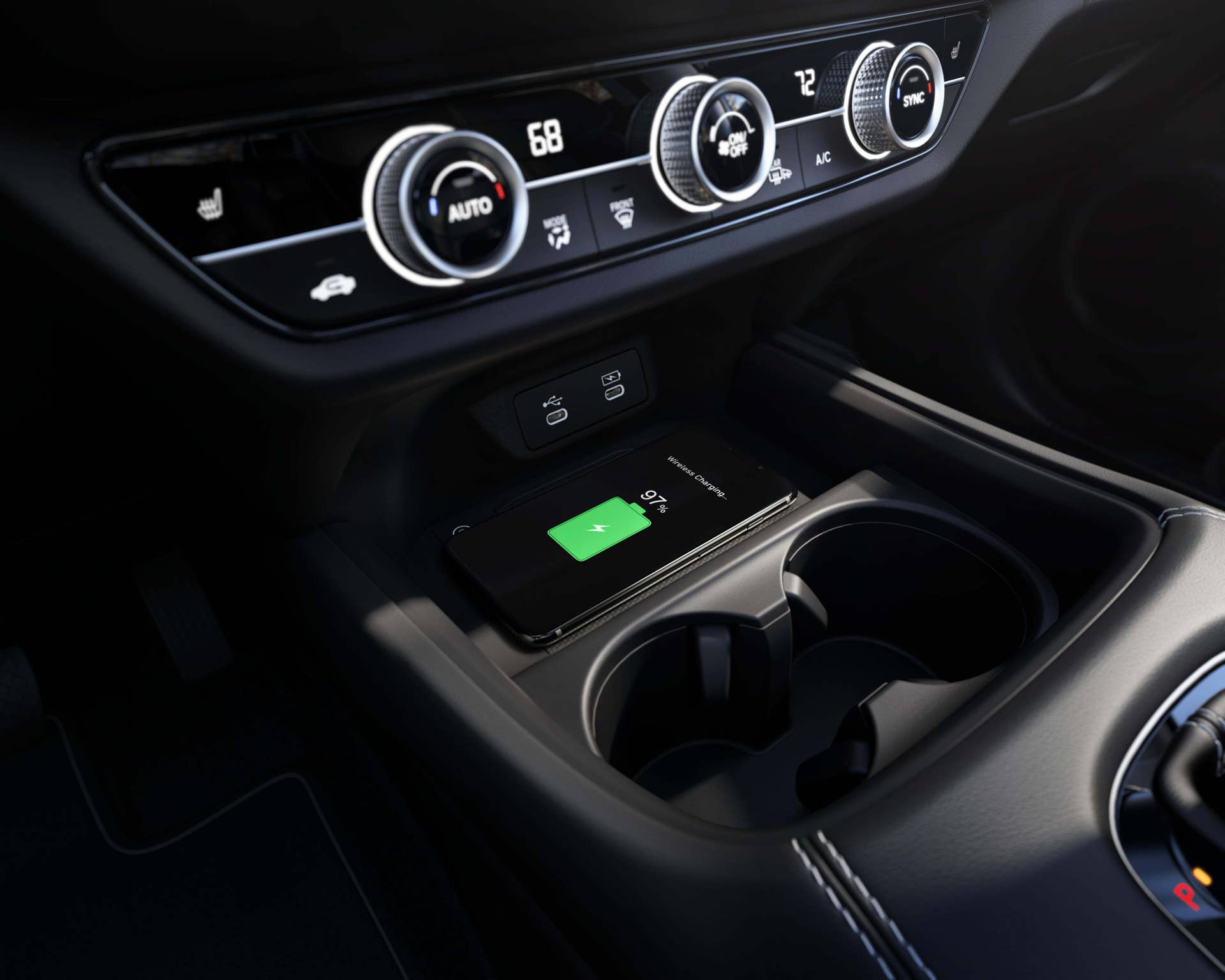
View the 3 images of this gallery on the
original article
The 2026 HR-V’s first two trims — the LX and Sport — don’t offer an 8-way power-adjustable driver’s seat, but you’ll find this feature within the peak EX-L variant, complemented by leather-trimmed seats. An 8-way power driver’s seat is standard on the Kona’s two upper trims — the SEL Premium and Limited — but you’ll find synthetic leather instead of genuine leather for seating surfaces. Those prioritizing the quietest cabin can find what they’re seeking with the 2026 Kona’s SEL Premium trim.
Power and efficiency spotlight
Drivers shopping within the subcompact SUV segment often have to sacrifice power, but that doesn’t mean that a model’s specs within this area aren’t worth considering. Each 2026 Honda HR-V is equipped with a 2.0-liter 4-cylinder engine producing 158 horsepower and 138 lb-ft of torque. Front-wheel drive (FWD) is standard and all-wheel drive (AWD) is available on every HR-V trim, with FWD versions delivering 26 mpg in the city and 32 mpg on the highway, and AWD grades supplying 25/30 city/highway mpg.
Honda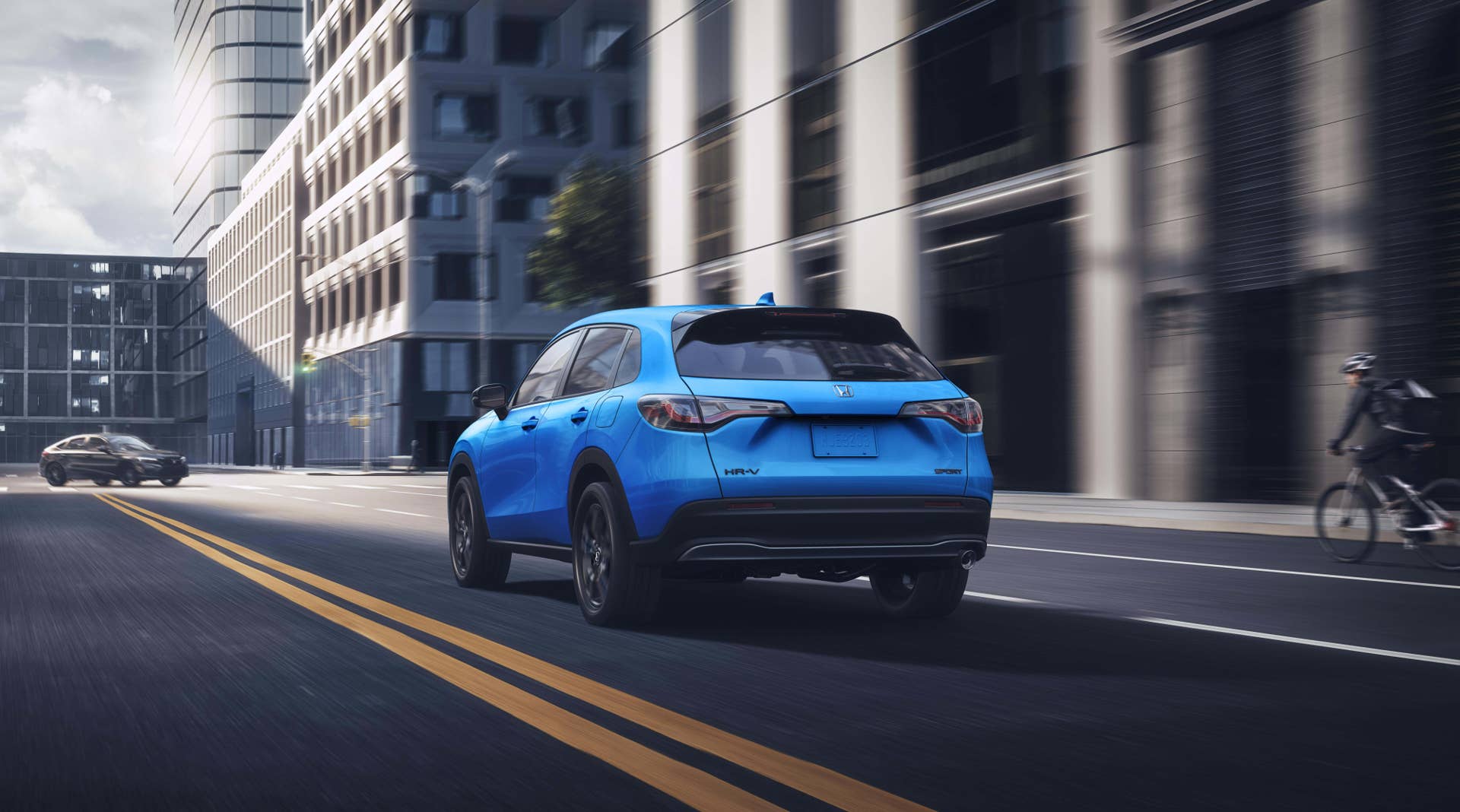
View the 2 images of this gallery on the
original article
In comparison, the 2026 Kona SE and SEL Sport trims use a 2.0-liter 4-cylinder engine producing 147 horsepower and 132 lb-ft of torque, but the model’s SEL Premium and Limited grades have a turbocharged 4-cylinder engine with 190 horsepower and 195 lb-ft of torque. The new Kona is similarly available in FWD or AWD. A FWD Kona SE gets 29/34 city/highway mpg, and an AWD Kona SE gets 27/29 city/highway mpg. Moving into the Kona SEL Sport, drivers receive 28/35 city/highway mpg in FWD, or 26/29 city/highway mpg in AWD. Graduating to the Kona SEL Premium gives you 26/31 city/highway mpg in FWD, or 25/28 mpg in AWD, while the peak Kona Limited provides 26/31 city/highway mpg in FWD, and 25/28 city/highway mpg in AWD.
Honda has updated the HR-V’s standard display, but it still falls short of the Hyundai Kona
Earlier, we touched on how Honda has now equipped each 2026 HR-V with a 9-inch central touchscreen, but there’s also a 7-inch partially digital instrument cluster with a reconfigurable display. In contrast, the 2026 Kona features a 12.3-inch touchscreen in every trim, with the SE and SEL Sport grades also equipped with a 4.2-inch digital gauge cluster. The upper SEL Premium and Limited features a much larger 12.3-inch digital gauge cluster. You’ll find three drive modes within the HR-V: Econ, Normal, and Snow, while the Kona offers Normal, Eco, Sport, Snow, and MyDrive. You’ll also find more standard driver-assist tech within the 2026 Kona, including features such as Blind-Spot Monitoring and Rear Cross-Traffic Alert.
Hyundai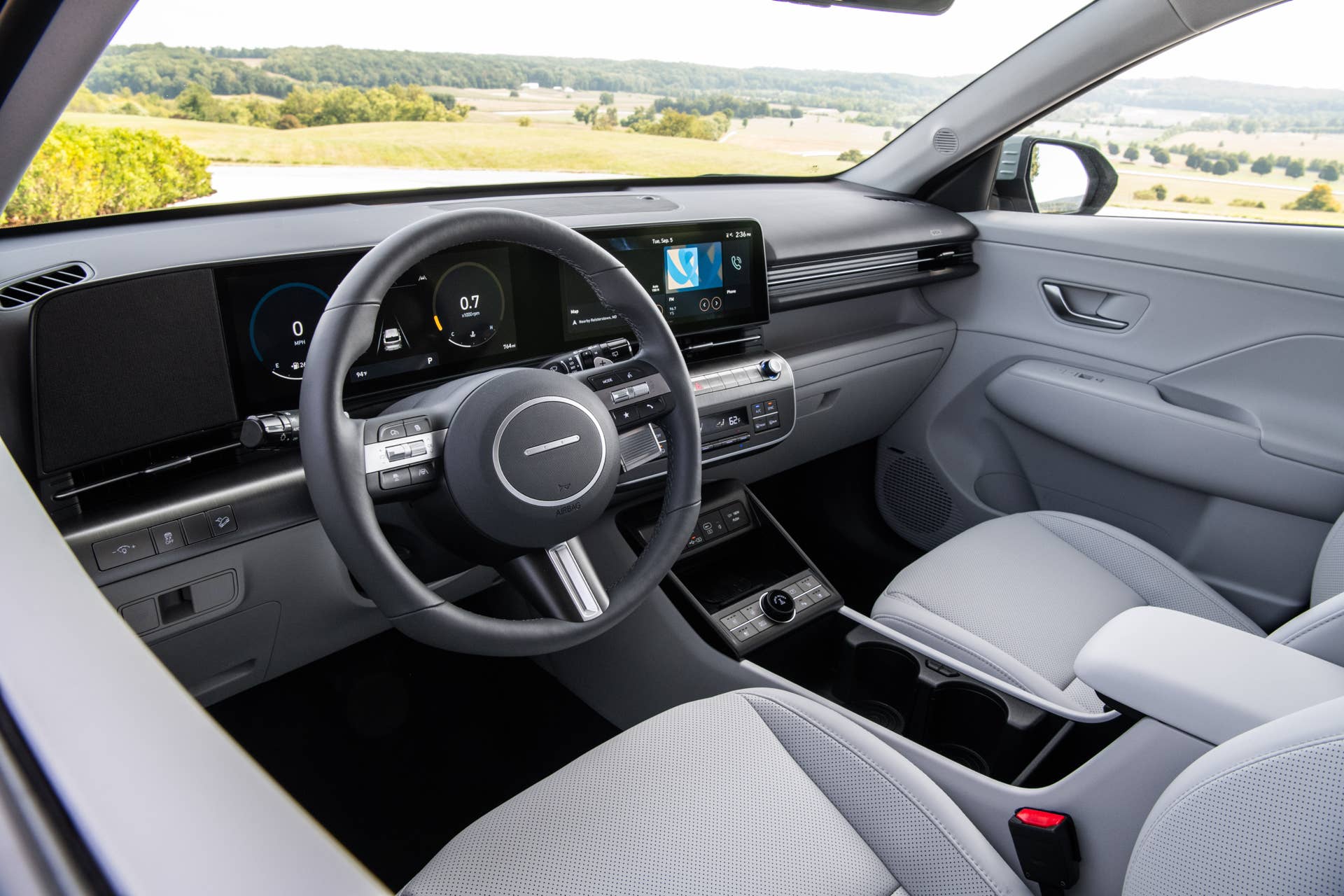
Which exterior style would you choose?
While exterior styling tastes are subjective, there are objective observations worth considering for these two vehicles. Drivers who prefer a more refined and understated exterior might opt for the 2026 Honda HR-V, while those seeking bolder, futuristic aesthetics might choose the 2026 Hyundai Kona. Additionally, the Kona features more pronounced exterior cladding on areas such as the lower doors and wheel arches.
Honda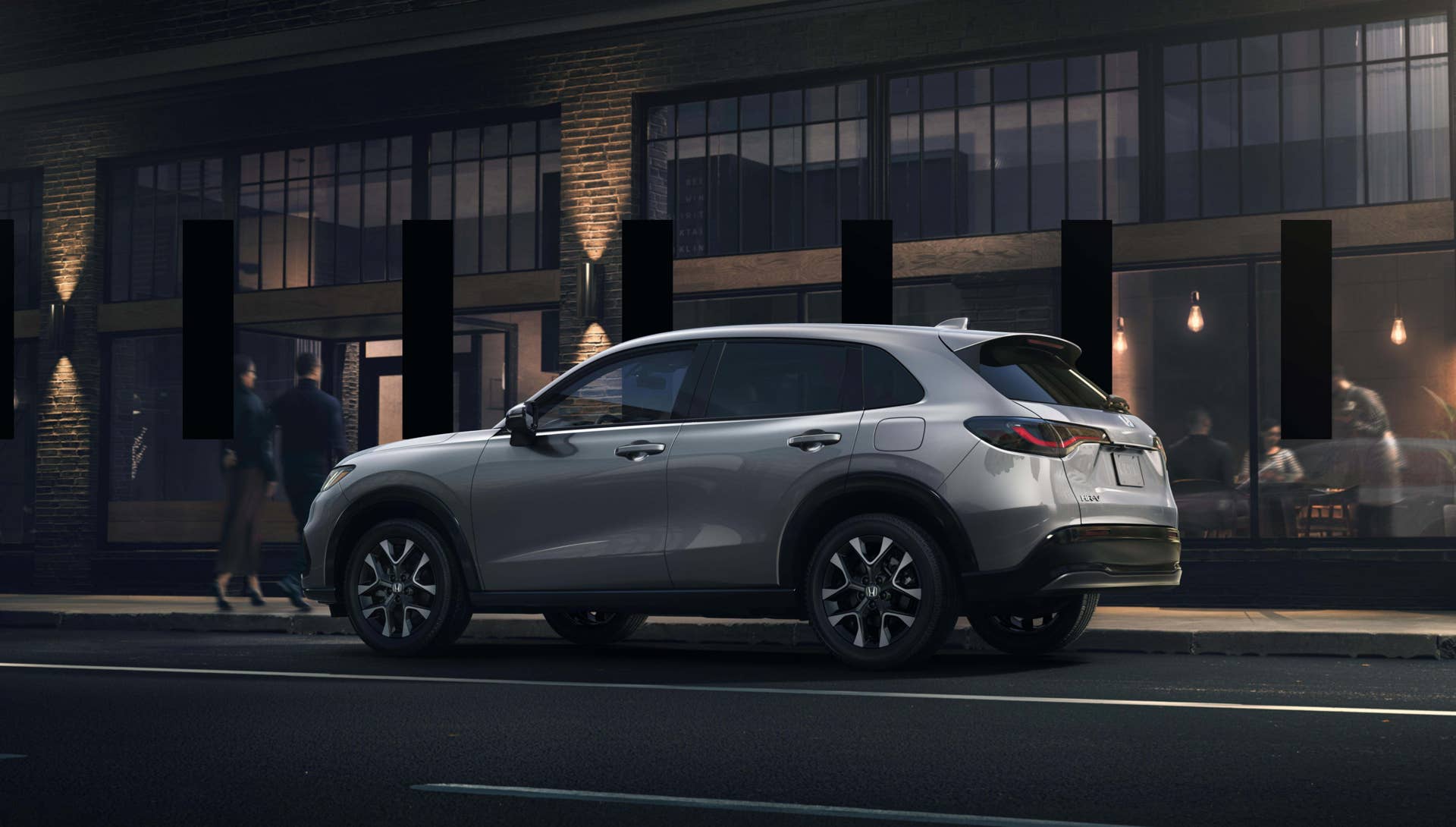
View the 2 images of this gallery on the
original article
Final thoughts
You can’t go wrong with either the Honda HR-V or Hyundai Kona when shopping for an economical subcompact SUV, and each model has undergone recent updates that have increased their respective value. The 2026 Honda HR-V can satisfy drivers seeking genuine leather trim, a sleek exterior design, and a long-standing reputation that often translates to better resale value. Alternatively, the 2026 Hyundai Kona offers greater power in its upper trim levels, along with futuristic elements both inside and out, with a forward-thinking exterior design and enhanced cabin digitalization. Be sure to test drive each option before making a decision.