

With names like “TrailSport” and “Wilderness,” these compact crossovers make their ruggedness loud and clear, but just how tough are they beneath the surface?
In the same week, I found myself tasked with daily driving the 2026 Honda CR-V TrailSport Hybrid at home, and doing a quick hop down to Oregon to test out the all-new 2026 Subaru Forester Wilderness. As the two adventure-ready compact crossovers are pitted directly against each other on the market, I decided to use the opportunity to get a sense of where each of them shone when compared with one another, and where they faltered. So, at the end of my week, after returning from driving the Forester Wilderness in Oregon and handing back the keys to the CR-V TrailSport Hybrid, I found myself pondering a complicated question: which one would I rather have?
2026 Honda CR-V TrailSport Hybrid Cole Attisha
View the 2 images of this gallery on the
original article
The truth is, I still haven’t quite made up my mind. Both of these crossovers, despite competing directly against each other in the same segment, have their own distinct pros and cons. Whether I’d buy one over the other would depend entirely on my specific lifestyle and what I’d realistically intend to do with either one of them. There’s also an entire field of rivals from other brands out there, such as the Toyota RAV4 Woodland Edition, the Nissan Rogue Rock Creek Edition, the Hyundai Tucson XRT AWD, and the Ford Bronco Sport Badlands. So, instead of plainly stating, “I’d have X over Y, because of this one specific reason that appeals to me but might not appeal to anyone else,” I’ve decided to share with you what I liked most about each of these respective “soft-roaders,” as well as what I disliked most, and attempt to provide a sense of what type of buyer each of these appeals to, so that you can make your own educated decision about which one is the “real winner” based on how well each of these crossovers suits your needs and intentions.
2026 Honda CR-V TrailSport Hybrid Cole Attisha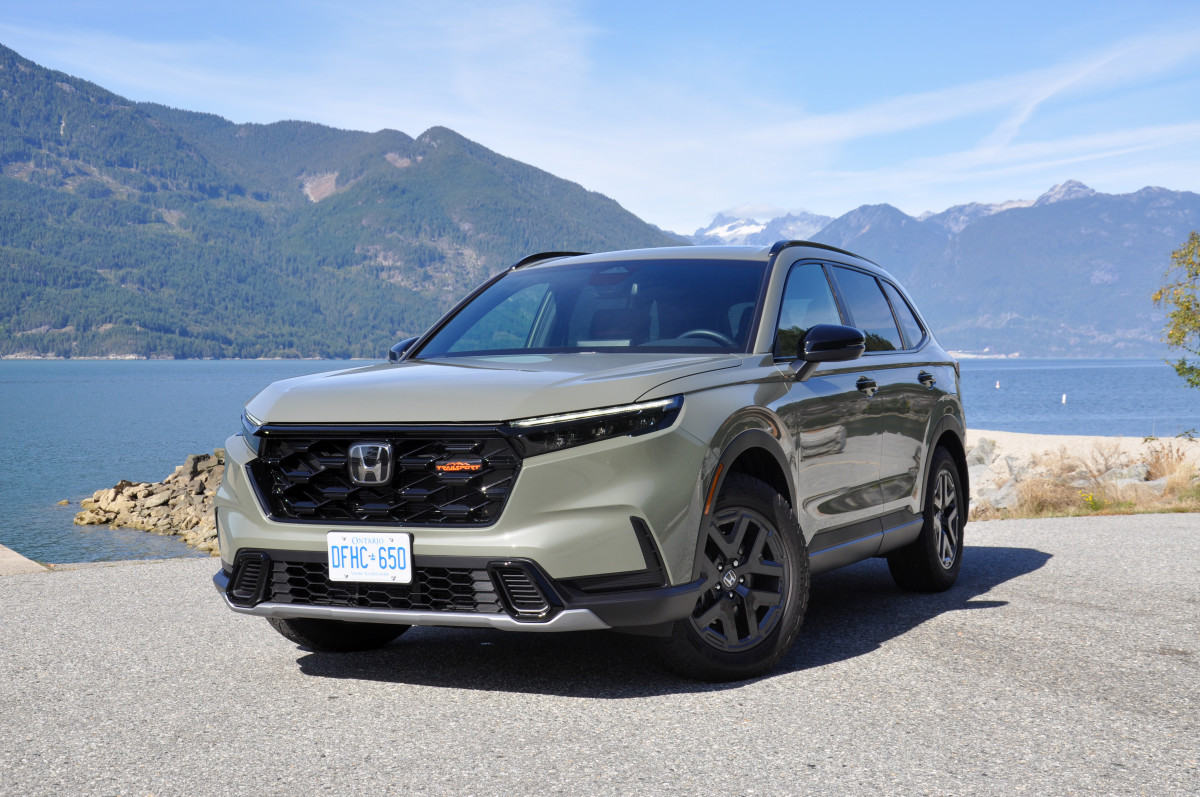
View the 2 images of this gallery on the
original article
How do these adventure-ready crossovers stack up when the going gets tough?
At 8.2 inches, the Honda CR-V TrailSport Hybrid not only offers less ground clearance than the Subaru Forester Wilderness (at 9.3 inches), but it, in fact, offers even less ground clearance than the standard Forester, which boasts 8.7 inches. The Subaru also beats out the CR-V when it comes to approach angle and departure angle, all vital metrics for when paved roads are left in the dust. The Forester Wilderness can also tow more—way more—with a maximum tow capacity rating of 3,500 pounds, compared to the CR-V TrailSport Hybrid’s 1,000-pound max capacity (the lowest of its segment). Another on-paper blow for the CR-V is its 3,900-pound curb weight, which is again beaten by the Forester’s 3,675-pound relative lightness (the lightest of its segment, in fact). The Subaru also provides an all-terrain spare tire, whereas the CR-V has no spare tire at all.
2026 Honda CR-V TrailSport Hybrid Cole Attisha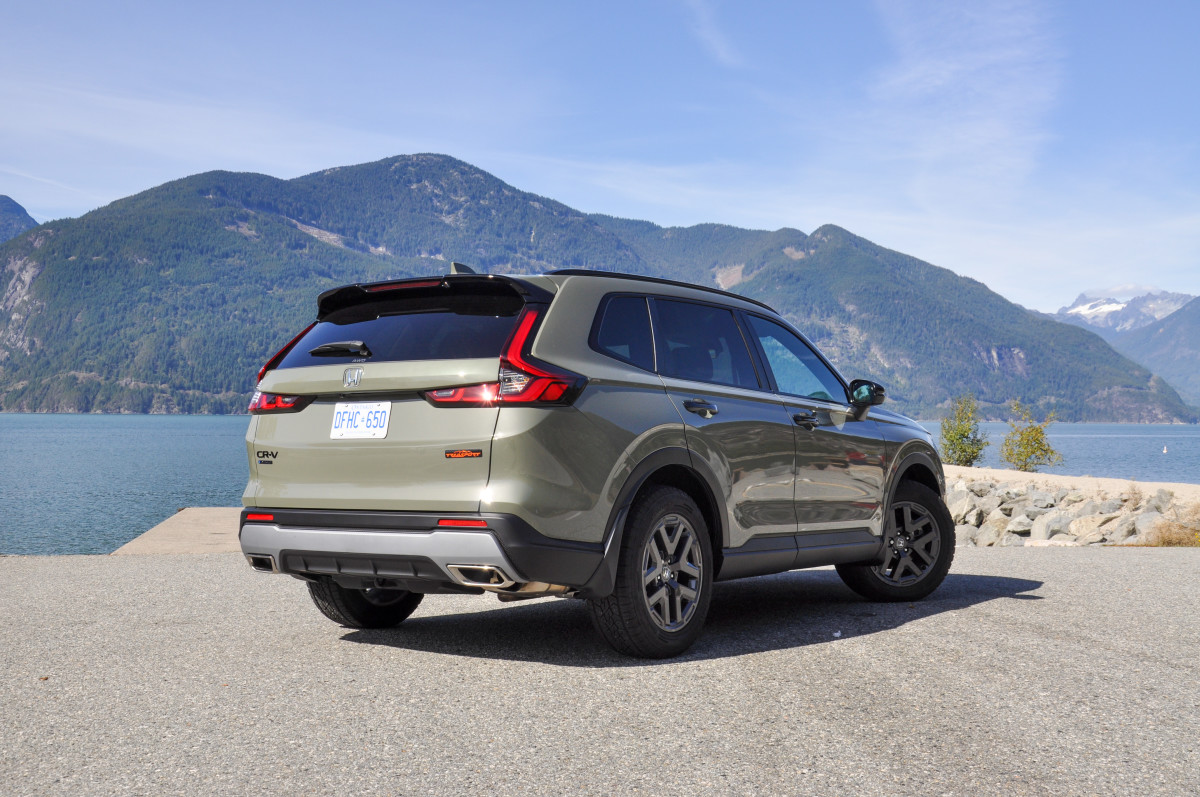
View the 2 images of this gallery on the
original article
On paper, then, the Forester Wilderness blows the CR-V TrailSport out of the water when it actually comes to getting down and dirty in the mud—or whatever other unpaved terrain you’d like to throw at it. The leg up that the Forester boasts on its spec sheets translates into real-world use, as well, as I found myself tackling steep, boulderous terrain with the Forester Wilderness that I dared not even attempt with the CR-V. There is no denying that if tackling seriously rough terrain was on my agenda, the Forester Wilderness would be the obvious candidate over the CR-V TrailSport Hybrid, full stop.
Above and beyond the standard Forester, Subaru has given the Wilderness model retuned off-road drive modes, increased the ground clearance, revised bumper designs for improved approach and departure angles, a revised final drive ratio, updated differentials, increased roof rail capacity, increased underbody protection, and an all-terrain spare tire. Above and beyond the standard CR-V Hybrid, Honda has given the CR-V TrailSport all-terrain tires and made minor aesthetic changes to the exterior to make it look tougher. That’s it. So, it seems the TrailSport package is for buyers who don’t take the “off-roader roleplay” too seriously and are looking for a slightly edgier look to complement their soft yet friendly crossover. Doesn’t that make the TrailSport model essentially pointless?
2026 Honda CR-V TrailSport Hybrid Cole Attisha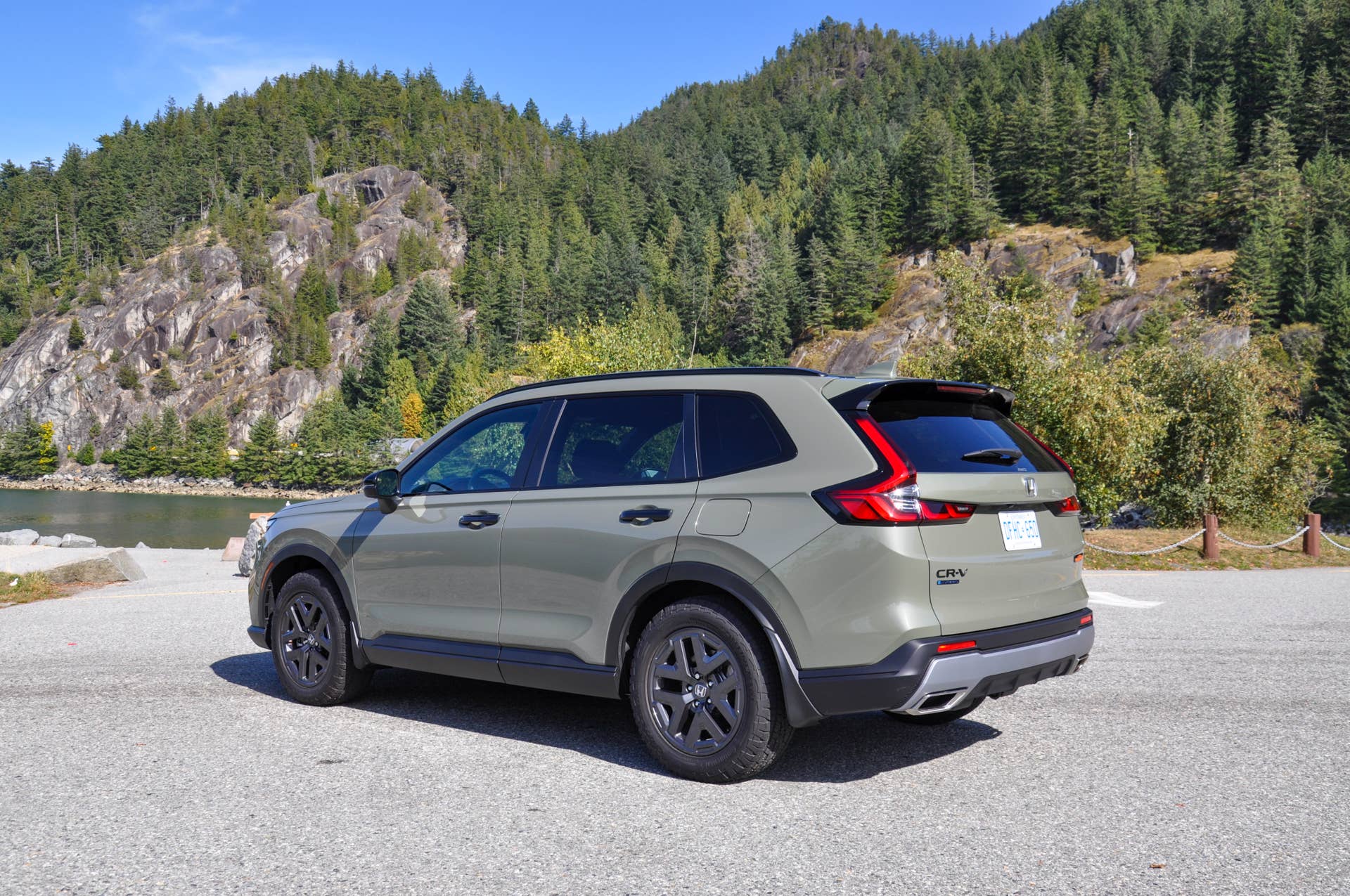
View the 2 images of this gallery on the
original article
The CR-V TrailSport’s story doesn’t end there
Now, if you aren’t planning to scale mountains, wade through streams, or trudge through thick mud, then stick around and hear me out, because the CR-V TrailSport Hybrid isn’t exactly a lost cause just because it’s not nearly as rugged as the Forester Wilderness. What if, instead of a hardened off-roader, you’re simply in the market for a family-friendly, daily drivable compact crossover that’s both efficient and roomy, and can easily tackle seasonal drives to the occasional ski resort, fishing cabin, or coastal surf destination? If the majority of your time behind the wheel of your crossover is destined to be spent on paved roads, then perhaps the CR-V TrailSport Hybrid is the adventure-ready crossover that’s right for you.
Simply put, the Honda CR-V TrailSport Hybrid has road manners that the Forester Wilderness can’t compete with. Yes, its all-terrain tires make more noise than standard tires would, and come at the cost of minor fuel efficiency losses, but generally speaking, the CR-V Hybrid is the better-handling car when it comes to cornering, accelerating, and braking. Where the Subaru feels more refined off the road, the Honda feels more refined on the road. The Forester’s anemic 2.5-liter Boxer engine pumps out just 180-horsepower and 178 lb-ft of torque. In contrast, the CR-V’s 2.0-liter dual-electric-motor hybrid powertrain boasts a combined 204 horsepower and 247 lb-ft of torque. Not only does the Honda boast significantly greater power figures, but it also outperforms the Forester in fuel economy, with an impressive 40 mpg city/34 mpg highway/37 mpg combined fuel efficiency rating, compared to the Forester’s 24 mpg city/28 mpg highway/26 mpg combined.
Cole Attisha
2026 Honda CR-V TrailSport Hybrid Cole Attisha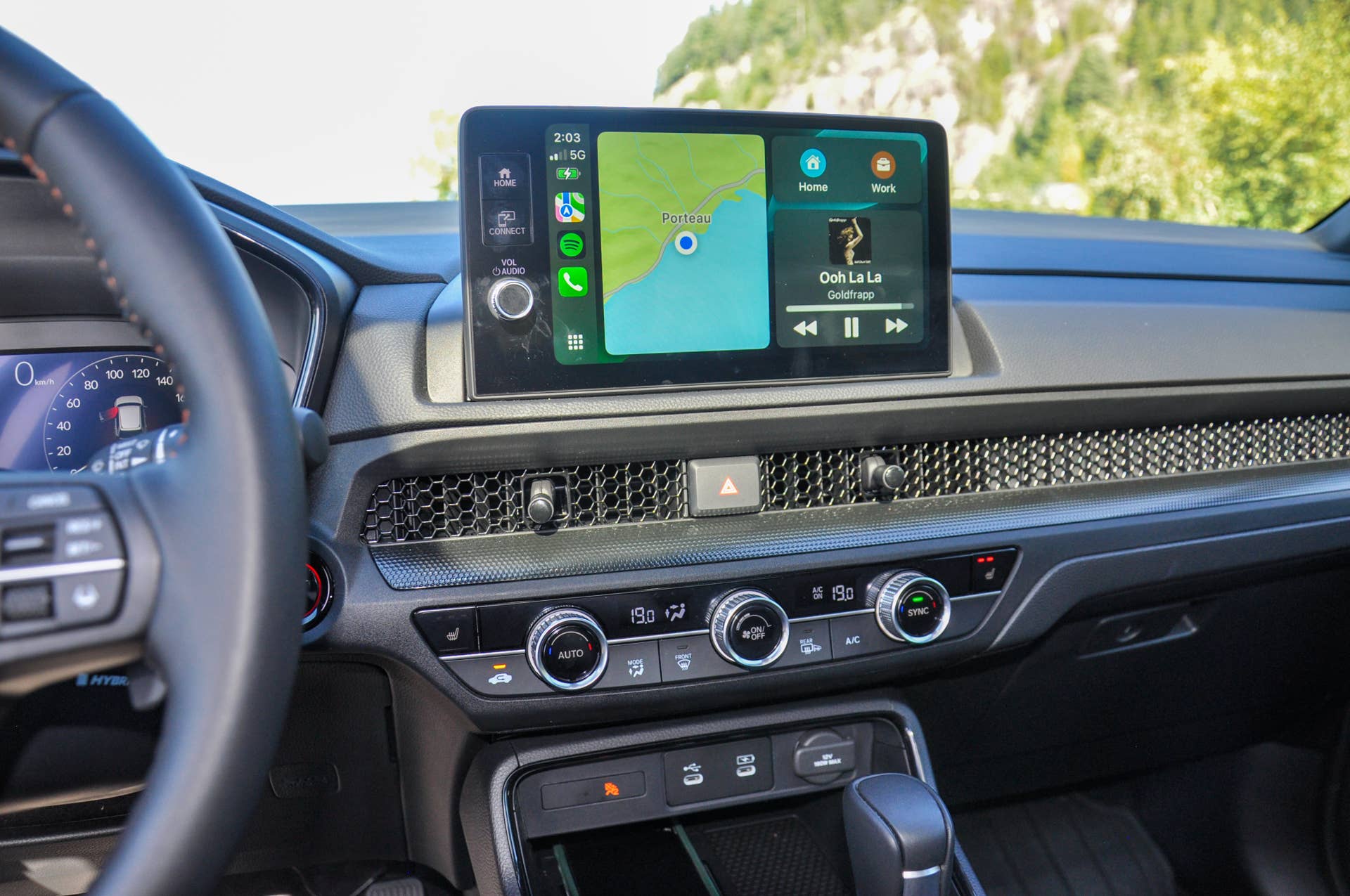
View the 3 images of this gallery on the
original article
Cole Attisha
How do they compare inside?
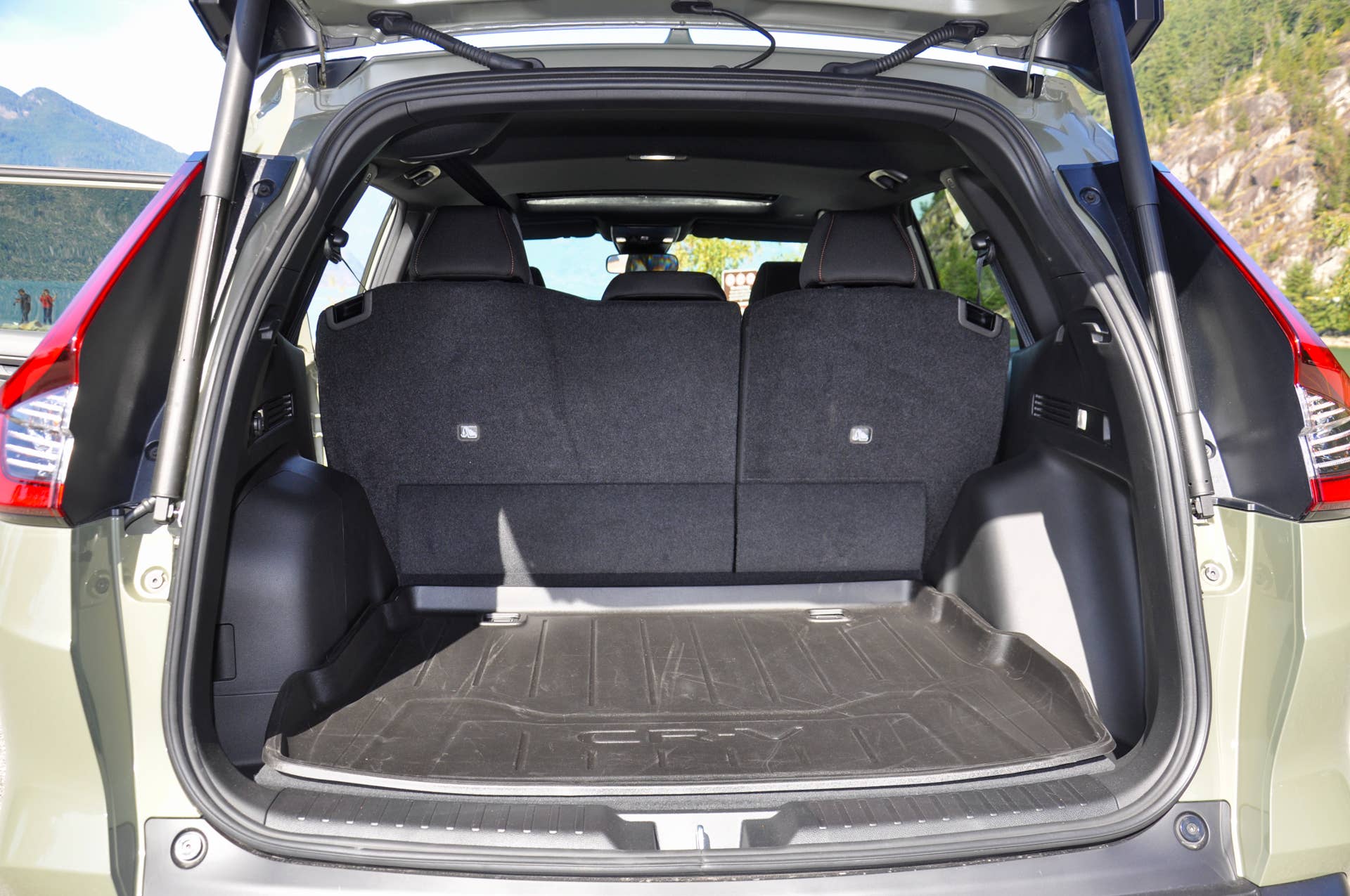
The Honda CR-V TrailSport’s triumphs don’t end with its mechanical performance, either. The CR-V boasts significantly greater cargo space when compared with the Forester, both with the rear seats folded up or down. The CR-V offers approximately 39.3 cubic feet behind the rear seats and 76.5 cubic feet with them folded, while the 2026 Forester Wilderness has about 27.5 cubic feet behind the rear seats and 69.1 cubic feet with them folded. That’ll make a noticeable difference when you’re trying to cram every last bit of gear and luggage into the trunk before a lengthy family road trip.
View the 4 images of this gallery on the
original article
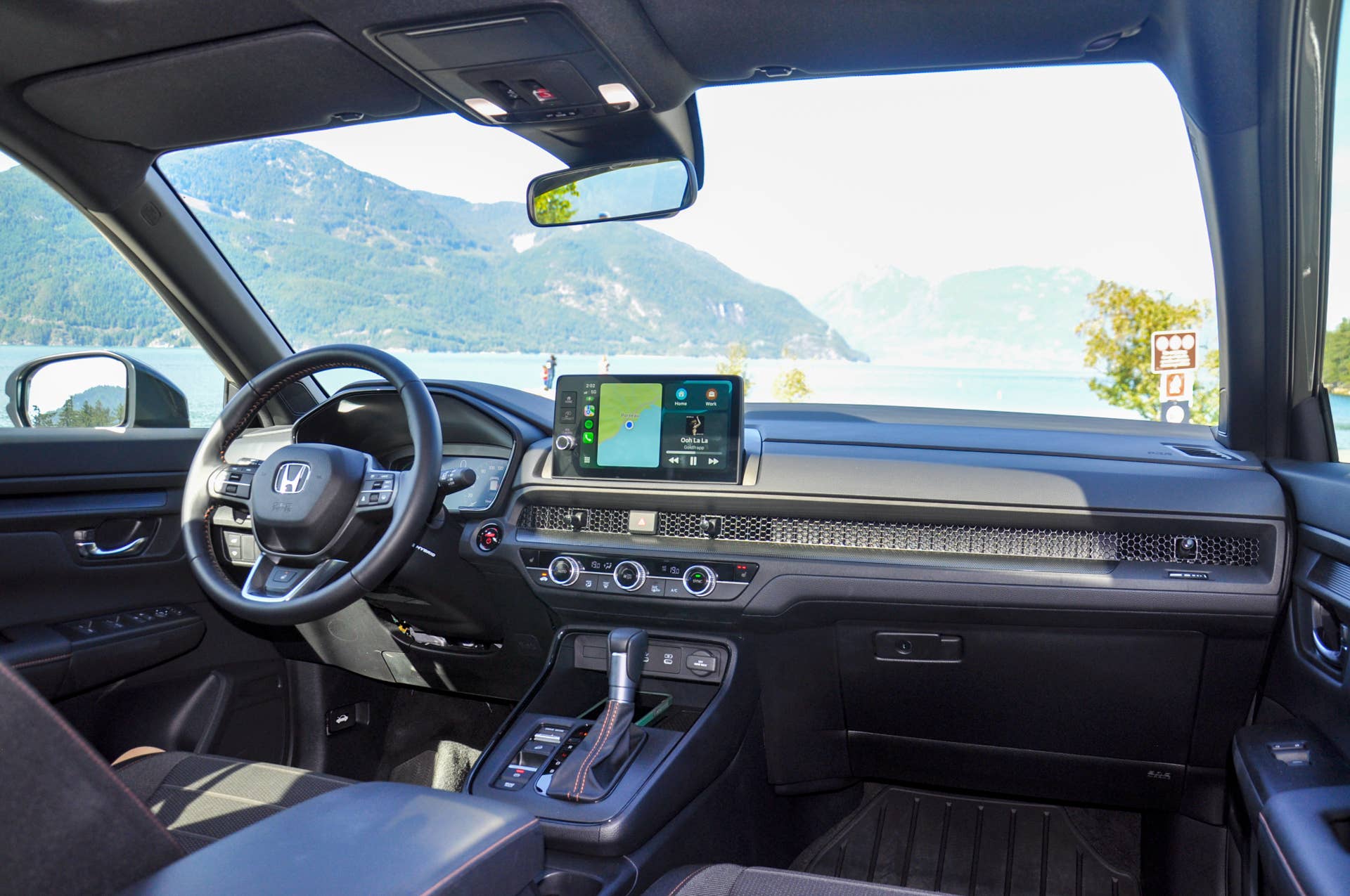
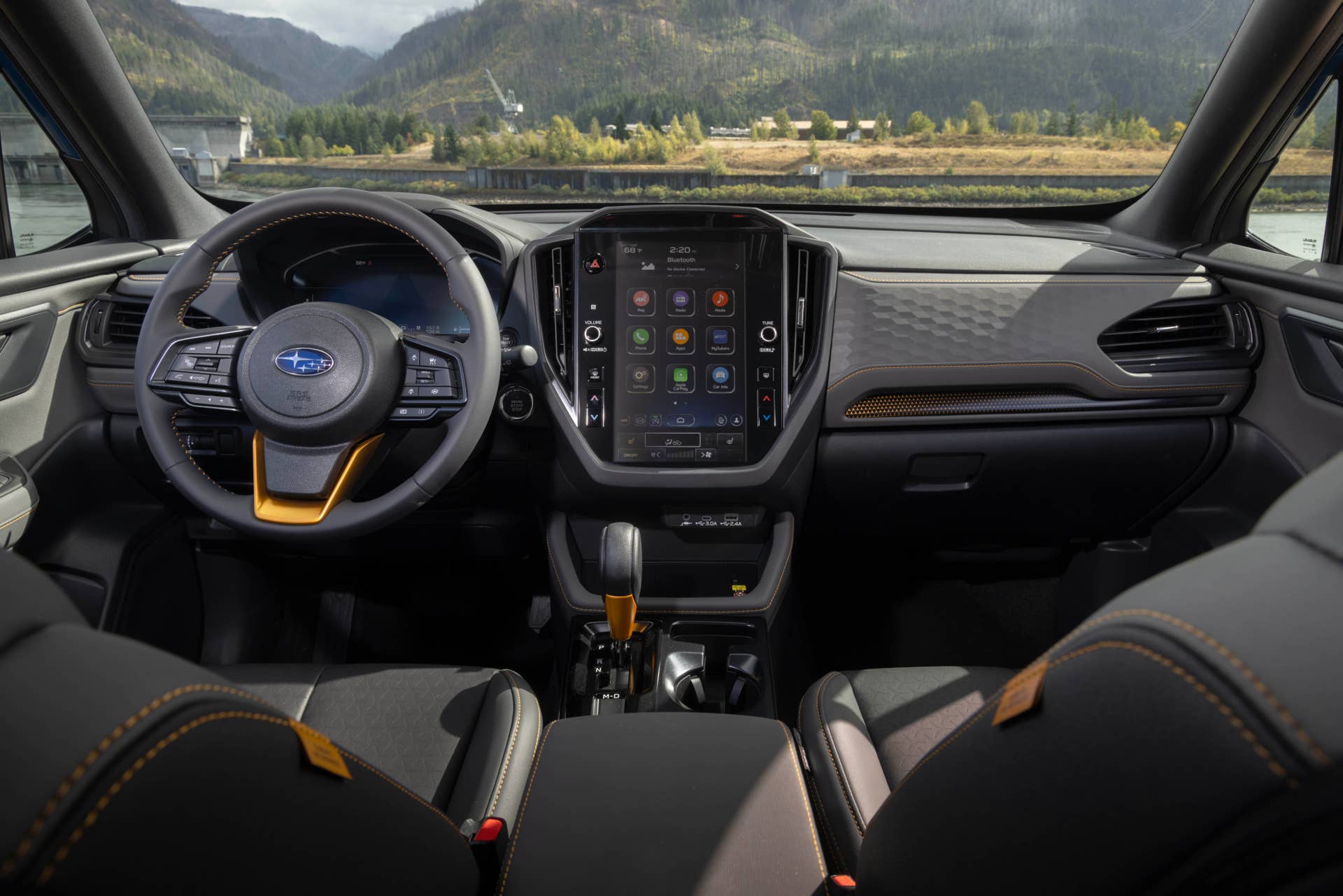
Both the Forester Wilderness and the CR-V TrailSport offer similar yet unique cabin environments, despite their differing space offerings. Both vehicles utilize central display screens for infotainment purposes, offer digital gauge clusters, and feature cabins that are satisfactorily comfortable. From my perspective, the Subaru’s interior felt more playful and was easier on the eyes. Gold accents and stitching strewn about livened the place up a bit. Its Startex upholstery looks and feels far more premium than the Honda’s fabric, and, based on my own experience, I’d be surprised if it weren’t more durable long-term than the Honda’s material, especially if it’ll be subject to sharp, muddy puppy paws. The Forester’s large panoramic moonroof is a plus, as well, as it would be vastly preferable to the Honda’s sunroof if I ever found myself stargazing out in the boonies late at night.
Although the Forester’s interior appears more welcoming, I found the CR-V’s interior to be more comfortable and ergonomic. The Forester Wilderness’s interior is cozy, with no complaints regarding seating position, firmness, or any other factor that could contribute to an uncomfortable experience. The CR-V TrailSport Hybrid’s interior is plainly more comfortable. Of course, the CR-V is inherently smoother to drive thanks to its torquey hybrid system, but its cushiony seating meant neither my behind nor my spine ever got sore even after lengthy driving stints. More importantly, at least in my opinion, is the fact that Honda hasn’t simply relegated all of its interior functions onto one giant tablet screen in the middle of the dashboard. The Forester’s infotainment screen can take some time to load, so you’ll have to wait a few minutes after ignition to set your heated seats and cabin temperature to your preferred level. Although the Honda’s smaller screen might deter younger buyers compared to the Subaru’s television-sized tablet, I was much more pleased by the Honda’s ergonomics than those of the Forester, and I’m not even thirty years old yet!
2026 Subaru Forester Wilderness Cole Attisha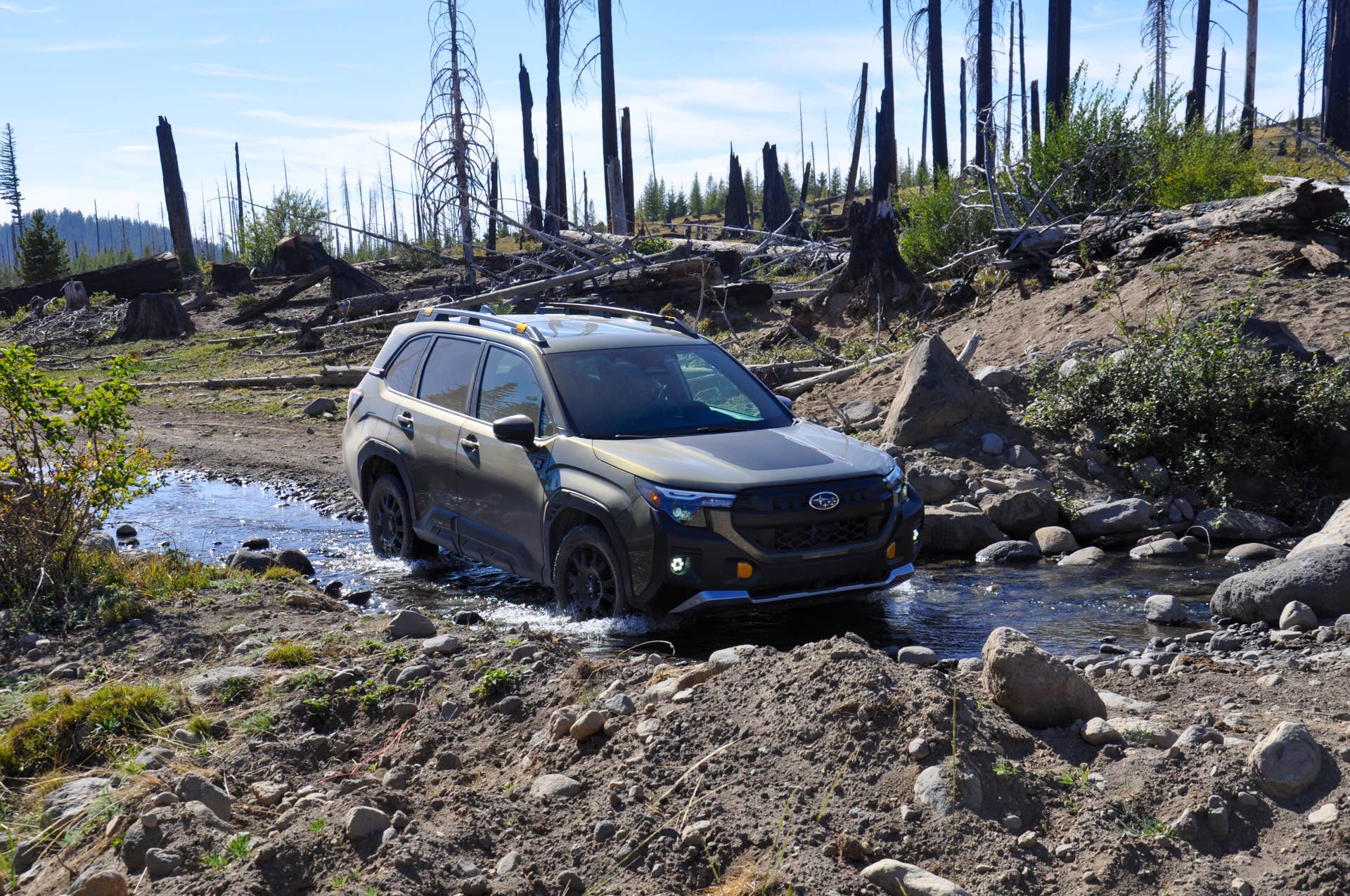
View the 1 images of this gallery on the
original article
The real verdict
When it comes down to pricing, both the 2026 Honda CR-V TrailSport Hybrid and the 2026 Subaru Forester Wilderness land in the mid- to high-30 grand range. Specifically, the Forester Wilderness asks $36,285, with an available $2,000 optional package that adds an 8.0-inch Multimedia System with native navigation, an upgraded, Harman Kardon-developed premium sound system, and a power rear liftgate. On the other hand, the CR-V TrailSport Hybrid asks $38,800 up front, but includes upgraded features such as a Bose premium sound system and a power rear liftgate in that cost. Optional extra packages include the $1,424 “HPD Package,” which adds cosmetic enhancements such as a tailgate spoiler, HPD emblem, lower door trim accent, and fender flares, as well as the $345 “Protection Package,” which essentially bundles a few popular accessories such as splash guards, a cargo tray, and black wheel locks.
So, then, since both crossovers are priced at a relatively similar price point for the equivalent features, give or take a few hundred bucks, a winner can’t necessarily be settled based on cost alone. The reality is that there isn’t really one clear winner between the two of these crossovers. Both the Honda CR-V TrailSport Hybrid and the Subaru Forester Wilderness demonstrate an excellent understanding of each automaker’s respective clientele, and both offer equipment and packaging that would be mind-blowing to find at this price point only a few short years ago. The truth of the matter is that it really does just come down to whether you plan on spending more time on or off the road, and, I guess, whether you prefer the look of one over the other. There’s no denying the Forester Wilderness does the whole adventure-ready cosplay thing to a much more effective degree than that of the CR-V TrailSport, but at the same time, if you’re a bit more grounded and are willing to admit to yourself that, perhaps you don’t need things like a revised final drive or updated differentials in your comfortable compact crossover daily driver. Possibly, the CR-V TrailSport will resonate with you more through its understated subtleties.
Cole Attisha
Back to my original question, then: which one would I have? Well, honestly, the answer I’d give you is simply that I wouldn’t have either. I’m not a fan of multitools, but rather tools that are dedicated to a single task. If I want to scale a mountain or hit the trails, I’ll take my body-on-frame, V8-powered 1995 Land Rover and not worry about a few bumps and bruises. Surely, if I ever came across any obstacles drastic enough to do some serious harm, my old Disco could handle far more than any unibody crossover pretending to be an off-roader could overcome. That said, these crossovers aren’t meant for buttheaded people like me who will gladly pour money into a 30-year-old heap just because it’s boxy and looks tough. These crossovers are do-it-all daily drivers. Either of these two crossovers could feasibly be your family’s only vehicle, unlike my Land Rover, which achieves 10 mpg on a good day, only to make the same amount of power as the relatively fuel-sipping Forester Wilderness, and constantly requires repairs.
Ultimately, I believe the Honda CR-V TrailSport Hybrid is a better comparison to the Subaru Forester Hybrid than to the Forester Wilderness. If you’re serious about taking it off-road, the Forester Wilderness is the way to go over the CR-V TrailSport; it’s no contest. If most of your driving will be done on the road, then the CR-V TrailSport Hybrid might be the superior option. However, it’d still be worth comparing it with the Forester Hybrid, which would still offer superior ground clearance, albeit with more competitive power and fuel economy when compared to the Forester Wilderness. Plus, no one is stopping you from throwing a set of all-terrain tires on one of those, either, if you insist on adding some extra ruggedness.