

Made to get dirty
I was always a fan of the Honda Passport. To me, it felt like you could get all the goodies that the Pilot offers (all-wheel drive, passenger space, and a modest but reliable V6) without committing to three rows. To put it simply, if you wanted a smaller, more athletic version of the Pilot, you got the Passport. For 2026, the Passport was redesigned to better reflect that. Honda’s design concept for the Passport is “Born Wild,” to look, as Honda puts it, “brawny and broad-shouldered.” The front end is more aggressive, the grille is bold, the ground clearance is increased, and it comes in new, fun colors that would be especially handsome with a layer of mud.
Kristen Brown
There are seven trims of the Passport, and four of them bear the TrailSport name: the standard TrailSport, which starts at $48,450, the TrailSport Blackout ($49,650), TrailSport Elite ($52,450), and the TrailSport Elite Blackout ($53,650). It’s the company’s most expensive model. The TrailSport Elite that I tested had a sticker price of $54,355 after add-ons and taxes. With all that, how did it perform on Central Oregon’s famed Forest Service Road 370? It wasn’t what I was expecting at all. Here’s how it went.
First, FSR 370 is not your run-of-the-mill trail
In Central Oregon, one of the most scenic forest service roads is also one of the toughest. It starts in the Mt. Bachelor National Forest on the Cascade Lakes Highway, just past the foothills of Mt. Bachelor, and if your car is tough enough, you can stop at Todd Lake or go all the way up to the Broken Top wilderness.
The Forest Service’s website reads, “Forest Service Road 370 is a very rough road with sections through which low-clearance vehicles cannot travel. The Forest Service does not maintain FSR 370 for passenger cars and recommends high-clearance vehicles. Several washouts occurred on the road during winter and spring, making conditions extremely rough.”
Kristen Brown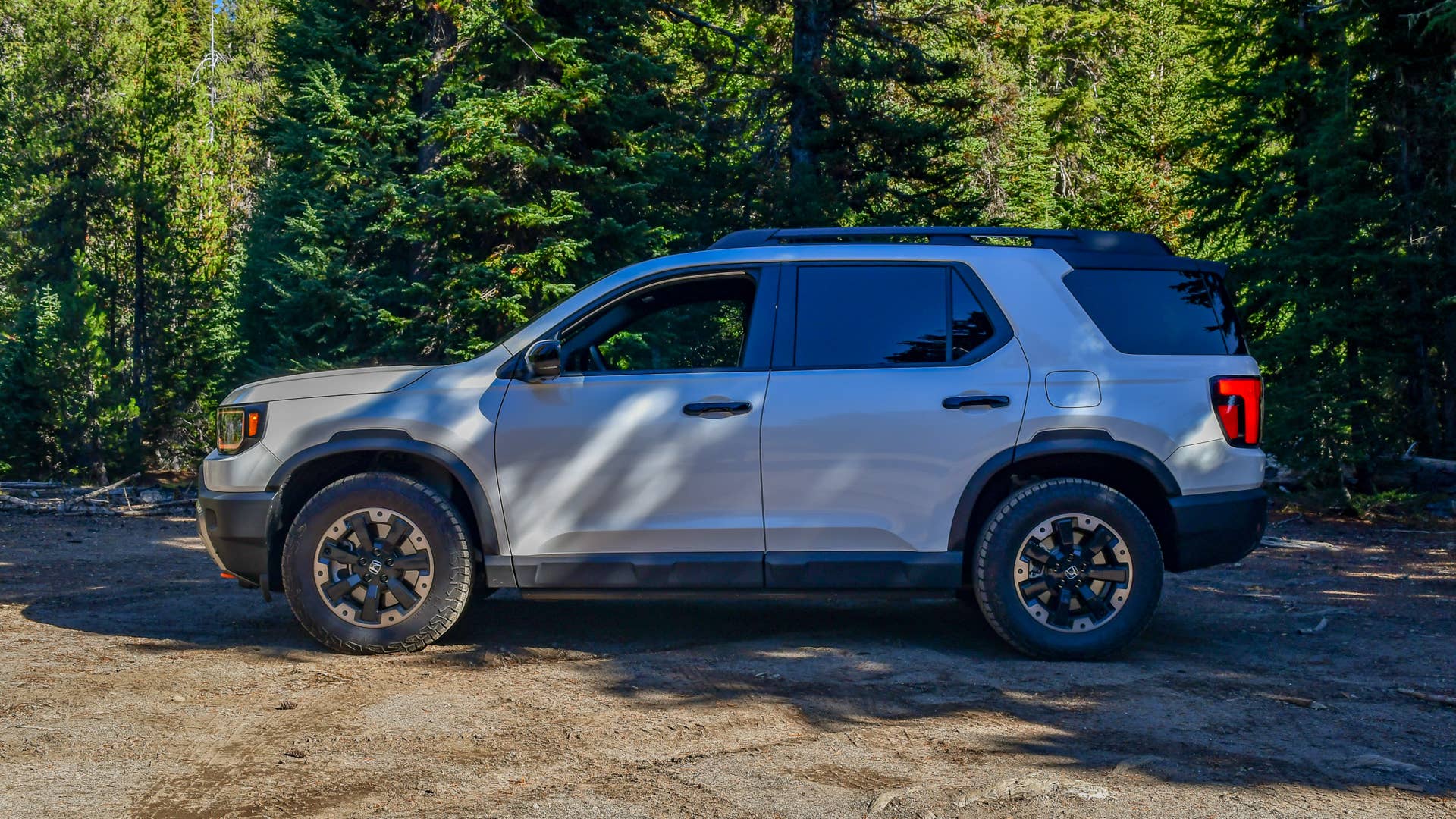
The TrailSport Elite has 8.3 inches of ground clearance, “off-road tuned” suspension, i-VTM4 all-wheel drive with torque-vectoring, and meaty General Grabber all-terrain tires. It also comes with a handy Trail drive mode that changes the throttle response, traction control system, and transmission to keep the speeds low and torque high. It also automatically toggles the off-road cameras on the front, rear, and side mirrors. Hill descent control came in handy, too, as it allowed me to focus on steering when the road became really, really rough.
The trail went from tame to nerve-racking in under a mile
When we first found the opening of the trail, we were greeted by a flat, gravel road. For a quarter of a mile, we started questioning the validity of our neighbors telling us how rough and demanding FSR 370 is. We turned around a bend and saw an elderly woman in a Subaru Forester bouncing and teetering as she drove, and noticed all the washed-out sections of the trail. Everywhere we looked, there were deep ruts and dips. There was nowhere to hide from them.
Kristen Brown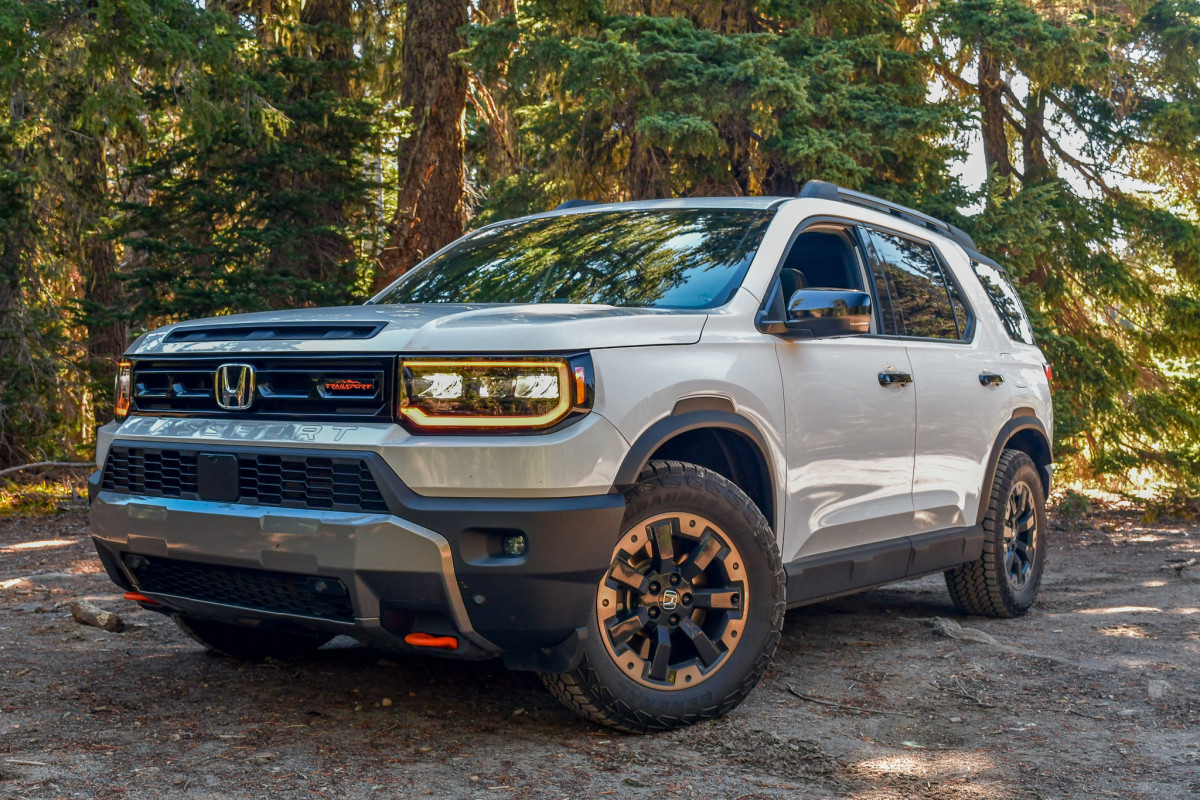
My toddlers in the backseat loved how bouncy the ride suddenly was. At that point, I was very grateful for the larger tires and suspension, which were quick to absorb the bumps from the dips hidden in the dappled sunlight. Even after I slowed down to around 5 mph, it was incredibly bouncy. The TrailSport Elite handled it, but my husband and I agreed that the suspension could use a bit more travel to better absorb the bumps and dips, even at very low speeds.
Otherwise, the approach and departure angles were just right, and we never once bottomed out in the front or rear. Even if we had, the TrailSport Elite has steel skid plates covering the engine, transmission, and gas tank. That helped foster confidence in both my husband and me, who became more nervous as we were passed by lifted Jeeps, an old Land Cruiser, and a built 4Runner, who raised their eyebrows and snarkily wished us luck.
The trail camera system came in clutch
Once we passed Todd Lake, the trail became thin, rocky, muddy, and uneven. It rained a good amount in the mountains the day before we arrived, and the trail made that very apparent, with loads of debris and sections that were freshly washed out. Once I changed the drive mode to Trail Mode, the infotainment screen changed to show me a live feed from the Passport’s cameras placed in the grille, on the side mirrors, and on the tailgate.
Kristen Brown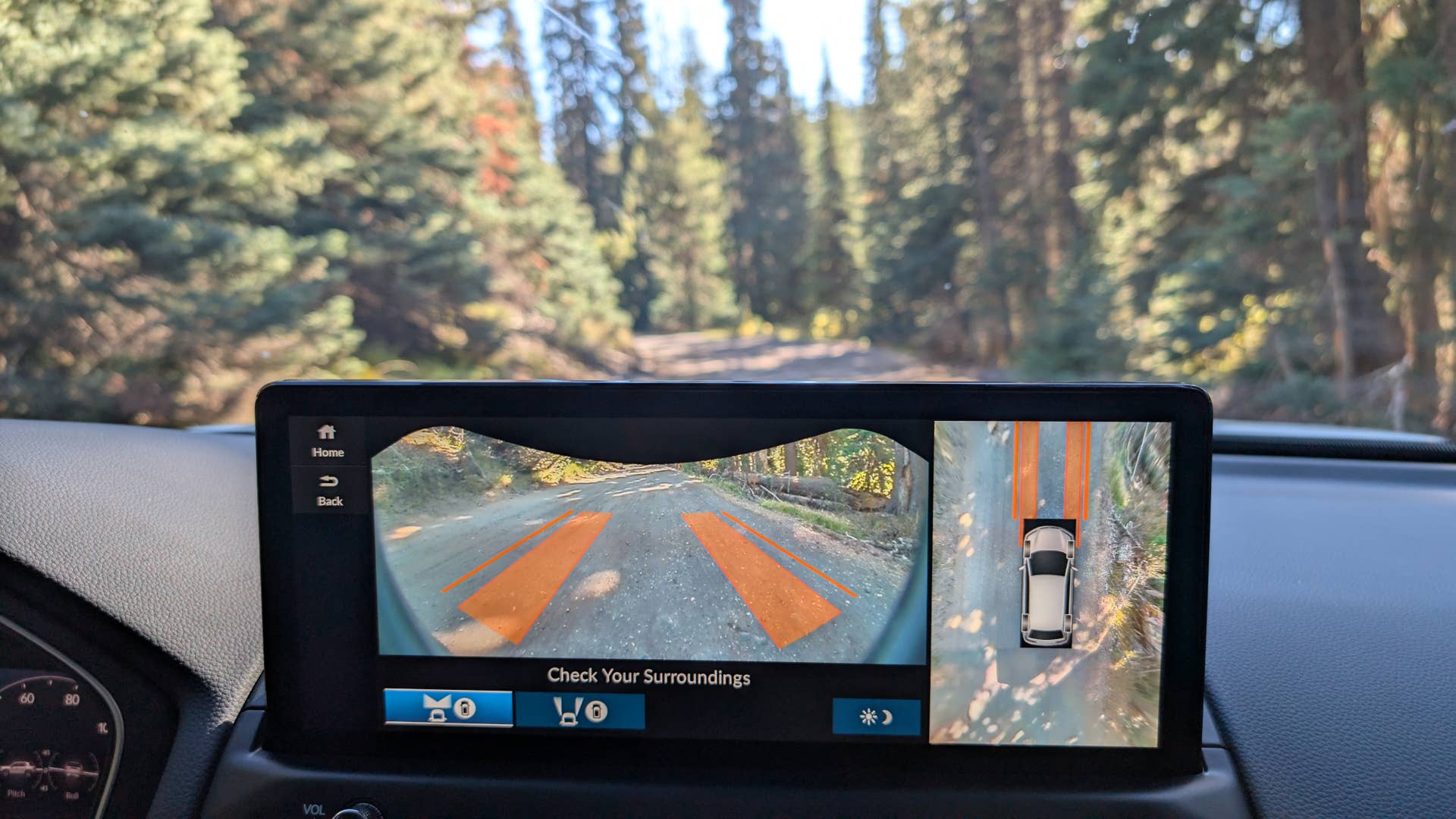
Given the trail’s condition and the fairly limited visibility over the long hood, the camera system’s tire placement prediction markers were a welcome advancement. My husband would point to the camera to warn me about rocks that he worried may damage the underside (he didn’t know about the skid plates then), but it was nice to be able to know where to steer in order to avoid obstacles the cameras helped spot. The driver’s information screen showed other information, too, like a compass, torque distribution display for all four wheels, elevation, pitch & roll, and tire pressure.
Kristen Brown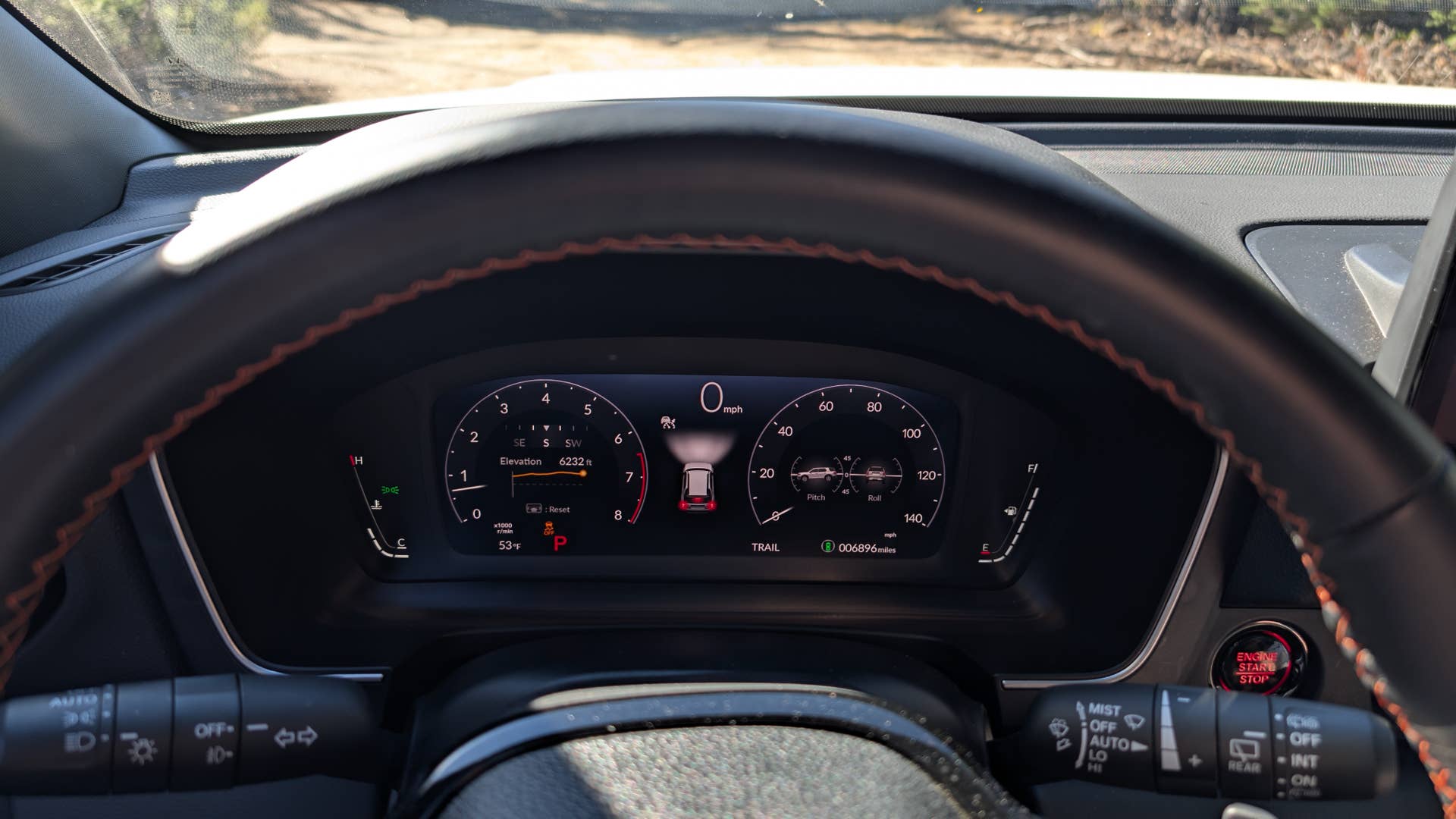
It was especially helpful when I had to pull over to the side for other drivers, as I could look at the cameras every once in a while, and even change the angle to focus on a particular camera.
The Passport TrailSport is very wide–almost too wide
One of the first things that my husband and I noticed when the Passport was delivered was how wide the darn thing is. We have a standard two-car garage with a driveway, and it took up so much space width-wise that my Forester barely fit in the driveway. The width is apparent from the driver’s side, too, because while off-road, it was difficult for me to see the corner of the hood on the passenger’s side. The width became a disadvantage on that particular trail, too, because it became impossible to avoid pinstriping it, especially when I had to pull over into the brush to make room for other cars.
Kristen Brown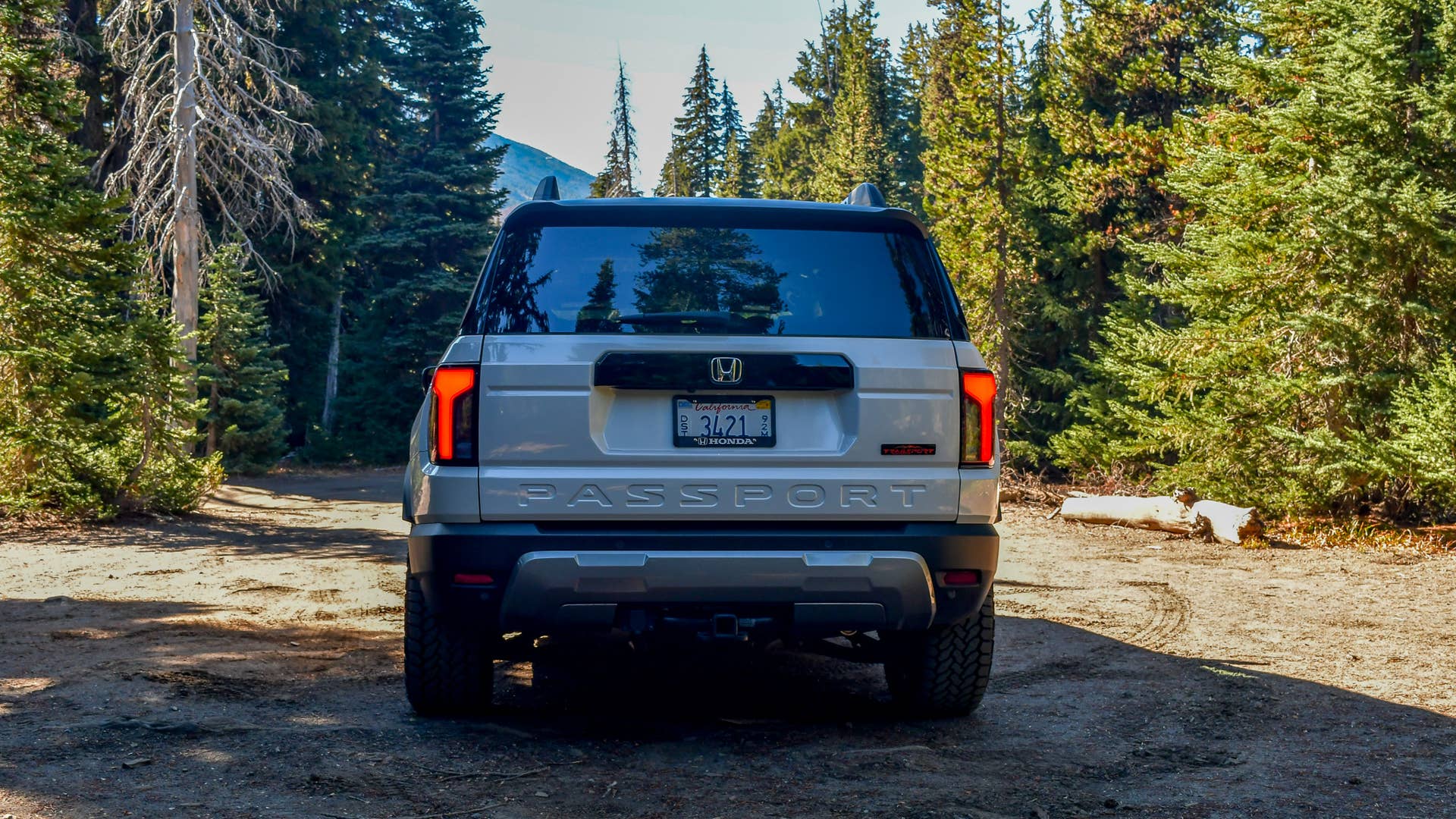
If it were just a tad skinnier, it wouldn’t be a big deal, and on some trails, this can be a real pain in the tuchus. It’s a pain for other cars, too, since there’s less space for them to pass. It’s not a reason not to buy the Passport, though–just something to keep in mind.
When it’s not off-road, though, the width was nice, especially with toddlers. There was enough space to keep them from harassing each other while driving, which was wonderful. A wider car means a wider sunroof, too, which they loved, especially off-road.
The all-terrain tires were very much appreciated
Since it rained nearly all day the day before, the trail was muddy, but the General Grabber AT tires were ready and willing to handle it. We’d had General Grabber all-terrain tires on our Subarus before and loved them–so we were very familiar with their off-road capabilities. Even though it was rocky, muddy, and even sloppy in some sections, the tires never slipped or lost traction.
Kristen Brown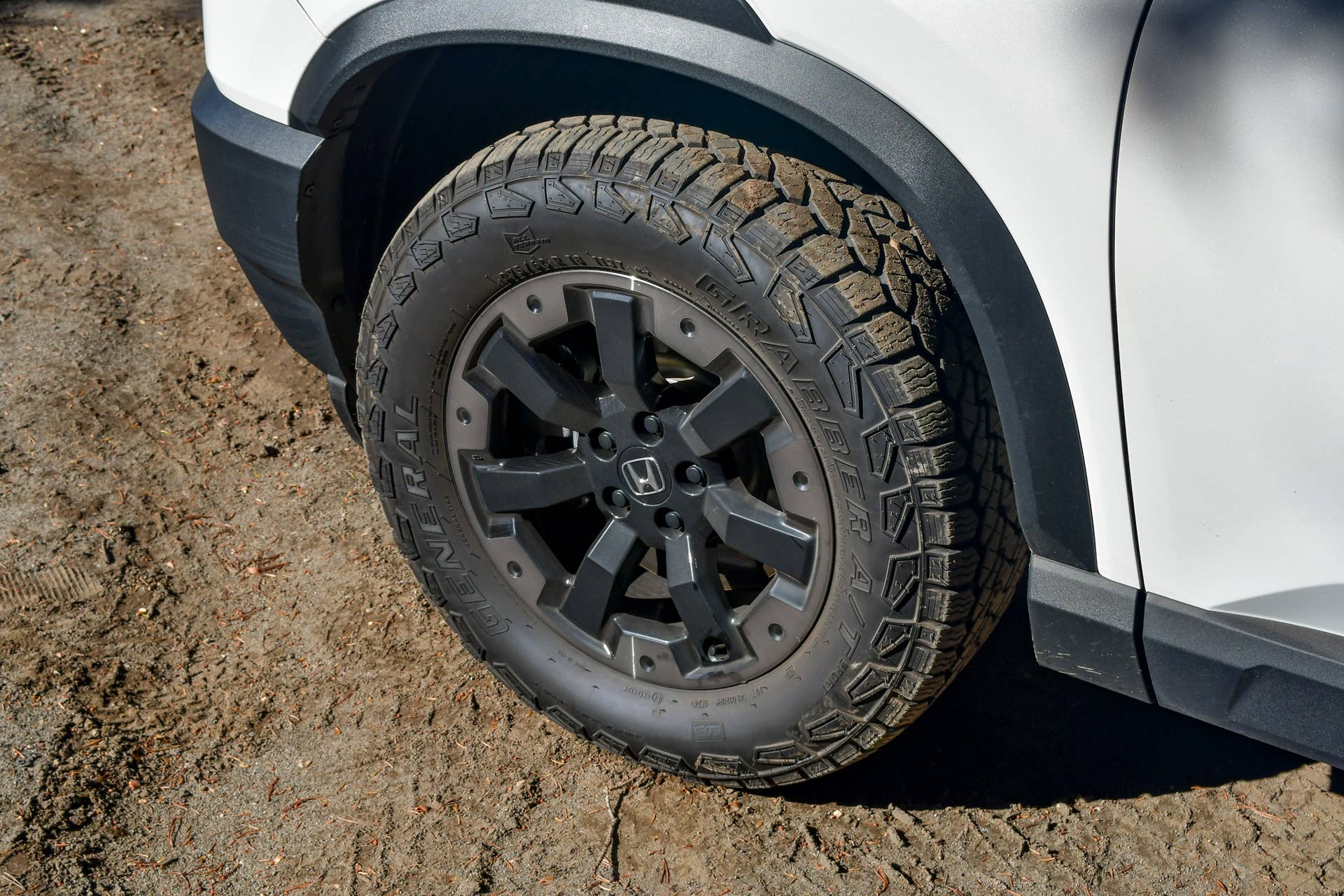
At one point, we had to descend a steep hill, which presented a good opportunity to test out the hill descent function. Putting it in hill descent was easy, and the tires worked with the all-wheel drive, ABS, and traction control system to get us down the hill with ease. The mud was slick and sticky, but the system was responsive enough to brake individual wheels when slipping occurred, and the tires were the real heroes. Shout out to General Grabber.
Final thoughts: Overall, I was impressed with its capabilities, but I won’t be replacing my Jeep with it
It’s obvious that there was a lot of attention to detail when Honda was developing the Passport, particularly the four TrailSport trims. It can definitely handle roads tougher than the one I took it on, but I don’t know that the Passport would be my dedicated off-roader, especially for the price. It would be better as an all-around SUV that can handle the rough trails if needed. As a highway cruiser, it was very comfortable, family-friendly with lots of features, and with a tow rating of 5,000 lbs (thanks to that 3.5-liter V6), it’s more capable than most to get you to that remote campsite with a trailer. I adored the Passport, and it’s at the very top of the list of cars I’d replace my Subaru with.