

Honda calls this Civic the “Sport Touring Hybrid”
I’ll admit that my own preconceptions of the Honda Civic are a mixed bag of likes and dislikes. I like that Honda will still sell you a Civic with a good ol’ fashioned manual gearbox, high-revving turbocharged four-cylinder engines, and the impressive lightweight handling dynamics that the model has championed since the 1980s at an affordable price point. I dislike that modern Civics are, plainly, a bit boring.
So, when I first picked up the keys for my 2026 Honda Civic Sport Touring Hybrid test car, I was eager to gain a sense of just how well it lived up to its self-proclaimed sportiness (especially considering that its powertrain will be found in the new Prelude), and whether it also instilled a similarly distinctive sense of “touringness,” combining the lively road manners one expects from a Honda Civic with the comfortable and luxurious appointments that one expects from any top-trim modern vehicle.
Does the 2026 Honda Civic Sport Touring Hybrid tick all the boxes? Sport, touring, and hybrid? That is the question. Obviously, thanks to its 2.0-liter four-cylinder hybrid powertrain, which produces a combined 200 horsepower and 232 lb-ft of torque, this Civic meets the necessary criteria to earn its “hybrid” badging. However, for it to justify its other two traits, the 2026 Civic Sport Touring Hybrid will need to hit all the hot buttons of an intangible, entirely subjective experience that proves itself worthy of being marketed as an affordable, everyday sedan that is both sporty and comfortably capable. To get a feel for how well the Civic achieves what Honda has set out for it to achieve, I drove one daily for a week. I took it on a gorgeous road trip up the West Coast of Vancouver Island, British Columbia, testing its abilities in city traffic, on lengthy highway stretches, and on the twisty coastal curves that all driving enthusiasts long for. This is how it all went.
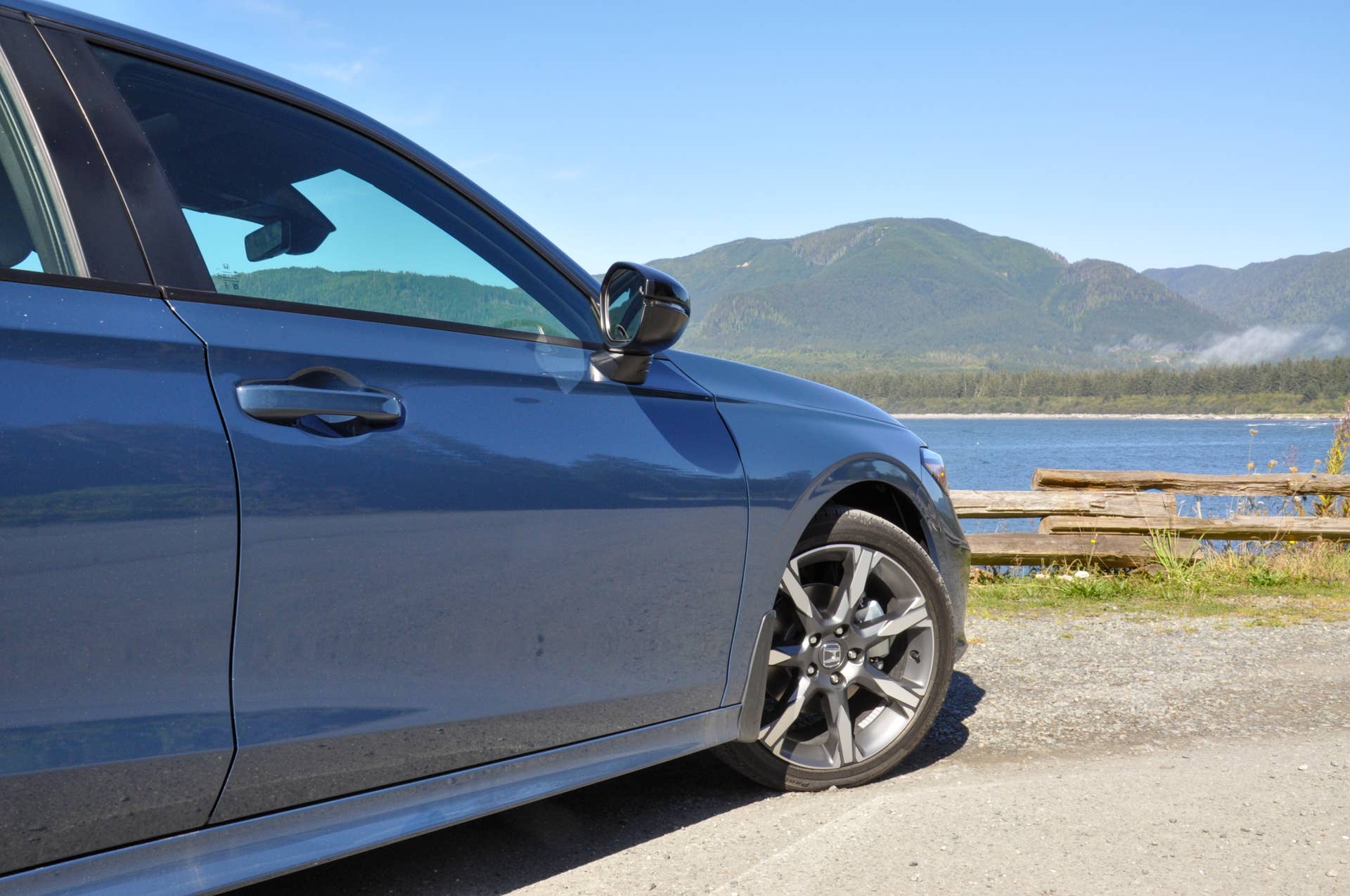
My first impressions gave me high hopes. It’s very handsome!
In all honesty, I hated the previous tenth-generation Civic’s appearance from every angle. To my critical eyes, it was too edgy, tried too hard to look aggressive, sported a hideous chrome unibrow on its forward fascia, and, frankly, was just plain ugly. I especially disliked the Civic Type R’s appearance, with its boy-racer spoiler and overly squiggly body lines, because beneath its abrasive surface, it was a surprisingly dynamic and engaging vehicle to drive. In 2021, the Honda Civic underwent a significant refresh for its eleventh generation, and, in my own humble opinion, Honda corrected its course aptly in terms of the Civic’s styling. Gone were its offensive edges, and in came a much more understated sense of elegance and restrained handsomeness. The new Civic looked both fresher and more traditional than its previous generation. For its 2026 model year, even with relatively few updates to its exterior styling since 2021, it still retains most of its freshness.
In Sport Touring Hybrid guise, the 2026 Civic’s style is enhanced by 18-inch alloy wheels with “Matte Shark Gray” inserts, full LED headlights, gloss-black power side mirrors, matte-black upper window trim, and black-painted rear badging. These minor details pack a significant visual punch and go a long way toward enhancing the trim package’s more premium appeal, even if the black-painted rear lettering clashes with the chrome Honda emblems. My test car was also painted in Blue Lagoon Pearl, which costs an additional $455, and sparkled fantastically in the clear blue skies that shone above the brilliantly blue Pacific Coast.
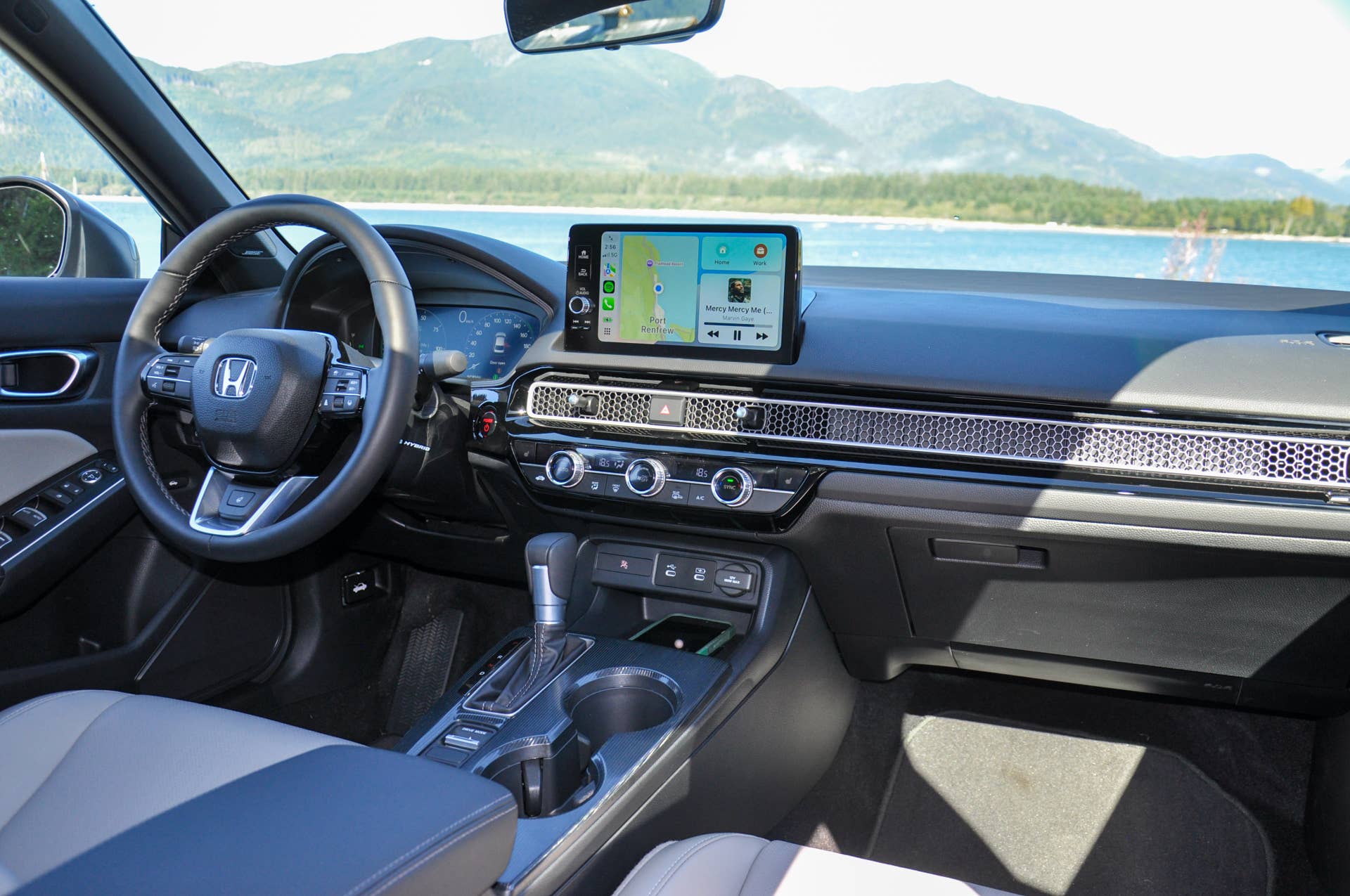
The interior looks and feels more premium, but it’s still unequivocally a Honda Civic
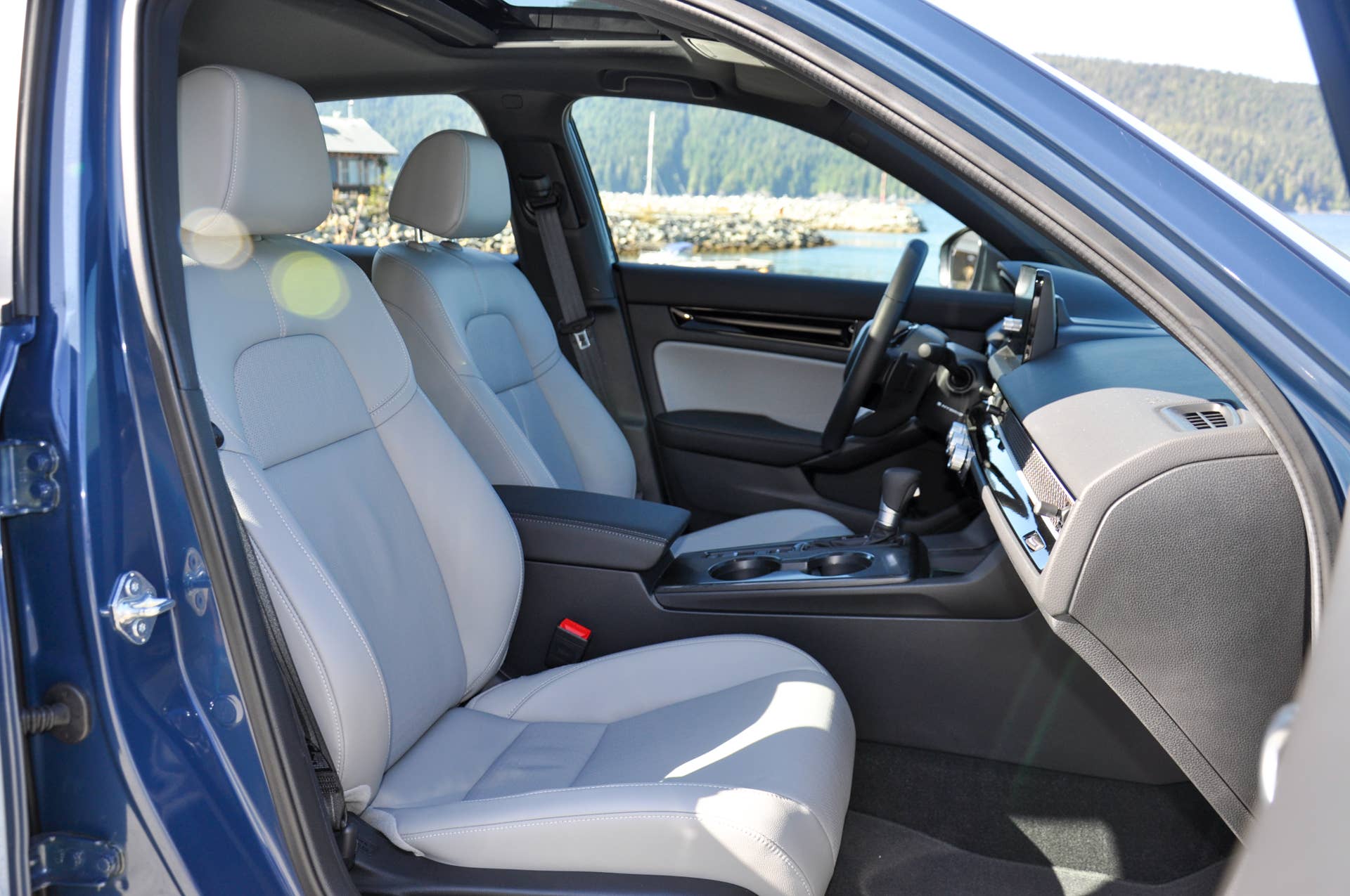
I’m not going to sit here and tell you that the Honda Civic’s interior feels lush, premium, and Mercedes-like, because the fact is, it doesn’t. At least, not entirely. Equipped with the Sport Touring package, the Civic Hybrid’s cabin benefits from leather-trimmed seating, which, when upholstered in gray, provides a visually appealing contrast to the body’s Blue Lagoon Pearl paint job. Although gray leather isn’t exactly everyone’s cup of tea, I was a massive fan of how it looked, especially as a lover of 2000s-era cars, which often featured grey leather interiors that I believe are beginning to age quite gracefully.
The Sport Touring package also provides a “one-touch” power sunroof, heated front seats, a twelve-speaker Bose sound system (which is ample and offers crisp fidelity, but isn’t quite as astounding as Ford’s available B&O systems), dual-zone automatic climate control, and a leather-wrapped steering wheel. Overall, the interior doesn’t exactly make the Civic feel like a “premium car.” Still, it’s far easier on the eyes and more satisfying to the touch than what most people might expect from a vehicle at its price point.
2026 Honda Civic Hybrid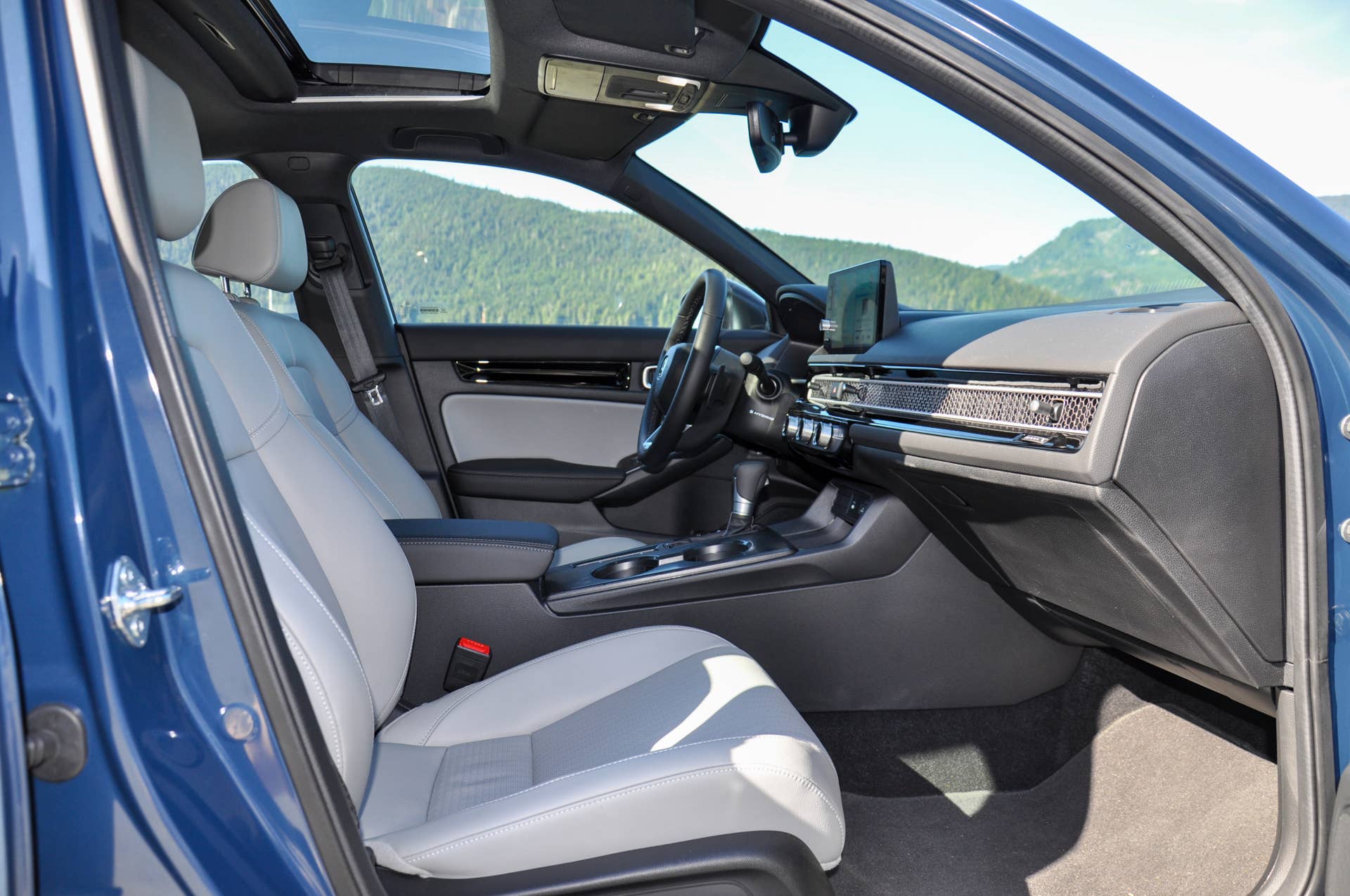
View the 3 images of this gallery on the
original article
Ergonomically speaking and in terms of comfort, I had very few complaints with the Civic Sport Touring’s interior. The seats are comfortable and provide satisfactory bolstering. I appreciated its fashionably integrated physical climate and basic stereo controls, and its nipple-like air vent positioning knobs take the guesswork out of figuring out exactly which direction its air conditioning blows. The Civic’s digital gauge cluster is relatively uncomplicated to use and read, and its live hybrid battery system diagrams turn fuel-efficient driving into an OCD-fueled game that often results in far better fuel economy than one (or, at least, I) would likely otherwise achieve. Additionally, its 14.8 cubic feet of cargo space impressed me, as it easily fit my golf bag laterally with plenty of space to spare.
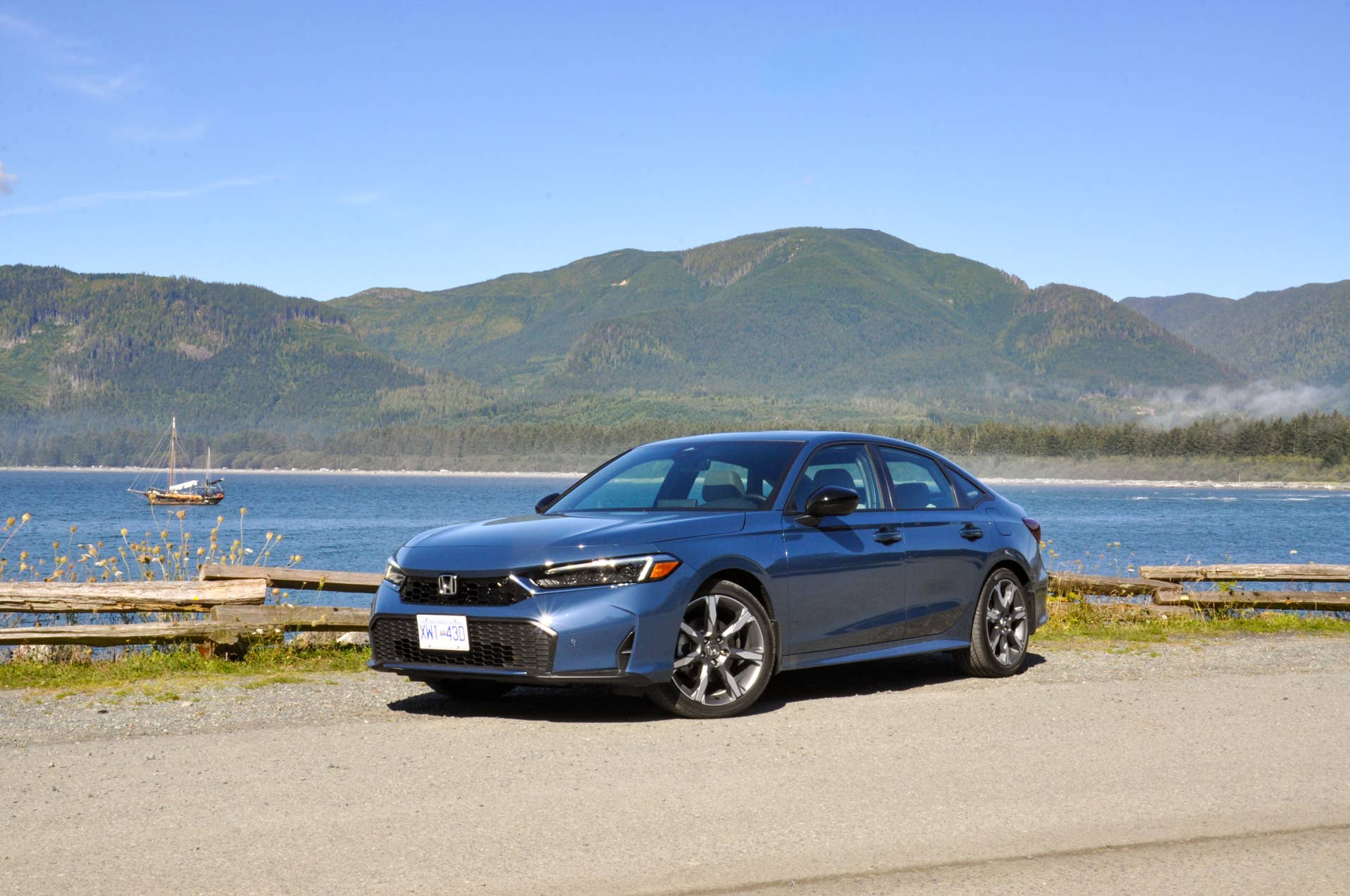
Driving the Civic Hybrid is easy livin’
On the road, the Civic Hybrid impressed me both during everyday city driving and on the highway, as well as on more spirited journeys with tight turns and sudden elevation changes. The Civic’s suspension absorbs harsh bumps and road imperfections with ease, gliding along poorly maintained roads like a perfectly smooth stone skipping along a wavy shoreline. However, it still retains a level of firmness that clearly communicates those road imperfections to the driver and results in tight cornering abilities befitting even the more performance-focused Civic models.
Although this is undoubtedly not a Civic Si, opting for the Civic Hybrid doesn’t mean sacrificing the ability to have fun behind the wheel, even if it does mean giving up the Si’s excellent manual gearbox. Thanks to its immediately responsive 232 lb-ft of low-end torque and its 200 horsepower, the Civic Hybrid actually achieves a 6.1-second 0-60 mph sprint compared to the Si’s slightly slower 6.6-second sprint time.
Around the city and on the highway, the Civic Hybrid makes being stuck in traffic far less of a chore than it would be in the Si. Even as someone who loves to drive cars with manual gearboxes, I’d take the Civic Hybrid over the Si any day if it meant I’d be sitting in stop-and-go traffic the whole time. It’s quiet, handles driver inputs smoothly, and lacks the sort of jerkiness that can be found in some of Honda’s rival vehicles. It’s efficient, too, with EPA-estimated fuel economy of 50 MPG in the city, 47 MPG on the highway, and 49 MPG combined. Throughout the duration of my testing, I achieved an average of approximately 43.5 MPG. Its electronic continuously variable transmission is set up in such a way that helps the Civic Hybrid drive efficiently, while also making it incredibly easy to drive at both low and high speeds, further enhanced by its adjustable drive modes. In essence, that’s the best way I can describe how this vehicle drives: it makes every drive as easy as possible, whether you’re stuck in traffic, commuting on highways, or navigating tight hairpins on your favorite B-road. It’s business in the front, party in the back, and admirably continues the Civic’s tradition of providing a well-balanced driving experience.
Final thoughts
With a starting MSRP of $29,295 for the Sport Hybrid, or $32,295 for the Sport Touring Hybrid ($32,750 as tested), Honda does ask a pretty penny when compared to direct rivals such as the 2026 Toyota Corolla Hybrid, which ranges from $24,575-$28,940, and the 2025 Hyundai Elantra Hybrid, which ranges from $25,450-$29,800. Although the Civic Hybrid exclusively offers more highly-equipped trim packages, there’s no denying that it is notably more expensive than its most immediate competitors. That being said, those who insist on an enjoyable driving experience will certainly appreciate where their money goes with the Civic Hybrid, as its 200 combined horsepower figure vastly outguns the Corolla Hybrid’s measly 138 horsepower and the Elantra Hybrid’s similarly low 139 horsepower.
The Civic Hybrid is undoubtedly the driver’s choice in its respective segment. It impressively combines the “touring” elements of comfort-focused Civic models with a surprising level of “sport” capability seen in performance-focused Civic models such as the Si and even the Type R. Thus, the 2026 Honda Civic Sport Touring Hybrid does ample justice to its lengthy name and is sufficiently multifaceted in such a way that makes it an outstanding daily driver and also a surprisingly capable weekend thrill seeker. So, would the Civic Hybrid be your pick of the bunch? Let me know what you think in the comments section!