

They’re both trucks, in most ways
Before I’m roasted on a spit, yes, I know the Honda Ridgeline isn’t classified as a “real” truck. It’s not a body-on-frame, it doesn’t have a crazy high towing rating, and the payload rating isn’t very truck-like. It’s not something you’d see at a construction site or a working zone, towing and hauling goods from one site to another. However, it does have many truck-like features that make it comparable to other trucks of its size, such as the Ford Ranger.
Kristen Brown
View the 2 images of this gallery on the
original article
My family and I loved the Ridgeline’s comfort, features, AWD capabilities, and family-friendliness. It did feel like a Honda Pilot with a truck bed thrown on, but that’s why we loved it–it’s a truck without the things we don’t like about trucks, while the Ford Ranger is more of a truck with the driving feel of a car. With that, let’s get into why one might be better than the other.
The Ford Ranger has more engine options and truck-like features
You’re probably not surprised to read that Ford makes a tougher truck, taking a lot of the F-Series DNA and putting it directly into the Ranger. Most notably, the Ranger has a body-on-frame construction, while the Honda is a unibody, giving it more of a car or SUV-like driving style and ride. The Ranger’s ride, while definitely bumpier, was still very comfortable. Under the hood, the Ranger can come with either a 2.3-liter EcoBoost four-cylinder or a 315-horsepower 2.7-liter EcoBoost V6, or even a 3.0-liter EcoBoost V6 (in the Raptor version, anyway). In the Honda, all you get is a 280-horsepower 3.5-liter V6. But don’t be fooled–it’s not the same engine as the Pilot. The 3.5-liter in the Pilot is a double overhead cam, while the Ridgeline’s is a single overhead cam.
Kristen Brown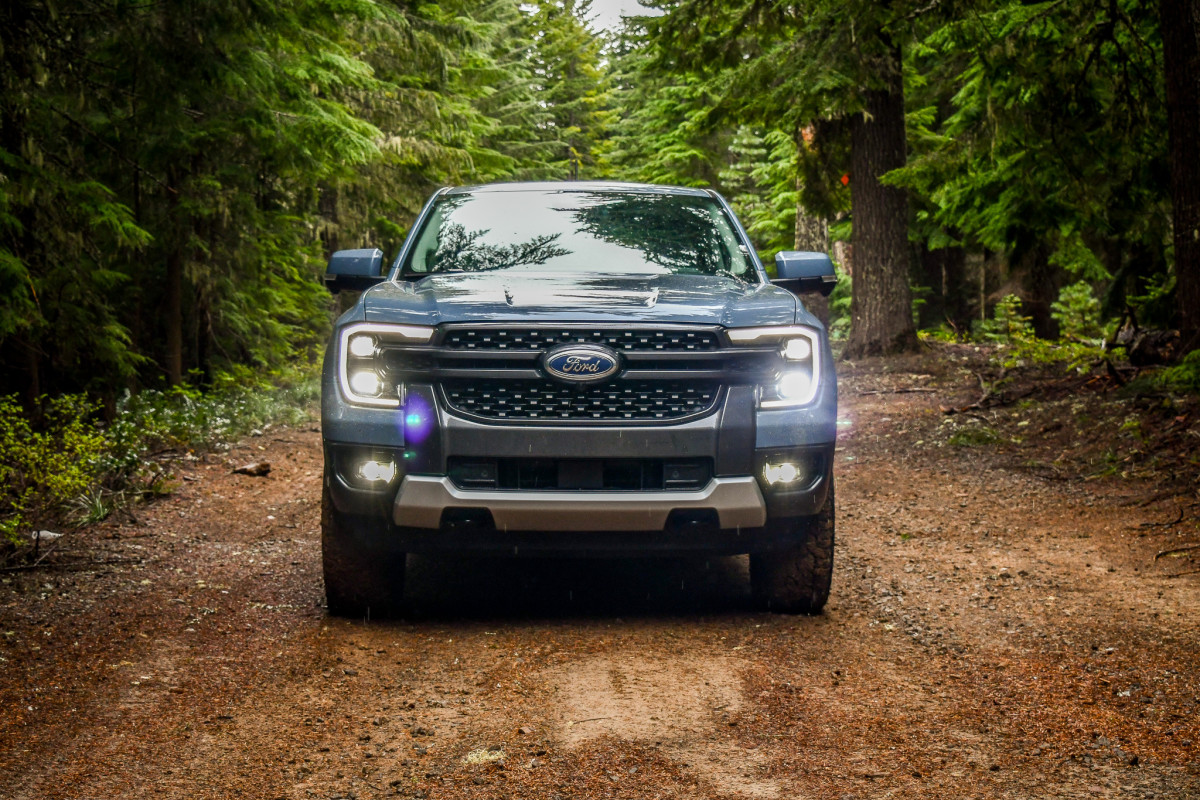
With a more powerful engine, the Ford has a higher towing rating of 7,500 pounds compared to the Honda’s 5,000 pounds. It also has a higher payload of 1,805 pounds versus the Ridgeline’s 1,583 pounds. They both offer four trims: the XL, XLT, and the Raptor for the Ford, while the Ridgeline has the Sport, RTL, TrailSport, and Black Edition. Instead of a 10-speed automatic, the Ford has an eight-speed automatic. Both are torquey, but it makes the Honda slightly more efficient (despite the Ford being an EcoBoost).
When it comes to daily drivability, the Honda takes the cake
In true Honda fashion, there were more clever cubby holes and storage areas than we knew what to do with, but one of my favorites was the in-bed storage compartment. Overall, it’s 7.3 cubic feet, measuring 43 inches long, 15.5 inches wide at the bottom, and 15.25 inches deep–making it ideal for carrying groceries when the rear seats were full, which, during my week-long affair with it, was 100% of the time. A drain plug at the lowest part of the bin means that if my gallon of milk spilled, I could remove it, drain it out, and then spray it out to clean it. I noticed it was lined with weatherstripping — and fairly heavy-duty stripping at that — and the thick plastic lining made for easy cleaning.
Honda’s careful to advertise it can be used as a cooler because of the plug at the bottom, and I could see it coming in handy while camping to keep tools safe and out of the passenger’s footwell. You also wouldn’t have to worry about thieves because that compartment can be locked. There are also storage compartments along the side of the bed, plenty in the cabin, under the rear seats, and in the front. Every time I thought, “Oh, this would be the perfect place for a storage bin,” there was one. It reminded me a lot of the Honda Fit.
Kristen Brown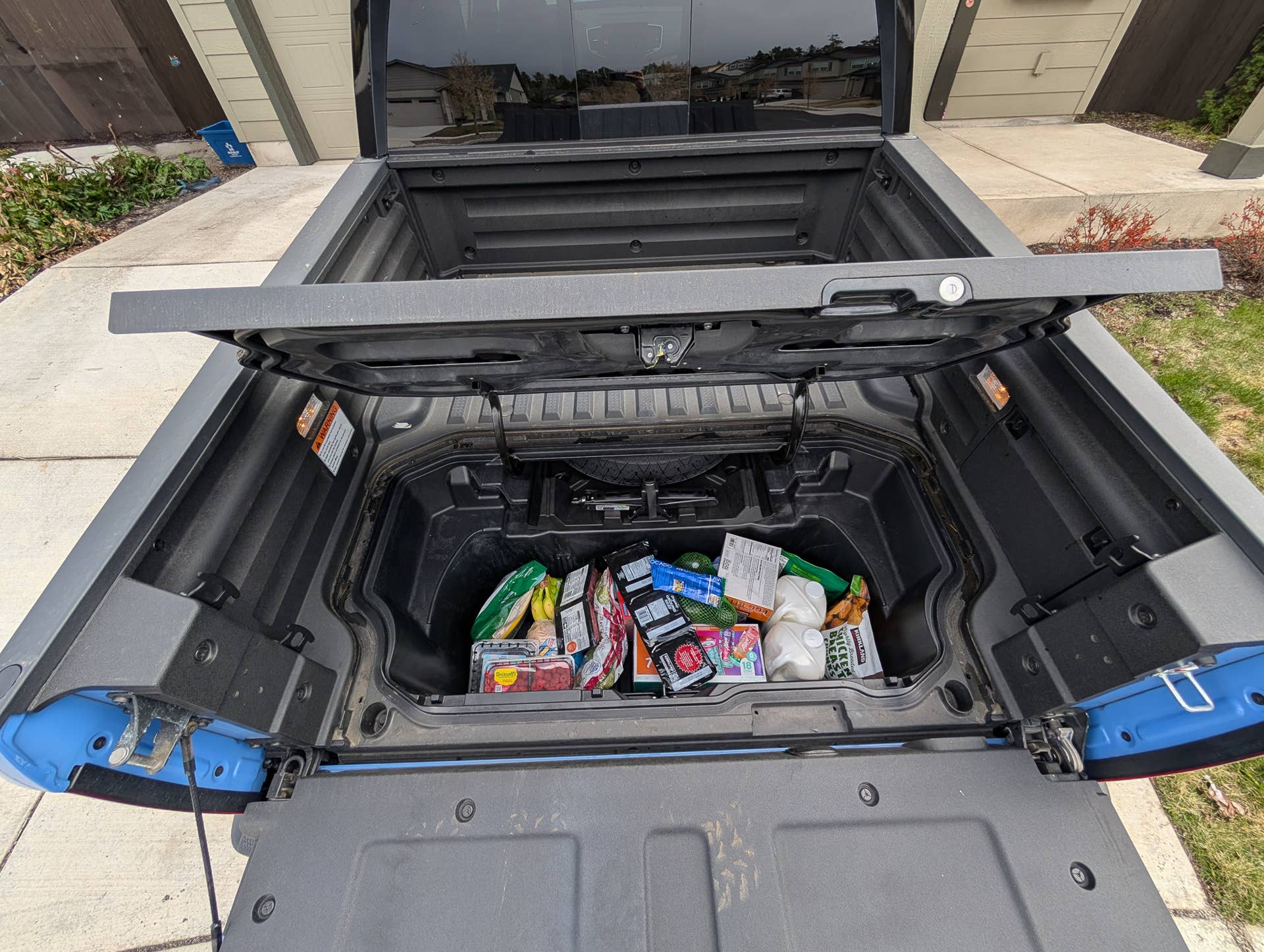
Obviously, the Ford’s work ethic means there’s not much clever storage options. While there is storage under the rear seats and small places to keep small items along the bed, it didn’t have as many storage options. The Honda, when in Eco mode, got better mileage than the Ranger, too. In the Honda, I average about 20 miles to the gallon around town, while I got just over 18 mpg in the Ranger.
When it comes to family-friendliness, they equal each other out
Once my toddlers’ car seats were installed, the Honda was by far the easiest truck I’ve reviewed with kids. However, the challenge was in actually installing the car seats. In the Ridgeline, I had to fold the seats, snake the top tether through the rear, and then secure it to an anchor point on the floor of the truck. In the Ranger, attaching the top tether was much easier–it was behind the rear seats. However, because I had two car seats to install, I had to make sure I could put some slack in the line for the top tether, or I couldn’t fold the seat.
Kristen Brown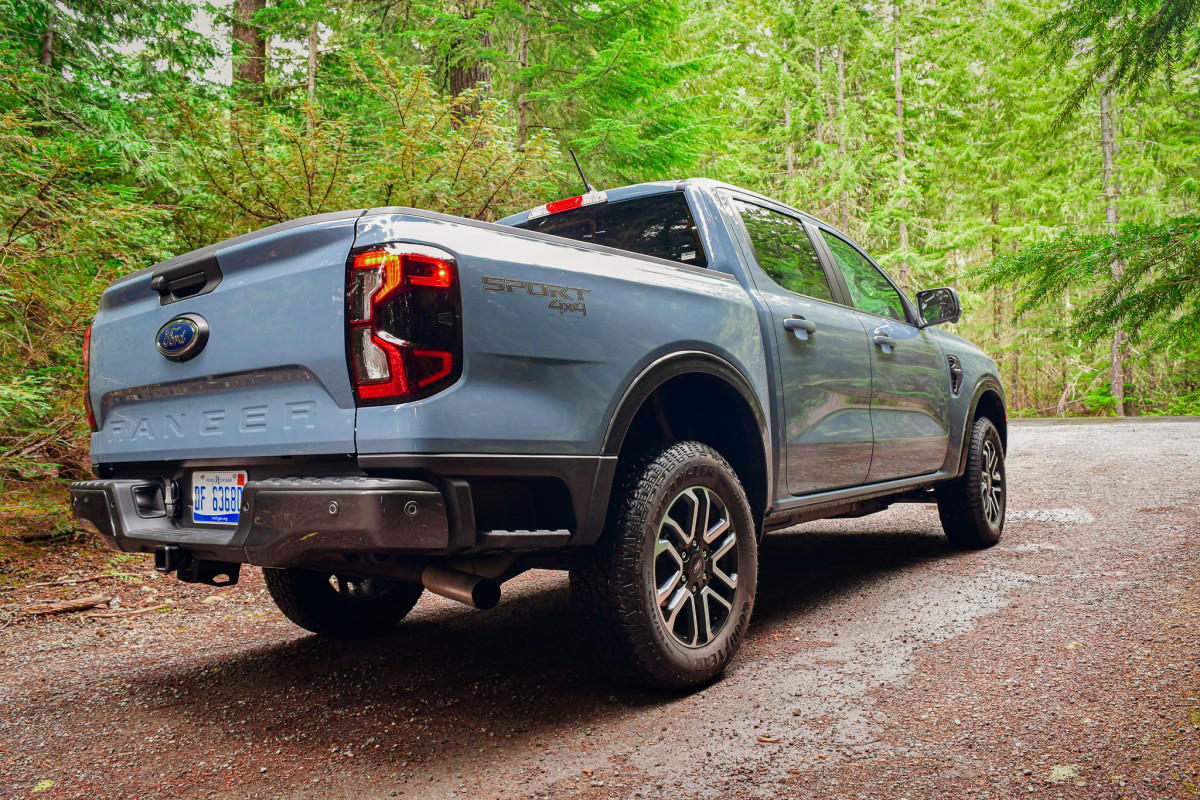
However, the kids were much more cramped in the Ford, and it had smaller windows in the rear, which they were not fans of. They loved the windows in the Honda, as their seats gave them the advantage of looking over and out of the windows. The in-bed storage made grocery hauls a breeze since I didn’t have to stuff them in the bed, in their footwells, or in the passenger’s seat, while I had to rearrange the groceries in the Ranger to avoid having them in the bed. So, that’s why I say they even each other out, because getting the seats in the Honda was pretty annoying. The Ranger was easier that way, but without the rear seats, I had to be more clever about storing things. It was even harder with my husband in the truck.
The Ford’s interior was much fancier, while the Honda’s was simple
Ford has been doing a great job with interior design lately, and the Ranger was no different. The 12-inch touch screen in the Ford was incredibly bright, vibrant, responsive, and intuitive–but nearly every setting, save for the temperature adjustment for the heater and A/C., fan speed selector, media volume knob, hazard light button, and A/C recirculation selector, was buried in the screen. If you wanted to redirect the flow of air from the A/C, you’d have to do it from the screen. Thankfully, those controls were always visible at the bottom, even if you were using a phone mirroring software, but it was still frustrating.
Kristen Brown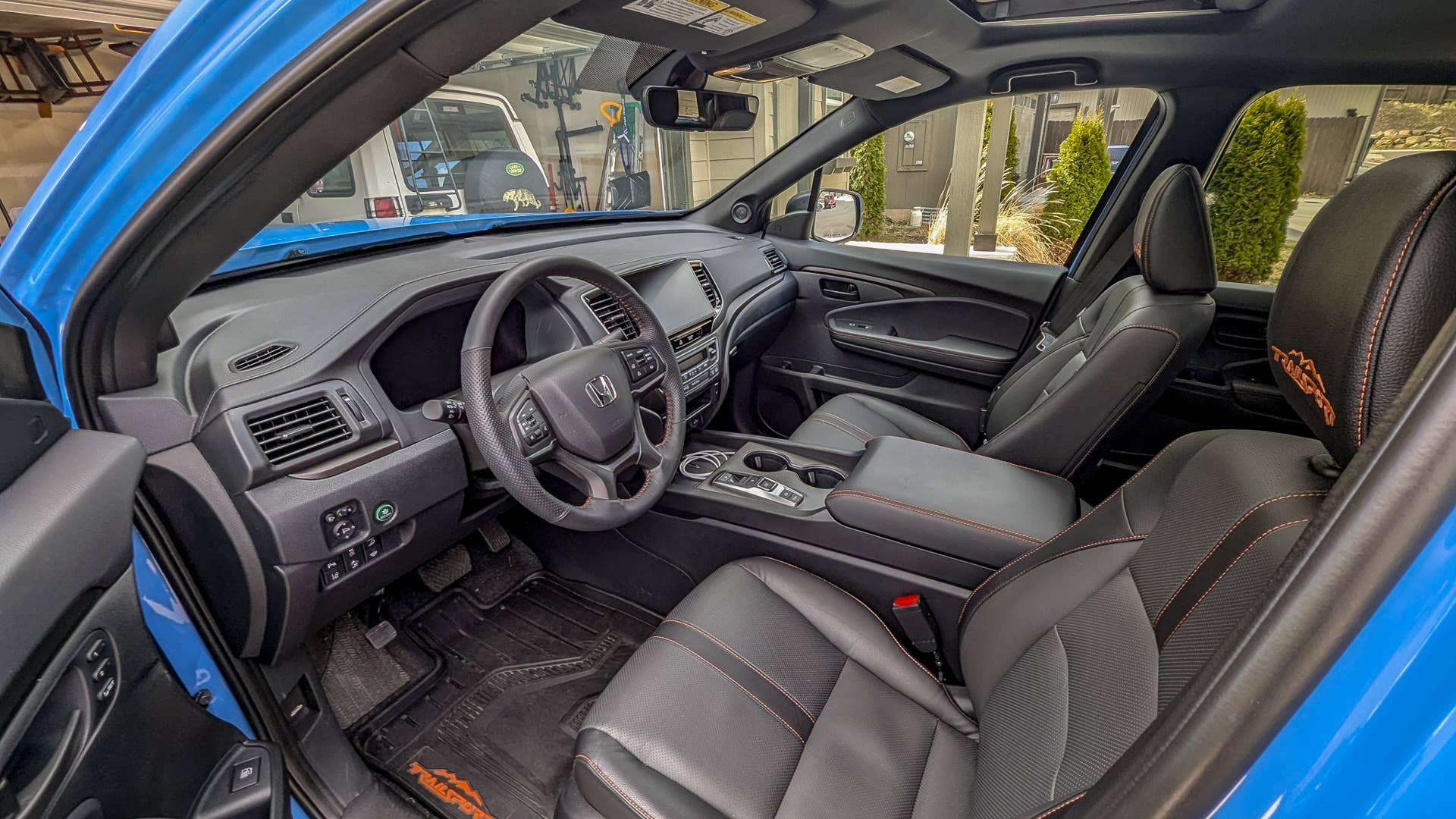
View the 2 images of this gallery on the
original article
In the Honda, however, it was much, much simpler. All frequently used driver controls were buttons and knobs, down to the rear A/C controls and seat heaters. It had a wireless phone charger, too. For those who don’t like screen-dominant interiors, I got comfortable with the Ridgeline’s interior much quicker than I did in the Ford. Though the funky shifting system in the Honda was a bit of an adjustment for me.
Off-road, both were plenty capable
Yes, I know the Ranger has a more traditional and robust 4WD system while the Honda is AWD, so off-road, they both have their strengths and weaknesses. With that in mind, both of them held their ground and were perfectly comfortable off-road. When I had the Ranger, I was driving it to Washington State for an event at Ridgeway Motorsports Park, and ventured onto a trail that was soaked by a storm passing through the Mt. Hood National Forest. There, I was very grateful for the Lariat’s 4WD system, and how easy it was to switch it into 4Hi or 4Lo, lock the rear differential, and select a terrain mode that best suited the situation. It handled the slick, sticky mud with ease.
Kristen Brown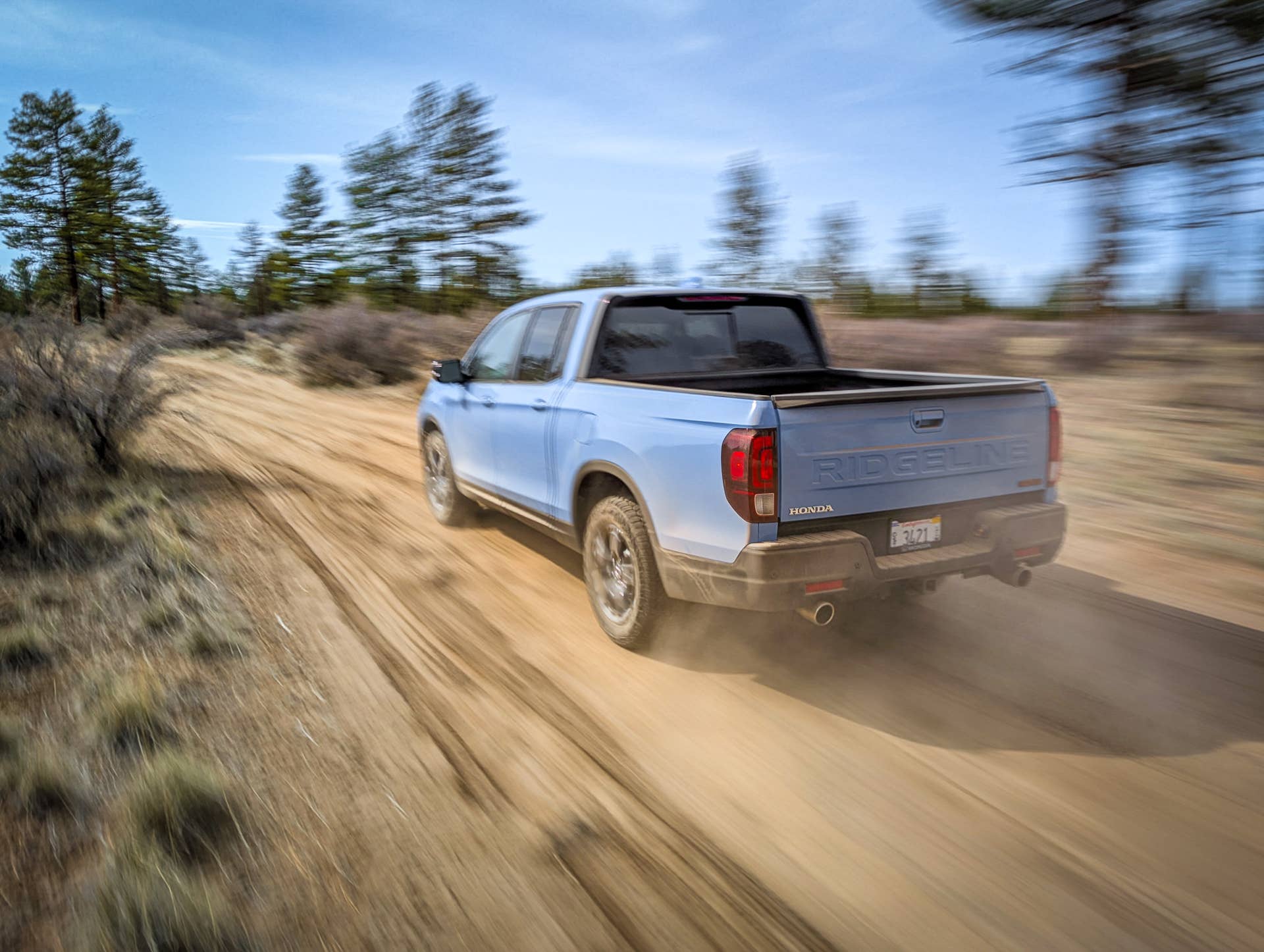
The Honda comes with AWD and a terrain select mode, as well as decently rugged General Grabber AT tires. On the dusty, rocky, and log-laden trails of Central Oregon, the Honda’s terrain selection system and AWD system performed beautifully. Part of me wished it had rained a little so I could test it in some mud, but I’m sure it would have done fine.
Price-wise, they’re very similar
With both the Honda and the Ford, you’re getting a very decent truck at a very decent price. The Ranger starts at $33,350 for the XL, while the Raptor model starts at $56,070. The Honda starts at $40,150 with the Sport, and it maxes out at $46,750. The Ranger Lariat I drove was priced around $47,265 with all the add-ons, while the TrailSport I reviewed was just over $45,380. Therefore, they’re very similar in price, even though the Ford has a lot more truck-like and off-road features.
Final thoughts
I enjoyed my time with both the Ranger and the Honda Ridgeline. Both were sturdy, surprisingly family-friendly, and offered a lot for their respective prices. However, they are definitely better for different types of truck people. The Ranger is better for those who regularly haul, tow, or go off-road and need something more robust and capable. The Honda, however, is better for those who need just a little more than what they’d get from an SUV, but not as much as they’d get from a truck.
Kristen Brown/Autoblog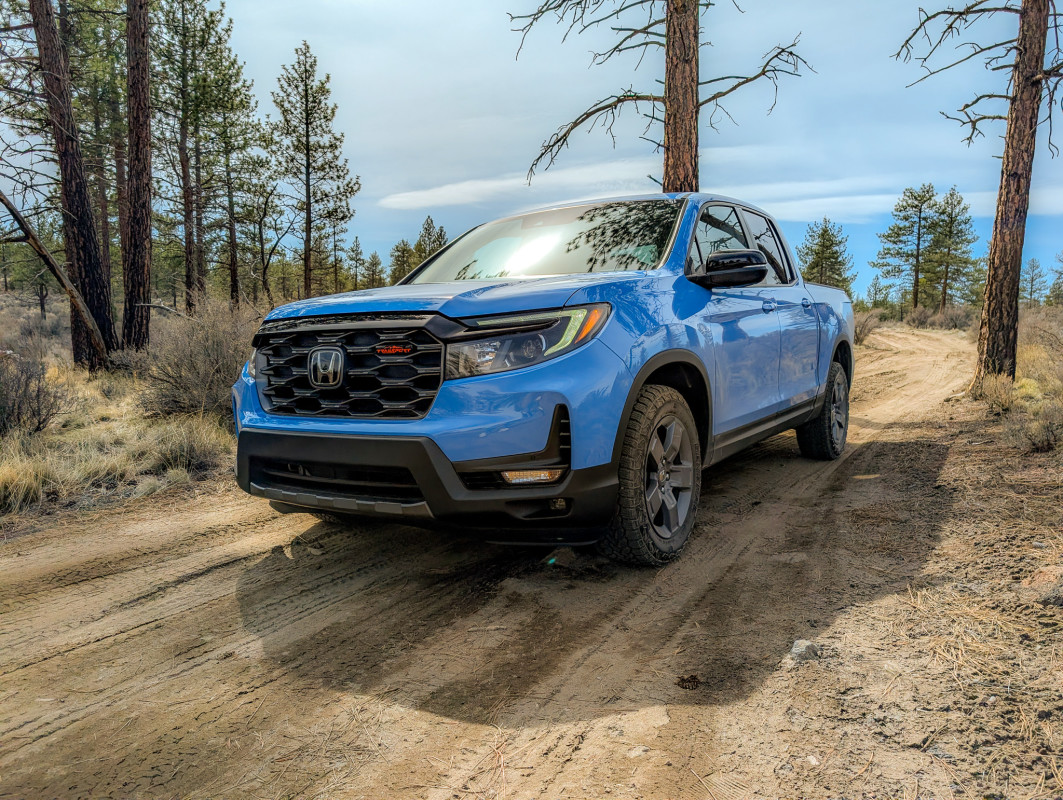
The Honda would be perfect for campers who need to haul multiple bikes, tall flower or tree pots from one place to another, or the occasional haul to the dump. There’s a good reason they’re popular in Bend, Oregon, because they’re capable, but just the right amount of capable. You’re getting a perfect blend of a small truck and a mid-sized SUV, without having to buy either one.