

Given last year’s refresh, the Honda Ridgeline has not changed much for 2025. However, the Honda light truck lineup as a whole is undergoing some changes led by the all-new 2026 Honda Passport. It’s likely that Honda will eventually weave that model’s design, tech, and mechanical changes throughout its entire fleet.
Should the Honda Ridgeline change so soon, though?
2025 Honda Ridgeline
Related: Rivian’s design travels a different road
Standout feature #1: Drives like a crossover or a minivan
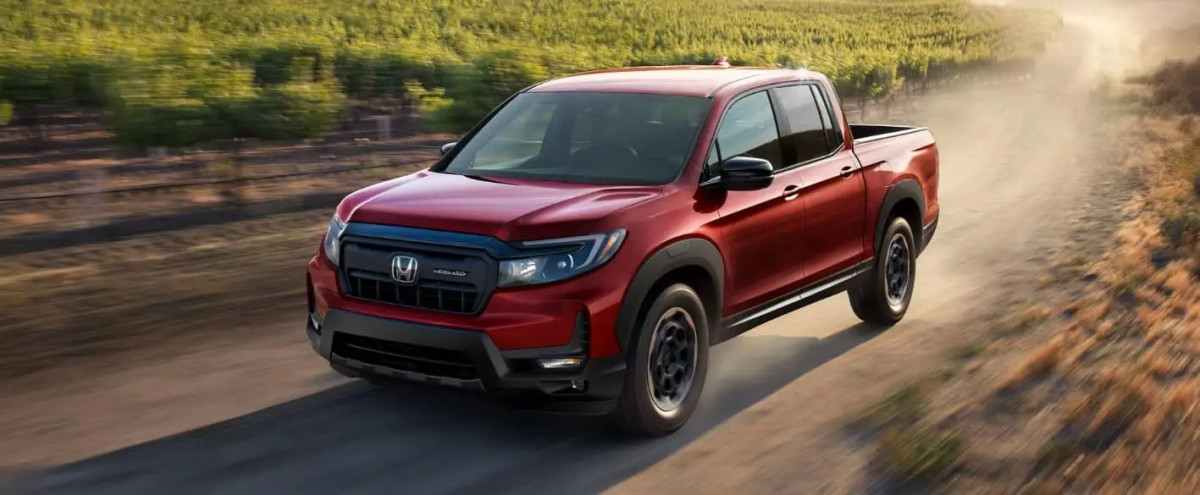
Some folks mistakenly think that Ridgeline’s platform is simply sourced from the Pilot and/or Odyssey. Part of that is true, but Honda beefs up the unibody substructure with a subframe that results in a rigid, solid vehicle that is as easy to drive as a Honda Pilot but can handle real abuse.
Its 3.5-liter V6 engine produces 280 hp, and 262 pound-feet of torque mated to a nine-speed automatic transmission. All of those traits combined make the Ridgeline ideal for daily commuting and cross-country trips.
Honda
Standout feature #2: It’s a smart buy
The 2025 Honda Ridgeline isn’t inexpensive right out of the box, with an MSRP of around $41,000. If you compare it to a Nissan Frontier base model, there’s nearly a $10,000 gap, but things change when you see what you get for the dough. Included in the price is its outstanding iVTM4 all-wheel drive (AWD) powertrain, as well as a crew-cab setup and a five-foot bed.
The EPA rates the Ridgeline at 18 mpg city, 24 mpg highway, and 21 mpg combined, placing it squarely in the middle of its class, which includes hybrids, other V6s, and turbocharged four-cylinder engines. Past Ridgeline models tend to outperform those figures, at least in my tests.
Honda
Related: Four things you didn’t know about the BMW X5
Standout feature #3: Excellent AWD system
Yes, I have taken the Ridgeline off-road, not only the RTL trim, which has beefier off-road-friendly tires but the others as well. It is, without a doubt, one of the best pickups for driving in snow and wet conditions. The AWD system is a wizard at sending the power where it’s needed.
Up to 70 percent of the power can be sent to the rear axle. If traction is needed more on one side than the other, up to 100 percent of the rear axle’s power can be sent to either rear wheel. This is called mechanical torque vectoring, and it works well on any surface. The older AWD system heated up easily when misused, but this improved AWD system is thankfully stronger.
Honda
Standout feature #4: Outstanding utility
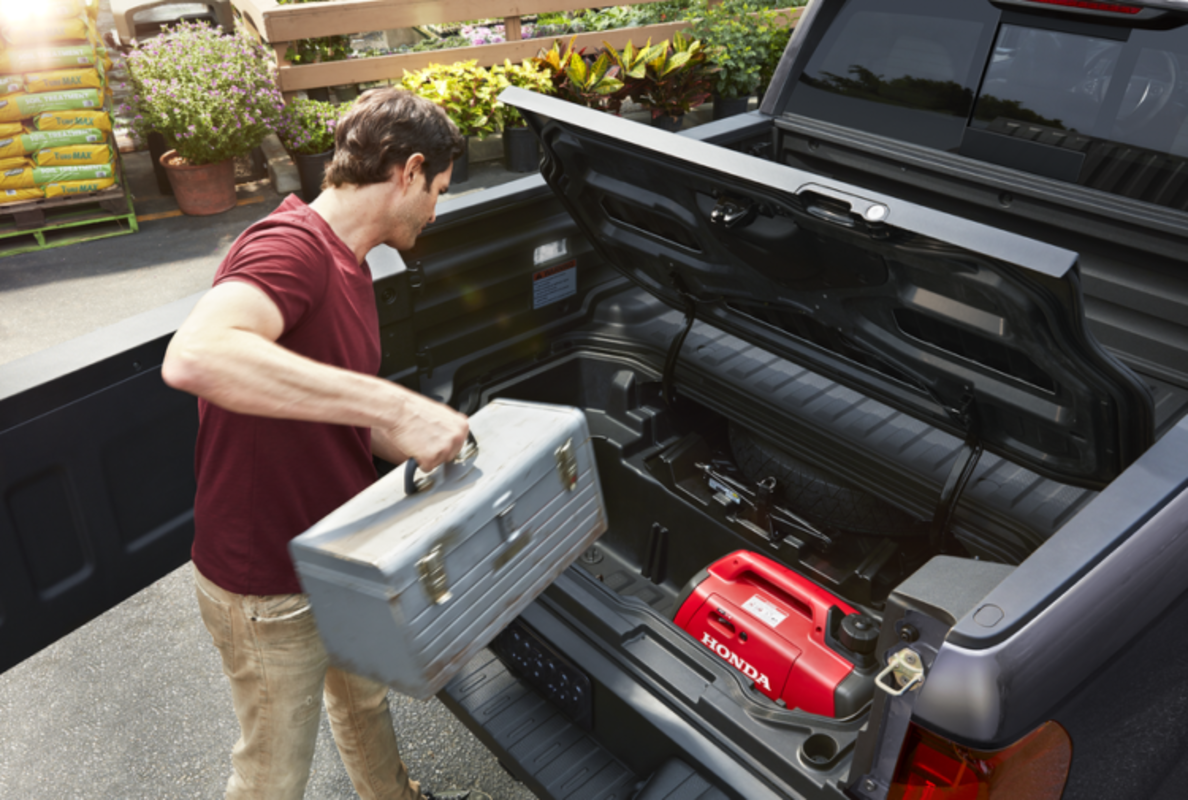
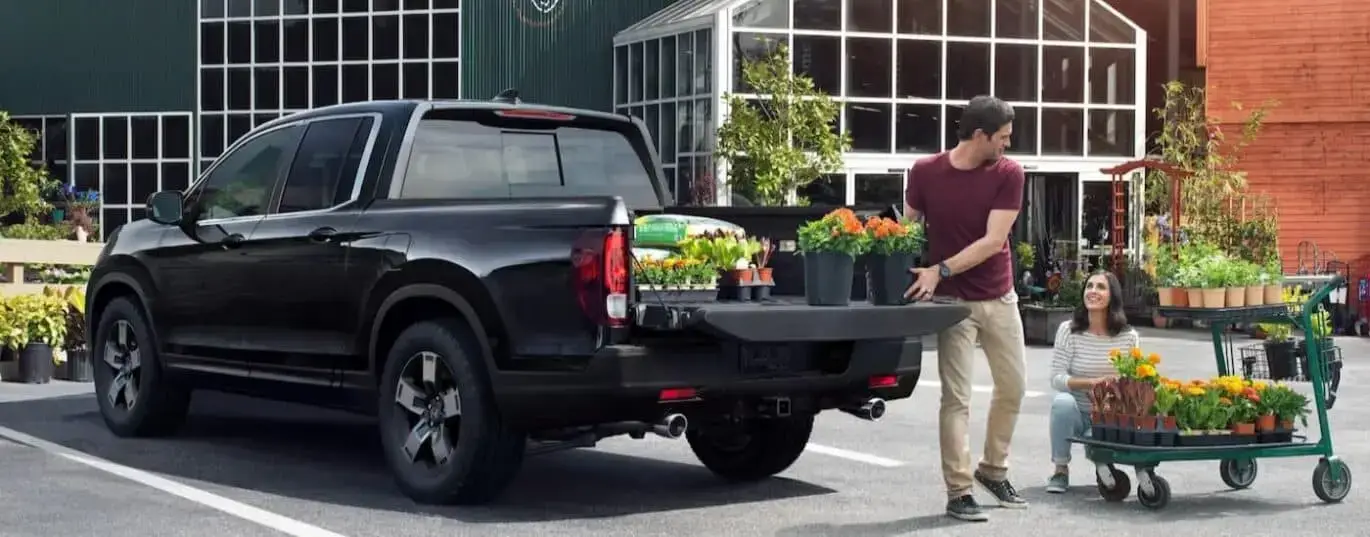
If you look at just the back of the Ridgeline, you will be hard-pressed to find a pickup that is as accommodating. The easily accessible bed is five feet long and over four feet wide, and a locking under-bed storage area adds 7.3 cubic feet of capacity. Low cuts over the wheel hubs make it easy to hold 4×8 sheets of whatever, and the Ridgeline can hold up to 1,500 lbs overall, making it very competitive in this midsize class.
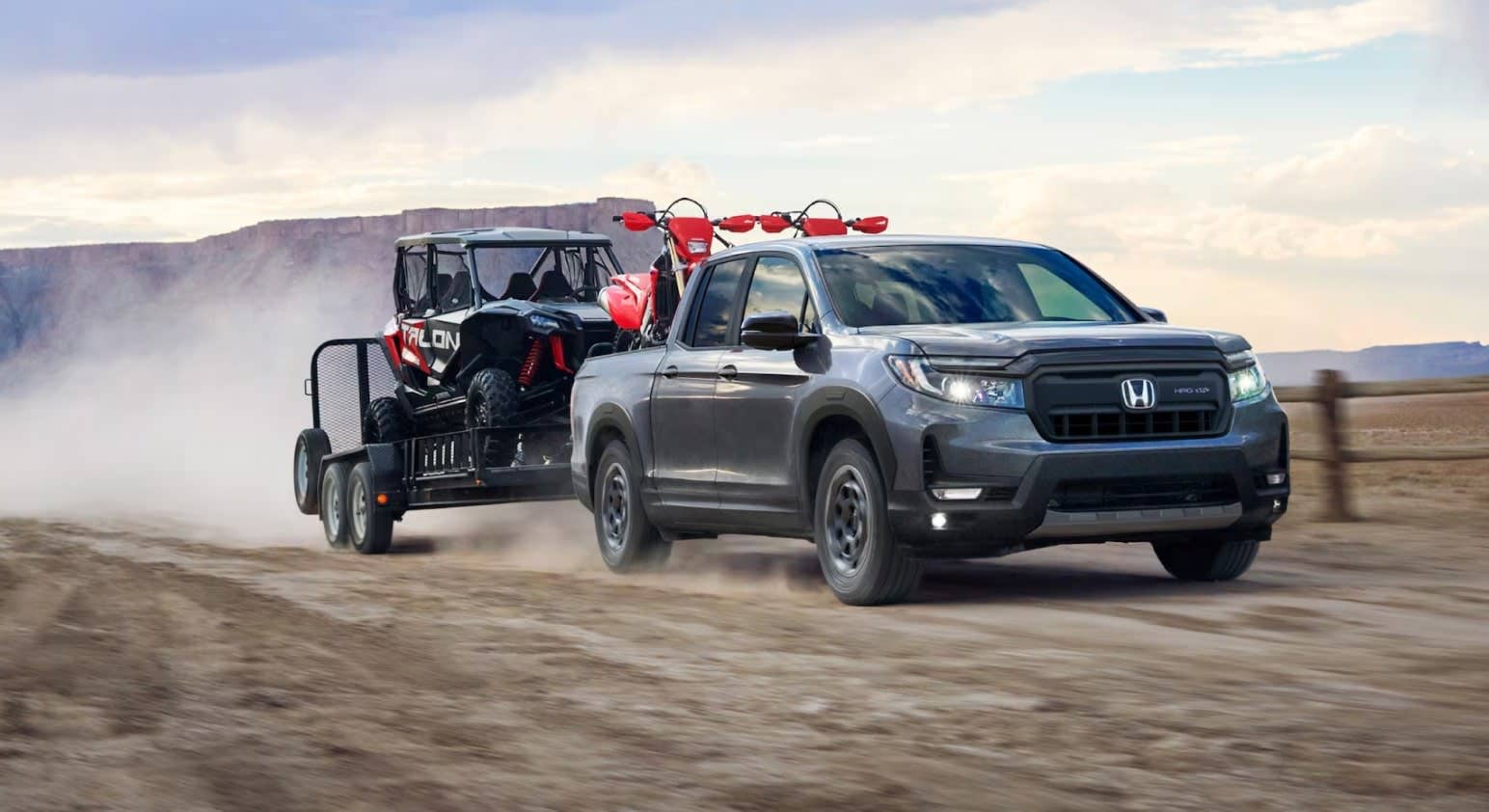
The rear tailgate opens either outward or straight down like a conventional tailgate, making it remarkably useful for DIYers. While it’s rated to tow only 5,000 lbs, making it the lowest in its class, it can pull that weight fairly easily.
Honda
Related: How much range do EVs really lose in freezing temps?
Surprising flaw #1: Some might not consider it a real truck
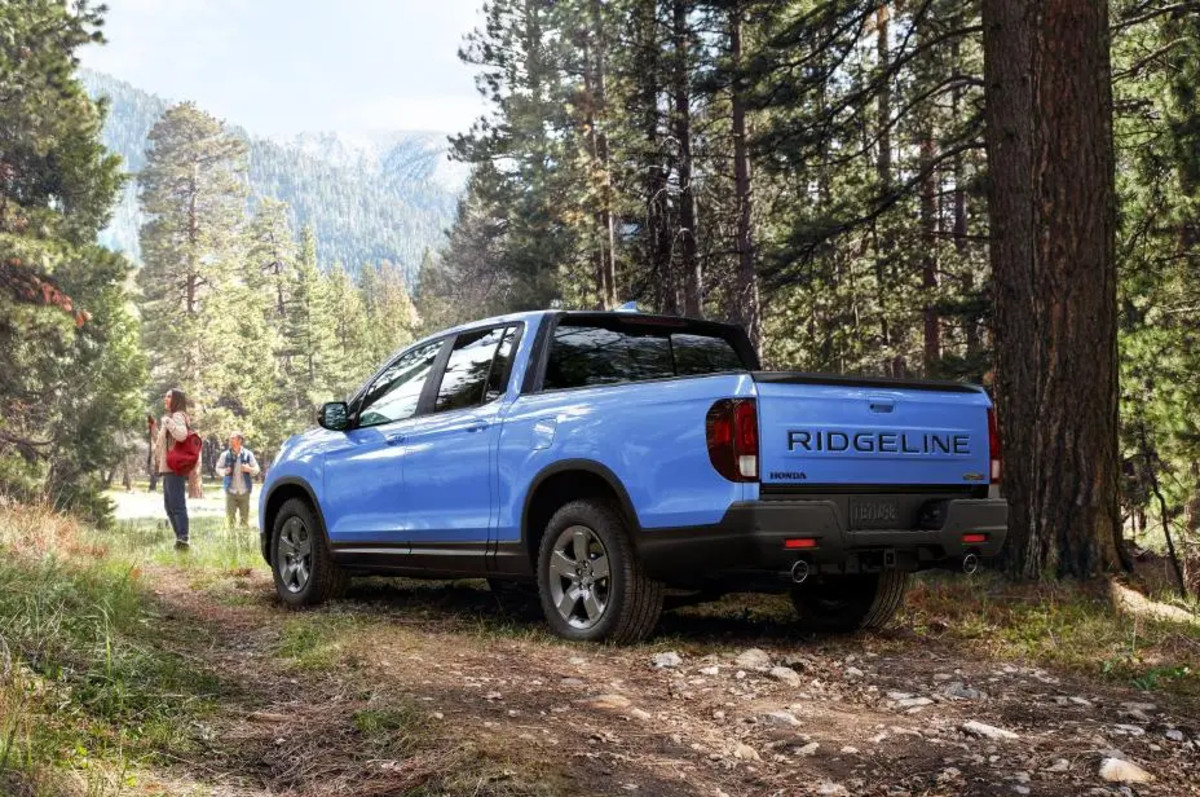
No matter what you call it, purists will never be satisfied calling the Honda Ridgeline a pickup truck. Its lack of a full frame irks some, while its front-wheel drive-biased configuration bothers others. In addition, it has a four-wheel independent suspension, which can be a deal-breaker for some consumers.
After all these years of testing various Ridgelines, the only downside to its lack of some of these “truck” features is its low towing rating. I still think it’s fine for the midsize class, as I’ve towed over 7,000 lbs in other midsize trucks, and they didn’t like the mass either. Still, on paper, it’s important – right?
Honda
Surprising flaw #2: Baby pickups are becoming competitive
Ford and Hyundai both build great little pickups that are less expensive, more fuel efficient, and can match or nearly match, the Ridgeline’s numbers. If you want more of a truck, the Ford Maverick is hard to beat, and the Hyundai Santa Cruz is even more car-like. They both present a compelling alternative for people who want capability in an even smaller package.
Final thoughts
With the competition from the little pickups and the onslaught of new and revised midsize pickups, the Honda Ridgeline still remains a serious competitor. It’s remarkably easy to live with, no matter where you are, and it has so much utility that you’ll forget those folks who yell that it can’t conquer the Rubicon.
The truth is that the Ridgeline is a great family utility vehicle, one that excels at almost everything. Sometimes, not listening to the naysayers pays off.
Related: Four new features on the 2025 Lincoln Aviator